Showing posts with label Howlin' Wolf. Show all posts

Monday, December 23, 2024

Archive Review: Howlin’ Wolf’s Ain’t Gonna Be Your Dog (1994)

Howlin’ Wolf’s Ain’t Gonna Be Your Dog
Howlin’ Wolf is one of those blues artists that even non-fans of the genre recognize. Born as Chester Burnett in 1910 in West Point, Mississippi, he picked up the guitar in his late teens, mentored by Blues legend Charlie Patton. A contemporary of Muddy Waters, Elmore James, and Sonny Boy Williamson, Burnett often played alongside these greats as they all traveled the same Southern blues circuit. It wasn’t until the late 1940s, after a stint in the army during World War II, that Burnett decided to pursue music as a full-time vocation.

Howlin’ Wolf’s Ain’t Gonna Be Your Dog


Moving northward to West Memphis, Arkansas, Howlin’ Wolf began recording sides for Chicago’s Chess label through Sam Phillips’ Memphis Recording Service. Ain’t Gonna Be Your Dog presents 14 of these Memphis cuts, recorded in the early ‘50s and featuring the young bluesman backed by talents such as Hubert Sumlin and James Cotton. By the time that Burnett moved to Chicago to become a full-fledged Chess label artist in the mid-‘50s, he was an established name in the genre. He would continue to be a major player in the Blues, a not-so-friendly competition arising between Wolf and another Chicago bluesman, Muddy Waters.

Wolf’s late ‘50s/early ‘60s output is what sealed his legend as a great blues performer and can be attributed not only to Wolf’s own charismatic talents, but to the instrumental contributions of long-time collaborator Sumlin and the skilled hand of songwriter Willie Dixon. Recording a number of Dixon compositions, Howlin’ Wolf made them his own with inspired guitar playing and his magnificent trademark mouth harp work.  
    

The Reverend’s Bottom Line


Ain’t Gonna Be Your Dog pulls together 42 wonderful Howlin’ Wolf performances, from the aforementioned early Memphis sides to the landmark Chicago Chess sessions, including several cuts from the late 1960s as well as alternates and a few unreleased songs. It is an excellent companion to the earlier released Chess box set, and well worth getting for fans for whom that set served as an introduction to this brilliant and complex artist. Ain’t Gonna Be Your Dog, by covering almost twenty years of Howlin’ Wolf’s creative output, firms up any claims made for his considerable songwriting skills and instrumental talents. There is, perhaps, no better place for the music love to begin “rediscovering the blues” than here. (Chess Records/MCA Records)

Review originally published by R.A.D! music zine, 1994

Friday, December 20, 2024

Archive Review: Howlin’ Wolf’s Live and Cookin’ At Alice’s Revisited (2011)

In his prime, the mighty Howlin’ Wolf was a force of nature on stage, a cyclone of power and a tsunami of emotion on a level that few blues singers could aspire to, much less match. By the early 1970s, however, the great Wolf was getting old and sick, too many hard years resulting in various ailments that robbed the blues giant of some of his magic and vitality.
 
Gone, too, were the halcyon days of the blues, as black audiences had turned to soul and funk, and young white fans were moving towards the heavier-sounding blues bastardizations of Led Zeppelin, Humble Pie, and others. Chess Records, Wolf’s long-time label, tried to modernize his unique brand of blues for the rock ‘n’ roll record buyer with albums like The London Howlin’ Wolf Sessions, which paired the aging bluesman with much-younger British blues-rock acolytes like Eric Clapton, Steve Winwood, and half the Rolling Stones, the attempt meeting with little success.

Howlin’ Wolf’s Live and Cookin’ At Alice’s Revisited


While Howlin’ Wolf would never experience the sort of late-career renaissance enjoyed by his friend and number one competitor Muddy Waters during the mid-‘70s, he could still display a measure of the electricity he once had when the spirit so moved him. Such a performance can be found on Live and Cookin’ At Alice’s Revisited, released in 1972 as the only live album released during Wolf’s lifetime. Chess and producer Ralph Bass unknowingly captured lightning in a bottle, providing Wolf with one last shot at immortality (he would release only one more studio album, 1973’s The Back Door Wolf, before his death in 1976).

Live and Cookin’ At Alice’s Revisited documents a January 1972 performance at a converted coffeehouse on the North side of Chicago called Alice’s Revisited. For the record, Wolf was backed by his longtime musical foils – guitarist Hubert Sumlin and pianist Sunnyland Slim – as well as legendary drummer Fred Below, second guitarist L.V. Williams, former Little Walter bassist Dave Myers, and Chicago blues institution, saxophonist Eddie Shaw. It’s a sad commentary on Wolf’s status at the time that a few days after this now-legendary gig, Wolf and the band were opening for Alice Cooper in Los Angeles…an odd and ill-fitting pairing if ever there was one.   

Mean Mistreater


The band romps through ten songs here, eight of which originally appeared on the 1972 and 1977 vinyl releases of the album, comprised of nine Wolf originals and a red-hot cover of Waters’ “Mean Mistreater.” Wolf opens with “When I Laid Down I Was Troubled,” his harmonica into leading into a full band vamp, the talented players laying down a fat blues groove that Wolf struts into with uncharacteristically subdued vocals. As the song unfolds, Wolf’s vocals become more strident, the instrumentation nearly burying his vocals in their trail as the groove rolls on. Scraps of Sumlin’s superb fretwork emerge from the chaotic mix, Below’s steady timekeeping accented by Myers’ walking bass line and Slim’s tinkling keys. Wolf’s manic harpwork fills in around the edges of a strong, highly-rocking performance.

The band is just warming up however, and after delivering a rhythmic Chicago blues-styled stomp in “I Didn’t Know,” complete with Sumlin’s scorching solos, Wolf and his gang hit their full stride with Waters’ “Mean Mistreater.” Peppering the band’s strolling rhythm with icy blasts from his harp, Wolf jumps in with his growling, whiskey-soaked vocals as Sumlin embellishes the performance with squalls of notes. Slim bangs away at his piano in the corner, but it’s Wolf’s swaying harp and heartbreak vocals that make the song soar.

Call Me The Wolf


Wolf is at full-stream by the time he belts out “I Had A Dream,” the singer masterfully welding soul and blues together in his performance as the band rocks the house behind their legendary singer. The rhythm section swings like a tornado, Sumlin throws in the hottest of licks, and Wolf proves himself an underrated harp player with an emotional, powerful solo of his own. His signature song, “Call Me the Wolf,” is a tortured cry from the soul of man, Wolf’s spoken-word intro evolving into a bluesy howl that speaks of betrayal, more of a primal scream at the heavens than a normal blues song.

Wolf’s take on the traditional “Sitting On Top of the World” is a slow-tempo bonfire that smolders and spits sparks, the band opening with shards of guitar playing against silky piano and the saxophone’s emotional howl. Wolf’s vocals are a Delta drawl that perfectly captures the song’s duality of emotions felt and those expressed. Two “bonus tracks” from the same live set and left off the original LP, are stellar performances both – “The Big House” is an extended blues jam with Wolf’s roaring vocals measured throughout, while “Mr. Airplane Man” is a riffing, rocking black cat moan, the band’s malevolent rhythms perfected in sync with Wolf’s growled, howled, and biting vocals.    

The Reverend’s Bottom Line


As the old maxim goes, you can’t teach an old dog new tricks, and by 1972 it was evident to anybody listening to releases like This Is Howlin’ Wolf’s New Album or Message To the Young that the blues great simply wasn’t ready or willing to move beyond his comfort zone. Live and Cookin’ At Alice’s Revisited, a long-overdue live album from the Wolf, captured the legend doing exactly what he did best – tearing up the stage with a setlist of familiar blues gems that provide a perfect showcase for the Wolf’s blues intensity.   

It’s a bit of a travesty that Live and Cookin’ At Alice’s Revisited has remained out of print for almost 20 years, much less that it’s taken an Australian label – reissue specialists Raven Records – to bring this essential piece of Howlin’ Wolf’s legacy back into focus. My advice is that if you’re a Howlin’ Wolf fan, or a fan of Chicago blues overall, grab a copy of Live and Cookin’ At Alice’s Revisited while the album is in print and available. Wolf’s performance is priceless, the band one of the best in the blues at the time. ‘Nuff said! (Raven Records, released February 8, 2011)

Friday, October 28, 2022

Archive Review: Ann Arbor Blues & Jazz Festival 1972 (2014)

Ann Arbor Blues & Jazz Festival 1972
In the 40+ years since the event, the 1972 Ann Arbor Blues & Jazz Festival has become known as one of the premiere live concerts in blues history. Although the event was only attended by roughly 16,000 intrepid souls, it has since been blown up and exaggerated much like the original Woodstock Festival so that two or three times the actual number of attendees feel like they experienced the magic that occurred over that three-day weekend in September 1972, a familiarity bolstered, perhaps, by Atlantic Records’ release of a two-album set of performances from the festival in early 1973.

The festival was the brainchild of a group of University of Michigan students, with organizer Cary Gordon (no relation) at the helm. Receiving backing from both the school and Canterbury House, an Episcopal Church, the first Ann Arbor Blues Festival was held in September 1969. To find artists for the event, however, first Gordon, John Fishel, and other students travelled to Chicago, where they met with Bob Koester of Delmark Records and checked out artists at some of the city’s Southside clubs. To give their fellow students a taste of the blues, they booked a successful performance by the Luther Allison Trio at the school in the spring of 1969, and held the full-fledged festival in September.   

Ann Arbor Blues & Jazz Festival 1972


Although the 1969 and 1970 Ann Arbor Blues Festivals were artistic successes, bringing a wealth of talent to perform, neither event was financially successful. After a year’s absence, during which time both Gordon and Fishel had left school, new U of M Events Director Peter Andrews was asked by the university to promote another festival. Working with former MC5 manager and White Panther Party founding member John Sinclair, they expanded the musical focus of the event and renamed it the Ann Arbor Blues & Jazz Festival. The pair held shows in 1972 and 1973, but after a disastrous attempt at promoting a 1974 festival in Windsor, Ontario, the event went on hiatus until the early 1990s.

As mentioned above, the 1972 festival was released on vinyl months after the event, but the album has been largely out-of-print until its 2014 rescue and reissue by Wounded Bird Records, a U.S. based archival label. Although Wounded Bird is primarily known for 1970s-era rock and jazz releases, they’ve done the blues world a large favor by releasing Ann Arbor Blues & Jazz Festival 1972 as a two-CD set. The briefest of glances at the track list will convince even the most traditional of blues fans to add this budget-priced set to their library. Boasting of performances by legends like Hound Dog Taylor, Koko Taylor, Bobby “Blue” Bland, Muddy Waters, Howlin’ Wolf, Freddie King, Luther Allison, Otis Rush, Bonnie Raitt, and others, how much more value could you expect for your dollar?

Hound Dog Taylor’s Kitchen Sink Boogie

   
After a brief introduction, disc one of Ann Arbor Blues & Jazz Festival 1972 kicks off with the raucous “Kitchen Sink Boogie,” courtesy of Hound Dog Taylor & the Houserockers. Hot on the heels of his inaugural Alligator Records album release, Taylor and his red-hot band rip through the nearly-four-minute instrumental like a hot knife through soft butter, Taylor’s guitar screaming and screeching like a rabid beast while the rhythm section holds down a swinging boogie beat. Koko Taylor follows with her equally audacious performance of “Wang Dang Doodle.” Accompanied by the song’s writer, Willie Dixon, and backed by a band that includes guitarist Mighty Joe Young, pianist Rick Wright, and a full horn section, the duet raises the rafters with an energetic and rowdy showing.   

The great Bobby “Blue” Bland brings a bit of smooth R&B vibe to his reading of “Ain’t That Loving You,” the singer silkily crooning the romantic lyrics while Dr. John (a/k/a Mac Rebennack) adds some elegant guitar licks. Speaking of Mr. Rebennack, his original “I Walk On Guilded Splinters” brings some New Orleans-styled swamp-blues to the stage, the original voodoo “Night Tripper” growling his vocals above a smothering, claustrophobic arrangement while backing singers add sweet backing harmonies. Howlin’ Wolf simply dominates the stage with his high-octane reading of “Highway 49.” Backed by a talented band that included guitarist Hubert Sumlin, pianist Detroit Junior, and sax legend Eddie Shaw, the Wolf roars through the song like a hurricane staggering through southwest Michigan.  

Dedicated to Otis Spann


Not to be outdone by his Windy City rival, the great Muddy Waters delivers an equally powerful rendition of his classic “Honey Bee.” With his wiry slide-guitar dancing in the background and harp player George “Mojo” Buford blowing a mournful riff, the performance captures the essence of the Chicago blues. Waters joins promoter John Sinclair and Lucille Spann, widow of former Waters band pianist Otis Spann, in dedicating the festival to the late bluesman. Mrs. Spann, joined by guitarist Mighty Joe Young, acquits herself well on “Dedicated To Otis,” a slow-burning, Chicago-style three-alarm fire fueled by Wright’s jaunty piano and Spann’s gritty, emotional vocals. Guitarist Freddie King keeps the party going with his lively take of Don Nix’s “Goin’ Down.” With David Maxwell banging away at the piano keys and Deacon Jones chiming away on the organ, King tears through the song with reckless abandon, his high-flying solos bringing down the house.

The great Luther Allison returned to Ann Arbor to brilliantly cover the classic Percy Mayfield ballad “Please Send Me Someone To Love.” While Allison’s stellar fretwork dominates any performance, the guitarist’s brassy horn section adds some punch to the song with its blustery blasts. Ann Arbor Blues & Jazz Festival 1972 offers just two bona fide jazz performances, the first of which – CJQ’s “Form Kinetic” – providing a little too much shrill instrumentation for my taste. By contrast, Sun Ra & His Solar-Myth Arkestra tickles your ears with their dissonant, improvisational take on “Life Is Splendid.” Both jazz numbers may sound a little harsh to the average blues fan, but they both provide a valuable snapshot of musical undercurrents in the early 1970s.        

The Reverend’s Bottom Line


As good as all the above performances may be, I’ve barely scratched the surface of the eighteen artists represented on Ann Arbor Blues & Jazz Festival 1972. Junior Walker & the All Stars, Johnny Shines, Otis Rush, and the Boogie Brothers all deliver exemplary performances. Bonnie Raitt offers a fine tribute to her mentor Mississippi Fred McDowell with a three-song medley, and later joins Sippie Wallace on the stage for a lively recreation of the singer’s 1929 song “Women Be Wise.”  

Taken altogether, there’s barely a wrong note on Ann Arbor Blues & Jazz Festival 1972, and if the artists and performances included on the set don’t prompt you to put down some hard coin for a copy, you’re probably not much of a blues fan in the first place. I hear that Taylor Swift has a new album out that might be more your taste. For those of us whose blood runs blue, listening to Ann Arbor Blues & Jazz Festival 1972 proves why the event has exceeded its humble roots to live on in memory. As good as this stuff is, however, I have to ask – is there any more tape from the festival in the vaults? I’m surely not alone in wanting to hear more music from this weekend in Ann Arbor… (Wounded Bird Records, released July 15, 2014)

Buy the CD from Amazon: Ann Arbor Blues & Jazz Festival 1972

Friday, April 15, 2022

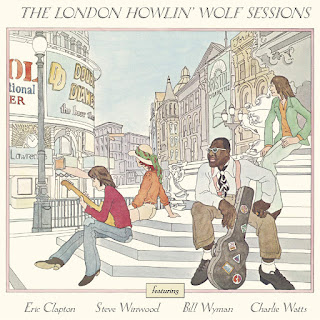
Archive Review: Howlin’ Wolf’s The London Howlin’ Wolf Sessions (1971/2012)

The London Howlin’ Wolf Sessions
In 1970, Chess Records producer Norm Dayron had the idea of pairing Chicago blues legend Howlin’ Wolf in a London studio with a bevy of his young British blues-rock acolytes to record an album of the Wolf’s old songs. After all, Dayron had found a modicum of chart success the previous year by hooking up the great Muddy Waters and his pianist Otis Spann with a group of young turks that included guitarist Michael Bloomfield and harp player Paul Butterfield, the resulting album, Fathers and Sons, slipping into the Billboard Top 200 albums chart at number 70 and receiving overall positive critical reviews.  

The London Howlin’ Wolf Sessions


For The London Howlin’ Wolf Sessions, Dayron enlisted a band that included the Rolling Stones’ rhythm section of bassist Bill Wyman and drummer Charlie Watts, and guitarist Eric Clapton, who was still flush with fame and fortune from the success of his blues-rock power trio Cream. The producer flew Wolf, his longtime guitarist and musical foil Hubert Sumlin, and young harpslinger Jeffrey Carp to London to record with the British chaps for a week. The sessions weren’t without drama, however – by 1970, Wolf was a sick man, with heart and kidney problems that made the mercurial bluesman even grouchier. Wolf didn’t know what he was doing messing around with these damn fool kids, and some of his performances were tentative, at best.

However, as music journalist and blues historian Bill Dahl outlines in his excellent liner notes to the deluxe edition of The London Howlin’ Wolf Sessions, eventually everything began to gel in the studio and Wolf and the assembled band knocked out an acceptable, if not remarkable album of classic blues music. As a kid I was enchanted by both Howlin’ Wolf and The London Howlin’ Wolf Sessions, one of the first blues albums I’d heard at the time. I had no idea in 1971 or 1972, when I first picked up the album, that blues purists had dismissed it as a trivial work on the part of those involved; or that Clapton had virtually disowned the album (perhaps “Slowhand” should be so frank in reconsidering much of his mediocre 1980s work!).

Built For Comfort


For a fourteen-year-old budding blues fan, however, everything from the painted cover art to the B&W session photos inside, not to mention the music found on The London Howlin’ Wolf Sessions, all came as a revelation that would lead to a deeper study of the blues. Through the years, the initial harsh critical reception afforded the album would soften somewhat, and I’ve since spoken with many musicians that revere these performances. So, some 40 years after its recording, how does The London Howlin’ Wolf Sessions stand up to the master’s body of work?

The album holds up better than might be expected, and maybe even moves up a notch or two towards minor classic status in my estimation. Sure, nothing here is going to match the Wolf’s powerful mid-1950s work for Chess Records, or even his earlier recordings for Sam Phillips in the Sun Studio in Memphis; then again, nothing ever could. Truth is, as the Wolf’s early-to-mid-1960s “albums” were really nothing more than collections of previous singles releases, he wasn’t really an album-oriented artist like Waters would become. Later attempts to appeal to young, album-oriented blues-rock fans with releases like 1969’s This Is Howlin’ Wolf’s New Album or 1971’s Message To the Young would fail miserably commercially and critically. That leaves us with The London Howlin’ Wolf Sessions, a spirited collection of new performances of old songs, delivered with a fresh perspective on the blues while retaining their traditional appeal.   

Sittin’ On Top of the World


The London Howlin’ Wolf Sessions leads off with the spry, slightly funky Wolf original “Rockin’ Daddy,” the performance fueled by Sumlin’s loping fretwork and Clapton’s Southern-fried licks. Wolf roars and bellows like the artist of yore, while Phil Upchurch’s (later overdubbed) bass line plays nicely off of Charlie Watt’s timekeeping. Willie Dixon’s classic “I Ain’t Superstitious” is afforded a lush, busy mix with Wolf’s rote vocals nearly lost amidst a wash of overdubbed horns. Clapton’s fretwork here is nuanced and imaginative, if buried in the din, while Ringo Starr’s drums (the musician credited as “Ritchie” on the original album) rise above the otherwise messy mix.

It’s with “Sittin’ On Top of the World” that the album really begins to cook, with Jeffrey Carp’s greasy harpwork sizzling beneath Wolf’s languid vocals; Lafayette Leake’s later overdubbed piano play tinkling in the background as Sumlin’s solid rhythm guitar serves as a foundation on top of which Clapton lets fly with an elegant, undeniably bluesy solo. The rollicking “Worried About My Baby” also makes good use of Carp’s harp, his blasts of harmonica reminding of Junior Wells as Wolf belts out the lyrics above Leake’s lively piano. Wolf’s classic cover of James Oden’s “What A Woman!” (a/k/a “Commit A Crime”) is the most traditional Chicago blues number on the album, the song’s distinctive hypnotic rhythm punctuated by Clapton’s short, shocking leads and a fine, blustery Wolf vocal turn.     

The Red Rooster


Another Dixon gem, “Built For Comfort,” was tailor-made for Wolf, and he walks his way through the lyrics with a familiar swagger as the horns flare brightly behind him and Ian Stewart’s intricate piano play is matched by Clapton’s intermittent solos. As Dahl recounts in the album’s liner notes, it was the recording of “The Red Rooster,” with Clapton asking Wolf to show him how to play the song, which would break up the tension of the sessions. While critics like Cub Koda have expressed their dislike of the studio dialog that serves as an intro to the song, it’s intriguing to hear at this late date, and by the time the full band roars into the actual song, everybody is rockin’ full-tilt, from Clapton’s fluid riffing to Wolf’s sly vocals to Leake’s trilling piano.

Although Dixon’s “Do the Do” sounds an awful lot like a Bo Diddley song with its familiar beat, it’s all Wolf, baby, the singer slipping into the fat groove with a fine vocal performance that is itself enveloped by Wyman and Watt’s gorgeous lockstep rhythms and Clapton’s rattletrap fretwork. “Highway 49” rocks hard, with a strong Wolf vocal bolstered by Clapton’s innovative leads, Sumlin’s bedrock rhythms, and Steve Winwood’s lofty piano-pounding, which was dubbed in later. The original album ended with a spirited take of “Wang Dang Doodle,” the song’s mesmerizing rhythms captured perfectly by the band, the slightly-echoed production adding to the song’s exotic vibe, Carp’s harmonica creeping in on the fringes as Stewart’s energetic piano notes dance in the background.  

Rockin’ Daddy


This 2012 “deluxe edition” of The London Howlin’ Wolf Sessions includes three bonus tracks at the end of the first disc, performances originally released in 1974 as London Revisited. Of the trio, Wolf’s “Killing Floor” stands out, the song’s sparse arrangement and familiar rhythm complimented by a fair Wolf vocal performance, and some intricate interplay between Wolf and Clapton on guitar. This set also includes a second disc of alternate takes from the London sessions, some varying only slightly from the released version, some drastically so. For instance, an alternative “What A Woman!” includes Winwood’s overdubbed organ, which adds to the general cacophony but does little to enhance the performance.

By contrast, a sparse rehearsal take of “Worried About My Baby,” features Wolf on harmonica, Clapton’s subtle guitar fills, and Wyman’s throbbing bass, the performance displaying a different possibility for the song. The alternate “I Ain’t Superstitious” sounds even funkier than that used on the original album, bassist Klaus Voorman and drummer Ringo Starr doing a fine job on the rhythm while Carp adds some inspired harpwork, but Wolf’s vocals slight and unsatisfying. An extended version of “Do the Do” stretches the song into a bona fide blues jam with Clapton and Stewart in particular playing above the locomotive rhythm. Wolf’s original “Poor Boy” is provided different lyrics and instrumental mix, but Wolf’s vocals still shine brightly amidst the claustrophobic arrangement which is busy with Clapton’s wiry guitar and Carp’s emotional harpwork.    

The Reverend’s Bottom Line


A lot of blues have passed through these ears since I first heard The London Howlin’ Wolf Sessions as a teen. While I’d like to think that my musical tastes have expanded and grown more sophisticated through the years, the comfort of the familiar relics of our early years grows larger in our minds. Even when viewed apart from the prism of sentimentality, this most-maligned of albums from the great Howlin’ Wolf’s career sounds better than its most vocal critics dare to admit.

In retrospect, The London Howlin’ Wolf Sessions was a successful experiment that captured the great Howlin’ Wolf during the waning days of his strength and power, the elder bluesman still providing many of his performances with a brittle ferocity. Hubert Sumlin, the rock upon which Wolf’s legacy was built, provides the singer with a familiar face and shared history, while the British players – especially Clapton, who has seldom played better than he does here – infuse the performances with energy and zealous enthusiasm. In short, The London Howlin’ Wolf Sessions stands up well to re-inspection, outliving decades of unfair criticism to achieve classic status on its own numerous merits. (Chess Records, released 1971, reissued August 31, 2012)

Buy the CD from Amazon: The London Howlin’ Wolf Sessions

Sunday, August 5, 2018

The Rolling Stones are Confessin’ The Blues

Confessin’ The Blues
It’s not really a secret on either side of the Atlantic that British rock legends the Rolling Stones have long been fans and supporters of American blues music. The named themselves after a song by Chicago blues great Muddy Waters, and started their time-defying career in the early ‘60s as a blues and R&B covers band. The Stones have flirted with the blues ever since, celebrating their lengthy love affair with the release of the 2016 album Blue & Lonesome, a collection of heartfelt covers of classic blues tunes.

Given their relationship with, and knowledge of the blues, it only makes sense that the Stones’ band members could curate an authoritative collection of blues music. On November 9th, 2018 BMG and Universal Music will release Confessin’ The Blues, a 42-track collection of classic blues music chosen by the Stones and featuring red-hot tracks by folks like Muddy Waters, Howlin’ Wolf, John Lee Hooker, Robert Johnson, Elmore James, Chuck Berry, and many others. Confessin’ The Blues will be released in two-CD, double-vinyl, and a 5”x10” vinyl book-pack that mimics the original 78rpm releases. All versions feature liner notes by music journalist Colin Larkin while the book-pack includes removable art card prints by noted blues illustrator Christoph Mueller. The album’s cover was painted by Stones guitarist and resident artist Ron Wood.

The band and BMG decided that 10% of the label’s net receipts from the sale of the album will be donated to Willie Dixon’s Blues Heaven Foundation, an educational non-profit organization that keeps the history and spirit of the blues alive. Named after the legendary blues musician, songwriter, and producer Willie Dixon, the organization’s President and CEO Jacqueline Dixon says in a press release for the new album, “we are extremely honoured, grateful and humbled that Willie Dixon’s Blues Heaven Foundation has been included in such an astonishing project. It means so much that my father’s dream of creating an organisation that promotes, protects and preserves the Blues for future generations is being recognised and supported by artists that have achieved so much.”

Rolling Stones founding member and guitarist Keith Richards says it best, “if you don't know the blues... there’s no point in picking up the guitar and playing rock and roll or any other form of popular music.” The blues is where it all began and, judging the complete track listing below, Confessin’ The Blues includes some of the best music the genre has to offer. 

Confessin’ The Blues track listing: 

Disc One:
01. Muddy Waters - Rollin’ Stone
02. Howlin’ Wolf - Little Red Rooster
03. John Lee Hooker - Boogie Chillen
04. Little Walter - Hate To See You Go
05. Chuck Berry - Little Queenie
06. Bo Diddley - You Can’t Judge A Book By It’s Cover
07. Eddie Taylor - Ride ‘Em On Down
08. Slim Harpo - I’m A King Bee
09. Magic Sam - All Your Love
10. Elmore James - Dust My Broom
11. Little Walter - Just Your Fool
12. Muddy Waters - I Want To Be Loved
13. Big Bill Broonzy - Key To The Highway
14. Robert Johnson - Love In Vain Blues
15. Mississippi Fred McDowell - You Gotta Move
16. Jimmy Reed - Bright Lights, Big City
17. Big Maceo - Worried Life Blues
18. Little Johnny Taylor - Everybody Knows About My Good Thing (Part 1)
19. Howlin’ Wolf - Commit A Crime
20. Otis Rush - I Can’t Quit You Baby
21. Jay McShann & Walter Brown - Confessin’ The Blues

Disc Two:
1. Howlin’ Wolf - Just Like I Treat You
2. Little Walter - I Got To Go
3. Chuck Berry - Carol
4. Bo Diddley - Mona
5. Muddy Waters - I Just Want To Make Love To You
6. Elmore James - Blues Before Sunrise
7. Eddie Taylor - Bad Boy
8. Boy Blue - Boogie Children
9. Jimmy Reed - Little Rain
10. Robert Johnson - Stop Breakin’ Down Blues
11. Reverend Robert Wilkins - The Prodigal Son
12. Lightnin’ Slim - Hoodoo Blues
13. Billy Boy Arnold - Don’t Stay Out All Night
14. Bo Diddley - Craw Dad
15. Dale Hawkins - Suzie Q
16. Amos Milburn - Down The Road Apiece
17. Howlin’ Wolf - Little Baby
18. Little Walter - Blue and Lonesome
19. B.B. King - Rock Me Baby
20. Buddy Guy - Damn Right I’ve Got The Blues
21. Muddy Waters - Mannish Boy

Also on That Devil Music.com:
The Rolling Stones - Blue & Lonesome CD review