Showing posts with label Johnny Winter. Show all posts

Friday, February 20, 2026

CD Review: Steppin’ Out: The Roots of Garage Rock 1963-1965 (2026)

Steppin’ Out: The Roots of Garage Rock 1963-1965
When Elektra Records released the Lenny Kaye-curated Nuggets album in 1972, little did they know that they were not only scratching an itch experienced by hundreds of thousands of rock ‘n’ roll fans ill-served by the hard rock and prog of the time, but that they were kick-starting a “garage rock” cottage industry that continues unabated to this day. Aside from the numerous, varied Nuggets-related albums released over the past 50 years, you have a heaping handful of prolific Nuggets-adjacent series like Pebbles, Killed By Death, Back From the Grave and, most recently, Brown Acid that have explored the depths of garage, psych, and proto-metal rock.  

Into the fray jumps Cherry Red Records in the U.K. The archival label has released some mighty fine compilation box sets of late – last year’s Motor City Is Burning offers the most complete overview of Detroit’s rock ‘n’ soul history as you’ll find on three discs while the previous year’s Pushin’ Too Hard: American Garage Punk 1964-1967, as I wrote at the time, “really shines is by presenting and preserving more obscure garage rock nuggets by not only those marquee artists but odds ‘n’ sods ‘n’ true rarities that all but the most rabid collector may not have heard.” Steppin’ Out: The Roots of Garage Rock 1963-1965 is this year’s edition, Cherry Red’s Strawberry Records imprint doing yeoman’s work in compiling another high-quality, 94-track, three-disc box set.

Steppin’ Out: The Roots of Garage Rock 1963-1965


Mitch Ryder
Mitch Ryder
Steppin’ Out isn’t necessarily a “garage rock” compilation but is ostensibly a look back at a lot of the artists and music that inspired the shambolic late ‘60s garage rock revolution. As such, you have a bit of this and a soupçon of that, with early rock ‘n’ roll and radio-friendly pop to psychedelic rock and surf music all represented here. Like any compilation of this sort, there are bands that are readily familiar (The Byrds, The Beach Boys, Mitch Ryder, Paul Revere & the Raiders); bands that are vaguely familiar (Sir Douglas Quintet, the Sonics, the Misunderstood, Link Wray); and those that are largely obscure except to record-hoarding fanatics (Sir Frog & the Toads, Merrell & the Exiles, Ognir & the Nite People).

The most impressive aspect of Steppin’ Out, aside from the collection’s sheer quantity of music, is the nearly-seamless flow of songs and styles that compliment each other. So, you get the Chantells’ classic instrumental “Pipeline” segueing into the Dartells’ soulful dance tune “Hot Pastrami.” Jan & Dean’s teen melodrama “Dead Man’s Curve” rolls right into the rowdy, garage-adjacent party tune “Farmer John” which, itself, is a sort of spiritual cousin of the Kingsmen’s “Louie Louie” (which is included here as well). The Trashmen’s manic classic “Surfin’ Bird” leads into the Astronauts’ esoteric, otherworldly instrumental “Baja,” and so on…

The Puddin’ Heads, The Beefeaters & The Sonics


The Sonics
The Sonics
Rather than bore you, the gentle reader, with the familiar – we all know that the Beach Boys’ “I Get Around,” the Byrds’ “I’ll Feel A Whole Lot Better,” the McCoys’ “Hang On Sloopy,” and the Lovin’ Spoonful’s “You Didn’t Have To Be So Nice” are great songs – I’ll instead cover the hidden gems and truly obscure tracks found on Steppin’ Out that make it worth the outlay of cash to buy the set. Disc One, for instance, includes the frenetic, punkish, British-flavored “Now You Say We’re Through” by the Puddin’ Heads, the B-side to the American band’s lone single rattling and shaking like a runaway train. The Beefeaters, as any ‘60s rock fan can tell you, were the pre-Byrds band with Roger McGuinn, David Crosby, and Gene Clark. Their lovely, poppish “Please Let Me Love You” displays some of the same magic their latter band would capture.

The previously-unreleased 1965 track “Get Away From Me” by Philadelphia garage rockers the Angels (not the girl group that released “My Boyfriend’s Back”) features a pair of female vocalists with attitude who clearly aren’t playing around, their fiery vocals complimented by a smooth instrumental groove. The Sonics are cult favorites, not widely known outside of their Pacific Northwest territory, but the influence of tunes like the young, loud, and snotty “The Witch” extended around the globe, the band’s punkish delivery and bludgeoning instrumentation creating an instant rock ‘n’ roll classic. Even more obscure are Merrell & the Exiles, genius bandleader Merrell Fankhauser a fascinating cat that dabbled in all sorts of rock ‘n’ roll styles under a number of band names. “Let Me Go” is a lo-fi rave up from 1964 or ’65, with jangly guitar and clamorous backing instrumentation adding to the excited performance.

Sir Douglas Quintet, The Wailers & Sir Frog


Sir Douglas Quintet
Sir Douglas Quintet
Second disc openers the Sir Douglas Quintet don’t get nearly enough acclaim for their groundbreaking Tex-Mex sound; the band’s “She’s About A Mover” masterfully blends British Invasion rock with Doug Sahm’s Texas roots to create a mesmerizing slab o’ proto-garage rock circa 1965. The Avengers (not the San Fran punks but rather SoCal high school kids) strike a Beatle-esque pose with their 1965 single “When It’s Over,” which is raw, primal, and gutsy while still retaining a monster sense of melody. The Surfaris – best known for their classic instrumental romp “Wipe Out” – were twangmasters of the highest order, the previously-unreleased “Storm Surf” slapping some high-energy Link Wray licks onto a trembling rocker. Hailing from Detroit, the Human Beings’ 1965 single “Ain’t That Lovin’ You Baby” presages the high-octane Motor City scene of a few years hence, the song’s bluesy sound and shards of livewire guitar punctuating a tale of unrequited love.

Like the Sonics, the Wailers were Sasquatch-weaned wildmen from the Pacific Northwest, and their 1965 tune “Hang Up” is grungy, loud, and recklessly rocking, threatening to blow out your speakers with every note. The Gentry’s “Keep On Dancing” appears on every compilation of this sort and should need no introduction, but the Memphis band’s foot-shuffling keyboards ‘n’ drums dancefloor rhythms are always worth revisiting. The Bobby Fuller Four are forever remembered for “I Fought the Law,” but this 1965 single, “Never To Be Forgotten,” is an equally-infectious slice of Buddy Holly-styled pop while Sir Frog & the Toads (so named by their label owner for whatever reason) attempted to kick-start a dance craze with the R&B infused “The Frog.” The fact that we’ve never heard of them since is no reason not to enjoy the song’s wiry guitarplay and liver-quivering rhythms. 

Johnny Winter, Ognir & the Nite People, The Spades & The Groupies


Johnny Winter
Johnny Winter
Texas bluesman Johnny Winter pioneered a rootsy blues-rock sound in the ‘70s, but this unreleased 1965 recording showcases the guitar wizard as a blues-eyed soulster with an emotionally-impactful heartbreak tune. Disc three opens with the psych-tinged, British Invasion-styled Brogues and their frenetic “Don’t Shoot Me Down,” which manages to hit all the right spots with raging guitars and keyboards. The Rationals, from Detroit, are one of my Motor City faves and their “Look What You’re Doin’ (To Me Baby)” showcases frontman Scott Morgan’s soulful vocals and the band’s rowdy, guitar-driven R&B sound. The oddly-named Pennsylvania quintet Ognir & the Nite People (‘Ognir’ being ‘Ringo,’ as in ‘Starr,’ spelled backwards). The band’s young, loud, and snotty take on the Stones resulted in the pulse-pounding “I Found A New Love” while the Sonics reappear with the rattletrap rave-up “Cinderella,” a 1965 single that will shake the furniture at the right volume.

The all-sisters band the Girls deliver an engaging 7-incher with the moody “My Love” while Roky Erickson’s pre-Elevators band the Spades and their 1965 single “We Sell Soul” offer a curious glimpse of pre-LSD era Roky and his underrated vocal and songwriting skills. The Misunderstood have a cult following that continues to grow to this day, and for good reason. The unreleased (at the time) song “Bury My Body” showcases a band taking their British Invasion influences to the gym and pumping iron until they became something entirely fresh and exciting. Indiana band the Jokers only made one single, “What’cha Gonna Do,” but it’s a winner, a bluesy garage-romp with soaring vocals and harmonica play that veers across Dylan’s turf. NYC rockers the Groupies mustered up this lone single, “Primitive” a bluesy gutbucket caveman stomp that was later be covered by the Cramps, thus provided a cherished place in the punk-blues canon.       
      

The Reverend’s Bottom Line

    
Too much of the third CD of Steppin’ Out is comprised of well-worn songs by Nuggets-certified bands like the Standells (“Dirty Water”), the Leaves (“Hey Joe,” 1965 version), the Knickerbockers (“Lies”), the Strangeloves (“Night Time”), and the Thirteenth Floor Elevators (“You’re Gonna Miss Me”), which seems like a bit of a gyp. As great as all these songs may be, they’ve been anthologized to death on previous compilations and their inclusion here seems like lazy curation. 

You could easily cut a dozen of these songs from Steppin’ Out and still have a three-disc, 80-song too-cool-for-school compilation that would kick plenty of ass. Still, this is a minor cavil, at best, and Steppin’ Out delivers plenty o’ bang for your bucks, the box – along with Cherry Red’s Pushin’ Too Hard – providing perfect bookends to the original Nuggets album, song overlap be damned. After all, you can’t have too much garage rock in your collection! (Strawberry Records/Cherry Red, released January 23rd, 2026)  

Buy the CD box from Amazon: Steppin’ Out: The Roots of Garage Rock 1963-1965

Friday, June 23, 2023

Book Review: Mary Lou Sullivan’s Raisin’ Cain: The Wild and Raucous Story of Johnny Winter (2010)

Mary Lou Sullivan’s Raisin’ Cain: The Wild and Raucous Story of Johnny Winter
When guitarist Johnny Winter burst onto the rock music scene in 1969, his arrival was accompanied by a then-unprecedented amount of hype. Signed to Columbia Records with what was reported as the largest advance in history, expectations were unrealistically high for the young albino bluesman from Texas.

Truth is, by the time that Winter was introduced to the record-buying public, he was already a decade-long veteran of local and regional Texas bands, first performing at the young age of fifteen years old. In the 40 years since Winter’s “discovery” and the release of his self-titled debut album, the talented guitarist has endured a fearsome roller-coaster of fame and famine, addiction and alcoholism, acclaim, and indifference…and along the way he has created some great music and influenced a couple generations of guitarists that followed.

Mary Lou Sullivan’s Raisin’ Cain: The Wild and Raucous Story of Johnny Winter


Writer Mary Lou Sullivan first met Winter a quarter-century ago, and has become a trusted confidant to the tight-lipped musical legend. Her biography of Winter, Raisin’ Cain is the result of seven years of work and hundreds of hours of recorded conversations with Winter; the artist’s family and friends; and with musicians like Billy Branch, Jerry Portnoy, Bob Margolin, and Tommy Shannon, among many others. Raisin’ Cain is an authorized biography, meaning that Winter oke-doked the book, and the man even dug up dozens of photos to help compliment Sullivan’s 386 pages of hard-hitting but easy-to-read prose.

Raisin’ Cain touches all the bases of Winter’s lengthy, wild, and raucous 40-years in the business, from his early days on the Texas music circuit to his signing by manager Steve Paul and subsequent performance at the Woodstock Festival; Winter’s short affair with fellow Texan Janis Joplin and the dozens of women that have crossed his path; Winter’s heroin addiction and alcoholism; his record label deals, mismanagement, and re-emergence in the 2000s as an elder statesman of the blues.

The Reverend’s Bottom Line


More than anything, Raisin’ Cain does a great job of capturing the one everlasting love of Winter’s life: blues music. From his early efforts to hold onto a pure blues sound in the face of pressure to rock ‘n’ roll, to his joyful production of Muddy Water’s late-career albums, to the making of nearly all of his recordings through the years, Sullivan captures it all with humor, insight, and deference to her subject.

Writer Mary Lou Sullivan digs as deep into her subject’s life as such great music biographers as Peter Guralnick did with Elvis or Robert Gordon did with Muddy Waters, interviewing everybody from Winter and his equally famous brother Edgar to former bandmates, managers, producers, fellow blues musicians, and many others. Sullivan’s writing style is to simply get out of the way and let those she’s interviewing tell the story, and she has strung together the story of Winter’s life and career masterfully. As a result, Sullivan has delivered the ultimate bio of the enigmatic bluesman. Raisin’ Cain is highly recommended for any Johnny Winter fan, of course, or anybody interested in blues music. (Backbeat Books, published May 1st, 2010)

Buy a copy of the book from Amazon:
Mary Lou Sullivan’s Raisin’ Cain

Friday, March 18, 2022

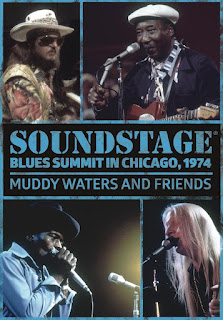
Archive Review: Muddy Waters’ Soundstage: Blues Summit In Chicago, 1974

Muddy Waters’ Soundstage
In July 1974, Muddy Waters was chosen to host the inaugural episode of Soundstage, the beloved live concert series broadcast by PBS stations around the country for thirteen subsequent seasons. Waters was the first in a long run of talented performers to appear on the acclaimed TV show, and he brought some friends with him, resulting in what the producers called a “Blues Summit In Chicago.” The King of Chicago Blues brought along his Queen, the phenomenal Koko Taylor, and a full suite of acolytes and admirers, including Junior Wells, Michael Bloomfield, Johnny Winter, Buddy Miles, and Dr. John, among others.

Muddy Waters’ Soundstage Blues Summit In Chicago 1974


After a solid performance of Waters’ “Blow Wind Blow” that’s interrupted by introductions, the show gets down to business with a sizzling take on “Long Distance Call.” Muddy is in fine voice, belting out the lyrics with perfect timing and emotion, accompanied by Wells’ icy harp and Bloomfield’s twangy guitar licks, with Pinetop Perkins banging the piano keys. Singer/songwriter Nick Gravenites joins Wells on his signature “Messin’ With the Kid,” the pair ripping the roof off the sucker with an energetic performance, Bloomfield’s wiry solos underlining a smiling Wells’ lively vocals.

Waters returns to the stage for a raucous read on his “Mannish Boy,” the band delivering a white-hot groove for Waters to croon above while Winter and Bloomfield swap licks. Taylor is joined by Willie Dixon for a romp through “Wang Dang Doodle,” guitarist Phil Guy receiving a well-deserved spotlight while Koko outshines her male colleagues with an electrifying performance. With his usual modesty, Johnny Winter introduces “Walking Through the Park,” leading the band on a livewire cover of the Buddy Guy tune featuring three dueling guitarists and Wells’ raging harp play.

An extended take on Waters’ “Got My Mojo Workin’” literally has the audience on its feet as everybody hits the stage. Wells offers a freight-train solo, Winter lays down a finger-blistering lead, and Pinetop hammers the keys alongside Dr. John. There are other solid performances here, ten in all for this first Soundstage release, the DVD a definite “must have” for any old-school Chicago blues fan! (Legacy Recordings, 2015)


Review originally published by Blues Music magazine, 2015

Buy the DVD from Amazon.com: Muddy Waters’ Soundstage

Friday, February 25, 2022

Archive Review: Johnny Winter’s Step Back (2014)

Johnny Winter’s Step Back
The death of blues guitarist Johnny Winter in July 2014 took us all by surprise. Sure, the man had been ailing for some time, but that didn’t stop him from touring non-stop and performing like a dervish for the audience each and every night. It seemed like he’d be with us forever, and while it’s sadly fitting that he should hang up his guitar for the last time while on the road, it did little to lessen the loss.

Before his death, Winter had all but finished up Step Back, his star-studded follow-up to 2011’s critically-acclaimed Roots set. Comprised of vintage blues and R&B songs that Winter grew up listening to as a teen in Texas, Step Back features covers of classics by artists as diverse as Ray Charles, Clarence “Gatemouth” Brown, Bobby “Blue” Bland, and Lightnin’ Hopkins, to name but a few. Winter was joined in the studio for his blues odyssey by such fellow fiends as Joe Bonamassa, Eric Clapton, Leslie West, Brian Setzer, and Dr. John, among other talents, the result being one of the best and most spirited albums of Winter’s lengthy career.    

Johnny Winter’s Step Back


Winter departs from his signature sound somewhat with the album-opening “Unchain My Heart.” Winter’s cover of the Ray Charles classic probably skews closer to Joe Cocker’s later version than Charles’ original hit, but he does it up right. Accompanied by the “Blues Brothers Horns,” led by trombonist Tom “Bones” Malone and saxman “Blue” Lou Malone, Winter infuses the track with a big band, R&B vibe complete with angelic female backing vocals. Winter’s voice is surprisingly smooth here, taking on a silkier feel even while his guitarwork retains its razor edge. It’s a wonderful and atypical performance that proves that, even in the latest stages of his career, Winter could still hit us with a creative curve ball.

“Can’t Hold Out (Talk To Me Baby)” is a lesser-known Elmore James track, but a blues gem nonetheless, written by Willie Dixon and recorded in 1960 for Chess Records. Winter is accompanied Ben Harper on vocals and guitar, and much as he did working with Charlie Musselwhite on the pair’s award-winning Get Up! album, Harper’s contribution perfectly complements the older bluesman’s performance. Winter is provided a chance to display his slide-guitar prowess on the raucous track, but Harper lays in a few nice licks as well. Winter is joined by Eric Clapton on a laid-back cover of Bobby “Blue” Bland’s “Don’t Want No Woman” and, as usual, when “Slowhand” is recording with and challenged by another talented guitarist, he rises to the challenge. The two guitarist’s solos are things of beauty, drenched in the blues and polished off with a soulful shine while pianist Mike DiMeo layers in some tasty honky-tonk fills in the background.

Killing Floor

 
Howlin’ Wolf’s “Killing Floor” is a tune familiar to anybody reading this, a blues standard that has been etched in wax by everybody from Jimi Hendrix and Electric Flag to Clapton and many others. Winter’s manager and rhythm guitarist Paul Nelson is featured here, acquitting himself nicely with a lively solo that keeps the song’s momentum going nicely. Winter’s vocals are playful and energetic, not as gruff as the Wolf’s but like fresh sandpaper nonetheless. Bo Diddly’s “Who Do You Love” is required reading for any young blues-rock band, and Winter and crew bite into it like a pride of hungry old lions on a gazelle. Meredith Dimenna’s backing vocals soften Winter’s raw tones somewhat, and his greasy slide-guitar licks are highlighted by Nelson’s accompanying acoustic and electric guitars; DiMeo’s spry piano-pounding adds a little livewire electricity to the performance.

ZZ Top’s Billy Gibbons guest stars on a Jimmy Reed’s “Where Can You Be,” his reckless six-string sound a perfect foil to Winter’s scorched tones. The mid-tempo number sizzles and sparks like a smoldering fire, and there’s not nearly as much difference in the two men’s solos as one might think; both are short, sweet, and strong and prove that while you can take the man out of Texas, you’ll never get the Texas out of the man. Joe Bonamassa stands alongside the Blues Brothers Horns for “Sweet Sixteen,” Winter proving with his opening solo that he can channel his inner B.B. King with the best of them. With DiMeo’s Hammond organ adding color, the two men put on an instrumental clinic certain to thrill any blues guitar fanatic. Winter’s vocals are soulful, the band keeps a steady, swaying rhythmic backdrop, and the horns add accent on what is a brilliant performance.  

Son House’s Death Letter


The heart and soul of Step Back, however, is Winter’s solo performance on Son House’s mournful “Death Letter.” Accompanied only by his National steel guitar and his weary voice, Winter’s intricate guitarplay is matched by the urgency of his gritty, haunted vocals. It’s a powerful performance, and one that shows how deep the blues ran through Winter’s DNA. His cover of Little Walter’s jaunty “My Babe” is much livelier by contrast. With the band laying down a traditional Chicago blues rhythm, Winter’s vocals are matched by harpist Jason Ricci’s dancing notes. Winter’s fluid guitar solo approximates Walter’s original harmonica solos, and sounds great next to Ricci’s underrated harpwork.

As a band, Aerosmith has always worn its blues fascination on its collective sleeves, and whatever one may think of them, there’s no denying that Joe Perry is a first class stringbender – a status proven by his appearance here. Dueting on Lightnin’ Hopkins' signature tune “Mojo Hand,” the band lays down a rollicking beat on top of which Winter and Perry slap out a pair of rattletrap solos that buzz and hum with unbridled blues electricity. Step Back closes out with a fine cover of Fat Domino’s finest, “Blue Monday,” Winter joined by Dr. John, who brings a bit of New Orleans flavor to the performance, his upbeat piano playing nicely off the Blues Brothers Horns and their nuanced R&B fills.    

The Reverend’s Bottom Line


Johnny Winter fans are a rabid, loyal bunch, so the Reverend’s definitely preaching to the choir; the faithful already have a copy of Step Back tucked away on their shelf. As for the rest of you, if you’ve been sitting on the fence about Mr. Winter, this is the album to tip you over to the right side. Hearing Winter hold his own with some of the best and brightest from the blues and rock worlds is impressive enough, but with Step Back the guitarist makes the argument that even if an individual man’s life is frail and finite, the blues ring eternal.

Kudos to producer Paul Nelson for capturing these fine performances on tape; to the guest musicians who brought their best to the studio; to Winter’s talented band for their spirited and supportive playing; and most of all to Mr. John Dawson Winter III, who plays guitar and sings on his final album with the same love and affection for the music that he brought to his first recording. A one of a kind talent and a charismatic performer, Winter’s death is a huge loss for the blues…but as swansongs go, you won’t find better than Winter’s Step Back. (Megaforce Records, released September 2, 2014)

Buy the CD from Amazon.com: Johnny Winter’s Step Back

Wednesday, February 23, 2022

Archive Review: Johnny Winter’s Still Alive and Well (1973)

Johnny Winter’s Still Alive and Well
When blues-rock guitarist Johnny Winter released his fifth studio album, Still Alive and Well, in early 1973 he’d been away from the decades’ thriving and ever-changing music scene for nearly three years. During this time, Winter had been hospitalized for heroin addiction and had already run through two bands – his original blues-rock trio and the hard rock-oriented Johnny Winter And, with Rick Derringer and members of the McCoys. While the former band had experienced some chart success with Winter’s self-titled debut album and its follow-up, Second Winter, the first Johnny Winter And album in 1970 barely charted, a relative failure partially redeemed by the band’s moderately-successful 1971 live album.

Winter put together a kind of new band for Still Alive and Well, with guitarist Derringer and bassist Randy Jo Hobbs from Johnny Winter And, and drummer Richard Hughes, who would be part of Winter’s bands for three or four years. With Derringer producing, and including guest musicians like Todd Rundgren and Mark “Moogie” Klingman (later of Rundgren’s band Utopia), Still Alive and Well was a welcome comeback album from the talented guitarist, hitting #22 on the Billboard albums chart and featuring a number of songs that Winter would perform well into his lengthy career.   

Johnny Winter’s Still Alive and Well


Still Alive and Well blows into town with a flurry of notes, Winter’s scorching intro to the well-known B.B. King hit “Rock Me Baby” leaving nothing but flames and ash behind as the singer’s roaring vocals are met by a percussive avalanche. Winter has always claimed that he wasn’t much of a singer, and while his vox here won’t be mistaken for King’s smooth-as-silk croon, there’s plenty of soul and fire riding atop the ripping guitar licks and fatback rhythms. Dan Hartman’s “Can’t You Feel It” is a similar barn-burner – dialed back a notch, perhaps, but evincing a Southern rock groove with a heart of pure blues. Songwriter and multi-instrumentalist Hartman was a member of Johnny’s brother Edgar’s band at the time, keeping it all in the family.

The first of two Rick Derringer-penned songs on Still Alive and Well, “Cheap Tequila” is a delightfully greasy ballad in a Rolling Stones vein, with imaginative lyrics and a country-blues vibe. The song benefits from Winter’s appropriately heartsick vocals, a big joyful chorus, and light-fingered mandolin pickin’ courtesy of Mr. Johnny which, intertwined with Derringer’s electric guitar, makes for some truly mesmerizing instrumentation. The first of Winter’s two original songs here, “Rock & Roll,” is a Texas-styled boogie-blues romp in the finest Z.Z. Top style, which means that it has plenty of electrifying slide-guitar work, stomp ‘n’ stammer percussion, and gruff vocals that barely rise above the livewire six-string rattle.

Silver Train


Mick Jagger and Keith Richards of the Stones wrote “Silver Train” specifically for Winter, and he did a heck of a lot more with the song than the Glimmer Twins ever would. Opening with a choogling locomotive rhythm, Derringer’s slide-guitar, and “Moogie” Klingman’s honky-tonk piano-pounding, Winter’s vocals provide a curious cross between Jagger and Howlin’ Wolf, at once both growling and twangy, driven to rise above the strident, busy instrumentation. It’s a raucous performance by the entire band, and not the last to infect these grooves. By contrast, “Ain’t Nothing To Me” is a sleazy barroom ballad, a sordid tale of booze and violence that offers up Derringer’s weepy pedal steel and Winter’s wry country-western styled vocals. Why one of those bright-eyed MBAs with one of Nashville’s Music Row labels hasn’t had one of their white-bread artists cover this old-school honky-tonk treasure is a mystery to me.   

The Derringer-penned cover song was tailor-made for the Texas blues-rock guitarist, its tale of triumph and defiance sung with all the heat and energy of a revved-up jet engine. Winter’s playful, razor-sharp vocals are matched by Hughes’ relentless drumbeats and crashing cymbals, his high-flying guitar solos swooping and soaring like an F-15 Eagle in battle. “Too Much Seconal” sits at the opposite end of the musical spectrum, the jazz-blues dirge not lacking in fervor but delivered in a much more laid-back manner. Winter’s elegant slide-guitar and mandolin are met by Jeremy’s Steig’s fluid flutework, the woodwind’s notes dancing around the steel-stringed instrumentation and creating a fever dreamlike effect.

The original vinyl version of Still Alive and Well closed out with a cover of the Stones’ “Let It Bleed,” faithfully delivered by Winter and crew with a little less twang and a little heavier rock ‘n’ roll sound than the original. The 1994 CD reissue includes two bonus tracks – rowdy covers of Little Richard’s “Lucille,” which is pure juke-joint vamp with a funky, walking rhythm and scraped, trembling fretwork and Dylan’s “From A Buick Six,” which amps up the Scribe’s oblique lyrics with rattletrap instrumentation, a boogieing backbeat, and shards of rhythmic guitar. Both songs could have easily been included on the original LP, fitting in both stylistically and in the reckless energy of their performances.    

The Reverend’s Bottom Line


Some 40+ years after its release, Johnny Winter’s Still Alive and Well remains the guitarist’s highest-charting, best-selling, and most critically-acclaimed work. Musically, the album runs the gamut of rock, blues, and what we’d today call alt-country, providing the listener with plenty of twangbangin’ good fun while still managing to pacify the purists with a handful of traditionally-styled blues tunes. While Winter would go on to make albums equally as great (Guitar Slinger, Third Degree, and I’m A Bluesman all come to mind), he’d never again achieve the perfect blend of roots ‘n’ blues that he did with Still Alive and Well, an essential entry in the Johnny Winter canon. (Columbia Records, released March 1973)

Buy the CD from Amazon.com: Johnny Winter’s Still Alive and Well

Friday, February 18, 2022

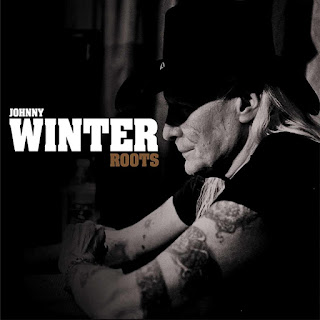
Archive Review: Johnny Winter’s Roots (2011)

Johnny Winter’s Roots
It’s been seven years since guitarist Johnny Winter’s last studio album, the acclaimed 2004 set I’m A Bluesman, and better than a decade before that since the release of 1992’s Hey, Where’s Your Brother? In the interim, there has been an abundance of live albums – some more legitimate than others – as well as seven volumes of Winter’s personally-curated Live Bootleg Series collections. Health issues, business problems, and overall lack of label interest have seemed to keep the guitarist sidelined rather than in the recording studio.

For what is essentially only his second new album in nearly two decades, Winter rounded up some friends to accompany him in the studio. It’s a mark of the guitarist’s status in the blues world that he managed to bring in such talents as Sonny Landreth, Warren Haynes, Susan Tedeschi, and Derek Trucks, among others, for the recording of Roots, a straight-talking, hard-rocking collection of blues and R&B standards. With so many gifted musicians surrounding him, you’d think that Winter could leave a lot of the heavy lifting to others, but that’s not the case here – Roots is Winter’s one of the best albums of his lengthy career, the guitarist playing and singing with the same belly full of fire that he brought to his work in the 1980s.   

Johnny Winter’s Roots


Roots kicks off with the smoother-than-silk “T-Bone Shuffle,” an almost-faithful re-creation of Texas blues great T-Bone Walker’s classic tune, featuring slide-wizard Sonny Landreth’s steely playing deep in the grooves. While the performance offers one of Winter’s best vocal performances in years, the intertwined guitars rattling away above the swinging rhythm section is a thing of pure beauty. Ditto for the Elmore James by way of the Allman Brothers Band cover of James’ swaggering “Done Somebody Wrong,” which includes ABB/Gov’t Mule guitar-banger Warren Haynes laying down some greasy slide alongside Winter’s stinging, high-velocity solos.

For “Got My Mojo Workin’,” a song that the guitarist originally recorded with the great Muddy Waters, Winter is joined by harp player Frank Latorre. This is a rabble-rousing rendition of the blues classic, upbeat and rowdy with a joyous Chicago blues-styled rhythmic base, Winter’s voice and fretwork joined at the hip with Latorre’s random blasts of harp. Rhythm guitarist and long-time Winter musical foil Paul Nelson adds a lot of flavor in the background, while the spot-on bass/drums combo of Scott Spray and Vito Liuzzi keep things rolling.

Dust My Broom


Winter brings in country music superstar and frequent blues LP guest guitarist Vince Gill for a raucous take on the Chuck Berry gem “Maybellene.” With a twang-and-bang that we haven’t heard since his Still Alive and Well album, Winter and Gill swap some tasty notes as pianist Mike DiMeo channels his inner Jerry Lee Lewis with a welcome bit of reckless key-bashing. The Jimmy Reed standard “Bright Lights, Big City” is a red-hot duet between Winter and guitarist Susan Tedeschi, the two giving off sparks with their incendiary solos, smoldering vocal turns, and the song’s jazzy arrangement. By contrast, Clarence “Gatemouth” Brown’s “Honky Tonky” is a throwback to the Texas coast circa 1955. The instrumental features Winter’s rattletrap guitar buzzing and dancing across the rhythms, his playing punctuated by brother Edgar’s raging saxophone, the resulting performance a welcome “cool down” after the fiery Winter/Tedeschi duet.

Winter revisits the Elmore James’ songbook with a blistering cover of the classic “Dust My Broom.” Joined by Derek Trucks on the track, the two talented instrumentalists slap more slide-guitar licks into four minutes than a fan could ever hope for, Winter’s growling, howling, playful vocals supported by ringing guitar notes. The two men have an easy chemistry, and their love of the material shines through in this stellar performance. The R&B gem “Come Back Baby” provides a classy outro to Roots, Winter’s soulful vocals accompanied by his subdued, albeit elegant fretwork and John Medeski’s chiming keyboards, a full horn section turning the performance into one worthy of the rhythm and blues revues of decades past.  

The Reverend’s Bottom Line


These sorts of patchwork albums, featuring a lot of guest musicians, are often a way to put new product on the shelf while masking the inadequacies of the name artist. Not so with Roots, Johnny Winter’s marquee status accompanied by some of the fiercest, most accomplished playing and singing of his career. Spurred on, perhaps, by the presence of so many distinguished blues and blues-rock talents, Winter rises to the challenge with an impressive performance on a slate of classic blues and R&B classics. Showing that he can still call up some fire and brimstone with his guitar, Winter knocks it out of the park with Roots. (Megaforce Records, released September 27, 2011)

Buy the CD from Amazon.com: Johnny Winter’s Roots

Friday, October 15, 2021

Archive Review: Johnny Winter’s Live Bootleg Series, Vol. 2 (2008)

Johnny Winter’s Live Bootleg Series, Vol. 2
When blues-rock guitarist Johnny Winter first hit the scene back during the late 1960s, audiences had no idea of what to make of the albino whirlwind from Texas. Rising out of the Beaumont, Texas bar scene, a 1968 Rolling Stone magazine article propelled the young bluesman to national prominence. Winter subsequently signed with New York club owner Steve Paul's for management and grabbed a label deal with Columbia Records. Winter's self-titled label debut was released by Columbia in 1969.
 
Winter released a number of critically-acclaimed blues-rock and roots-rock albums throughout the 1970s, including Second Winter and Still Alive and Well with Rick Derringer. In the early 1980s, Winter began his slow turn towards the blues, leaving Columbia Records after more than a decade and signing with noted blues label Alligator Records. Working with Alligator, Winter created a number of albums such as Third Degree and Guitar Slinger that have since become considered classics of hard blues.

Winter has always been his best in a live atmosphere, and the fretburner has released a number of dynamic live sets on vinyl and CD throughout his career. Live Bootleg Series, Vol. 2 is the second collection of live material culled from Winter's private collection. Recorded with a power trio that included bassist Jon Paris, who toured with Winter circa 1978 to '89, and drummer Bobby T, Live Bootleg Series, Vol. 2 offers up a red-hot and scorching set list of Winter's favorite blues songs.

Johnny Winter’s Live Bootleg Series, Vol. 2

Live Bootleg Series, Vol. 2 features Winter's take on songs by legends like B.B. King, Mose Allison, Jimi Hendrix, and Robert Johnson as well as an a song by obscure bluesman Willie Brown, and a lone Winter original. Winter's performances here are reckless, rockin', and a heck of a lot of fun. Winter's own "Black Cat Bone," for instance, is a Chicago-style rave-up with dancing fretwork and a steady shuffling beat, complimented by Paris' solid harp playing. Paris and Bobby T add a wide, loping groove to Allison's "Parchman Farm," Johnny laying his excited leads atop the rhythm.

The classic B.B. King song "Rock Me Baby" features Winter's bluesy Texas drawl belting out the lyrics, supported by some frenetic riffing and booming drumbeats. It's the obscure Willie Brown cover, "Mississippi Blues," that acts as the centerpiece of Live Bootleg Series, Vol. 2, however. With Paris blastin' away at the harp, Winter uses every inch of the 15-minute performance to paint a complex portrait of the blues, combining his passionate vocals with a variety of single-note leads, incredible slidework, and tough riffs. Robert Johnson's "Crossroads" is guitar-driven romp across the Delta, while Hendrix's "Red House" is the perfect showcase for Winter's explosive guitar technique. 

The Reverend’s Bottom Line

Although Live Bootleg Series, Vol. 2 only features six songs, all of 'em are real barn-burners, and only one clocks in at less than seven-minutes-plus, leaving plenty of time for Winter's extended slide-guitar jams. The album lives up to its "bootleg" status with less-than-pristine sound quality … OK, so most songs sound like they're being played in a tin can … and the album itself offers little or no information on the performances included, such as date or venue. Minor notes, to be sure, 'cause the music is what matters. Fans of guitar blues and blues-rock certainly won't be disappointed … just turn up the volume and let Johnny Winter rock the house! (Friday Music, released January 12, 2008)

Buy the CD from Amazon.com: Johnny Winter’s Live Bootleg Series, Vol. 2

Friday, March 1, 2019

Book Review: Brucer Iglauer & Patrick A. Roberts' Bitten By The Blues (2018)

Brucer Iglauer & Patrick A. Roberts' Bitten By The Blues
Whether label founder Bruce Iglauer would admit it or not, Alligator Records is an American treasure. From the label’s initial 1971 release – the white-hot self-titled album by Chicago blues trio Hound Dog Taylor and the HouseRockers – and throughout the ensuing decades, Alligator would become the foremost champion of that most American of music genres, the blues.

With a deep catalog of over 350 albums released over the span of almost 50 years, Iglauer and Alligator Records has documented and preserved music by both blues legends and lesser-knowns alike, sometimes dabbling in Americana, R&B, blues-rock, and even reggae music (!) without moving far from the label’s core mission.

Alligator’s legacy is built on the blues, however, with albums from the aforementioned Hound Dog Taylor – whose raucous sound would become the template for the label’s future releases (the label’s slogan is “Genuine HouseRockin’ Music”) – and bona fide greats like Koko Taylor, Buddy Guy, James Cotton, and Charlie Musselwhite building a foundation for the business. There are also artists like Son Seals, Lonnie Brooks, Albert Collins, Lil’ Ed & the Blues Imperials, and Saffire – The Uppity Blues Women, among several others, whose careers were nurtured by the label and with whom the artists’ fortunes have long been tied.   

Bruce Iglauer’s Bitten By The Blues


Hound Dog Taylor & the HouseRockers
I first met Alligator’s Bruce Iglauer at a NAIRD music trade group convention in Nashville back in the 1990s and would get to know him a little better during my tenure as the About.com “Blues Expert” circa 2008-2014. I’ve found him to be a smart, generous, supportive individual who you’d never guess ran a successful record label, a dolphin swimming among sharks as it were. As a couple of interviews we’ve done over the years has shown, Bruce is also a great storyteller, so it’s only natural that nearly a half-century after launching the label that would become his life’s work that Iglauer would get around to putting some of those stories down in print. Working with noted writer and Northern Illinois University associate professor Patrick A. Roberts, Iglauer has produced Bitten By The Blues: The Alligator Records Story, a book that is part autobiography and part label history, the man and his work forever joined at the hip.

Bitten By The Blues tells the tale of blues music in the latter part of the 20th century and the early 2000s, with art and commerce intersecting in often interesting ways. Iglauer has been intimately involved in the blues music scene since his late 1960s college days, and has been deeply immersed in the business of music nearly as long. Bitten By The Blues digs deep into the hidden mechanisms of the music biz, offering up a fascinating portrait of the ups and downs of running what, at this point, is one of American’s longest-running independent record labels. Unlike men in similar positions in the industry, Iglauer isn’t afraid to tell the whole story, warts and all, and the book offers reminders of bad business decisions, or situations where the blues-lovin’ Bruce went into a bad deal following his heart rather than his head. 

The Son Seals Blues Band
Iglauer’s triumphs far outweigh his failures, however, and his successes have led to some mighty fine music. Bitten By The Blues is chockful of inside stories about working with Alligator artists like Koko Taylor, Lil’ Ed & the Blues Imperials, Johnny Winter, Roy Buchanan, and Albert Collins as well as Bruce’s friendships with legends like Junior Wells and Luther Allison. Sometimes Alligator’s triumphs aren’t readily apparent, or they’re the result of a stroke of luck, like the recording of New Orleans music legend Professor Longhair’s final album, Crawfish Fiesta. Iglauer writes of loss – the impact of the death of Alligator’s raison d'être, Hound Dog Taylor is notably significant, as was the loss of Michael “Iron Man” Burke – as well as the challenges and obstacles of running an old-school record label in the era of streaming and diminishing sales of physical media like vinyl and CDs.

The Reverend’s Bottom Line


Koko Taylor's I Got What It Takes
Iglauer imbues Bitten By The Blues with the same wit, humor, and charm that he evinces in person, and his larger-than-life personality shines through every page. Iglauer admits that while he’s always envisioned Alligator Records as a big family, not every artist or employee has always been happy. Although he’s known as a straight-shooter who does right by his artists, a few have complained of royalties they thought they deserved or of slights by the label and, to his credit, Bruce addresses these controversies in the book. It’s telling, though, that not only has Alligator had several artists who enjoyed lengthy careers with the label, they’ve also had more than a handful of talents who have left the Chicago institution’s ranks only to return and record some of the best music of their lives.

Most importantly, perhaps, Bitten By The Blues reveals some of Bruce’s vision for the future of the label, a future that’s not carved in stone by any means, but is strengthened by the label’s discovery and development of young talents like Shemekia Copeland and Selwyn Birchwood as well as the addition of road-tested blues veterans like Tommy Castro, Nick Moss, and Tinsley Ellis to the label’s ever-evolving roster. Bitten By The Blues is an insightful and entertaining read for any blues music fanatic or anybody interested in the business of music. The only (admittedly minor) quibble I have with the book is that I’d loved to have seen more photos, but extra credit to Bruce for including a complete Alligator Records discography that we rabid collectors can use as a convenient shopping list. Grade: A+ (University of Chicago Press, published October 19, 2018)

Buy the book from Amazon.com: Brucer Iglauer & Patrick A. RobertsBitten By The Blues

Also on That Devil Music.com:
Shemekia Copeland - America’s Child CD review
Elvin Bishop - Elvin Bishops Big Fun Trio CD review
Alligator Records 45th Anniversary Collection CD review

Friday, April 29, 2016

CD Review: Johnny Winter & Dr. John's Live In Sweden 1987 (2016)

Johnny Winter & Dr. John's Live In Sweden 1987
The reputation of beloved blues-rock guitarist Johnny Winter has only grown since his death in July 2014. Perhaps the most-bootlegged of blues artists (the classic bluesmen enjoyed the prime of their careers years before taping became prevalent), everything from Winter’s earliest demo recordings to an abundance of live performances has found its way to fans, traders, and collectors, authorized or no.

Winter’s legit back catalog is nothing to sneeze at – a dozen and a half studio LPs, another ten or so live discs, and then there’s the dozen Live Bootleg Series albums the guitarist compiled for Friday Music – over 40 albums featuring the legendary bluesman. Include an equal number of obscure releases of ill repute, and there’s certainly a wealth of Winter available for young blues fans to discover.

Johnny Winter & Dr. John’s Live In Sweden 1987


Toss Live In Sweden 1987 on top of the teetering stack o’ Winter wax, not only because it’s historically important, but because it’s just a hell of a lot of fun! Documenting a performance on Swedish television with his ol’ buddy Dr. John (a/k/a Mac Rebennack), Live In Sweden 1987 features Winter fronting a classic power trio comprised of bassist Jon Paris and drummer Tom Compton, the line-up that would subsequently record The Winter of ’88 for MCA Records. The performance is relevant as it showcases Winter in-between contracts, having just left Alligator Records, for whom he recorded a trio of acclaimed and dynamic albums, and before he returned to the majors (albeit briefly...).

Winter comes roaring out of the gate like a prize thoroughbred with “Sound The Bell,” from his middle Alligator release, 1985’s Serious Business. Mangling his fretboard like nobody’s business, Winter chomps up the track at a fast pace as his rhythm section tries to keep up, his wiry solos coiled like concertina wire as he turns a three-minute romp into a seven-plus minute manic jam. Things cool off a bit for “Don’t Take Advantage Of Me,” a funky rocker taken from 1984’s Guitar Slinger album. Atop a heavy fatback groove, Winter lays down some wicked licks while Paris nicks a classic bass riff from Cream’s Jack Bruce to play with, and Compton just beats the tar out of his kit, crashing and banging through the performance.

Love Life & Money


Winter digs into his blues songbook for a raucous cover of the legendary J.B. Lenoir’s “Mojo Boogie,” from 1986’s Third Degree. Winter’s fiery playing cleverly mixes Lenoir’s Chicago-style boogie-woogie groove with a little Texas roadhouse flavor while Paris hits a high note with his Little Walter-inspired harpwork. Dr. John jumps into the fray with his classic “You Lie To Much,” a slice of New Orleans blues with Rebennack’s rollicking pianoplay contrasting with Winter’s scorching guitar licks as the rhythm section establishes a boogie-flavored, Professor Longhair-approved swinging groove. Dr. John’s take on Muddy Water’s “Sugar Sweet” is a rolling, rocking tune with plenty o’ Winter’s greasy slide guitar, Rebennack’s jaunty piano-pounding, raging harpwork by Paris, and a steady, stomping beat from Compton.

The Willie Dixon-penned gem “Love Life & Money,” from Third Degree, is a bluesy duet between Winter and Dr. John, the two swapping off gruff, groaning vocals on a lyrical tale of woe, the song’s noisy instrumentation punctuated by Winter’s mourning guitar playing and Rebennack’s tearful, honky-tonk keys. Winter closes out the show with his traditional performance of the Rolling Stones’ “Jumpin’ Jack Flash,” a song tailor-made for Winter’s trademark style of guitar raunch. Winter and the gang don’t disappoint, ripping through the riff-heavy tune like a pride of hungry lions, with cascading rhythms, screaming guitar, and tidal waves of piano accompanying Winter’s best growling, Howlin’ Wolf vocals.

The Reverend’s Bottom Line


Running a mere seven songs and around an hour in length, Live In Sweden 1987 will leave the listener satisfied, but wanting much more. Winter’s performance throughout the album is stunning, his guitar solos sharp and joyful – his high-flying romp during “Love Life & Money” is particularly moving, full of emotion and imagination. Dr. John’s contributions to the show can’t be understated, his immense talents and particular style of jazz-flecked Cajun blues offering a fine counterpoint to Winter’s soulful, Texas-bred strain of the music.

Performance aside, Live In Sweden 1987 is important for Johnny Winter fans because there’s just not a lot of late ‘80s era live Winter recordings available. Aside from an antique VHS videotape, I couldn’t find any previous release of this material, either semi-legit or bootleg, which means that the good folks at MVD Audio have rescued a true JW treasure from obscurity. Better yet, the performance has been released on CD, DVD, and vinyl, covering all the bases for the rapid faithful. On any given night, Winter could be the best bluesman on the planet, and Live In Sweden 1987 captures an electrifying night that explains what all the hype surrounding Winter was about to begin with. Grade: A- (MVD Audio, released April 22, 2016)

Buy the CD from Amazon.com: Johnny Winter & Dr. John's Live In Sweden 1987


Sunday, February 28, 2016

Johnny Winter: Down & Dirty Documentary Film Coming!

Johnny Winter: Down & Dirty DVD
By the time of his death in July 2014, beloved blues-rock guitarist Johnny Winter had forged a career of nearly a half-century that included some three-dozen live and studio albums, and thousands of performances. A Grammy™ Award winner and the first non-African-American to be inducted into the Blues Hall of Fame, Winter was responsible for Chicago blues legend Muddy Waters’ late 1970s career resurgence, the guitarist producing a handful of albums for Waters, including two of his best in 1977’s Hard Again and the following year’s I’m Ready.

In spite of his many career highs, Winter also experienced more than his share of lows, including drug addiction, bad management, and growing up as a thin albino in rough ‘n’ tumble east Texas. Winter’s life and career – warts and all – has been captured by Johnny Winter: Down & Dirty, a feature-length documentary film by Greg Olliver, the acclaimed co-director and producer of Lemmy, a biographical documentary of the late Motorhead frontman Lemmy Kilmister. The film will be released worldwide on March 4th, 2016 on DVD and iTunes by Megaforce, and will feature never-before-seen photos and bonus footage, including Winter’s final studio performance, a haunting solo version of bluesman Son House’s classic “Death Letter,” performed on resonator guitar.

Johnny Winter's It's My Life BabyJohnny Winter: Down & Dirty was produced independently through Secret Weapon Films in NYC, Olliver traveling with Winter during the last two years of his life and capturing the making of the guitarist’s Grammy™-winning Step Back album. The film provides an intimate portrait of the legendary bluesman, Winter speaking frankly about his childhood, friendship with Muddy Waters, and his career-threatening addictions to heroin and methadone. Fellow musicians like James Cotton, ZZ Top’s Billy Gibbons, Susan Tedeschi, Derek Trucks, and Aerosmith’s Joe Perry share their memories of Johnny in filmed interviews, as do his brother Edgar, former bandmate Tommy Shannon, and former Columbia Records exec Clive Davis, who signed Winter to the label in 1968.

Johnny Winter was an once-in-a-lifetime talent whose contributions to blues and rock music cannot be overstated, Johnny Winter: Down & Dirty a welcome glimpse into the life and career of a legendary American musician.


Bonus content from the film:

Sunday, November 22, 2015

Fossils: Johnny Winter's Still Alive & Well (1973)

Johnny Winter's Still Alive & Well
[click to embiggen]
Johnny Winter – Still Alive & Well

After the release of the Johnny Winter And album in 1970, blues-rock guitarist Johnny Winter retreated from the music biz to seek treatment for his increasingly debilitating heroin addiction. During the interim, his brother Edgar scored big with his They Only Come Out At Night album and its hit single “Frankenstein.” A common refrain during Edgar’s 1972 tour was “hey man, where’s your brother?”

The elder Winter brother came roaring back in 1973 with his fifth studio album, Still Alive & Well, the album title both an answer to the question on everybody’s mind as well as a statement of purpose. Working with his former bandmates Rick Derringer and Randy Jo Hobbs, Winter delivered a high-energy set of blues and roots-rock that included a handful of original songs by Winter and Derringer as well as classic covers like Big Bill Broonzy’s “Rock Me Baby” and the Rolling Stones’ “Let It Bleed.” The Stones also contributed a new song, “Silver Train,” for Winter to spin his magic on, and Winter’s original “Too Much Seconal” is a bluesy, personal warning about drug abuse. Derringer’s “Cheap Tequila” is a fine twangy roots-rocker while the title track is a defiant musical statement tailor-made for Winter’s slash ‘n’ burn fretwork.

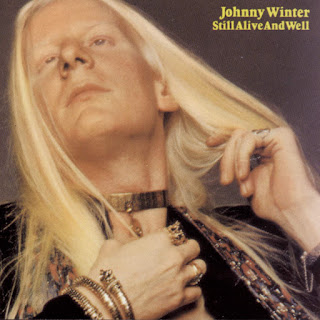
Still Alive & Well performed admirably in spite of Columbia Records’ bland advertising efforts. This ad for the album is little more than a photo outtake from the session that provided the cover artwork. Displaying, perhaps, Winter’s undeniable albino chic, it says little of the guitarist’s return after three years or his impressive and expanding musical palette. The album peaked at #22 on the Billboard magazine album chart anyway, Winter’s fans obviously excited about the guitarist’s much-anticipated return.

Tuesday, March 31, 2015

Muddy Waters & Friends Jam In Chicago (circa 1974)

Soundstage: Blues Summit In Chicago, 1974 DVD
Thirty-plus years after his death, the great Muddy Waters remains the undisputed King of Chicago Blues. Sure, Buddy Guy may be his heir apparent, but with a wealth of Waters’ back catalog CDs and DVDs remaining in print for new listeners to discover, and with new treasures from the archive trickling out each year, it’s going to be hard – if not impossible – for anybody to claim Waters’ throne anytime soon…

Legacy Recording will be adding another priceless gem to the Waters’ treasure chest on April 21st, 2015 when they reissue Soundstage: Blues Summit In Chicago, 1974 on DVD for the very first time. Credited to “Muddy Waters and Friends,” the DVD documents a July 1964 concert by Waters and a few friends that would be broadcast as the first episode of Soundstage, a beloved live concert series that was broadcast by PBS stations around the country for 13 seasons during the late 1970s and early-to-mid-1980s (and was resurrected for more episodes in the early ‘00s).

Waters by himself is a potent onstage presence, especially with a band at the time that included talents like guitarists Bob Margolin and Luther “Snake Boy” Johnson, bassist Calvin “Fuzz” Jones, pianist Pinetop Perkins, and drummer Willie “Big Eyes” Smith. Among the heavy “friends” appearing with Waters are fellow Chicago blues giants Koko Taylor and Willie Dixon; guitarists Michael Bloomfield, Nick Gravenites, and Johnny Winter; former Waters’ band harp player (and solo star) Junior Wells; and pianist Dr. John, among others. Together, these storied musicians put on a hell of a show (the full DVD tracklist can be found below).   

“This first edition of our Soundstage series definitely stands the test of time,” says Soundstage producer Ken Ehrlich in a press release for the DVD. “The same greatness that these blues legends like Muddy Waters, Willie Dixon, Junior Wells and Koko Taylor showed in this iconic gathering of blues greats continues to influence current generations of blues players and fans. The only difference is that now, 40 years later, the other artists on the show like Johnny Winter, Mike Bloomfield, Dr. John and Buddy Miles have now achieved similar legendary status as those first generation blues artists they came to honor back in 1974.”

Soundstage: Blues Summit In Chicago, 1974 tracklisting:

Muddy Waters – “Blow Wind Blow”
Muddy Waters – “Long Distance Call”
Junior Wells & Nick Gravenites – “Messin’ With The Kid”
Junior Wells – “Stop Breaking Down”
Muddy Waters –  “Mannish Boy”
Willie Dixon & Koko Taylor – “Wang Dang Doodle”
Johnny Winter – “Walking Through The Park”
Muddy Waters & Willie Dixon – “Hootchie Kootchie Man”
Dr. John – “Sugar Sweet”
Muddy Waters – “Got My Mojo Workin’”

Buy the DVD from Amazon.com: Muddy Waters and Friends' Soundstage: Blues Summit Chicago 1974

Wednesday, March 4, 2015

Alligator Records Announces Johnny Winter Record Store Day LP!

Johnny Winter’s It’s My Life, Baby – The Best of the Alligator Records Years
As I write, Record Store Day 2015 is slightly more than six weeks away. Collectors are taking out home improvement loans (‘cause new music does improve your home, doesn’t it?) and plotting strategies to acquire those rare RSD releases they covet, while fans of individual bands and artists are hoping that their musical idol will participate in RSD with some lil’ bit of vinyl memorabilia, whether it be EP or LP, or even a bitchin’ 7” single (with picture sleeve, of course)…

Various labels’ plans for Record Store Day are beginning to trickle out in advance of the event, and one of the first to go on the Reverend’s list is Johnny Winter’s It’s My Life, Baby – The Best of the Alligator Records Years. Winter released three superb albums for the Alligator Records label during the mid-1980s, and the esteemed blues label has put together an eight-track compilation of the best songs from those albums, pressed onto glorious 180-gram vinyl and including a download card for the album.

After leaving the CBS/Sony associated labels that he’d spent better than a decade recording for, Winter signed with Alligator after a hiatus of four years so that he could play the blues music he loved without the inflated commercial expectations he’d experience by again enlisting with a major label. His first album for the label was 1984’s Guitar Slinger, widely considered to be one of the blues-rock guitarist’s best efforts; the album also earned Winter his first Grammy™ nomination. A year later, Winter followed with Serious Business, which garnered a second Grammy™ nomination for the guitarist and charted even higher than its predecessor.

The last of Winter’s trio of albums for Alligator was 3rd Degree. Released in 1986, the album reunited the guitarist with his original rhythm section of bassist Tommy Shannon and drummer ‘Uncle’ John Turner, and also featured a guest appearance by New Orleans music legend Dr. John (a/k/a Mac Rebennack). Due to Winter’s stellar reputation, all three of his Alligator Records releases received airplay on rock ‘n’ roll radio, and his video for “Don’t Take Advantage of Me” (from Guitar Slinger) was in rotation on MTV for over six months.

Winter left Alligator when his management coaxed him into returning to a more commercial blues-rock sound; he’d record a single album for MCA Records (with synths?!) before signing with Virgin Records subsidiary Point Blank for a handful of records. Winter continued to tour and record until his death in July 2014. Winter stayed true to the blues throughout, and It’s My Life, Baby reflects some of the best music the guitarist made throughout his lengthy and acclaimed career.