Showing posts with label New York Dolls. Show all posts

Sunday, March 2, 2025

Remembering David Johansen, R.I.P.

David Johansen
Former New York Dolls front man and solo artist David Johansen passed away this week after a lengthy battle with various health issues. “David Johansen passed away peacefully at home, holding the hands of his wife Mara Hennessey and daughter Leah, in the sunlight surrounded by music and flowers,” his family posted on the Sweet Relief fundraising website. “After a decade of profoundly compromised health he died of natural causes at the age of 75.” A unique and charismatic performer, Johansen never quite received the commercial success his music would seem to demand, but his star continues to shine as young generation of rockers discover the infectious and energetic sound of the first two New York Dolls albums…

Born in Staten Island in 1950, Johansen was, in many ways, the quintessential New Yorker – brash, bold, and loud while performing, but with a reputation as friendly and engaging off stage. Johansen began performing in the late ‘60s, singing with a local band called the Vagabond Missionaries. Johansen later hooked up with guitarists Johnny Thunders and Rick Rivets, bassist Arthur Kane, and drummer Billy Murcia, forming the New York Dolls in 1971. Rivets was later replaced by Sylvain Sylvain, going on to form proto-punk outfit the Brats. The band members weren’t necessarily serious about the Dolls, but after developing a unique musical vision that placed them firmly on the ramshackle side of the Rolling Stones, the Dolls began to developing a loyal following via raucous performances at Max’s Kansas City and the Mercer Arts Center.

The New York Dolls


The New York Dolls
The Dolls were dismissed by record labels at the time as a less-talented version of the Stones; the band’s frequent onstage vulgarity and tongue-in-cheek penchant for cross-dressing ruffles some corporate feathers, to be sure. Critics first noticed the Dolls after they opened for the Faces in England in 1972, the band subsequently touring the U.K. Tragically, Murcia overdosed on alcohol and Quaaludes during the tour, the Dolls subsequently bringing in drummer Jerry Nolan, who would later join Thunders in the Heartbreakers. Thanks to support from rock critic and Mercury Records A&R man Paul Nelson, the band received a label deal and it was arranged for musician/producer Todd Rundgren to produce the band’s self-titled 1973 debut.

With original songs penned mostly by Johansen with either Thunders or Sylvain, tunes like “Personality Crisis,” “Trash,” and “Jet Boy” created a blueprint for punk rock to follow. A lively cover of Bo Diddley’s “Pills” was provided a similar proto-punk makeover. Given a meager budget to work with, the Dolls nevertheless delivered a rock ‘n’ roll classic; The New York Dolls album was recorded for a mere $17,000 (the bulk of which was probably Rundgren’s fee). The album was deemed a commercial failure, though, peaking at #116 on the Billboard album chart, but its econo-production costs meant that it likely still made money on its 100,000+ sales. Although it has been reported that the album has only moved around 500k copies to date, it’s a steady-seller year-to-year and has since become regarded as one of the most important debut albums of all time, influencing bands on both sides of the ocean like Kiss, the Ramones, the Smiths, the Sex Pistols, the Replacements, and the Damned among many others. Mercury Records must have seen some light at the end of the tunnel, as they approved a second Dolls album.

Recorded and released in 1974 with veteran producer George “Shadow” Morton (The Shangri-Las, Janis Ian, Vanilla Fudge) at the helm, Too Much Too Soon offered a mix of band originals (“Babylon,” “Who Are the Mystery Girls?,” “Chatterbox”) largely written by Johansen and Thunders, and inspired R&B covers like “Stranded In the Jungle,” “Don’t Start Me Talkin’,” and “(There’s Gonna Be A) Showdown.” Although Morton’s polished production smoothed out the band’s raw edges somewhat, critics like Dave Marsh and Robert Christgau were firmly in the Dolls’ corner; sadly, Too Much Too Soon sold less than 100k copies, but likely turned a profit as Mercury had the band lined up to record a third album. A U.S. tour in support of Too Much Too Soon turned into a disaster, with cancelled shows and increased drug and alcohol use by the band creating tensions. Subsequently dropped by Mercury, Thunders and Nolan left in 1975 to form the Heartbreakers, with Johansen and Sylvain carrying on for another year with substitute players before breaking up.

David Johansen In Style


Johansen launched his solo career with a self-titled debut album in 1978; produced by NYC ‘guy at all the best parties’ Richard Robinson along with Johansen, it was released by the CBS-distributed Blue Sky Records label associated with blues-rock guitarist Johnny Winter and his manager, Manhattan club owner Steve Paul. The album included musical guests like Dolls’ guitarist Sylvain, Aerosmith guitarist Joe Perry, singer Nona Hendryx, violinist Scarlet Rivera, and Rascals’ keyboardist Felix Cavaliere. Johansen’s critically-acclaimed sophomore effort, In Style, followed a year later; produced by former Bowie guitarist Mick Ronson, it featured guest musicians like Ian Hunter (Mott the Hoople) and Dan Hartman (Edgar Winter Group) as well as Johansen’s old friend Sylvain.

In Style didn’t sell particularly well, but the album yielded lasting songs like “Melody,” “Swaheto Woman,” and “She Knew She was Falling in Love.” Given another bite of the apple by Blue Sky, Johansen recruited South African musician Blondie Chaplin (who had played with the Beach Boys and Rick Danko of the Band) to produce Here Comes the Night. Released in 1981, Here Comes the Night saw Johansen working closely with Chaplin to craft a more commercial sound but, when the album peaked at #180 on the Billboard chart, Blue Sky cut him loose after releasing Live It Up in 1982. The energetic and entertaining live set displayed a portion of Johansen’s enormous onstage charisma on original songs like “Frenchette,” “Melody,” “Funky But Chic” and the Dolls’ tracks “Personality Crisis” and “Stranded In the Jungle,” the album scoring a Top 30 hit with a medley of the Animals’ “We Gotta Get Out of this Place,” “Don’t Bring Me Down,” and “It’s My Life.”

Buster Pointdexter
Johansen signed with Passport Records for 1984’s overlooked Sweet Revenge LP which, like virtually all of the singer’s previous albums, received widespread critical acclaim along with modest sales. Johansen had already cooked up his third act, however – the pseudonymous ‘Buster Poindexter’ – a sort of R&B revue bandleader backed by the Uptown Horns. Performing an upbeat mix of pop, swing, jump blues, and novelty tunes, Johansen scored a Top 40 hit LP with 1987’s Buster Poindexter and its single “Hot Hot Hot.” Johansen appeared frequently on Saturday Night Live as part of the house band, and a video for “Hot Hot Hot” received heavy airplay on the MTV cable network. Johansen released four albums under the ‘Buster Poindexter’ persona circa 1987-1997, each exploring a different musical style.

Coaxed by longtime Dolls fan Morrissey of the Smiths to reunite for the 2004 Meltdown Festival in London, the performance by the surviving members of the band – Johansen, Sylvain, and Kane – led to a live album and DVD. Following Kane’s unexpected death of leukemia a few weeks after the festival, Johansen and Sylvain recruited guitarist Steve Conte, bassist Sami Yaffa (Hanoi Rocks), drummer Brian Delaney, and keyboardist Brian Koonin to record the 2006 album One Day It Will Please Us To Remember Even This, which was followed by several festival appearances. This Dolls line-up also recorded 2009’s Cause I Sez So; 2011’s Dancing Backwards In High Heels proved to be the band’s swansong.

David Johansen & the Harry Smiths


David Johansen & the Harry Smiths
Johansen channeled his longstanding love of blues and folk music with the Harry Smiths, a band formed with multi-instrumentalists Brian Koonin, Larry Saltzman, and Kermit Driscoll along with percussionist Joey Baron. Named after music historian Harry Smith, whose 1952 compilation of 1920s and ‘30s country and blues music, The Anthology of American Folk Music, inspired many an aspiring musician in the 1950s and ‘60s, Johansen and the Harry Smiths released two albums – 2000’s David Johansen & the Harry Smiths and 2002’s Shaker – comprised of whip-smart covers of timeless tunes by legends like Lightnin’ Hopkins, Furry Lewis, Son House, Mississippi John Hurt, Sonny Boy Williams, songs that Johansen’s aging voice was more than world-weary enough to sing convincingly.

Over the years, Johansen also dabbled in acting, his expressive face and over-the-top personality leading to roles in the 1988 Bill Murray film Scrooged (as the ‘Ghost of Christmas Past’), Mr. Nanny, Freejack, and Car 54, Where Are You? as well as TV shows like Miami Vice, Oz, and Bill Murray’s Netflix special A Very Murray Christmas. Award-winning filmmaker (and fellow New Yorker) Martin Scorsese directed a documentary film on Johansen for the Showtime cable network, Personality Crisis: One Night Only, which was released in April 2023. Johansen also contributed songs to several compilation albums over the years, including 1984’s A Diamond Hidden In the Mouth of A Corpse, 1994’s September Songs – The Music of Kurt Weill, 2003’s Stormy Weather: The Music of Harold Arlen, and 2005’s Jim White Presents Music From Searching For the Wrong-Eyed Jesus. He also hosted a weekly show for Sirius satellite radio called David Johansen’s Mansion of Fun.

After reading about the New York Dolls in Creem magazine – where they were honored with awards as both the “Best New Group of the Year” and “Worst New Group of the Year” in a reader’s poll – I quickly latched onto the first Dolls LP. While in high school, I’d be invited to parties at a former girlfriend’s house, knowing that I’d show up with a stack of records and, plied with a six-pack of beer, would gladly play DJ all night. As my classmates paired up and disappeared up a hill for extracurricular activities, I’d slap on the New York Dolls album…I got all the way through side one once before somebody came down the hill and demanded that I change the record to something like Billy Joel. I remained a steadfast Dolls fan ever since, and I’ve seen initial dismissal of the New York Dolls as low-rent clones of the Rolling Stones give way to acceptance as one of the most groundbreaking bands in rock ‘n’ roll history.

David Johansen may never have gotten rich, or even received anything more than a modicum of commercial success, but his work with the Dolls and his underrated solo albums continue to find new converts to this day. His music has influenced a heck of a lot of people, which is more than you can say about many of those that came before and after the Dolls. Johansen is a legend and his death makes the world of rock music far less interesting. R.I.P.

Friday, September 20, 2024

Archive Review: Various Artists - CBGB’s and the Birth of Punk (2002)

CBGB’s and the Birth of Punk
A fleabit Bowery dive every bit as filthy as its reputation makes it out to be, CBGB’s has earned its place in history as the nursery school of punk rock. The Reverend made his pilgrimage to this rock ‘n’ roll mecca back in ‘82, hitting the club with some friends after a long night drinking pitchers of Rolling Rock at the Village’s Rooftop Tavern with the ghost of Jackson Pollock. The bands were largely unknown (tho’ the Dancin’ Hoods did subsequently make a couple good albums), the beer was warm and CBGB’s bathroom was worse than any Southern truckstop I’d ever thrown up in.

To top it all off, I left behind the umbrella I had bought on the street from a Korean grocer earlier that day. ‘Course, by 1982, Joey, Stiv, Debbie and Richard had shuffled off to greener pastures and even Lester had left this mortal coil. CBGB’s was still the coolest place on the planet to be at that moment and if we experienced even a little of the club’s famed vibe, it was worth the sojourn.   
   

CBGB’s and the Birth of Punk


The club’s legend, of course, is not based on its ambiance (dark and smelly) or even its shithole bathrooms (proudly pictured on a CBGB’s T-shirt available on the club’s web site). The many talented bands that graced the stage at CBGB’s in the early-to-late seventies is what earned the club and its proprietor Hilly Krystal a place in rock ‘n’ roll history. As outlined in British music journalist Johnny Chandler’s liner notes for CBGB’s and the Birth of U.S. Punk, Krystal originally opened the club in 1973 in New York’s run-down Bowery district as a venue for “Country, Bluegrass and Blues” (CBGB). Crowds weren’t exactly queuing up to buy tickets for the club so when Television’s Tom Verlaine and Richard Hell approached Krystal in early ‘74 about becoming a sort of house band, playing the same night every week, he agreed. Soon folks like the Ramones, Debbie Harry, and Patti Smith were hanging out, performing, and creating a music scene that would have worldwide impact. Krystal was never afraid to book unsigned bands, thus opening the club up to the best and the brightest talents from across the country.

Compiled by Chandler, the U.K. CD release of CBGB’s and the Birth of U.S. Punk offers up a dozen and a half tracks, ranging from important punk antecedents like the Velvet Underground and the Stooges to 1960s-era garage bands like the Seeds and the Sonics. A fair representation of homegrown N.Y.C. talent is included, such as the New York Dolls (who frequently performed at the Mercer rather than CBGB), Suicide, Johnny Thunders & the Heartbreakers, and the Ramones. Some of the big names associated with the club are included, such as Blondie, the Dead Boys, and Television, represented here by an unreleased live version of “Friction” actually recorded in New Jersey.

Licensing difficulties obviously influenced the track selection, since there’s nothing here from the Talking Heads or Patti Smith, both important CBGB’s attractions back in the day. Cleveland’s Electric Eels and Pere Ubu merit inclusion, both bands having made an important trek to New York to perform at the club. Chandler’s odd choice of a Dead Kennedys’ song – certainly better suited to a West Coast punk rock compilation – stands out quite starkly. CBGB’s and the Birth of U.S. Punk is meant to provide an audio history of both the NYC scene and its impact on what would later become known as “punk rock.” Chandler has done a fairly admirable job in assembling the compilation, tracing the evolution of punk’s first generation from its ‘60s roots to its inevitable early 1980s conclusion as it crashed-and-burned under the weight of its own ambitions.

Touchstones In Rock ‘n’ Roll History


However, do we really a document such as this? Of the artists included on the CD that actually haunted the CBGB’s stage at some time, only a handful of them made it into the 1980s intact, and only the Ramones and Pere Ubu stretched a career into the ‘90s. Although nearly every band featured here had some small degree of influence on modern music, most are merely the favorites of aging and overwrought critics and record collectors with too much time on their hands. Likewise, the dubious influence of bands such as the Velvet Underground, the New York Dolls, the 13th Floor Elevators, and Television is overstated – none experienced a significant enough commercial presence to influence listeners beyond their inner circle. They are touchstones in rock ‘n’ roll history – more people are familiar with their names than with their music.   

Ask the average fan of, say, Down By Law or Pennywise about CBGB’s and they might mumble something about the Ramones and not much else. Although still offering live bands seven days a week, I’d bet the farm that Krystal makes more money hawking CBGB’s T-shirts online than he does from the club’s take at the door. CBGB is a symbol of a long-passed era, an aberration in time rather than a thriving creative venue. The legendary Cantrell’s club in Nashville provides as much the same sort of looking glass into the past for Music City scenesters. The club featured national acts like the Replacements alongside local talents like Jason & the Scorchers and the White Animals during the 1980s. In both cases, the long-term influence of either CBGB or Cantrell’s on their city’s local music scenes is inconsequential beyond their status as brief historical curiosities.  

The Reverend’s Bottom Line


The British fascination with the roots of punk (or sixties garage rock, for that matter) is admirable, especially considering American fast-food culture that ignores the past in favor of a bright, shining present. There comes a time, however, when we have to stop obsessing with the past. I like the New York Dolls, the Stooges, Television, and the Ramones every bit as much as the next fellow, but it is unlikely that yet another compilation featuring these artists is going to change the world, much less attract many new listeners.

CBGB’s, the club, and the punk rock era that it ushered in has been documented to death. Being the consummate record geek, the Reverend bought a copy of CBGB’s and the Birth of U.S. Punk just like many of you. However, from my seat, the compilation smells like a rotting corpse, Chandler’s erstwhile efforts akin to necrophilia. Your money is better spent on a White Stripes CD or perhaps a Ramones reissue. (Ocho Records, released April 8th, 2002)

Review originally published by Alt.Culture.Guide™

Friday, December 22, 2023

The Dirtiest Dozen: Punk's Most Important Bands (2023)

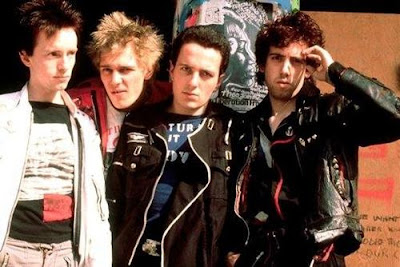
The Clash
The Clash: The Only Band That Matters

In these troubled days and times, the first lesson learned by young music journalists is how to write lists. It doesn’t matter what you’re rating – albums, musicians, record labels – as long as it’s guaranteed to piss off half your readership and confirm the supremely good taste of the other half. Most importantly, lists of, say, “the top two thousand chord-crunching guitar gods” are certain to grab eyeballs, which placates bored and jaded advertisers who might take their filthy lucre elsewhere...

The Reverend certainly isn’t above such hijinks and, during my six-year-plus stint as the About.com “Blues Expert” circa 2008-2014, I was required to create numerous lists and slideshows (‘memba them?), often utilizing corporate-approved, SEO-friendly “key words” like “lacrosse,” “Obama,” or “head cheese,” largely because the bosses had already paid big bucks for some dodgy roster of Google-guaranteed dictionary entries from some grifty company touting their ninja-like search-engine prowess.

In this spirit, I found inspiration in a recent Facebook discussion in which I was informed by one tender young soul that she was 64 years old and was “there” and, therefore, she knew more about the subject than I – a rockcrit who has been writing about punk-rock since it was in diapers – and that, contrary to my opinion, the Dead Kennedys weren’t a punk band, dammit! That debatable position got my cerebellum a quivering, so I figured that I’d scribble my own list of the twelve most important punk-rock bands.

As much as I love pre-punk rockers like the Dictators, the Flamin’ Groovies, and the New York Dolls, I haven’t included them below no matter how significant their influence on the genre may have been. If the list seems tilted towards American bands, that’s my experience, and although Britania ruled the waves from 1976-78, by ’79 the Yanks had clearly picked up the punk-rock torch and ran with it. One last caveat – your list is probably different, so you can bitch at me in the comments below…  

Johnny Thunder's So Alone

Godfather of Punk: Johnny Thunders
An exception, of sorts, to my ‘no NY Dolls’ comment above, Thunders’ solo career was clearly a major influence on punk and other raucous-based sleaze-rock lifeforms. After the Dolls, the guitarist formed the Heartbreakers, who shipped off to Merry Ole England to take part of the “Anarchy Tour” with the Clash and the Damned. The Heartbreakers’ only LP, 1977’s L.A.M.F., remains a punk-rock textbook to this day while Thunders’ proper solo debut, 1978’s So Alone, bridged the gap between old-school rock and the new wave. Recorded with Heartbreakers Walter Lure and Billy Rath and with studio contributors like Phil Lynott (Thin Lizzy), Steve Marriott (Humble Pie), Chrissie Hynde (The Pretenders), Peter Perrett (the Only Ones), and Steve Jones and Paul Cook (Sex Pistols), So Alone is a bona fide punk classic and Thunder’s best album.      
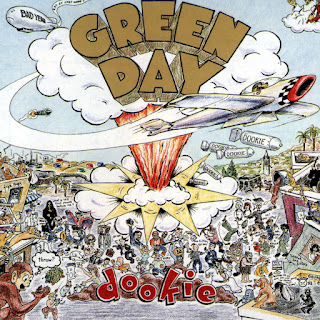
Green Day's Dookie

12. Green Day
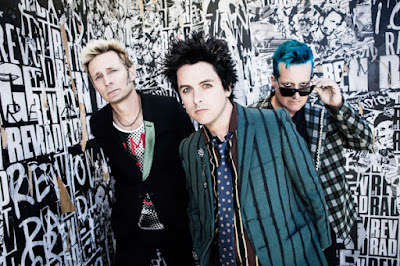
A lot of people might argue about Green Day being included on this list, but I’d contend that no single band did more to revive a moribund mid-‘90s punk-rock scene than the trio of Billie Joe Armstrong, Mike Dirnt, and Tré Cool. The Bay area band made its bones playing 924 Gilman and coming up through the indie label ranks but when their sophomore album, Kerplunk, sold better than 50k copies for Lookout! Records, the major labels took notice.

Green Day’s Reprise Records debut, Dookie, has sold better than 20 million copies worldwide to date and opened the door for bands like Bad Religion, Rancid, NoFX, Descendents, and Pennywise to walk through and achieve varying levels of success. Subsequent multi-Platinum™ albums like Insomniac, Nimrod, and the classic American Idiot have seen Green Day evolve beyond their punk roots to become a solid rock ‘n’ roll outfit. In the meantime, they are arguably the best-selling punk band of all time.  
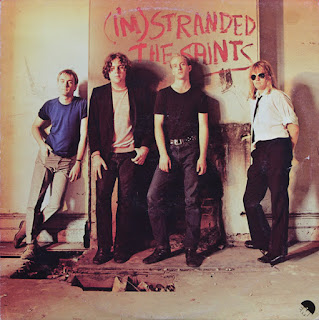
The Saints' (I'm) Stranded

11. The Saints
Although Australia’s Radio Birdman could easily be included in this position, their Motor City-styled musical mayhem didn’t reach U.S. audiences until Deniz Tek and Rob Younger had moved onto other dalliances. Still, Radios Appear is a great rock ‘n’ roll album. The Saints, on the other hand, successfully made the leap from the minor league Australian punk scene to the bright lights of London and, over the course of three critically-acclaimed albums, forged a unique identity based on a faster-louder sound fueled by chainsaw guitars and relentless tempos. Formed in 1973 by singer Chris Bailey, guitarist Ed Kuepper, and drummer Ivor Hay, they released their classic 1976 single “(I’m) Stranded” before the Damned or the Sex Pistols could get their rage cemented onto vinyl, and their 1977 single “This Perfect Day” hit #34 on the U.K. charts.

Albums like 1977’s (I’m) Stranded and 1978’s Eternally Yours (impressively produced by Bailey and Kuepper rather than some label hack) saw the band pursuing its own muse, refusing to become EMI’s idea of a cookie-cutter punk band. The band’s critically-acclaimed but commercially-unsuccessful third album, Prehistoric Sounds, further expanded the Saints’ musical vista, but after they were dropped by EMI, Kuepper left the band to Bailey, who carried on with new musicians for a handful of albums throughout the 1980s that failed to capture their early magic.   

Bad Religion's Stranger Than Fiction

10. Bad Religion
Although they were contemporaries of similar hardcore innovators as Minor Threat, the Germs, and Black Flag, Bad Religion didn’t really infect the rock mainstream with their erudite, literary lyrics and machine-gun instrumentation until the 1990s punk-rock revival. By the time that Bad Religion took their sound to the major leagues with 1994’s excellent Stranger Than Fiction, they’d already released seven albums through their own indie Epitaph Records imprint, from 1982’s How Could Hell Be Any Worse? through 1993’s Recipe For Hate. Although not as notorious or controversial as many of their contemporaries, Bad Religion’s sly social commentary and uncompromising political stance had a profound influence on bands like Green Day, Rise Against, Anti-Flag, and the Offspring.

When Bad Religion signed with Atlantic Records for Stranger Than Fiction, a lot of old fans cried “sell-out,” but I defy the average punter to legitimately argue that a performance like “21st Century (Digital Boy)” or “Better Off Dead” is weaker, musically or lyrically than, say, “Modern Man” or “American Jesus.” The Atlantic association resulted in four solid albums that inched their way into the upper reaches of the album chart and, as they were afforded a friendlier production budget, helped bring a score of new fans to the band’s later Epitaph releases like The Dissent of Man (2010) or True North (which actually charted Top 20 in 2013!). Additionally, Epitaph’s release of albums from bands like Rancid, the Offspring, Hot Water Music, and Pennywise helped fuel the flames of the ‘90s punk revival.      

The Germs' (GI)

9. The Germs
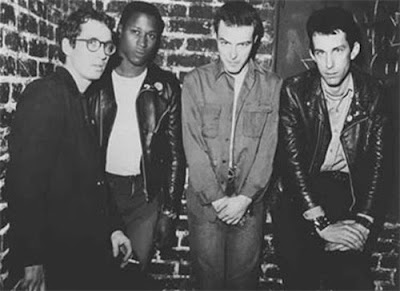
I could have just as easily included Richard Hell & the Voidoids at number eight, the band’s lone album, Blank Generation, providing both a cultural identity (“we’re the blank generation”) as well as a personal style (safety pins, etc) for punk-rock to anchor itself. But the Germs, equally-significant in their influence, had one thing that Mr. Myers, et al lacked – mythology. Specifically, that of singer Darby Crash (née Jan Paul Beahm), whose untimely death insured the short-lived band’s legacy. Crash wasn’t the first rocker to “live fast and die young” – Jim, Jimi, and Janis beat him to it by the better part of a decade – but he was one of the youngest, OD’ing on heroin at the barely-legal age of 22 years.

Still, Crash and the Germs rolled and roared through the nascent L.A. punk scene like a runaway bulldozer. Formed in 1976 by school chums Crash and guitarist Pat Smear, they added bassist Lorna Doom and drummer Don Bolles; this is the line-up that recorded the Joan Jett-produced 1979 album (GI) which, in and of itself, was as impressive a slab of white heat as any other U.S. punk band had released at the time. It was the Germs’ appearance in director Penelope Spheeris’s The Decline of Western Civilization documentary film that expanded the band’s reach beyond the insular L.A. punk scene, however, carrying Darby’s self-destructive antics to a welcoming audience of junior nihilists across the fruited plains. A 2007 biopic about the Germs, What We Do Is Secret, along with a tour by the re-formed band (with actor Shane West, who played Crash in the movie, on the microphone), brought the Germs’ high-voltage sound to the Warped Tour generation.  
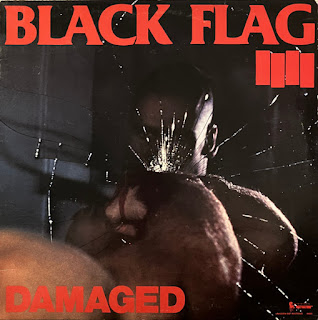
Black Flag's Damaged

8. Black Flag
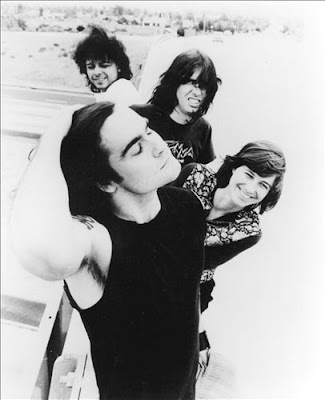
The only constant in Black Flag is guitarist and songwriter Greg Ginn, who has helmed his jolly band of karmic misfits since the band’s forming in 1976 in Hermosa Beach CA. One of the first hardcore punk outfits in the U.S., Black Flag helped define the hardcore sound, then discarded it just as quickly when Ginn’s musical obsessions took him far afield into heavy metal and free jazz-styled instrumental wank-offs. Still, Ginn’s ever-changing Black Flag roster had an indelible influence on punk-rock not only musically, but visually through the debauched cover art and show flyers created by Raymond Pettibon (Ginn’s brother) and through the band’s independent SST Records label, which released influential (and entertaining) early albums by bands like the Meat Puppets, Dinosaur Jr, the Minutemen, Sonic Youth, Bad Brains, and Hüsker Dü, among others.

There were several distinct eras for Black Flag, but two were particularly significant to the band’s legacy and importance – the “Keith Morris era,” circa 1976-79 and the “Henry Rollins era,” from 1981-86. Morris only appeared on the band’s Nervous Breakdown EP and, subsequently, the Everything Went Black and The First Four Years compilation LPs before jetting from the Flag to form the Circle Jerks and, more recently, Off! By contrast, Rollins appeared on six of the band’s seven full-length studio albums, including classics like 1981’s Damaged and 1984’s My War, while his hyper-intense on-stage persona turbocharged the band’s sound. An appearance in The Decline of Western Civilization catapulted Black Flag beyond the confines of SoCal, carrying their infamy around the world. Much like the Sex Pistols in the U.K., Black Flag directly inspired the creation of bands like Slayer, Tool, and Nirvana here in the states.

Minor Threat

7. Minor Threat / Fugazi
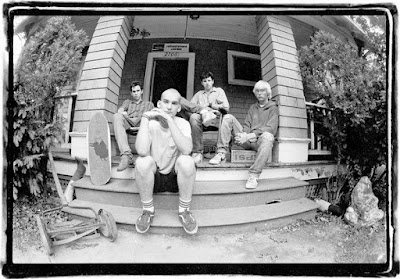
What the Dead Kennedys were to west coast hardcore, Minor Threat were to the eastern seaboard. Formed in 1980 by singer Ian MacKaye, drummer Jeff Nelson, bassist/guitarist Brian Baker, and guitarist Lyle Preslar, Minor Threat were only together for around three years, releasing a handful of 45s, a pair of EPs, and a single album, Out of Step, which defined “straight edge” punk for a generation to follow. More importantly, the band was at the forefront of the D.I.Y. indie rock scene, the Dischord Records label founded by MacKaye and Nelson keeping records cheap and gradually expanding beyond releasing hardcore punk records to include all styles of underground rock.

When Minor Threat ran its course, MacKaye formed post-punk outfit Fugazi with guitarist Guy Picciotto, bassist Joe Lally, and drummer Brendan Canty, the band releasing six influential albums of often-experimental rock that expanded the possibilities of hardcore punk into new creative territory. Fugazi were touring missionaries for the D.I.Y. lifestyle, playing over 1,000 shows in all 50 U.S. states and overseas, and with Dischord Records they walked it like they talked it, releasing important and influential albums by bands like Government Issue, Rites of Spring, Dag Nasty, and Jawbox.       

The Buzzcocks' Another Music In A Different Kitchen

6. The Buzzcocks
Admittedly, the Buzzcocks’ enormous influence was initially limited to the U.K. but, as the band’s timeless and effervescent singles like “Orgasm Addict,” “What Do I Get?,” and “Ever Fallen In Love (With Somebody You Shouldn’t’ve)” meandered across the ocean as import vinyl, they picked up numerous fans stateside. Formed in 1976 by Pete Shelley and Howard Devoto as a musical outlet for their shared Velvet Underground obsession, the pair found inspiration in the Sex Pistols and, before long, were opening for the controversial band and rapidly building a following of their own. Fusing power-pop roots with the energy and zealousness of punk-rock, the band racked up eight chart singles in the U.K. through 1979. Devoto split shortly after “Orgasm Addict,” eventually forming the art-punk outfit Magazine. 

After Devoto’s departure, talented bassist Steve Diggle switched over to guitar and shared songwriting duties with Shelley, which brought a diversity to their sound that led to the aforementioned string of hit singles. Meanwhile, in the U.S., listeners primed by the import 45s eagerly anticipated albums like Another Music In A Different Kitchen and Love Bites (both 1978) and A Different Kind of Tension (1979), which would all later be reissued domestically by I.R.S. Records, which had released the Singles Going Steady compilation to some fanfare in 1980. The band underwent its first of many break-ups in 1980, reuniting several times throughout the years and, after Shelley’s unexpected death in 2018, Diggle carried on the Buzzcocks name, acquitting himself nicely with 2022’s Sonics In the Soul album. A Buzzcocks influence can be heard in bands like the Smiths, Radiohead, and Superchunk, among many others.     
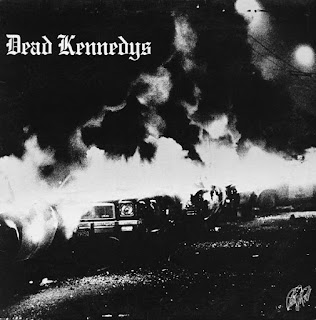
Dead Kennedys' Fresh Fruit For Rotting Vegetables

5. The Dead Kennedys
Jon Young, writing for The Trouser Press Record Guide (4th edition, 1991), said that “in the Dead Kennedys, America finally produced a powerful, self-righteously moral band to match the fury of the Sex Pistols,” considering them “as prime pioneers of American hardcore, the Kennedys have been influential, not only by setting a style, sensibility and commendable standards, but with their productive Alternative Tentacles label and active support for grassroots rock activity.” Featuring the manic vocals and socially-charged lyrics of frontman Jello Biafra, the DKs – guitarist East Bay Ray, bassist Klaus Floride, and drummer D.H. Peligro – skewered American traditions and ethics with albums like 1980’s Fresh Fruit For Rotting Vegetables and 1985’s Frankenchrist.

The DKs weren’t without controversy, not only for their incendiary name but also for an uncompromisingly leftist political stance. The turmoil embroiling the band culminated in a 1986 obscenity trial that eventually saw the trumped-up charges dropped, but censorship had already taken its toll and, along with the band’s collective disillusionment with an increasingly-violent hardcore scene, led to their break-up. Although the other DKs got back together and moved on without Biafra as some sort of twisted covers band, Biafra continues to support underground and left-of-the-dial styled bands through Alternative Tentacles. The band shot across the punk rock firmament like a comet, influencing followers like Bad Religion, Green Day, the Minutemen, and Rage Against the Machine.
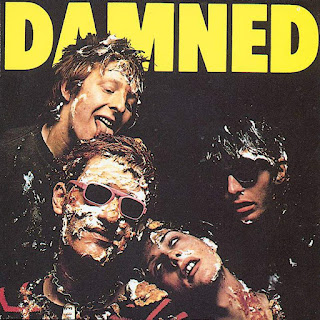
The Damned's Damned Damned Damned

4. The Damned
English punk rockers the Damned often don’t get the credit they deserve for their reach, innovation, and influence. They were the first U.K. punk band to release a single (1976’s blistering “New Rose”) and album (1977’s Nick Lowe-produced Damned Damned Damned), and they were the first to brave touring the U.S., sailing west across the Atlantic months ahead of the Pistols or the Clash. Although their second album, Music For Pleasure, was unfairly slagged by hometown critics, the Nick Mason (Pink Floyd) produced psych-punk LP has since received kinder reappraisal.

Subsequent album releases like 1979’s Machine Gun Etiquette (described as “T-Rex meets Motörhead”), 1980’s The Black Album, and 1985’s Phantasmagoria added elements of Goth and heavy metal to the band’s pioneering punk sound. The Damned are still rocking to this day, their 2023 album Darkadelic helping corrupt an entirely new generation of young punks. 
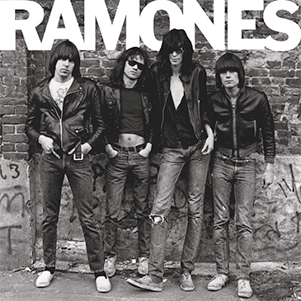
The Ramones
 

3. The Ramones
Forming in 1974, the four “brothers” from Forest Hills, Queens NYC – Joey, Johnny, Dee Dee, and Tommy – would have a profound effect on the development of punk-rock in the U.S. Pursuing a stripped-down, no-frills style of guitar-rock that incorporated elements of pop and psychedelic-rock, the band’s fast ‘n’ loud delivery, Joey’s original vocals, and their junk culture lyrics quickly earned the Ramones a loyal local following circa 1975. Bridging the gap between proto-punkers like the Dictators and the New York Dolls and first-generation punk-rock outfits like the Dead Boys, Patti Smith, and Richard Hell & the Voidoids, the Ramones brought a unique sound and energy to rock ‘n’ roll that influenced scores of bands to follow. Signing with Sire Records, the Ramones notoriously recorded their self-titled 1976 album for a sparse budget of $6,400; the album would go on to sell hundreds of thousands of copies and eventually be certified for Gold™ Record status.

They would follow their critically-acclaimed debut with a pair of albums in ’77 – Leave Home and Rocket To Russia – which etched in stone the band’s reputation as punk pioneers. The total run time of those first three essential LPs was roughly 90-minutes which, with a total of 42 songs among them, worked out to slightly more than two minutes per song; the Ramones were clearly not working by the hour. Road To Ruin (1978) saw the band begin to expand their sound to incorporate guitar solos and pop melodies, and they worked with legendary producer Phil Spector for 1980’s underrated End of the Century. The band broke up in 1996 with fourteen studio albums under their belt that incorporated everything from punk and hard rock to pop and psychedelia. Influential far beyond their often-meager album sales, the Ramones left behind an undeniable legacy that influenced bands worldwide, from the Misfits, the Beastie Boys, Rancid, and Green Day stateside to the Clash, Sham 69, and the Damned in the U.K. and even Teenage Head in Canada and Shonen Knife in Japan.

Sex Pistols' Never Mind The Bollocks

2. Sex Pistols
It helps that the Sex Pistols’ legacy that they self-destructed after less than three years together, leaving the vultures to pick at the band’s decaying corpse for decades with scores of dodgy ‘odds ‘n’ sods’ and bootleg-quality live album releases. As for their single legit album, 1977’s Never Mind the Bollocks followed a trio of Top 10 U.K. hit singles – “God Save the Queen,” “Pretty Vacant,” and “Holidays In the Sun” – each seemingly more controversial than the previous.

The string played out through 1979 and the band’s demise, with non-LP singles like “No One Is Innocent,” “Something Else,” “Silly Thing,” and a cover of Eddie Cochran’s classic “C’mon Everybody” all charting Top 10. The Pistols directly inspired a generation of bands to follow, and we have Johnny Rotten and the gang to thank for the Buzzcocks, Siouxsie and the Banshees, Billy Idol, Joy Division, the Smiths, and many others. Outspoken, outrageous, and obscene, the Sex Pistols were a generational cultural phenomenon.

The Clash's London Calling

1. The Clash
“The Only Band That Matters” really was, the Clash following their own musical path for the better part of a decade, discarding the tiring cliches of British punk in favor of musical innovation that brought elements of reggae, funk, and rockabilly to their guitar-drenched and energetic sound. With roots in Britain’s pub-rock scene, the Clash were possibly the best band inspired by the Sex Pistols’ Sturm und Drang, and when Mick Jones and Joe Strummer were brought together, magic happened.

The band’s first two albums – 1977’s The Clash and 1978’s Give ‘Em Enough Rope – are critically-acclaimed, punk rock classics that crossed over to the pop charts, but their third, 1979’s London Calling, was a commercial blockbuster on both sides of the pond and the band’s U.S. breakthrough. The confusing and uneven three-disc Sandinista! (1980) was seen by many as a step backwards (it might have been better condensed to two LPs), but 1982’s Combat Rock –a Top 10 disc in both the U.K. and the U.S. – solidified the Clash’s position as the most important and influential bands from the “Class of ‘77” (the less said of Cut the Crap, the better…)     

Honorable Mention: The Avengers, Bad Brains, The Boomtown Rats, The Dead Boys, Richard Hell & the Voidoids, The Minutemen, The Misfits, Operation Ivy, Rancid, Stiff Little Fingers, X, and X-Ray Spex… 

The Sex Pistols
The Sex Pistols
 
Green Day
Green Day  

The Gems   
The Germs

The Dead Kennedys
The Dead Kennedys

Minor Threat
Minor Threat

Black Flag
Black Flag


Friday, April 12, 2019

Archive Review: The New York Dolls’ Live From Royal Festival Hall, 2004 (2004)

The New York Dolls’ Live From Royal Festival Hall, 2004
When I was a kid, say fourteen or fifteen, I read Creem magazine religiously. It was my cultural bible, the one single lifeline I had from the rural suburbs of Nashville to the entire world of music. Seldom did Dave Marsh, Lester Bangs, and friends steer me wrong, and thanks to these pioneers of rock criticism, I discovered bands like the Stooges, the Dictators, the MC5, the Flamin’ Groovies, and the New York Dolls.

The New York Dolls always had a special place in my heart, the band’s outrageous first album a constant companion after its release. In high school, friends would invite me to parties at Wendy J’s, knowing that if they left me with a six-pack and the stereo, that I would be the deejay. I’d keep the music playing while couples paired off and wandered up the hill behind Wendy’s house to make out, lulling them into complacency with a little Billy Joel or Aerosmith. Once I knew that they were, ahem...“busy”...I’d hit ‘em with the New York Dolls. One time I made it through the entirety of side one before somebody came down the hill to request a less boisterous choice in music.

The New York Dolls’ Live From Royal Festival Hall, 2004


Unfortunately, two albums into their brief career, the Dolls started to fall apart. First guitarist Johnny Thunders left the fold, followed soon thereafter by drummer Jerry Nolan, the two forming the Heartbreakers. Dolls’ vocalist David Johansen soldiered on with guitarist Sylvain Sylvain in various incarnations of the band. There was the disastrous Malcom McLaren era, which we can blame for the creation of the Sex Pistols (i.e. Dolls lite), but by 1977 – a mere four years after their groundbreaking first album – the band was kaput. Notorious junkie Thunders would overdose in 1991 and Nolan would die a few months later of a stroke. The spirit of the New York Dolls would live on however, influencing hundreds of young bands fueled by the Dolls’ two timeless studio albums, and countless live bootlegs and outtakes/rarities collections.

One of the young artists infatuated with the New York Dolls was a chap by the name of Morrissey, who would make a splash of his own during the ‘80s as frontman for the Smiths. The former President of the Dolls’ British fan club, Morrissey invited the surviving members of the band to perform at the 2004 Meltdown Festival that he was involved in promoting. Johansen, Sylvain and bassist Arthur Kane agreed, enlisting guitarist Steve Conte from Johansen’s band and drummer Gary Powell from the Libertines for the performance. The evening was subsequently captured on both CD and DVD as Live From Royal Festival Hall, 2004, released on Morrissey’s Attack Records label and distributed stateside by Sanctuary.

You Can’t Put Your Arms Around A Memory


Live From Royal Festival Hall, 2004 offers up a predictable selection of the Dolls’ “greatest hits,” drawing heavily from the band’s classic debut album. Tunes like “Looking For A Kiss,” “Jet Boy,” “Trash,” “Frankenstein,” and “Personality Crisis” still rock the house like a wrecking ball, Johansen’s hoarse, soulful vocals none the worse for the wear some thirty years after the fact. Sylvain still has awesome chops, and although Conte is a solid technical guitarist, he doesn’t possess the reckless spontaneity that Thunders brought to the band back in the day.

As a sort of “reunion” show, Live From Royal Festival Hall, 2004 passes muster, Johansen’s energetic performance breathing new life into the old songs. The band’s tribute to Johnny Thunders – a heartfelt reading of his “You Can’t Put Your Arms Around A Memory” – appropriately revisits one of Thunders’ best songs. The entire reunion performance was considered a success and there was talk of future shows. Sadly, tragedy struck the Dolls again shortly after the Meltdown performance when founding member Arthur “Killer” Kane died of previously undiagnosed leukemia.

The Reverend’s Bottom Line


Live From Royal Festival Hall, 2004 won’t replace the two original Dolls studio albums, but it is a fine tribute to the band’s legacy, offering a glimpse of the energy and intensity of one of rock ‘n’ roll’s finest cult bands. Just as the New York Dolls inspired a generation of punks like the Ramones, the Damned, and the Smiths, so too can their influence be found in the sound of bands like the Libertines, the Strokes, the Hives, and others who genuflect at the garage rock altar. This is music straight from the wellspring of rock ‘n’ roll, timeless in nature and a hell of a lot of fun... (Sanctuary Records, released October 5, 2004)

Buy the CD from Amazon.com: The New York Dolls’ Live From Royal Festival Hall, 2004