Showing posts with label album review. Show all posts

Friday, November 29, 2024

Hot Wax: Albert Collins, Robert Cray & Johnny Copeland’s Showdown! (1985/2024)

Albert Collins, Robert Cray & Johnny Copeland’s Showdown!
Esteemed blues label Alligator Records has been reissuing a truckload of hot-off-the-griddle flapjacks this year, culminating in this superstar collection of head-cutting axe-wranglers. Originally released on vinyl in 1985, Showdown! features seasoned blues veterans Albert Collins and Johnny Copeland spanking the strings alongside (relatively) new guy Robert Cray. The results are enough to warm the heart of even the most diehard blues traditionalist, then and now. While Stevie Ray was forging his own blues pathways during the ‘80s, this trio of talented cats were showcasing their own considerable skills for the hottest label in town. Showdown! earned the trio a Grammy™ Award for “Best Traditional Blues Recording” and the record has since become considered a classic of blues guitar.

Bluesmasters Albert Collins, Robert Cray & Johnny Copeland


Texas-born Albert Collins, a/k/a ‘The Ice Man,’ was the old head in the studio, the guitarist making his bones by playing juke-joints and dive bars in the rough ‘n’ tumble Southeastern region of the Lone Star State while still a teenager with his band the Rhythm Rockers. After a few years of banging around Houston, Collins – then only 22 – was joined in the Rhythm Rockers by 17-year-old Johnny Copeland, who soon split out on his own to record singles for labels like Duke, Mercury, and Golden Eagle Records. Many of Copeland’s early releases, regional hits like “Rock ‘n’ Roll Lily” and “Down On Bending Knees,” spotlighted his soulful vocals above his fiery guitarplay. It wasn’t until Copeland signed with Rounder Records and released albums like 1981’s Copeland Special and 1985’s Bringin’ It All Back Home, that Copeland’s six-string skills really came to be appreciated by blues fans.

Collins released his own first single, “Freeze,” in 1958 for the regional indie Kangaroo Records, but it was his 1964 recording of “Frosty” that would become the guitarist’s signature song. Collins’ various singles were collected on his first album, 1965’s The Cool Sound of Albert Collins. A friendship with boogie-rockers Canned Heat led to the guitarist’s relocation to California, where he found a modicum of success in the rock ‘n’ roll world, touring with bands like the Grateful Dead and contributing his fretwork to albums by artists like Ike & Tina Turner. It was his association with Alligator Records that propelled him to blues stardom, however, albums like 1978’s Ice Pickin’ and 1980’s Frostbite placing Collins squarely in the center of the ‘80s blues revival.

Robert Cray, the youngest of our three six-string wizards, was a good two decades behind his mentors when he launched his own individual voyage into the blues. Inspired by seeing Collins perform at his high school graduation party, Cray formed his namesake band in the late ‘70s with fellow legend Curtis Salgado. Cray appeared in as the uncredited bass player with the fictional Otis Day & the Knights band in the 1978 movie National Lampoon’s Animal House and released his debut album, Who’s Been Talkin’, in 1980 for the soon-to-be-bankrupt Tomato Records label. A subsequent deal with the far more stable Hightone Records label resulted in 1983’s critically-acclaimed Bad Influence album, which announced Cray’s talents to the blues world, followed by 1985’s False Accusations, which edged the guitarist into the mainstream.

Showdown!


All three artists have since been honored with induction into the Blues Hall of Fame, among their many other accolades, so getting talents of this caliber together in the studio to record together was a significant move. In a 2011 interview, Alligator founder Bruce Iglauer chose Showdown! as his favorite release, telling this writer that “it’s won every kind of blues award, but musically speaking, it was a record by three men that really loved each other and really loved making music together. I think that a lot of that love, and some of the competitiveness, and some of the father-son relationship that Albert had with both Johnny and Robert, was captured in the musical performances. The guys came in, they knew they were doing something special, and for myself and Dick Shurman, my co-producer, a lot of our job was to get out of the way and let it happen.”

Showdown! does not disappoint – the three guitarists’ talents mesh well together on the album’s ten tracks. The chosen material is largely comprised of blues and R&B covers – albeit relatively obscure ones – with a handful of original songs (two by Copeland, one each from Collins and Cray) thrown in to spice up the gumbo pot somewhat. The classic “T-Bone Shuffle” kicks off the festivities, the signature song of Texas guitarist T-Bone Walker who influenced, really, all three men. It’s a jaunty, smooth-as-silk performance with all three artists sharing the microphone and ripping off terrific solos – Copeland’s a sharp, stinging flurry of notes; Collins’ his typical natural-bred cool; and Cray’s a jazzy flourish to finish up the song. Copeland’s “Lion’s Den” is a real roadrunner, his larger-than-life vox matched by his over-the-top solo; by contrast, Collins veers closer to rock ‘n’ roll turf with his razor-sharp licks incorporating a rockabilly vibe.

The other Copeland original on Showdown!, “Bring Your Fine Self Home,” is a moody blues torch-song that showcases the enormous talents of all three musicians. With Collins blowing a mournful harp and adding scraps of emotional lead guitar, both Copeland and Cray provide texture with flowing rhythm guitarplay; Johnny provides the song’s heartbreak vocals. The trio’s take on Houston bluesman Hop Wilson’s voodoo vamp “Black Cat Bone” opens with verbal interplay between Copeland and Collins and launching into a deep groove (courtesy of drummer Casey Jones and bassist Johnny B. Gayden) before turning into an exciting guitar battle between the two bluesmen. Cray’s “The Dream” is a slow-burning blues heavy on atmospherics and featuring Cray’s soulful voice with Collins’ guitar underlining the lyrics. “Albert’s Alley” is a swinging, up-tempo instrumental while a cover of Ray Charles’ “Blackjack,” which closed the original 1985 LP, allows each guitarist to stretch out and strut their stuff.       

The Reverend’s Bottom Line


There’s not a duff track to be found on Showdown!, the album’s light-handed production allowing the three guitarists the freedom to cut loose and just revel in the joy of music-making. This clear vinyl deluxe reissue, with a gatefold cover featuring unpublished photos and Alligator head honcho Bruce Iglauer’s memories of the sessions, is even ten percent better than the original, as it includes a bonus track in the form of a fiery cover of Eddie “Guitar Slim” Jones’ “Something To Remember You By,” a performance every bit as red-hot as the first nine tracks. If you’re a fan of blues guitar, you owe it to yourself to track down this Showdown! reissue. Honestly, it just doesn’t get any better than this, a super-session featuring three of the genre’s greatest talents. Grade: A+ (Alligator Records, released November 29th, 2024)

Buy the vinyl from Amazon: Albert Collins, Robert Cray & Johnny Copeland’s Showdown!

Monday, September 9, 2024

Album Review: Calidoscopio’s Scorpio Rising (2024)

Cultural ‘Cassandras’ have been bemoaning the state of rock ‘n’ roll for much of the past two decades. Critics all but declared the genre D.O.A. at the turn of the century and have since ignored evidence to the contrary in the form of red-hot albums from rockers like Joe Grushecky, Redd Kross, Jack White, Guided By Voices, and Dream Syndicate, to name but a few, over the past couple of years. There are newer R&R acolytes the road and in the studio, too, young soul rebels like Beach Slang, Fontaines D.C., Wet Leg, and King Gizzard & the Lizard Wizard. Rock ‘n’ roll isn’t dead and buried, it’s not even in a coma; it just went underground, much as it did during the disco years, or in the commercial aftermath of grunge.

Among the plethora of underground bands genuflecting at the altar of rock ‘n’ roll are what I like to call the “Children of Nuggets” (or maybe the “Grandchildren” at this point, as the 50th anniversary of the release of the original, influential Nuggets album has come and gone…). These are bands that, while influenced by the sounds of the swinging ‘60s – pop, rock, blues, garage, and psychedelic – are nevertheless putting their own spin on vintage vibrations, not only breathing new life into antiquated styles, but creating new paths to take these genres into the future. One such “grandchild” that is blazing new trails is Rochester, New York’s Calidoscopio, a multi-national, trans-oceanic outfit fronted by producer and multi-instrumentalist Dave Anderson and including German guitarist Oliver Hilbers and drummer Knuth Hildebrandt.

Calidoscopio’s Scorpio Rising


Calidoscopio released its fantastic debut album Get Ready! back in 2021, about which this scribe wrote at the time, “Calidoscopio’s Get Ready! provides a mind-bending trip back to the future with a timeless sound that is both familiar and yet innovative.” Giving the LP another spin prior to penning this review, I stand by my words. Scorpio Rising is the band’s sophomore effort, four years in the making and, if anything, more mind-blowing than its predecessor. Leaping right out of your speakers with the opening track, “I’m Higher Than I’m Down,” the listener is caught in a sonic-swirl that bodychecks your senses like a proto-Hawkwind, blending Seeds-like garage-rock riffs with hyper psychedelic space-rock flourishes that leave you reeling from the first note to the last.

Giving no quarter, “Shadows of the Moonlight” is more garage-y in feel, with a steady cacophony of drumbeats and an infectious guitar riff that falls prey to a killer solo that cuts with tooth and claw. “Burn A Hole” pairs clever lyrics with a novel vocal delivery above a steady rhythmic track with sparse six-string flourishes. Opening with a clamorous instrumental din, “You’re Gonna Make Me” combines a Sky Saxon aesthetic with ringing, and often-times clashing instrumentation and distraught vox to create a bluesy vibe. A classic tale of romantic woe that is as timeless as rock ‘n’ roll itself, “Gypsy Girl” brings a wan folkish pacing to an emotional ‘tears on my guitar’ performance, two powerful minutes of anguished heartbreak.

Magic Panacea


Cut from similar romance-gone-wrong cloth, “I Want To Be Alone” delivers a complex, textured instrumental arrangement running like an angry river beneath Anderson’s tortured vocals while Hildebrandt’s shotgun cymbal work and cascading drumbeats drive the emotional heartbeat of the song. With a vibrating sonic wavelength and dense production fitting the moment, “Shanghai Girl” rocks from post to post with chiming fretwork and locomotive rhythms. The throwback rock of “She’s Bad” reminds of Duane Eddy with nearly-hidden vocals and a loud, twangy guitar sound that bounces from speaker to speaker. Picking up the pace just a notch, “Magic Panacea” brings a dose of psychedelia to the party, offering up a buffet of delicious git licks above an energetic drumbeat, including a gorgeous ‘50s-style solo that evokes James Burton’s influential work back in the day.

Downshifting to allow the listener to catch their breath, “Here Comes The Sun” captures a darker, atmospheric vibe at odds with the song’s seemingly upbeat lyrics. The dichotomy helps drive the song across new stylistic turf and makes for an exciting, mind-bending performance. The title track is pure, pedigreed psychedelic rock with a razor edge and lysergic lyrics, four-minutes and eleven sugar cubed seconds of joyful music-making with dueling guitars and thundering drumbeats guaranteed to take your head to a better place. Closer “Kicked Out-Kicked In” is unrelenting in its onslaught, a monster, guitar-driven garage-fire that couldn’t hit any harder if Anderson and Hilbers actually smashed their guitars over your head.   

The Reverend’s Bottom Line


With Scorpio Rising, Calidoscopio displays an evolution in sound and a willingness to explore previously-undiscovered corners of rock music that have remained hidden for decades. Yes, the band pursues an overall musical direction that, at first blush, may seem derivative and/or revisionist, but nothing could be further from the truth. Dig a little deeper into Scorpio Rising and you’ll find the method to the band’s madness, heretofore unrealized creative avenues where others fear to tread. No matter your age, if you dig bands like the Seeds, the 13th Floor Elevators, and the Electric Prunes, you’ll find a lot to love in the grooves of Calidoscopio’s Scorpio Rising! (Jargon Records, released July 19th, 2024)

Buy the album from Bandcamp: Calidoscopio’s Scorpio Rising

 
Previously on That Devil Music: Calidoscopio’s Get Ready album review

Sunday, July 21, 2024

Hot Wax: Robin Trower’s Bridge of Sighs (1974/2024)

Robin Trower’s Bridge of Sighs
I spent untold hours circa 1974-75 playing Robin Trower’s Bridge of Sighs over and over again on my funky BSR turntable (you know, the kind where you stacked three or four LPs on the spindle and let ‘em rip!). Although I was a fan of Trower’s work with Procol Harum, his skills were often overshadowed by that band’s keyboard-dominated sound. I dug Trower’s debut, 1973’s Twice Removed From Yesterday, but the quantum leap the guitarist underwent for Bridge of Sighs was unparalleled. The ‘Master of the Stratocaster’ might have taken influence and inspiration from Jimi Hendrix, but he took his spacey, jagged, ethereal six-string experimentation into another realm with songs like “Little Bit of Sympathy,” “Too Rolling Stoned,” “Day of the Eagle,” and the title track, a classic stoner jam if there ever was one.

As amazing as Bridge of Sighs was and is, subsequent efforts like 1974’s For Earth Below and 1975’s Long Misty Days – while featuring fine craftsmanship – lacked the spark of Trower’s sophomore effort. Trower doesn’t get much love these days from classic rock radio, but the recently-reissued 50th anniversary edition of Bridge of Sighs is befitting the guitarist’s royal stature. Available as a two-LP vinyl set or four-CD box with demos and alternative takes, I opted for the vinyl set and was quite chuffed…the remastered sound adds depth and resonance to the recordings, and the classic songs really leap out of your speakers.

The second LP offers a May 1974 live show from The Record Plant in Sausalito, the band playing Bridge of Sighs in its entirety along with a pair of other songs – “Alethea,” which would appear on For Earth Below and “Rock Me Baby,” from the debut. The sound on the live disc isn’t as good, but the performance is fire, and special mention should be made of bassist/vocalist James Dewar, who brought a grounded confidence and immense soulfulness to balance Trower’s otherworldly instrumental trips. (Chrysalis Records, released March 7th, 2024)

Buy the vinyl from Amazon: Robin Trower’s Bridge of Sighs [50th Anniversary Edition]

Friday, December 29, 2023

Hot Wax: The Solo Works of Syd Barrett (2023)

The Solo Works of Syd Barrett
In a 2017 conversation with Mojo magazine editor Phil Alexander, Led Zeppelin’s Jimmy Page expressed his admiration for Pink Floyd founder Syd Barrett, stating that “Syd Barrett was absolutely unbelievable in terms of what he was doing. He took a step sideways and channeled all this amazing stuff. Their version of psychedelia was very, very cool.” The six-string wizard doubled-down on his praise, comparing Barrett to Jimi Hendrix, saying that his “writing with the early Pink Floyd was inspirational. Nothing sounded like Barrett before Pink Floyd’s first album. There were so many ideas and so many positive statements. You can really feel the genius there, and it was tragic that he fell apart. Both he and Jimi Hendrix had a futuristic vision in a sense.”

Singer, songwriter, and guitarist Roger Keith “Syd” Barrett co-founded classic rock legends Pink Floyd in 1965 with bassist Roger Waters, keyboardist Richard Wright, and drummer Nick Mason. Barrett was the band’s early frontman and main songwriter, exploring the depths of psychedelic expression in words and music and introducing free-form fretwork, distortion, and feedback to the vocabulary of rock music. For all of his influence, Barrett’s tenure with the band was incredibly short – four hit singles, the band’s 1967 debut LP The Piper At the Gates of Dawn and studio leftovers comprising part of their sophomore effort, 1968’s A Saucerful of Secrets – before he was begrudgingly removed from the band in early 1968 for his excessive LSD usage which, along with the stress of the band’s unexpected fame and commercial express, illuminated Barrett’s underlying mental illness.

The Solo Works of Syd Barrett


Syd Barrett
Barrett was essentially replaced in Floyd by singer/guitarist David Gilmour, a college friend of Syd’s who joined the band in late 1967 as its fifth member. Barrett launched a short-lived solo career with the 1969 single “Octopus,” subsequently releasing his solo debut, The Madcap Laughs, in January 1970. He followed up that album’s modest success (#40 on the U.K. charts) with his sophomore effort, Barrett, released in November 1970. That was basically it for Barrett’s solo career, and after wandering from one fruitless project to another for a couple of year, Syd gave up on the music biz and, by the end of the ‘70s, had retired from public life altogether, moving back into his mother’s house in Cambridge and spending his time painting and gardening, living keenly on royalties that Gilmour made sure he received.

Capitalizing on Pink Floyd’s chartbusting success during the ‘70s and the band’s enduring popularity, as well as Barrett’s growing reputation as a sort of reclusive mad genius, Harvest Records released Opel in 1988, an odds ‘n’ sods collection of unreleased material and alternate takes from Barrett’s 1970 sessions. While all three of Barrett’s erstwhile solo albums have been reissued sporadically over the decades, they’ve all been out-of-print since roughly 2010, leaving the door open for Jack White’s Third Man Records to walk through. As part of the label’s recent “Vault” offerings, Third Man has reissued all three of Barrett’s solo albums on various colors of 180-gram vinyl with remixed sound, packaged together in a gorgeous custom slipcase with new, exclusive artwork as The Solo Works of Syd Barrett. To sweeten the pot, the set includes a 7-inch single by David Gilmour covering two Barrett songs.

Syd Barrett’s The Madcap Laughs


Syd Barrett’s The Madcap Laughs
Roughly half (seven of thirteen songs) of The Madcap Laughs were produced by Barrett’s former Floyd bandmates David Gilmour and Roger Waters, with Syd provided co-production credits on two songs. Five tracks were produced Harvest Records headman Malcolm Jones with one song (“Late Night”) produced by Syd’s manager Peter Jenner and overdubbed by Jones. Much of the album is just Syd and his guitar; those songs provided fuller band instrumentation benefit from the contributions of several (uncredited) members of Soft Machine in the form of keyboardist Mike Ratledge, bassist Hugh Hopper, and drummer Robert Wyatt, who were brought in by Gilmour to appear on two tracks. Humble Pie drummer Jerry Shirley and Willie Wilson, who plays bass on the record, contribute to two tracks.

The album opens with “Terrapin,” a languid, folksy acoustic number featuring Syd’s wan vocals and a simple, yet mesmerizing guitar strum. By contrast, “No Good Trying” is a full-blown band jam (tho’, to be honest, the band was shoehorned in on tape later); the song the sort of psych-drenched free-for-all that would provide inspiration for Robyn Hitchcock and hundreds of other lysergic warriors. “Love You” is a little too Tin Pan Alley for my taste, with rinky-tink piano-play and soft-pedaled vocals, but “No Man’s Land” is full of atmospheric ambience, Barrett’s voice lying strategically beneath the surface of the mix while the band creates a multi-textured wall-of-sound with dense instrumentation and flanged guitars. The album’s lone single release, “Octopus,” is the apex of The Madcap Laughs, a reasonably up-tempo rocker with syncopated rhythm guitar and playful lyrics delivered with a sort of stream-of-consciousness flow.

Lyrically, “Golden Hair” is based on a poem by legendary Irish wordsmith James Joyce, possibly the only bard more madcap than Syd himself. The short, but satisfying song benefits from Barrett’s evocative vocals and a lonesome droning acoustic guitar. The sorta, kinda eight-minute medley/song cycle comprised of “She Took A Long Cool Look At Me,” “Feel,” and “If It’s In You” is proggy in spirit with elegant Barrett vocals that ride the waves of his complex, whiplash fretwork. Mixing the sort of soft-psych sounds that Floyd made its name upon, Syd blends in elements of British folk and American blues music in the creation of avant-garde rock ‘n’ roll. “Late Night” closes The Madcap Laughs, the song’s use of exotic, Eastern musical flourishes, slung low in the mix beneath Syd’s chanted, enchanted vox. It’s a perfect song for 1970, bridging the gap between Floyd’s early albums and the sort of genre-defying experimental rock created later by chance-takers like Led Zeppelin, Genesis, and Strawbs.

The Madcap Laughs
wasn’t released in the United States until 1974, packaged as a two-LP set with Barrett, by which time it was overshadowed by the unparalleled success of his former band’s Dark Side of the Moon. Given the relative success of The Madcap Laughs, Harvest’s parent company EMI thought a follow-up album was appropriate. Recording for Barrett began in February 1970 at Abbey Road Studios with Pink Floyd’s Gilmour and Richard Wright helming the sessions, the pair also contributing bass and keyboards while Shirley was brought back to man the drum kit. Rushed out by the end of the year, Barrett failed to chart – possibly because the label didn’t release any singles from the LP – and Syd’s Harvest Records tenure was over.

Syd Barrett’s Barrett


Syd Barrett’s Barrett
‘Tis a shame, too, ‘cause Barrett is a fine album, not far afield from The Madcap Laughs. The lead-off track, “Baby Lemonade,” would have made a fine initial single, sporting filigree 12-string guitar licks courtesy of Gilmour and a rich, lavish soundtrack beneath Barrett’s spacy, effective vox and psych-influenced lyrics. It could easily be mistaken for a Robyn Hitchcock/Soft Boys track of a decade or so later, displaying how forward-thinking Barrett was as an artist. The mid-to-slow-tempo of “Love Song” is off-putting, with morose vocals to match, but Wright’s subtle harmonium flourishes rescue the song from mediocrity. “Dominoes” could pass as an early Floyd cut from Saucerful, Syd’s madcap poetry and nuanced vocal delivery punctuated by a deeply-textured, often exotic, and delightfully-complex musical backdrop courtesy of Gilmour and Wright.

The blues-tinged “Rats” is built around Barrett’s syncopated, scattershot guitar strum and (seemingly) double-tracked vocals, which are among the singer’s most forceful on the LP. As the musical chaos builds behind him, with swirling instrumentation almost burying Syd’s voice as he sings oblique, nonsensical lyrics like “heaving, arriving, tinkling; mingling jets and statuettes; seething wet we meeting fleck” that somehow work in this context. In the same vein, “Maisie” is acid-blues built on a twisted Delta rhythm with Syd’s drawled vocals outshining Dylan’s in their lack of transparency, Barrett relating some sort of story-song with lines like “Maisie lay in the wall with her emeralds and diamond brooch, beyond reproach.”

Side two opener, “Gigolo Aunt,” is more normal – or as normal as Barrett gets, I guess – with an up-tempo psych-rock arrangement that veers close to respectable, BBC radio-friendly fare in spite of Syd’s opening barrage of hallucinogenic wordplay:

“Grooving around in a trench coat with the satin entrail,
Seems to be all around in tin and lead pail, we pale;
Jiving on down to the beach to see the blue and the gray,
Seems to be all and it's rosy, it's a beautiful day.”
    
Regardless, “Gigolo Aunt” benefits from a scorching Barrett guitar solo, Shirley’s jazzy timekeeping, and various instrumental flourishes added by Wright and Gilmour and would have made for a solid second single from the album. “Waving My Arms In The Air I Never Lied To You” could have been that single’s B-side, the performance sporting a jaunty arrangement complimented by Syd’s wasplike guitar and a full instrumental canvas for him to paint upon. Another lyrically-confusing sonic miasma, “Wolfpack” is maddeningly dense, with instruments barging into the mix and subsequently dropping out as Syd’s otherwise strong vocals hide in the mix behind stunning guitars, soaring bass lines, and the tinkling piano keys that they rest upon.

Barrett closes with the appropriately oddball “Effervescing Elephant,” Vic Saywell’s bleating tuba supporting the song’s overall British dancehall inspiration. Reviewing Barrett for All Music Guide, critic and rock historian Richie Unterberger writes that “it was regarded as something of a charming but unfocused throwaway at the time of its release, but Barrett’s singularly whimsical and unsettling vision holds up well.” I’d agree with my esteemed colleague as Barrett is an altogether enchanting collection of psych-folk with touches of uniquely British pop music that never fails to intrigue, the album revealing hidden secrets with each listening (even after 53 years!).

Syd Barrett’s Opel


Syd Barrett’s Opel
A lot of rockcrit types look down their bespectacled noses at vault-scrubbing, commercial cash-in compilations like Opel, but the collection succeeds in spite of EMI’s money-grubbing efforts because of the unique nature of the material that Barrett left behind when he left rock ‘n’ roll in the rear-view mirror. What today’s scribes don’t realize is that albums in the mid-to-late 1960s and throughout the ‘70s were usually only eight-to-ten songs in length due to the limitations of the 33-1/3 rpm vinyl format, artists often dropping two or three worthwhile tunes from the final track list before shipping it off for mastering. The title track here is a great example, the ninth take of “Opel” a keeper, a Donovan-esque folk dirge with haunting guitarplay and Syd’s droning vocals lifting up an otherwise down-tuned performance reminiscent of Nick Drake. I wouldn’t say that the song was 45-worthy, but it’s an otherwise solid opener to build an album around.

 “Clowns & Jugglers,” which includes the Soft Machine guys from Madcap, is a fractured, jagged pop song that preceded XTC and their ilk nearly a decade in advance, with fascinating instrumental backing cradling one of Syd’s most demented vocal performances. The song would evolve into “Octopus” from the first LP, but it’s altogether mesmerizing in this form. To call “Dolly Rocker” pleasantly eccentric would be an understatement, but it fits firmly into the Barrett milieu, with lovely acoustic guitar and Syd’s haggard, haunting vocals. The unreleased “Word Song” is of a similar construct, a man and his guitar and stream-of-consciousness vocals that will have your head spinning.

Another 1968 outtake produced by Jenner and overdubbed by Jones, “Swan Lee (Silas Lang)” offers an intriguing musical premise that could have benefited from a singular production vision and on-time studio backing. The odds bodkins “Birdie Hop” is a whimsical tune with rudimentary instrumentation and production that may have been deemed too damn weird to revisit, but “Let’s Split,” with an effervescent arrangement and performance, should have been taken the distance and afforded a serious take. “Lanky (Part One)” is a lengthy, yet invigorating instrumental track overflowing with cross-current sounds, fascinating musical ideas, and general cacophony (“Part Two” was reportedly a seven-minute-plus drum solo – yikes!) but “Milky Way” is another quirky, whimsical folk-pop song with skewed-but-effective vocals, a gentle melody, and imaginative acoustic guitarplay.        

There are a number of “odds ‘n’ sods” styled outtakes and demos included on Opel, songs like “Rats,” “Golden Hair,” and “Wined and Dined” that offer an interesting glimpse at the creative studio process but which don’t really out-shine those versions from the first two albums. I focused mostly on the unreleased tracks which, by themselves, would have been the foundation of an entertaining and artistically-satisfying album in 1971 or ’72 if fate had deemed otherwise. As Richie Unterberger wrote for All Music Guide, “for several years, the existence of “lost” material by Syd Barrett had been speculated about by the singer’s vociferous cult, fueled by numerous patchy bootlegs of intriguing outtakes. The release of Opel lived up to, and perhaps exceeded, fans’ expectations.” Unterberger deemed the album as “equally essential as his two 1970 LPs,” finding Opel “charming and lyrically pungent, with Barrett’s inimitable sense of childlike whimsy.”  

As swansongs go, Opel wasn’t a bad note to go out on, even if Barrett had clocked out almost a decade-and-a-half previous and likely cared less. As for the bonus 45 accompanying the Syd box set, Third Man dug up a pair of transcendent performances by Barrett’s friend and Pink Floyd bandmate, David Gilmour. The A-side is a cover of Barrett’s “Dark Globe,” taken from a European concert circa 2006, while the B-side showcases Gilmour’s take on Syd’s “Dominoes,” from a January 2002 performance at The Royal Festival Hall. The former offers a reverent reading with ragged vocals as close to Syd’s as Gilmour can reach, accompanied by intricate, lacy acoustic guitar while the latter is delivered as a jazzy fever-dream with shuffling rhythms, manic piano-play, and wiry fretwork. Both are too-brief interpretations of solid choices from Syd’s short catalog, leaving one with the desire to hear Gilmour record an entire album of Barrett songs.

Syd’s Tragic Genius


Syd Barrett
Barrett’s influence is undeniably timeless, with artists as diverse as David Bowie, The Who’s Peter Townshend, Brian Eno, XTC, The Jam’s Paul Weller, Pere Ubu, The Damned, Robyn Hitchcock and, of course, the aforementioned Jimmy Page all citing Syd as an inspiration on their own music. Too, Syd’s ethereal fingerprints can be found all over late period Pink Floyd albums like Dark Side of the Moon, Wish You Were Here, and The Wall. As legendary critic and Trouser Press magazine founder Ira Robbins wrote of Barrett in The Trouser Press Record Guide (fourth edition, 1991), “his unselfconscious looniness continues to set a framework in which artists can explore updated acid-rock with little more than an acoustic guitar,” calling the artist “tormented but unquestionably brilliant.”

Barrett was inducted into the Rock & Roll Hall of Fame in 1996 as a member of Pink Floyd; fittingly, he did not attend the induction ceremony. Syd died of pancreatic cancer in 2006 at the amazingly young age of 60 years; given the long shadow cast by the genius of this creative gnome, one could imagine Barrett living beyond time. Syd’s tenure with Pink Floyd is documented in the recent film Have You Got It Yet? The Story of Syd Barrett and Pink Floyd, which features interviews with his former band members. With Third Man’s lovingly-created reissues of Barrett’s solo albums as a deluxe box set, the crazy diamond will continue to shine for years to come. (Third Man Records, released September 2023)

Monday, October 30, 2023

Album Review: The Rolling Stones' Hackney Diamonds (2023)

The Rolling Stones' Hackney Diamonds
I may be a little late to the party with this, but here's my two cents worth of rockcrit blather about the Rolling Stones' recently-released Hackney Diamonds album. I still dislike the first single; "Angry" is hopelessly inane as sung by a wealthy 80-year-old rock star, but it plays better without the absurd music video they hacked together to accompany the song.

There's a few things that I like a lot here..."Whole Wide World" sounds like an edgier version of the energetic Some Girls version of the Stones with some cool avant-garde guitar squonk. Mick's vox on "Dreamy Skies" are a little too featherweight, but I like the song's dominant, sleazy Exile-era vibe and bluesy guitar grease. "Live By the Sword" offers up some scorching guitar pyrotechnics and one of Charlie's last recorded performances... they're really gonna miss Mr. Watts if they carry on.

"Sweet Sounds of Heaven," with Lady Gaga, has really grown on me and probably should have been the album's initial single release, and the band is always gonna bring it on a Delta throwback like "Rolling Stone Blues," with Mick still trying to sound like Muddy Waters after all these decades.
 
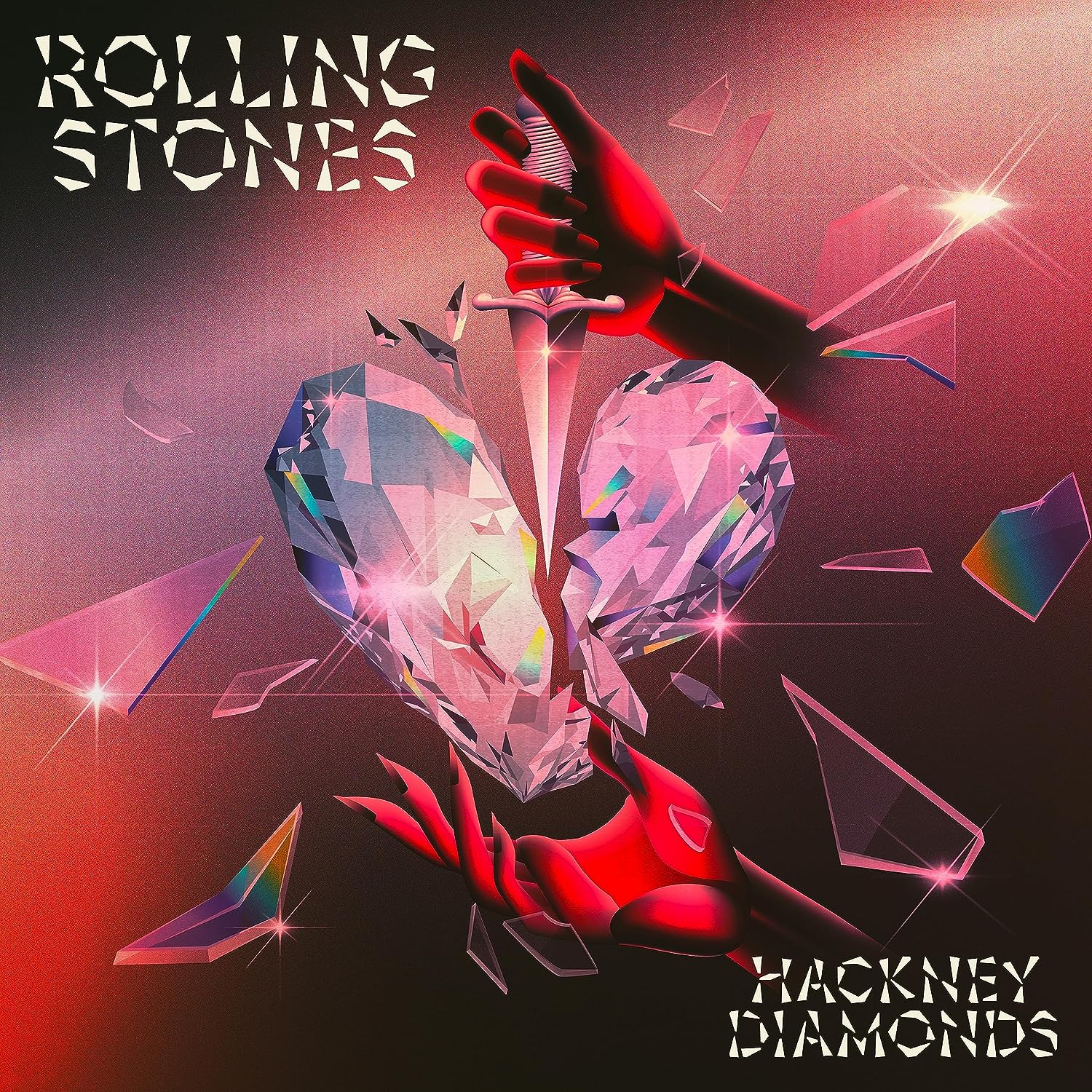
I'm of mixed feelings about the chinzy album cover artwork, which assaults the eyeballs like some cheap-o late '80s heavy metal album, or maybe some of the worst visual abominations that came out of Master P's No Limits label in the late 1990s and early '00s. The album production is a wee too clean and tidy for my taste but, overall, Hackney Diamonds is better than I expected, tho' not anywhere near a "Second Coming"...it's a solid late-period Stones effort that reminds one of the band's long-enduring greatness but doesn't add much to their already massive rock 'n' roll legacy... (Geffen Records, released September 6th, 2023)

Friday, June 2, 2023

Album Reviews: Neil Young & the Ducks, Neil Young with the Santa Monica Flyers (2023)

The Ducks with Neil Young - High Flyin'
The Ducks (with Neil Young) – High Flyin’ (Shakey Pictures Records)

One of a pair of recent archival releases from Neil Young’s “original bootleg series,” High Flyin’ features highlights of a summer ’77 California tour by the Ducks, a pick-up band comprised of Young, former Moby Grape bassist Bob Mosley, drummer Johnny Craviotto (who played with Ry Cooder and Buffy Sainte-Marie), and guitarist Jeff Blackburn, who fronted his own band and co-wrote “My My Hey Hey (Out of the Blue)” with Neil. Released as three-album vinyl or two-CD sets, the 25-tracks were chosen by all the band members and includes a brace of cover tunes alongside several Young compositions. All four men share the microphone, so the result is a triumph of band democracy, everybody had their spotlight, and the entire album sounds like a bunch of friends jamming full-stop.

The handful of Neil originals are generally from the more-obscure wing of his enormous mansion of songs, the lone exceptions being Young’s “Are You Ready For the Country?,” which places a sly groove alongside the song’s guitar-driven shake, rattle and roll arrangement, and Buffalo Springfield’s “Mr. Soul,” which is afforded a ramshackle, feedback-drenched, runaway freight train-styled performance. Much of the material on High Flyin’ was penned by Mosley and/or Blackburn, however, and they mix country, rock, and blues styles as deftly as Mr. Young with the instrumental skills to pull off the disparate genres. The band’s choice of cover tunes – bangers like Fats Domino’s “I’m Ready” or Crazy Horse’s “Gone Dead Train” – are provided uniquely rowdy and highly amplified interpretations while material that hits closer to home, like Moby Grape’s incredible “Gypsy Wedding,” is infused with equal enthusiasm. The album’s sound quality is top notch, better than expected for 1977 recordings, but Neil typically spared no expense, bringing in a mobile recording van to capture the shows, something we’re all thankful for... Grade: A   BUY!

Neil Young's Somewhere Under the Rainbow
Neil Young with the Santa Monica Flyers – Somewhere Under the Rainbow (Shakey Pictures Records)


Ol’ Neil’s mining his archives for these “original bootleg series” releases and he’s crankin’ them out a couple at a time. Young may be providing these recordings with his personal touch before setting them free but, as is the case with Somewhere Under the Rainbow, there are some shows that should stay in the can. Not that this November 1973 concert is horrible – there are, indeed, some fine performances on the two discs – but the sonic quality is pretty funky, hollow and distant with an edge of distortion, just a notch above an audience-recorded bootleg, really, and Neil sounds like he’s singing to us from the bottom of a cave.

Young leads an ace band through its paces, talented players like multi-instrumentalist Nils Lofgren, steel guitar wizard Ben Keith, and Crazy Horse’s Billy Talbot and Ralph Molina, and the set includes beloved tunes like “Cowgirl In the Sand,” “Helpless,” “Roll Another Number (For the Road),” and Buffalo Springfield’s “Flying On the Ground Is Wrong.” The extended version of “Tonight’s the Night, Part II” kicks ass in all the best ways, but Neil’s performance overall is somewhat lackluster, and the band can only prop up its frontman so much. The album’s liner notes lend more gravity to the performance than it deserves and while your enthusiasm may vary from this scribe’s, if yer gonna shell out a double-sawbuck for a Neil Young bootleg – authorized or not – I’d recommend High Flyin’ above this tedious molasses mix. Grade: C+   BUY!

Saturday, May 20, 2023

Album Review: Pete Berwick's The Damage Is Done (2023)

Pete Berwick’s The Damage Is Done
A multi-talented man of the media – singer, songwriter, actor, and novelist Pete Berwick comes to his ‘Outlaw County’ credentials honestly, the Chicago native serving his time in Purgatory (i.e. Nashville) during the Music City’s late ‘80s/early ’90s indie rock boom. Berwick was a man without a country in many ways, however, as the major labels’ narrow vision only saw room for two Gnashville twang-bangers (Jason & the Scorchers, Webb Wilder), completely ignoring Berwick’s songwriting skills and onstage charisma. Not that those other guys were undeserving of their big-league status, but there should have been one more artist on that alt-country Mount Rushmore circa 1990 or so…

Pete Berwick’s The Damage Is Done


Berwick returned to the Windy City and, undeterred by trends, continued to tread the boards with an impressive catalog of releases that includes bona fide country-rock shit-kickers like Just Another Day In Hell and Ain’t No Train Outta Nashville. For his seventh album, The Damage Is Done, Berwick returned to Nashville (or nearby Tullahoma, actually…) and turned the clock back to his 1980s cowpunk roots. Although it has its more traditional country moments – as “traditional” as a born ‘n’ raised rebel like Berwick can get, anyway – much of The Damage Is Done is an unhinged, unbridled, and utterly brilliant rock ‘n’ roll album. The first couple of songs on the album, “She Ain’t Got Me” and “Finger Down My Throat,” burn with the anger and white-phosphorus energy of anything Black Flag or the Dead Kennedys every cranked out, true blue “cowpunk” with the emphasis on “punk,” and we’re all the better for it.

After all, who needs another treacly Music Row release with safe-as-milk lyrics penned by committee; passive, inoffensive production; and music straight from the 1970s performed by aging session drones? Berwick has pulled off a keen trick, indeed, recording a contemporary country album that captures the piss ‘n’ vinegar spirit of early Johnny Cash and Waylon Jennings while still managing to channel more righteous anger and angst than a dozen generic SoCal punk rock poseurs. Berwick’s lyrical skills still shine through on songs like the bluesy blue-collar anthems “Time Clock On the Wall” or “Don’t Know How,” but it’s when he truly cuts loose with the evangelical fervor of songs like “You’ll Get Used To It” or the monster title track the that the creative venom shotguns out of your speakers like a firehose.

The Reverend’s Bottom Line


Berwick’s voice has aged into a dangerous weapon, his raw, whiskey-gutted vocals imbuing each performance with pain and penitence you only earn through decades of hard-won experience. Ashley Argo’s backing vocals provide a sweet counterpoint to Berwick’s sandpaper vox, and Charlie Bonnet III’s flamethrower guitar licks rage through the mix like molten metallic slag. Multi-instrumentalist (and album engineer) Dave Summers picks up the slack with bass, drums, keyboards, and some guitar, and the entire quartet displays an enormous musical chemistry throughout The Damage Is Done, delivering what was needed to support Berwick’s unique vision and performances. As such, Pete Berwick has delivered another career tour de force with The Damage Is Done. If you like your country music with a little rock ‘n’ roll edge, or you like your rock music with a little country twang, you’ll find a lot to like in The Damage Is Done. Grade: A   BUY!