Cultural ‘Cassandras’ have been bemoaning the state of rock ‘n’ roll for much of the past two decades. Critics all but declared the genre D.O.A. at the turn of the century and have since ignored evidence to the contrary in the form of red-hot albums from rockers like Joe Grushecky, Redd Kross, Jack White, Guided By Voices, and Dream Syndicate, to name but a few, over the past couple of years. There are newer R&R acolytes the road and in the studio, too, young soul rebels like Beach Slang, Fontaines D.C., Wet Leg, and King Gizzard & the Lizard Wizard. Rock ‘n’ roll isn’t dead and buried, it’s not even in a coma; it just went underground, much as it did during the disco years, or in the commercial aftermath of grunge.
Among the plethora of underground bands genuflecting at the altar of rock ‘n’ roll are what I like to call the “Children of Nuggets” (or maybe the “Grandchildren” at this point, as the 50th anniversary of the release of the original, influential Nuggets album has come and gone…). These are bands that, while influenced by the sounds of the swinging ‘60s – pop, rock, blues, garage, and psychedelic – are nevertheless putting their own spin on vintage vibrations, not only breathing new life into antiquated styles, but creating new paths to take these genres into the future. One such “grandchild” that is blazing new trails is Rochester, New York’s Calidoscopio, a multi-national, trans-oceanic outfit fronted by producer and multi-instrumentalist Dave Anderson and including German guitarist Oliver Hilbers and drummer Knuth Hildebrandt.
Calidoscopio’s Scorpio Rising
Calidoscopio released its fantastic debut album Get Ready! back in 2021, about which this scribe wrote at the time, “Calidoscopio’s Get Ready! provides a mind-bending trip back to the future with a timeless sound that is both familiar and yet innovative.” Giving the LP another spin prior to penning this review, I stand by my words. Scorpio Rising is the band’s sophomore effort, four years in the making and, if anything, more mind-blowing than its predecessor. Leaping right out of your speakers with the opening track, “I’m Higher Than I’m Down,” the listener is caught in a sonic-swirl that bodychecks your senses like a proto-Hawkwind, blending Seeds-like garage-rock riffs with hyper psychedelic space-rock flourishes that leave you reeling from the first note to the last.
Giving no quarter, “Shadows of the Moonlight” is more garage-y in feel, with a steady cacophony of drumbeats and an infectious guitar riff that falls prey to a killer solo that cuts with tooth and claw. “Burn A Hole” pairs clever lyrics with a novel vocal delivery above a steady rhythmic track with sparse six-string flourishes. Opening with a clamorous instrumental din, “You’re Gonna Make Me” combines a Sky Saxon aesthetic with ringing, and often-times clashing instrumentation and distraught vox to create a bluesy vibe. A classic tale of romantic woe that is as timeless as rock ‘n’ roll itself, “Gypsy Girl” brings a wan folkish pacing to an emotional ‘tears on my guitar’ performance, two powerful minutes of anguished heartbreak.
Magic Panacea
Cut from similar romance-gone-wrong cloth, “I Want To Be Alone” delivers a complex, textured instrumental arrangement running like an angry river beneath Anderson’s tortured vocals while Hildebrandt’s shotgun cymbal work and cascading drumbeats drive the emotional heartbeat of the song. With a vibrating sonic wavelength and dense production fitting the moment, “Shanghai Girl” rocks from post to post with chiming fretwork and locomotive rhythms. The throwback rock of “She’s Bad” reminds of Duane Eddy with nearly-hidden vocals and a loud, twangy guitar sound that bounces from speaker to speaker. Picking up the pace just a notch, “Magic Panacea” brings a dose of psychedelia to the party, offering up a buffet of delicious git licks above an energetic drumbeat, including a gorgeous ‘50s-style solo that evokes James Burton’s influential work back in the day.
Downshifting to allow the listener to catch their breath, “Here Comes The Sun” captures a darker, atmospheric vibe at odds with the song’s seemingly upbeat lyrics. The dichotomy helps drive the song across new stylistic turf and makes for an exciting, mind-bending performance. The title track is pure, pedigreed psychedelic rock with a razor edge and lysergic lyrics, four-minutes and eleven sugar cubed seconds of joyful music-making with dueling guitars and thundering drumbeats guaranteed to take your head to a better place. Closer “Kicked Out-Kicked In” is unrelenting in its onslaught, a monster, guitar-driven garage-fire that couldn’t hit any harder if Anderson and Hilbers actually smashed their guitars over your head.
The Reverend’s Bottom Line
With Scorpio Rising, Calidoscopio displays an evolution in sound and a willingness to explore previously-undiscovered corners of rock music that have remained hidden for decades. Yes, the band pursues an overall musical direction that, at first blush, may seem derivative and/or revisionist, but nothing could be further from the truth. Dig a little deeper into Scorpio Rising and you’ll find the method to the band’s madness, heretofore unrealized creative avenues where others fear to tread. No matter your age, if you dig bands like the Seeds, the 13th Floor Elevators, and the Electric Prunes, you’ll find a lot to love in the grooves of Calidoscopio’s Scorpio Rising! (Jargon Records, released July 19th, 2024) Buy the album from Bandcamp: Calidoscopio’s Scorpio Rising
After the break-up of garage-rock royalty the Chesterfield Kings in 2009 (accept
no weak-kneed substitutes!), band frontman
Greg ‘Stackhouse’ Prevost returned to his roots and launched a solo
career with 2012’s critically-acclaimed effort Mississippi Murderer that
has resulted in four bodacious collections of git-driven blues-rock that is
equal parts Johnny Winter and early Rolling Stones with a double-shot of
Lightnin’ Hopkins to clear your head.
Of Prevost’s previous album,
2021’s Songs For These Times, I wrote that “the singer, songwriter, and
guitarist has crafted an impressive collection of material that not only defies
previously-held expectations but also explores the possibilities of roots ‘n’
blues music.” Flash forward three years and Prevost’s much-anticipated fourth
solo effort, After The Wars, which represents a quantum leap forward in
the artist’s creative evolution that, even after 40+ years, proves that you
can teach an old dog new tricks.
Greg ‘Stackhouse’ Prevost’s After The Wars
With After The Wars, Prevost expands his musical palette beyond scrappy
blues-rock to incorporate folk, country, and even psychedelic-pop for a dozen
songs that provide the listener with a mini-history of the last six decades of
music while pushing beyond expectations with every single of them. Opening with
the obscure Felix Pappalardi/Mountain song “Traveling In the Dark,” Prevost
eschews a hard rock approach in favor of a feathery, shimmering psych-folk
arrangement that emphasizes the song’s lyrics, delivered in a wan voice above a
lofty acoustic guitar strum that belies the distraught lyrics.
Throwing
listeners a curveball, Prevost delivers a spry reading of the traditional Gospel
tune “Twelve Gates To the City,” best known for its rendition by singer Don
Lewis. Accompanied by singer Danielle Colbert-Parrish, whose vocal talents
elevate Prevost’s grittier vox to heavenly heights, it’s an inspired and fiery
performance peppered by Prevost’s raging harmonica fills. The original “No
Hallelujah For Glory” is a sort of gospel-blues tune with a lively six-string
pull and Texas blues-styled vocals and mournful harmonica while a cover of
cult-rocker Roky Erickson’s “I Have Always Been Here Before” offers a fresh
perspective on one of the underrated songwriter’s best tunes, delivered with
reverence and energy in a psyche-folk style.
Prevost’s relationship
with obscure ‘70s rocker Armand Schaubroeck – owner of the world-famous House of
Guitars store in Rochester NY – dates back decades to when Greg worked at the
HOG, so his cover of Schaubroeck’s “Babe We’re Not Part of Society” isn’t
totally unexpected, but is nevertheless a welcome surprise. Two flash minutes of
raging vocals, fiery harmonica, and jagged guitar strum underlines Schaubroeck’s
original vision with reckless abandon, and although I can’t find the song on any
of Schaubroeck’s albums, if you dig it, maybe you’ll check out the recent CD
reissue of Schaubroeck’s classic 1974 album
A Lot of People Would Like To See Armand Schaubroeck…Dead.
Roadkill Rag
By contrast, Prevost’s cover of the Buddy Holly rarity “Learning the Game” is
downright pastoral in its delivery, sort of a pop-psych construct with gorgeous
strings and an arrangement that draws out the romantic nature of the lyrics. The
original “Roadkill Rag” is a blustery, up-tempo blues-rocker with echoing guitar
licks, growled lyrics, and a ramshackle performance befitting both juke-joint
and honky-tonk. A cover of Johnny Paycheck’s “Apartment #9” is totally
unexpected, yet cleverly fits into the album’s track list, the honky-tonk
tearjerker gliding to Nashville on the wings of Al Keltz’s subtle pedal steel
guitar. Prevost’s twangy vocals hint at another musical direction; maybe he’ll
cover a David Allen Coe song next album?
Riding out on some elegant
guitar and harmonica work, “Apartment #9” effortlessly segues into a cover of
Phil Och’s late-career folk gem “No More Songs.” Accompanied by Karl LaPorta’s
beautiful, low-key piano, Prevost imbues what is basically a funeral dirge for
Och’s career with dignity and presence. “Dust My Blues” breaks the tension with
an up-tempo reading fueled by soaring harmonica riffs and howling vocals. The
album’s title track is a sort of extended song cycle that blends Prevost’s
imaginative four ‘suites’ with David Bowie’s glam-infused psych-rocker “Memory
of A Free Festival” in the creation of a mesmerizing head trip that has more in
common with 1969 than 2024.
Stream-of-consciousness vocals,
cacophonic instrumentation, and overall chaos is tempered by a unique musical
vision that delivers an energetic and entertaining miasma of sound and texture
which points towards a new psychedelia that is informed by, but not beholden to,
the sounds of the ‘60s. The suite ends with seeming destruction before the
triumphant message of “Memory of A Free Festival” breaks out. It’s a heady trip,
and a helluva seven minutes! After The Wars closes out with the
traditional folk tune “He Was A Friend of Mine.” Covered by folks like Bob
Dylan, Dave van Ronk, and the Byrds, Prevost brings a bluesier take to the song,
which dates back to at least the 1930s. I like Prevost’s reading, which tacks
towards a joyful remembrance of the friend in question despite the mournful
nature of the instrumentation.
The Reverend’s Bottom Line
As much as I enjoy Prevost’s previous solo albums and, indeed, much of the
Chesterfield Kings’ worthy album catalog, After The Wars is a much more
nuanced and intricate collection of songs. The artist is accompanied by a larger
cast of musical friends here, including longtime collaborator Paul Morabito on
guitar, and co-producer Dave Anderson, of the very cool band Calidoscopio, who
contributes various instruments. Greg’s wife Caroll makes the album a family
affair by providing vocals on several songs, and the world-famous Felix the Cat
even makes his voice heard (on “Zen Cats,” part of the title song suite).
After The Wars is Greg Prevost’s most considered, creative,
and complex album to date, the artist paying tribute to his considerable past
efforts and influences while still defying expectations with his sojourn towards
the future. (Mean Disposition Records, 2024) Buy the LP from Get Hip Records:
Greg Prevost’s After The Wars
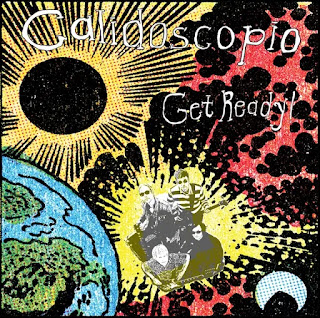
Calidoscopio – Get Ready! (Jargon Records) Roaring out of the Flower City with sabers rattling and amps cranked up
to eleven, at first blush Calidoscopio sounds like just another talented bunch
of 1960s-styled garage-rock revivalists with six-string Sturm und Drang.
Further spins of Get Ready! reveal hidden charms, however. The album is
an international affair, members of Germany’s Golden Coats collaborating
alongside Rochester NY’s Dave Anderson, with guest performances from
Australia’s Joey Bedlam (Dollsquad) and garage-rock deity Sky Saxon (from
beyond the grave). While the LP cover gives off serious Jack Kirby/psych-rock
vibes, songs like the scintillating title track – with big beat drums, gang
vocals, and twangy fretwork – evince a timeless, electric, rock ‘n’ roll
sound. “The Lanky Gunman” mixes trembling ‘Spaghetti Western’-styled guitar
strum with wall-of-sound instrumentation and an eerie story-song while a
long-lost monologue from the Seeds’ frontman Saxon is integrated into “Green
Forest,” a spacey, hippie-rock screed. “Demon Child” honors its shockabilly
roots, benefiting from Bedlam’s breathless vox and Anderson’s jagged guitar
licks while the punky “Koko the Gorilla” mixes Hasil Adkins with the Electric
Prunes for a raucous good time. Calidoscopio’s Get Ready! provides a
mind-bending trip back to the future with a timeless sound that is both
familiar and yet innovative.
Grade: A
BUY!
Deep Purple –
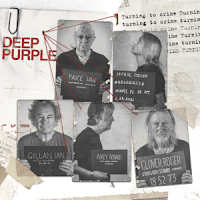
Turning To Crime (Ear Music) British rock legends Deep Purple are in their sixth decade as a band and
although they’ve never been adverse to recording the odd cover song (their 1968
hit “Hush” comes to mind), they’ve so far resisted the urge to record an album
exclusively of covers…until now. Turning To Crime is a collection of
twelve of the band’s favorites, ranging from bluesy 1950s-era R&B (Huey
‘Piano’ Smith’s “Rockin’ Pneumonia and the Boogie Woogie Flu”) and ‘60s psych
(Love’s “7 and 7 Is”) to blues-rock (Cream’s “White Room”) and beyond. Although
the current band is quite adept at playing any sort of music, Gillian’s aging
pipes betray his intent at times. Still, Turning To Crime is quite the
live wire, the band pulling off the performances more often than not. Fleetwood
Mac’s classic “Oh Well” is given an altogether new coat of (hard rockin’) paint,
the Yardbirds’ “Shapes of Things” is provided a stout psychedelic-pop sheen and,
surprisingly, Little Feat’s “Dixie Chicken” is an excitingly funky strut. Bob
Seger’s “Lucifer” is a deep-cut that mixes guitar-driven hard rock and Memphis
soul, but it’s the album-closing Southern rock-inspired medley (with tunes by
Booker T, Don Nix, Gregg Allman, and Steve Winwood) that will turn heads.
Grade: B+
BUY!
Tom Guerra –
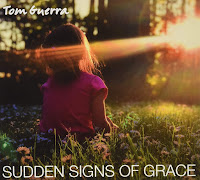
Sudden Signs of Grace (Casa del Soul Records) Tom Guerra began his career nearly 40 years ago as a member of outfits
like the Dirty Bones Band and the Mambo Sons. Guerra launched his solo career
with 2014’s All of the Above and came to our attention with 2018’s
acclaimed
American Garden. Recorded during the pandemic, Guerra’s fourth solo effort,
Sudden Signs of Grace, offers up everything that’s great about the artist
– finely-crafted songs, hypnotic melodies, intelligent lyrics, and stellar
guitarplay, all neatly packaged into three-minute, radio-friendly songs.
Although Guerra dishes up a couple of nifty covers here – perfectly capturing
the angst of Eddie Money’s “Gimme Some Water” with his fiery guitarplay while
Harlan Howard’s country classic “The Streets of Baltimore” is provided a
suitably melancholy, twang-drenched performance – it’s Guerra’s original
material that really shines. “Lonely No More” is a gorgeous power-pop song with
Duane Eddy-inspired guitar and winsome vocals; the jaunty “Lover’s Time” is a
charming amalgam of the Byrds and Big Star; and the honky-tonk flavored “Down
the Farm” rides on Guerra’s rapid-fire vocals, rollicking piano-play, and wiry
fretwork. There’s not a duff track to be found on Sudden Signs of Grace,
Guerra delivering an inspired collection of rock ‘n’ roll full of heart and
soul. (See the video, below!)
Grade: A
BUY!
The Specials –
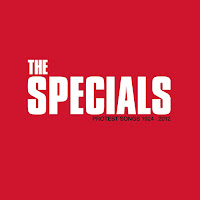
Protest Songs 1924-2012 (Island Records) God bless ‘em, the Specials still crank it out 40+ years after the band’s
exhilarating debut. Breaking up in the mid-‘80s, several members reunited in
1993, and they’ve carried on ever since, releasing a handful of albums since
reuniting, including 2019’s critically-acclaimed Encore. Crucially, the current
line-up includes Specials’ founders Terry Hall, Lynval Golding, and Horace
Panter. Protest Songs 1924-2012, is an exciting collection of themed
cover songs inspired by the George Floyd protests of the summer of 2020. An
eclectic collection it is, too, including classic material by the Staple
Singers, bluesman Big Bill Broonzy, Bob Marley, the Dixie Jubilee Singers, and
Frank Zappa, among others. The Specials are a long way from their days as ska
revivalists, pursuing a soulful, R&B-drenched sound as evinced by their
reading of Pop Staples’ powerful civil rights ode “Freedom Highway.” The Mothers
of Invention’s “Trouble Every Day” is provided an appropriately menacing tone,
complete with scorching guitars, while Leonard Cohen’s “Everybody Knows” is sung
in Cohen’s droll style. The Wailers’ “Get Up, Stand Up” offers a powerful,
albeit subdued performance that emphasizes Peter Tosh’s defiant lyrics. Totally
unexpected, but pleasantly surprising, the Specials’ Protest Songs is one
for the ages.
Grade: A-
BUY!
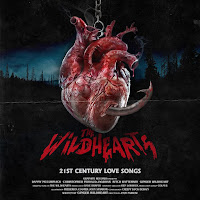
The Wildhearts – 21st Century Love Songs (Graphite Records U.K.) Wildhearts founder Ginger got the gang back together in 2012 for a series
of gigs that led to a live album, but the reformed band wouldn’t go into the
studio until 2019’s acclaimed Renaissance Men. With the
brand-spankin’-new 21st Century Love Songs, the band comes full-circle,
delivering its 10th studio work. It’s a real banger, too, with plenty of the
Wildhearts’ trademark melodic hard rock that often times teeters on the razor’s
edge of heavy metal. For instance, the album-opening title track hits your ears
like a sledge, combining an erudite Mott the Hoople-style of British rock ‘n’
roll with thrashy molten slag. Much of the rest of
21st Century Love Songs follows a similarly-skewed blueprint:
“Institutional Submission” sounds, at times, like Killing Joke on steroids until
the vocal harmonies and elegant fretwork chimes in while “Sleepaway” could pass
for a harder-rocking Cheap Trick. Underneath the instrumental clamor you’ll
unearth undeniable melodies, often accompanied by football hooligan harmonies
running interference for Ginger’s sweeter tones. Ginger could have been a hella
successful pop star if he’d chosen a less debauched path but, lucky for us, he’s
walked a sleazier, obstacle-strewn road to rock ‘n’ roll nirvana for almost 30
years now.
Grade: A
BUY!
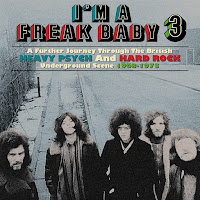
Various Artists – I’m A Freak Baby 3 (Grapefruit Records/Cherry Red U.K.) The late ‘60s and early-to-mid-‘70s provided an abundance of interesting
rock ‘n’ roll as bands discovered their muse and experimented musically. This is
the third volume in the U.K. archivists Grapefruit Records’ “Freak” series,
exploring the exciting new sounds of 1968-1973, and it’s every bit as
entertaining as the first two sets. Featuring 53 songs spread across three
discs, they follow a simple blueprint – offer a few scattered obscurities by
well-known bands (Free, Thin Lizzy, Deep Purple, Uriah Heep, Mott the Hoople,
Procol Harum) and mix in songs by lesser-known but period-essential groups
(Hawkwind, Spooky Tooth, Stray, Trapeze, Nazareth, Tear Gas). It’s when the
madmen at Grapefruit dig into the pits that it gets really interesting, though,
and I’m A Freak Baby 3 also includes rare (collectible) 7-inchers from
diverse artists like Quatermass, Mighty Hard, Curtis Knight Zeus, and Steam
Hammer and then caps off the set with previously-unreleased music from folks
like Stack Waddy, T2, Red Dirt, Wicked Lady, and the Yardbirds (!). Toss in
toons by cult rockers like Leaf Hound, Killing Floor, Third World War, and
Budgie and you have yourself a party, I’m A Freak Baby 3 providing a lot
of bang for yer hard-earned buck!
Grade: A
BUY!
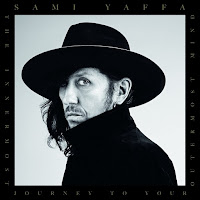
Sami Yaffa –
The Innermost Journey To Your Outermost Mind (Livewire Records) After 40 years in the trenches, former Hanoi Rocks and New York Dolls
bassist Sami Yaffa finally got around to recording a solo album and, as one
might expect, it’s a flamethrower. Yaffa approaches rock ‘n’ roll with a fierce
Johnny Thunders/Stiv Bators aesthetic and songs like the album-opening
“Armageddon Together,” a devastating take on modern religion, reflect this crash
‘n’ burn style of hard rock. There’s more than meets the eye here, tho’ –
Yaffa’s undeniable sense of rhythm adds melody to cod reggae tunes like the
mesmerizing “Rotten Roots,” which crosses the Clash with Lee “Scratch” Perry or
“You Gimme Fever,” which pairs a deep Sly/Robby groove with lusty lyrics and
elegant fretwork to great effect. “Fortunate One” flat-out rocks (not dissimilar
to Lords of the New Church), with Yaffa’s whiplash vox punctuated by Michael
Monroe’s bleating saxophones while “Germinator” slaps yer eardrums like a
nail-studded baseball bat, fueled by Monroe’s raging harmonica and guitarist
Christian Martucci’s razor-blade licks. “Cancel the End of the World” sounds
downright Pink Floydish, with lofty vocals and gorgeous, atmospheric
instrumentation. Yaffa is no one trick pony, displaying the many facets of his
enormous instrumental and songwriting talents with
The Innermost Journey…Grade: A-
BUY!