Showing posts with label music zines. Show all posts

Friday, December 15, 2023

This Mine Has Played Out: Goldmine Magazine In 2023

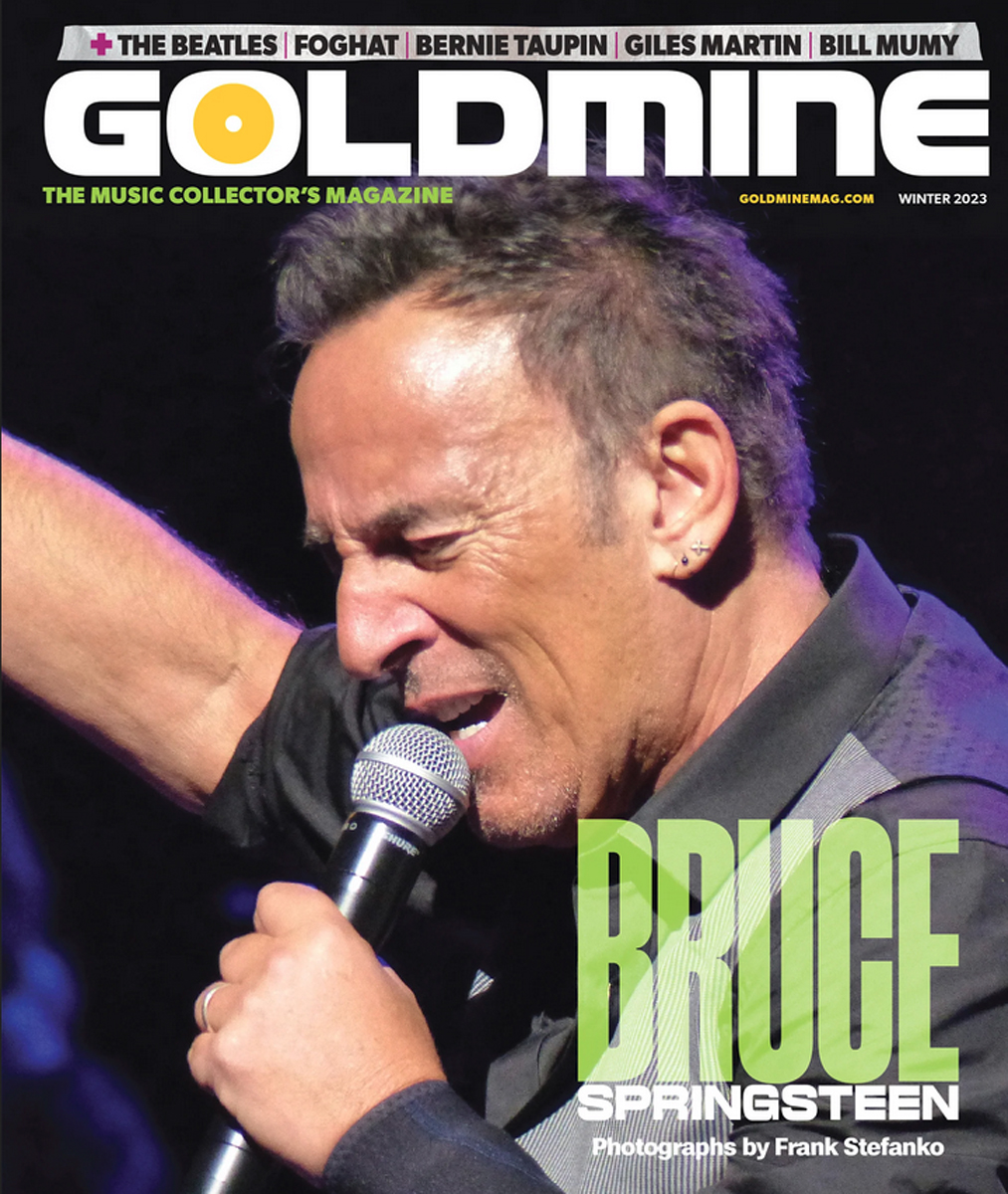
Bruce Springsteen on the cover of Goldmine magazine, winter 2023

I have quite a few rockcrit colleagues who write for Goldmine magazine, so I apologize in advance for stepping on any toes with this rant. Receiving and reviewing the winter 2023 issue of the long-running collectors’ zine, however, I feel that as the publication approaches its 50th anniversary, that it may be time to retire Goldmine to the old magazine resting home.

Goldmine was launched by publisher Brian Bukantis in September 1974 in the Detroit suburb of Fraser, Michigan. Bukantis’ agenda for the bi-monthly newsprint tabloid was to service the growing rock ‘n’ roll record and memorabilia collectors’ market. Early issues of Goldmine covered rock, country, blues, and soul music with artist interviews, discographies, and album reviews. One of the main features, however, were the seller’s ads, which offered albums, 45s, zines, and books by mail order from what would become a regular group of trusted sellers.

By 1977, both the magazine and the collectors’ market had grown to the point where Bukantis could take the publication monthly. I met Brian at a record convention in Detroit in 1979 and stayed in touch with him and editor John Koenig through the years. I wrote for Goldmine occasionally during the 1980s and ‘90s, and also contributed artist interviews and album reviews to similar publications like DISCoveries and Record Auction Monthly during both publication’s brief lifespans. At some point, Bukantis sold Goldmine to Krause Publications, a specialty publisher of price guides and other materials for collectors and hobbyists; it was a good fit. Krause later bought DISCoveries and folded it into Goldmine.

During its tenure as Goldmine’s owner, Krause did away with the magazine’s tabloid format in favor of a standard 8.5” x 11” magazine format largely printed on newsprint with color covers. In 2002, Krause was purchased by F+W Media, the New York City-based publisher of Writer’s Digest and other magazines. Goldmine continued more or less as it ever had, until F+W was bought out by a private equity fund, which continued expanding via purchases of other publications until F+W was saddled with debt and bought by another equity fund. The end-of-the-line came for F+W when the company filed for bankruptcy in 2019. The publisher’s assets were sold at auction, and Goldmine was bought at a discount by something called Active Interest Media (AIM), an equity fund-owned publisher of “niche enthusiast magazines.”

A year later, however, AIM dumped a number of its publications before being sold off itself. Goldmine ended up in the hands of the Project M Group, LLC which was formed in 2016 by CEO Enrique Abeyta, an investor and entrepreneur, and COO James Welch. Project M has been on a buying spree since its founding, gobbling up publications like heavy metal magazines Metal Edge and Revolver; Alternative Press magazine; and the BrooklynVegan music website. The first thing the new owners did was move Goldmine from Wisconsin to Brooklyn, and change the publication to a glossy, full-color 9” x 11” square bound format with better paper quality and ostensibly more content. With the change in appearance came an increase in the cover price, which had held at roughly $6 per month for years. Still, at ten bucks for a better zine, it was worth it…

The changes didn’t stop there, however…while the cost of an annual subscription stayed the same at $29.95, the frequency of the magazine was slowly reduced. What was once a bargain has become much less so, as the number of issues published each year dropped from twelve to six to the current quarterly publication schedule. The mail order ads, which had already dwindled to a handful of longtime advertisers, were finally eliminated altogether in favor of advertising for Goldmine’s online store. Record and book reviews were moved online and axed from the print edition altogether. Issues started featuring multiple covers, a gimmick no doubt inspired by Marvel and DC Comics’ long-standing practice of separating fans from their cash. Photos of the covers are also available to purchase and, given the email pitches that hit my in-box at least once a week, Goldmine seems more interested in selling me anything but the magazine.              

Back to the winter of 2023, and the new issue of Goldmine hit my mailbox with a thud. This issue has almost nothing that I’m interested in reading…with feature stories on Night Ranger and Foghat, the publication is touting new projects by two bands that even a lot of avid fans stopped caring about 40 years ago. There’s something on a guy that took a lot of photos of Bruce Springsteen, an excerpt from Bernie Taupin’s autobiography, and the obligatory three articles on The Beatles ‘cause they released a new song or something…for years now, Goldmine has never missed an excuse to put the Fab Four on the cover to help move some copies to its aging boomer readership. If not for Dave Thompson’s regular and welcome “Grooves” column, there’d be nothing I’d want to read.

The previous issue was similarly-vacuous and light on copy, and I blame both the magazine’s editor and the parent company. The Project M Group seems less interested in publishing a good magazine than in creating a “lifestyle” company by luring readers to the web store where you can buy records, books, t-shirts, photographs, and even stereo equipment. In the meantime, they’ve left editor Patrick Prince to continue steering the Goldmine ship. I have no beef with the editor – my infrequent dealings with Prince have been pleasant through the years, but he’s been the editorial overseer for better than ten years (2010-12 and 2015 to now) and he doesn’t seem to realize that any new music has been made since 1979.

The magazine’s editorial focus is long-past stale, and focused on a ridiculously-narrow slate of classic rock artists from the 1960s and ‘70s. Yo, Patrick, do you know what young vinyl fiends are collecting these days? Punk, new wave, and heavy metal bands from the 1980s and ‘90s! You couldn’t tell it from the last couple years of the magazine. Whereas the original Goldmine offered diverse coverage of musical genres, the current incarnation offers little beyond the same old tune, which is as tired as my arthritic knees. I love classic rock and blues music, but I get deeper coverage of bands I know and those I don’t from zines like Ugly Things, Maggot Brain, The Big Takeover, and even British music rags like Vive le Rock.

Goldmine has some talented and insightful writers on its freelance staff, folks like the aforementioned Thompson, Martin Popoff, Lee Zimmerman, Gillian Gaar, and Bill Kopp, among others, but I don’t believe that they’re being used to their full capabilities – especially since the zine has axed Zimmerman’s indie release column (a source of new music for a lot of us) along with the review section that frequently hipped readers to new music. An editorial change of course is needed, or else I don’t see Goldmine making it far beyond its 50th birthday.

Tucked in the pages of the winter issue is the publication’s circulation statement, which to the experienced reader signifies a publication in dire straits. Goldmine prints and circulates less than 6,000 copies of each issue, most of them sent to subscribers. They seem to have all but given up on newsstand circulation, which represents just a few hundred copies of each issue. This, my friends, is not a recipe for a successful regional publication, much less a magazine with a national profile. The record collecting field is wide open right now, and opportunities abound. This “mine” has played out, though, and unless Project M Group discovers a better editorial blueprint (Yo, Enrique, pick up a copy of the U.K. zine Record Collector), Goldmine will too soon wander into the publishing graveyard…


Saturday, March 11, 2023

I Come To Bury Caesar: Creem Magazine #2 (2023)

Creem magazine #2
“Friends, Romans, countrymen, lend me your ears; I come to bury Caesar, not to praise him.” - William Shakespeare, Julius Caesar, 1599


When I was a teenage rock ‘n’ roll fiend growing up in the rural suburbs of Nashville at the dawn of the 1970s, Creem magazine was literally my doorway to the world of music. Launched in Detroit in 1969 by publisher Barry Kramer and editor Tony Reay, the rag’s ‘Blue Collar’ irreverence appealed to my ‘Rust Belt’ upbringing, and writers like Dave Marsh, Lester Bangs, Jaan Uhelszki, Richard Meltzer, Jeffrey Morgan and others provided my education in rock music. By the mid-‘70s, Creem was shuffling close to a quarter-million copies a month out the door, second only to Rolling Stone among music zines at the time.

The rag’s editorial focus, unfettered by advertiser manipulation or the desires of the recording industry, meant that they could – and did – write about artists like the New York Dolls, Lou Reed, David Bowie, Roxy Music, and Blondie long before they were discovered by more mainstream publications. When a second generation of writers and editors came along in the 1980s, including Dave DiMartino, Susan Whithall, Rick Johnson, Bill Holdship, and John Kordosh, Creem introduced readers to artists like the Replacements and R.E.M. From 1969 through 1989, Creem magazine was an integral part of American popular culture.

21st Century Creem


The magazine struggled in the years after Barry Kramer’s death in 1981, and although the staff published some good work during the decade, ownership changed hands, Creem moved to the West Coast and, by 1989, it was kaput (the less said about a short-lived and dismal 1990 NYC-based version of the rag, the better). Long story short, there was plenty of litigation, and various hijinks ensued before Barry’s son (and heir to the Creem throne) J.J. Kramer gained ownership of the magazine. A documentary film about the early days, Creem: American’s Only Rock ‘n’ Roll Magazine, was released in 2019 to rave reviews.

As inevitably as the sun rises in the east, Creem magazine itself was resurrected in 2022 as a quarterly, subscription-only “lifestyle” publication which resembles the original rag not a whit. Kramer brought in professional magazine wranglers from the executive suites of Vice magazine, Entertainment Weekly, and Rolling Stone to publish the new 21st century Creem; Jaan Uhelszki was hired as Editor-At-Large to provide a link to the zine’s notorious past. A website was thrown together, tee-shirts featuring the magazine’s classic, Robert Crumb-designed mascot “Boy Howdy” were screen-printed and put out for sale, and a weekly email newsletter primed the pump for a print version of the magazine.

Creem In Print


When subscriptions became available for a Creem print version, I swallowed hard and coughed up the ridiculous sum of $80 for four quarterly issues. I’m halfway through my one-year Creem subscription and, so far I am not moved. With the third issue of the new Creem about to be published, I thought it the right time to review what they’d done so far, and it ain’t pretty. The current iteration of the zine has little of the wit or irreverence that made the original publication a rock ‘n’ roll media legend. None of the current crop of writers has jumped off the page, grabbed me by the ears, and poked at my eyeballs with a number 2 pencil to make me pay attention.

The rag’s physical size – an unwieldy 10.5”x13.5” – provides a lot of space for editorial content, which is squandered by the over-use of full-page photographs and illustrations. It’s a pet peeve of mine when magazines overly rely on pages of photos to fill up space – I perceive it as a lack of creative vigor – and the second issue of the reborn Creem sitting on my desk right now features roughly 40 mondo-sized pages of photos, or nearly 1/3 of the issue’s 128 pages. An otherwise interesting twelve-page story on the tragic final days of singer/songwriter David Berman (Silver Jews, Purple Mountains) is littered by six full pages of unnecessarily large photos and a seventh introductory page that add little of value beyond the story’s other four smaller photos.

An Awkward, Oversized Print Format


This is a minor cavil, perhaps, but photo galleries like “Be Our Guest” or the glut of pix embedded in the barely-there story “Freak On A Leash,” for example, are the print equivalent of website slideshows, which went out of style a decade ago. Admittedly, the awkward, oversized print format allows for some fantastic full-color photo reproduction, and the zine’s overall graphic design is reasonably contemporary, efficient, and yet exciting. The publication relies too often on illustrations to accompany the stories – three of the issue’s dozen features offer bad artwork to open the story, others over-utilize photos.

As for the editorial content, it hasn’t been all that compelling over the first two issues. Number two has an interesting story on how the CIA stole $5 million from classic rockers Creedence Clearwater Revival, and the aforementioned story on Berman serves its purpose, if providing little insight into the artist’s work or the lifelong depression that led to his suicide. Three pages of Justin Borucki’s original tintype photography of heavy metal musicians is at least three pages too few, considering its uniqueness and stark imagery. They could have taken pages away from illustrations and featured more of Borucki’s work. “Complacence Rock,” an article on wannabe billionaire rock stars, is a nifty bit of social commentary, but otherwise much of the content is hipster posturing and disposable trifles.    

The Reverend’s Bottom Line


Unless the next two issues of my Creem sub really knock me down and drag me to the record store, it’s unlikely that I’ll be re-subscribing. At the cost of a double sawbuck per issue, there’s too little bang for too many bucks. When I cough up $12 for a copy of Third Man Records’ Maggot Brain zine, there’s usually three or four articles of interest, and something about an obscure artist that makes me spend my money on. With shipping, a copy of Ugly Things cost me nearly $20 for the zine and another $100 for the records I buy after reading the issue.
 
Personally, that’s my benchmark for a music magazine – does it tell me something new about artists I’m already familiar with, and does it introduce me to artists I didn’t already know, getting me excited about new music I’ve yet to hear. I realize that you can never go back to the old daze [sic], and I’m probably an old man shaking his fist at the clouds. If you dig the “new” Creem, go for it – I won’t judge you – but I’m afraid that they’re no longer singing for me, so I’ll look for my cheap thrills elsewhere… (www.creem.com)

Full Disclosure: My first editor and mentor “Ranger” Rick Johnson got me into the pages of Creem in the early 1980s, and I sold them a handful of humorous reviews of books, TV shows, and such for the “Media Cool” section. The zine went bankrupt owing me something like $15 and I got legal paperwork for years afterwards as a legit creditor. I promise that this outstanding debt did nothing to color my impressions of the magazine’s new incarnation.


Creem magazine's Media Cool column, September 1985


Friday, February 3, 2023

Book Review: Paul Gorman's Totally Wired - The Rise and Fall of the Music Press (2022)

Paul Gorman's Totally Wired
The music media in the U.S. and the U.K. basically developed and evolved in parallel universes during the 20th century. The enduring American jazz magazine DownBeat published its first issue in 1934 (and they’re still going strong today) while Hit Parader – an offshoot of the 1930s-era ‘songster’ broadsides that reprinted song lyrics and sold for a nickel – first appeared in 1942 and published regularly until 2008. On the other side of the pond, Melody Maker launched in 1926 as a magazine for dance band musicians, gradually evolving as the market changed to cover jazz, folk, blues, and rock music over the decades. England’s New Musical Express (NME) was a relative latecomer, first publishing as a weekly newspaper in 1952 until finally pulling the plug as a freebie in 2018.

During the late 1960s and early ‘70s, as pop and rock music became a bona fide cultural phenomena (i.e. there was tons of moola to be made), music zines began sprouting up like mushrooms in a field of cow shit. Rolling Stone, Crawdaddy, Zoo World, Circus, Trouser Press, Rock magazine, Phonograph Record, and Creem were among those publications that cropped up stateside, while in the U.K. the aforementioned NME and Melody Maker were besieged by competitors like Blues and Soul and Let It Rock as well as by underground newspapers like Oz and International Times. The 1980s brought new challenges for the old guard of the music press, with publications like Spin magazine (U.S.), and Sounds and Smash Hits (both U.K.) appealing to readers with fresh editorial perspectives and contemporary music coverage that helped them sell tons of copies and sneak away with market share.

Paul Gorman’s Totally Wired

With Totally Wired: The Rise and Fall of the Music Press, writer Paul Gorman has attempted the unenviable feat of outlining the history and evolution of the music press in both the U.S. and the U.K. from the 1920s through the present. Gorman does so with an eye for detail that would put Pete Frame to shame, documenting the music media’s trajectory from its roots in 1920s Tin Pan Alley to its evident self-destruction in the 21st century digital age. While a worthwhile endeavor, it’s a Herculean task without favor as, no matter what you’ve written, you’re going to slight somebody along the way. Gorman is no neophyte to the music world, previously writing tomes like The Life & Times of Malcolm McLaren and The Story of The Face: The Magazine That Changed Culture. Based in London, he’s obsessively-knowledgeable about the British music media, but it’s this Anglo-centric perspective that throws a spanner in what is an otherwise exhaustively-detailed and inclusive book.

First, the good news – if you’re a fan and collector of music magazines (like the ol’ Reverend), there’s a lot to like about Totally Wired as Gorman fills in any gaps in the reader’s knowledge with a well-researched tome that not only documents the music press in New York, London, and elsewhere, but also does a fair job in explaining these publications’ role in popular culture on both sides of the Atlantic, how they fit into the overall tumultuous synergistic evolution of pop and rock music, and the publications’ overall influence on generations of music fans. Where the book really shines is with Gorman’s efforts to include the stories of marginalized writers (and musicians), Totally Wired boldly addressing the sexism and racism faced by women, people of color, and immigrants trying to forge a career in music and journalism.

But now for the bad news – unless you’re a fan and collector of music magazines, or have an extensive history with the medium (like the ol’ Reverend), Totally Wired proves to be one hard slog of a reading experience. At 360+ pages (not counting notes and a woefully-incomplete index), Gorman may have written the definitive history of the music media, but he’s also created a thick hardback doorstop of an afternoon read that will take you a fortnight to trudge through. Gorman’s biggest crime is his entirely gratuitous name-checking of every writer of note for a couple dozen U.K. publications. There’s an incestuous nature to the field, as well, so the same names pop up at different publications but, honestly, you can’t tell the players without a scorecard…and there are a lot of ‘em!

The Rise and Fall of the Music Press

Although I would expect U.K. readers of Totally Wired to be somewhat more plugged-in to the extensive, Marvel movie film credits-length list of writers, editors, et al that slipped through the revolving doors of Smash Hits, Melody Maker, NME, and such, for us stateside readers, it’s really just so much random noise and anonymous names. For much of the publishing era that Gorman so keenly documents, distribution of British music magazines was ‘hit or miss’ in the United States, even for those of us who diligently attempted to track down copies. As such, only the cream (or most notorious) of British scribes are reasonably well-known stateside – Kris Needs, Chis Welch, Julie Burchill, Tony Parsons, Nick Kent, and Charles Shaar Murray are all familiar talents that come to mind. The Reverend has written for several British music magazines over the years and most of the names checked in Totally Wired were still new to me.

Too, as I mentioned above, the daunting task of writing such an all-encompassing documentary work, even one with the impressive page count of Totally Wired, means that there are important omissions. I don’t mind that Rolling Stone magazine isn’t documented in depth – Joe Hagan’s 2017 book Sticky Fingers disposed of that particular task – but Creem magazine is largely forgotten by the end of the 1970s, Gorman totally neglecting the zine’s thriving early ‘80s run. Spin magazine – arguably as important to late ‘80s and early ‘90s alt-rock culture and coverage as Rolling Stone and Creem were to their respective eras – is provided only a few pages in passing, and his otherwise entertaining chapter on 1990s-era publications like The Source or Rap Pages that covered hip-hop music and culture, moves on after only a few pages…just as it’s picking up steam. Gorman dedicates a few pages to the legendary British metal zine Kerrang!, but glosses over similarly-influential publications covering the genre like Metal Edge and Revolver (both U.S.), or my buddy Martin Popoff’s seminal Brave Words & Bloody Knuckles zine (Canada).                

To his credit, Gorman does touch upon such culturally-relevant publications as the ‘90s zines Ben Is Dead and Maximum RockNRoll; Ira Robbins’ influential late ‘70s magazine Trouser Press; the short-lived but impactful Beastie Boys-financed Grand Royale zine; and fleeting 1990s commercial music rags like Blender and Ray Gun which, my personal distaste for them aside, were cultural touchstones nevertheless. British music magazines like The Face and Q became more widely-distributed stateside during the late 1980s, and his coverage of both is interesting and informative, but his minimal commentary on Mojo – probably the best-known British import of the last 25 years – seems like a major oversight. Important American publications like JazzTimes (b. 1970), No Depression (b. 1995), and Paste magazine (b. 2002) are overlooked altogether.

The Reverend’s Bottom Line

Neither does Gorman delve too deeply into the digital publishing ‘revolution’ of the late 1990s and early 2000s that affected the traditional music press and ultimately shuttered a number of the publications that he writes about. The 21st century music press is given short-shrift altogether, with Pitchfork briefly mentioned, but popular music-oriented websites like Perfect Sound Forever and Rock and Roll Globe unfairly overlooked. Yes, the underlying documentary aim of Gorman’s efforts may have been too daunting a task for any writer to truly achieve and Totally Wired, while often informative, sometimes entertaining and, occasionally fascinating, is nevertheless a flawed and frequently-tedious work that you have to really invest time and effort into reading. As such, I can’t really recommended the book to anybody outside of the hardcore journo-groupie or curious academic. (Thames & Hudson, published November 22 , 2022)

Buy the book from Amazon (if it sounds like your 'cuppa'): Paul Gorman’s Totally Wired


Music Zines