Showing posts with label MC5. Show all posts

Friday, June 21, 2024

Archive Review: Sonic's Rendezvous Band's "Sweet Nothing" (1999)

Sonic's Rendezvous Band's "Sweet Nothing"

When I lived in the Detroit area back in the late 1970s I used to hang out at a place not far from the house called Dearborn Music. A third-generation record store that had been passed down in a straight line from grandfather to grandson, the store had never sent back any records that it ever bought during its thirty-year history. This practice would make today’s retailers, with their sorry philosophy of limited selection and “just-in-time” inventory, wince and cry. But the result was a wonderfully dusty, crowded store that offered everything from still-sealed Big Band albums to ‘60s psychedelica and punk rock imports. Knowing my penchant for loud, high-octane Detroit rock ‘n’ roll, the grandson called me over one day and laid a 7” 45 rpm copy of “City Slang” on me. It was the first release from Sonic’s Rendezvous Band, a local “supergroup” made up of members from the MC5, the Stooges, and SRC and named after guitarist extraordinaire Fred “Sonic” Smith.

Little did I know at the time that this single would also be the last official release from the band. Although a couple of live bootleg tapes have circulated among the faithful during the past couple of decades, those of us thirsting for more had to be satisfied with our rare copies of “City Slang.” Imagine my surprise then when I opened up a copy of Mohair Sweets zine and saw an article on Sonic’s Rendezvous Band and a listing of a web site. Although Smith died a few years back, his wife – the talented Patti Smith – asked longtime associate Freddie Brooks to look through the band’s collection of tapes with an eye towards releasing some of the material. The first result of this jump into the vaults is the “Sweet Nothing” CD, which captures the band alive and scorching during a 1978 performance. Needless to say, I sent in my hard-earned coin as soon as possible and grabbed a copy of this gem before it disappeared on me.
 
Even though it had been twenty years since I saw the band play live in Ann Arbor, “Sweet Nothing” immediately brought up fond memories of that night. A solid hour-long set of raging “Motor City” rock ‘n’ roll, “Sweet Nothing” does not disappoint, even given my high expectations. Sonic’s Rendezvous Band were a monster of a live band, with Smith and fellow guitarist Scott Morgan dueling like sword fighters in a death match, trading deadly, razor-sharp riffs with abandon. Ex-Stooges’ drummer Scott “Rock Action” Asheton kept up a steady, often-times manic beat while bass maestro Gary Rasmussen laid down a rhythmic groove that propelled the music along like nitro in your gas tank.

With a sound that’s loud, meaty, and muscular, booming out of your speakers like a metal stamping machine in a Detroit auto plant, the songs on “Sweet Nothing” are almost immaterial, given the heaviness of the performances. These are good, not great songs, mostly originals by Smith or Morgan. Some are standard, guitar-driven love songs, like the mesmerizing “Hearts,” the engaging title track or the band’s drunkenly passionate cover of the Stones’ “Heart of Stone.” Other songs – like “Asteroid B-612,” for instance – are more esoteric, blazing a musical trail across territory that’s more akin to Sun Ra than to anything rock ‘n roll was spitting out in the late ‘70s.

That legendary single, “City Slang,” is presented here as an eight-minute, album-closing rave-up that’s guaranteed to stand you on your head, leaving you with the certain knowledge that Sonic’s Rendezvous Band were a great band. It’s a damn shame that they never became huge stars, but then again, their cult status befits them. After all, like Neil Young once said, “it’s better to burn out than to fade away.” For a too-few brief years, Sonic Rendezvous were the underground rock scene’s brightest burning stars, blazing their way through hundreds of live shows. Lucky for us that somebody captured one of these special nights on “Sweet Nothing”. (Mack Aborn Rhythmic Arts, released 1999)

Review originally published by Alt.Culture.Guide™

Sonic's Rendezvous Band

Saturday, February 3, 2024

MC5's Brother Wayne Kramer, R.I.P.

Wayne Kramer

Wayne Kramer is a bona fide rock ‘n’ roll legend. As guitarist for Detroit’s MC5, Kramer was part of an anarchic, creative band that was a major inspiration for both the late ‘70s punk revolution and the early ‘90s alternative rock movement. Kramer’s four late ‘90s solo albums recorded for the independent Epitaph label with members of bands like Bad Religion, The Melvins, and Claw Hammer only added to his already considerable musical legacy.

The guitarist also recorded albums with Johnny Thunders (
Gang War), British rock legend Mick Farren (Death Tongue), Brian James of the Damned (Mad About the Racket), and former MC5 manager John Sinclair (Full Circle), among others. Perhaps the most exciting album that Kramer recorded aside from the MC5 was the 1996 Dodge Main album, a sort of Motor City “homecoming” with Kramer, Deniz Tek of Radio Birdman, and Scott Morgan of the Rationals and Sonic’s Rendezvous Band.

Kramer passed away this week at the age of 75 after a brief fight with pancreatic cancer. This phone interview was published in 1997 in my
R Squared music zine.

It has become somewhat of a cliché, but in practice, Wayne Kramer is usually referred to as a “legend.” It would be much more accurate, perhaps, to label him as a survivor. As guitarist for Detroit’s notorious and influential MC5 – musical mouthpiece for the revolutionary White Panther Party – Kramer made it through the tumultuous ‘60s alive, if not unscathed. He’s lived through poverty, drugs, and prison to emerge from the other end of despair. Picking up the guitar again during the ‘80s for a series of musical collaborations with folks like Johnny Thunders and Mick Farren, it wasn’t until Kramer’s mid-‘90s emergence as a significant solo artist that he’d begun to forge his own identity and earn the critical respect he’s always deserved.

“For me, I didn’t really have a choice,” Kramer says of his chosen career path, “this is what I have to do. I’ve been confused about a great many things in my life, but I’ve never been confused about my reason to exist. It’s always been to do this work, to play this music. In the end, to hopefully share something with other people like they have shared with me...the things that I’ve gotten from great music, from great art. That sense that maybe I’m not alone, maybe I can spread that idea to someone else, that maybe they’re not alone, hopefully to leave the place a little nicer than I found it.”

Wayne Kramer's Citizen Wayne LP
After stints in New York and Nashville, Kramer ended up in Los Angeles, writing the songs that would eventually become 1995’s The Hard Stuff, his first album of three so far for Epitaph Records and the one that many consider his comeback effort. With backing from the L.A. band Claw Hammer and guest performances from a literal “who’s who” of punk rock (including inspired liner notes by Henry Rollins), The Hard Stuff is an excellent album, brimming with energy and lyrically exciting songs. Kramer quickly followed up with Dangerous Minds in 1996. The powerful Citizen Wayne is this year’s model, a stripped-down, hard-rocking, saber-rattling menace of an album. Lyrically, Citizen Wayne covers everything from Kramer’s MC5 days, the ‘60s and prison, to the struggle for human dignity and economic justice. Musically, it features a potent brew of hard rock, metal, punk, and free-form jazz that few artists have the talent to even attempt, much less make it work like Kramer is able to.

As one of the few icons of the ‘60s still standing, what are Kramer’s memories of the era? “They were exciting and romantic, but they were dangerous. You never knew when something bad was going to happen. You never knew what direction it was going to come from. If it wasn’t the police, it was the right wing – the ‘America, love it or leave it,’ John Birch Society – you add to that mix the volatile passions of the day, the militant rhetoric, and the fact that most everybody was high on acid most of the time, it was a time that was unique. That’s one of the things that I tried to do with Citizen Wayne, to try and grab a snapshot of what it was like. Songs like “Down On the Ground” or “Back When Dogs Could Talk,” that sense of limitless possibilities, that we could change the world, that there could be a new kind of politics, a new kind of music.”

Wayne Kramer & MC5
The Motor City seems a strange place to grow musical legends like the MC5 or Iggy and the Stooges. What was it about Detroit that allowed for this kind of musical phenomena? “I think it was that there were jobs there,” says Kramer. “There was work, and there was kind of a boomtown atmosphere, a sense that we could do anything in Detroit. If you wanted it built, manufactured, fabricated, we could do it in Detroit. People worked hard for their money and they wanted their bands to work hard. We carried that work ethic to the band and in the kind of music that we liked. It was what we called ‘high energy’ music. It was a visceral music, it was not a pretty, delicate music; it was a hard music. It was the music of James Brown, the avant-garde free jazz movement, Chuck Berry, and the rhythm section at Motown. Later, it was the music of the Who and the Yardbirds, that was experimental and pushed things.”

In many of the songs on Citizen Wayne, as well as his previous solo work, Kramer treads on political ground that is anathema to rock artists these days. With a perspective every bit as radical today as it was in 1969, Kramer is not afraid to take an artistic stand. “The wage and wealth gap is the human rights issue of today,” he says. “We don’t have the war in Vietnam now; we don’t have the generation gap. What we have is the difference between wealthy people and all the rest of us. I don’t believe that any thinking person can be an optimist today. I do believe that we are prisoners of hope. One sign that I see as really hopeful is that the unions are coming back.”

Wayne Kramer's Dodge Main
After touring throughout 1997 to support Citizen Wayne, Kramer will begin work on writing the soundtrack album for a proposed movie version of Legs McNeil’s history of New York punk, Please Kill Me. Afterwards, Kramer’s future is wide open. “My plan is to do an album a year for the next ten years, do a tour every year,” he says. “Music is not the kind of thing that is tied to being young. It’s something that you can continue to do through your thirties, your forties, your fifties...and continue to do it with meaning and passion. For me, my plan is to ‘do the work.’ That’s what living is all about. Push this music and sound into a more pure sonic dimension and try to write some good songs, tell some of the stories of what it’s like to be alive in this time and this place.” Like the true survivor that he is, Kramer works to create something that will live on beyond his brief time here. “Ultimately,” he says, “maybe I can become a blip on the horizon of our day.”

Also on That Devil Music:

Wayne Kramer’s Citizen Wayne CD review

Wayne Kramer’s The Hard Stuff CD review

Friday, November 18, 2022

Radical Pizza Wax Works: Ice-T, Ice Cube, Haunted Garage, Kinetic Dissent, MC5 (1992)

Ice-T's O.G. The Original Gangster
Ice-T – O.G. The Original Gangster (Warner Reprise Video)
Sure, we all know that Ice-T is fly, the baddest rhyming rap mutherfucker on the scene. But T is also a socially conscious satirist and political commentator of the first order. T’s second full-length home video release, O.G. The Original Gangster, is a collection of two dozen music videos, various conversations and commentary, and miscellaneous footage all tied in with the recent Ice-T album release of the same name. You’ll find the sex rhymes and funky raps here, but what you’ll see the most is T’s brave socio-political insight on songs such as “The Tower,” “Escape From the Killing Fields,” “Body Count,” and the wickedly scatological “Ya Shoulda Killed Me Last Year.” Go get ‘em Ice!

The video also includes musical insight into Ice T’s unique streetside experiences, recounted in rhymes like “Home of the Body Bag” and “Midnight.” With the force of his lyrics, T manages to transport the listener to East L.A. and right into the face of the poverty and violence found there. As one of the elder spokesmen of rap, Ice-T has been instrumental in fighting censorship of the music as an art form, appearing on numerous teevee talk shows and on radio. In his music, as in life, T always walks it like he talks it … no bullshit, no compromise. The O.G. The Original Gangster video is the same way. Though it doesn’t do much in the way of furthering video as a musical art form, it does manage to present the powerful work of Ice-T, the artist, in a visual format. On that level, it succeeds quite well.

Ice Cube – Death Certificate (Priority Records)

Casual fans who may have discovered Ice Cube from Boyz In the Hood, believing him to be the proverbial “bad kid with good intentions,” have reacted with more than a bit of dismay since the release of Cube’s latest sides, represented by Death Certificate. Too damn bad, I say; if you’re silly enough to venture into these waters, then why worry about the tide. After all, Cube, one of the leading proponents of “gangsta rap,” has never shied away from controversy; this disc is no exception. With this collection of 22 righteous tunes, Ice Cube slings his razor-sharp lyrical barbs at his former bandmates in N.W.A. and their Jewish manager; he also comes down on women, other blacks, and even Korean grocers. To be sure, some of the hatred which flows from these rhymes seems a bit misplaced, and could be directed into a more positive milieu (see what Ice-T has done in this area, for instance), but Ice Cube remains one of the genre’s most outrageous, influential, and articulate spokespersons.

Kinetic Dissent's I Will Fight No More Forever
Haunted Garage – Possession Park (Metal Blade Records)

Next to these spud-boys, Gwar are a bunch o’ pansies and the Butthole Surfers mere choirboys. Haunted Garage are the new kidz on the (cell) block, thank you, tougher then leather, crankier than yer near-dead great grandpa, and nastier than a blocked rectum. Stinging guitars tossing out lightning-like riffs, guttural vocals spitting out tasteless, obscene lyrics, throbbing rhythms spelling out S-I-N … Haunted Garage deliver the goods, all blood ‘n’ guts ‘n’ questionable sanity spewing out bile and noise and Satan with a capital ‘S’! C ya in hell, kiddiez!!!

Kinetic Dissent – I Will Fight No More Forever (Roadrunner Records)
As commercial rock ‘n’ roll becomes wimpier and even more bland … music made for geldings by eunuchs … hard rock, heavy metal, thrash – whatever you want to call it – is putting balls back into the music. Poetry, too, as I Will Fight No More Forever will attest to. Taking their title from Nez Perce Indian Chief Joseph’s famous speech, Kinetic Dissent infuse the entirety of this disc with thoughtful lyricism and hard-rocking performances. Delivering tasty thrash with musical and lyrical depth which belies any pre-conceived notions of the genre, Kinetic Dissent place themselves firmly among the forefront of the underground rock scene that is making waves (and winning fans) worldwide.

MC5's Kick Out the Jams
MC5 – Kick Out the Jams (Elektra Records)

Tho’ I came to the Motor City a decade too late to be a part of the crowd who worshipped before the altar of the holy ‘70s trilogy of Iggy/MC5/Nugent, I did manage to hang out down at the New Miami (located in the infamous Cass Corridor of East Detroit) enough nights to see what influence they had on their children. With this CD reissue of Kick Out the Jams, you can relive those fabulous, acid-soaked early ‘70s nights at the Grande Ballroom (where this LP was recorded). The voice of the Midwest’s White Panther Party, managed by radical iconoclast John Sinclair, MC5 mixed the leftist political rhetoric of the times with a bone-crunching rock sound that was equal parts late ‘50s R&B and roots rock and 1960s-era psychedelia. This disc isn’t just a historical curiosity, though, but an important rock ‘n’ roll milestone. MC5 were one of the first ‘heavy metal’ bands around, mixing punkish attitude with loud, LOUD music. Along with other “oddities” of the era like the Velvet Underground and Iggy and his posse, MC5 can be considered a precursor to many of those who followed.

All reviews originally published in the ‘Wax Works’ section of the Radical Pizza zine, February 1992

Sunday, October 23, 2016

Thoughts On The Rock & Roll Hall of Fame 2017 Nominees

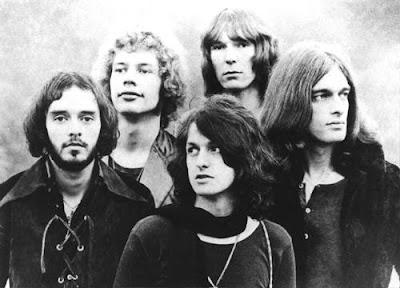
Yes
Yes

The Rock & Roll Hall of Fame Foundation released its 2017 list of nominees for possible induction into the Rock & Roll Hall of Fame in Cleveland, Ohio next spring. As usual, the list elicits a tsunami of hot takes as people debate the merits of each of the otherwise worthy nominees. The Reverend has taken a pretty firm stance on the Hall of Fame in years past, and this new list of nominees is no different.

I’ve offered my own takes below on who should get inducted – and who shouldn’t be inducted – into the Rock & Roll Hall of Fame; if you think differently, please feel free to state your case in the comments section below. Keep in mind that beyond the performers listed below, a number of worthy artists remain unconsidered for the Rock Hall, including the Moody Blues, Humble Pie, Motörhead, Jason & the Scorchers, Roxy Music, and King Crimson, to name a few. Also remember that the Reverend is a lifelong rockist and an old fart raised during the classic rock era of the 1970s…the music really was better back in the day, and this perspective is reflected in my picks below...

Yes to Yes!


What makes an artist or band “worthy” for induction to the Rock & Roll Hall of Fame? I’m not sure what Rolling Stone magazine founder Jann Wenner and the Rock & Roll Hall of Fame Foundation’s guidelines are (the Foundation has little to do with the physical Hall of Fame in Cleveland but chooses who is inducted), but here’s my take. A Hall of Fame artist should possess agreed-upon talent (by industry, critics, and fans); exerted influence on the evolution of the genre; push the musical envelope creatively; and while commercial success isn’t a necessity, in combination with the above traits, it adds to an artist’s legacy. By these standards, there’s really no damn good reason why British prog-rock legends Yes aren’t already in the Hall of Fame.

Now, my friend and colleague Martin Popoff has literally written the book on Yes and has previously argued in favor of their induction, so it’s unlikely that I’ll add much to this discussion. For both their groundbreaking creative endeavors in progressive rock, and their amazing commercial run of Top 10 albums during the 1970s (Fragile, Close To The Edge, Relayer, and Going For The One remain enduring, influential works), Yes has earned their induction. The band’s virtuoso musical talents through the years – singer Jon Anderson; guitarists Peter Banks, Steve Howe and Trevor Rabin; bassists Chris Squire and Trevor Horn; keyboardists Tony Kaye, Rick Wakeman, and Patrick Moraz; and drummers Bill Bruford and Alan White – defined a genre and inspired several generations of musicians to follow.

Detroit’s almighty MC5 are a conundrum, another band that should have already received induction into the Rock Hall. Yes, they only released three albums during their fast-burning career, but they made a lot of noise and arguably helped create both punk rock and heavy metal. If fellow Motor City madman the Stooges are in (inducted 2010), so too should the MC5. Pearl Jam’s nomination was a gimmee, and the band’s status and importance during the Grunge era are unparalleled. Pearl Jam brought arena-conquering muscle and sinew back to rock ‘n’ roll after the (mostly) wimpy ‘80s, and their pro-consumer actions on behalf of their fans is the icing on the cake.

The Zombies deserve induction, not only for their outstanding early body of work, but also for the enduring influence of those albums. The J. Geils Band are on the bubble for me – I love the band, and those early albums (their 1970 self-titled debut, 1971’s The Morning After, 1972’s Live: Full House, and 1973’s Bloodshot) offer a high-octane fusion of blues and rock that was as influential at the time as the Paul Butterfield Blues Band was a decade earlier. Sensing changes in the musical currents, the J. Geils crew beat fellow travelers ZZ Top to the line, albums like 1978’s Sanctuary, 1980’s Love Stinks, and 1981’s Freeze-Frame mixing radio-friendly synth-pop into the band’s heady brew of R&B and blues influences and scoring on the charts. Call ‘em the “poor man’s Aerosmith” if you will, but I’d put ‘em in...

MC5 photo by Leni Sinclair
The MC5

No to Hip-Hop & Pop


As I’ve argued many times, it’s called the “Rock & Roll Hall of Fame” for a reason, and no matter their contributions to art, music, or film, hip-hop and pop artists should never be inducted. If it’s a “pop culture” hall of fame, then drop the pretense and call it such. Otherwise, cut out these gratuitous nominations made in the name of some sort of false diversity. For instance, somebody on the nominating committee really wants to see Chic inducted so they’re back on the ballot again this year. They shouldn’t be inducted for the sole reason that they aren’t a rock band by any stretch of the imagination. Yes, main man Nile Rodgers produced a great record for David Bowie, but that’s just not enough to make the cut. Sorry, Chic lovers...

The legend of Tupac Shakur has undeniably grown in the years since his death, and although the rapper released four acclaimed, influential albums during his lifetime, he wasn’t a rock artist and his influence on rock music was minimal (and I’m not even discussing the posthumous flood of dodgy album releases). I’d also include Janet Jackson under this category – a talented and popular dance-pop artist with one foot in the R&B grooves of the ‘90s – but she’s not a rocker, no matter Wenner’s fever dreams.

Joe Tex’s nomination is problematic in that while he was a great R&B singer, I don’t consider him to be a great artist and don’t feel that his influence extended to rock musicians the way that, for instance, the work of James Brown, Ray Charles, and Little Richard did. Tex’s career was almost entirely played out on the R&B charts, and he had only a pair of crossover hits stateside and only one single ever charted in the U.K. The nomination of folk music legend Joan Baez is some sort of joke, because beyond her brief flirtation as Dylan’s muse, there’s nothing in her career that even remotely “rocks.”

Willing to risk pissing off what little punk readership we have, I’d also nix Bad Brains from induction into the Rock Hall, and I’m kind of surprised that the band was nominated in the first place. Moderately influential on the ‘80s rock scene, the bulk of Bad Brains’ artistic output came via indie labels like ROIR, SST Records, and PVC Records – which, in itself, doesn’t disqualify them for induction – but much of the band’s music just isn’t notable and wasn’t distributed widely enough to have made a big difference. Quick, name a single Bad Brains album beyond their self-titled 1982 debut...yeah, I thought so. Sure, they influenced the Red Hot Chili Peppers and Fishbone, but I’d rather induct the latter and forget about the former.
Electric Light Orchestra

Not This Year (Or Any Other)


Sheesh, is there a more overrated band on the planet than Jane’s Addiction (save for maybe Smashing Pumpkins)? Yes, Perry Farrell and gang have a loyal and vocal following, but they released a mere three over-hyped albums during their short heyday (1987-90), hitting the upper region of the charts but once, which is not a Hall of Fame worthy career in my mind. Sure, they made some innovative music before spiraling into addiction and pretentiousness, and kudos to Farrell for traveling freakshow that was Lollapalooza (at least before the event became as bloated as Farrell’s bands), but we also have JA to thank for rap-metal outfits like Korn and Limp Bizkit. Yikes!

Never, never, never for Journey, a rock band in name only. Through their arena-rockin’ years during the late ‘70s and early ‘80s, they were closer to the pop world than true rockers. Former Santana guitarist Neal Schon squandered his talents on this horrible band, and Steve Perry was a grating, faux soulful vocalist fronting a bunch of career opportunists. Synth-pop new wavers Depeche Mode were hot shit in their U.K. homeland, but their commercial peak in the U.S. came late in the game, and while they chalked up four RIAA sales awards, they never really made any waves stateside and their influence is restricted to a bunch of electronic-rock wankers and dance-pop outfits.

I could make a similar argument with Kraftwerk, who were an undeniably influential band in the very narrow sphere of electronic rock (a/k/a “Krautrock”), but the band literally disappeared early in the 1980s, and only scored one commercial and critically acclaimed album stateside with 1974’s Autobahn. I’d also question the merits of electronic rock and its place in the Rock & Roll Hall of Fame, but I’d promote artists like Brian Eno, Keith Emerson (ELP), or Rick Wakeman (Yes) – all of whom pioneered the use of synthesizers and Mellotrons in rock ‘n’ roll – before I’d induct Kraftwerk.

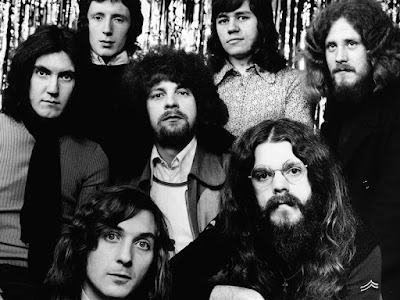
The nomination of Electric Light Orchestra (ELO) is also a hard one as I’m a fan of the band, but although they had a sweet commercial run in the mid-to-late ‘70s with four Top Ten albums and a pair of Top 20s, I can’t readily argue their overall importance to rock ‘n’ roll music. If anything, I’d rather induct ELO frontman Jeff Lynne’s earlier band, the Move, and even Lynne’s side gig as a superstar producer (Roy Orbison, Tom Petty, Paul McCartney, George Harrison, Brian Wilson), where he often coaxed great performances out of the artists he was recording, has more real potential for Rock Hall induction than does ELO.

As for 2017 nominees that I haven’t mentioned in this rant, well, it’s because they aren’t much worth mentioning. You have until December 5th, 2016 to vote for your favorite artists, so hit up the Rock & Roll Hall of Fame website to register your choices.

Saturday, April 16, 2016

DVD Preview: Louder Than Love - The Grande Ballroom Story

Louder Than Love - The Grande Ballroom Story
It was one of a handful of legendary American music venues, and the epicenter of the high-octane Detroit rock ‘n’ roll scene. Originally opened in 1928 as a popular dance hall, the historic Grande Ballroom was bought in 1966 by local high school teacher and radio DJ Russ Gibbs, who envisioned a venue similar to the Fillmore in San Francisco. Working with like-minded local counterculture figures John Sinclair (poet, musician, and MC5 manager) and High “Jeep” Holland (producer and manager of local bands), they booked a veritable “who’s who” of classic rock and blues artists to perform at the venue between 1966 and 1972, including Eric Clapton and Cream, Led Zeppelin, Janis Joplin, Howlin’ Wolf, the Who, and the Grateful Dead. Motor City rock legends the MC5 were frequent performers at the Grande, as were local rockers like Iggy & the Stooges, SRC, Catfish, Frost, Ted Nugent, and Savage Grace, among others.

On June 10th, 2016 our friends at Music Video Distributors will release Louder Than Love - The Grande Ballroom Story on DVD. Produced and directed by Tony D’Annunzio, the award-winning documentary film has enjoyed boffo screenings at nearly three dozen different film festivals around the world since its April 2012 debut to sold-out audiences in Detroit, including the Nashville Film Festival, Australia DocWeek, and the CBGB/NYC Music & Film festival. Filmmaker Michael Moore – a Flint, Michigan native – personally chose Louder Than Love for his Traverse City Film Festival, describing the movie as “an amazing look back at the talent and creative culture produced in this state.”  

“The Grande Ballroom era is potentially the greatest untold story in rock and roll history,’ says director D’Annunzio, a Detroit native, in a press release for the DVD. “With everything Detroit has been through in the last several decades, I wanted to let folks know that aside from the automobile industry, the city has some amazing musical history which helped shape American pop culture.” The filmmaker collected more than 75 hours of interviews with both local and international musicians who performed at the Grande Ballroom, including B.B. King, Alice Cooper, Scott Morgan (The Rationals), Wayne Kramer (The MC5), Dick Wagner (Frost), Ted Nugent, and James Williamson (The Stooges), among others.

D’Annunzio also gathered over 500 never-before-seen archival photos taken by professional photographers and fans of Grande Ballroom performers like the Who, Albert King, Jeff Beck Group, Iron Butterfly, the MC5, Traffic, and others. “We have incredible 8mm film of The Who performing ‘Tommy’ for the first time, including an audio recording by Pete Townsend explaining ‘Tommy’ to The Grande audience. Both have never been seen or heard in any documentary,” D’Annunzio notes. Showcasing the legacy of of one of the most influential music venues in rock ‘n’ roll history, you’re going to want to check out Louder Than Love - The Grande Ballroom Story!

Buy the DVD from Amazon.com 

Thursday, February 11, 2016

Cleopatra’s Psych Box Explores Classic & Modern Psychedelic Rock

Cleopatra Records' Psych Box

It doesn’t surprise the Reverend that the good folks at Cleopatra Records would release a project like the five-CD Psych Box, nosiree! Over the past year, the label has made it their mission to dig up and release undiscovered gems by psych-rock legends like Iron Butterfly and Quicksilver Messenger Service as well as discs by fellow travelers like Curved Air, Captain Beyond, and Hawkwind.

Psych Box is packaged in a 7” x 7” box with individual CD wallets and a full color booklet, the set tracing the history of psychedelic rock from its roots in the 1960s through the present day. The set includes choice music from bands like the aforementioned Iron Butterfly and Hawkwind, the Syn (which featured future Yes guitarist Peter Banks), the Legendary Pink Dots, the Warlocks, the Black Angels, and many more.

Cleopatra Records' Psych Box
The enclosed booklet includes band bios and suggested listening for whatever sort of musical acid trip you’d like to book in the future. The set includes a bonus 7” record featuring a spoken word track by Dr. Timothy Leary with a B-side from Led Zeppelin guitarist Jimmy Page. Just check out the track list below and we think you’ll agree that you’re getting a lot of bang for around $40 for the Psych Box!

Psych Box track list:

Disc One
1. The Brian Jonestown Massacre – “Going to Hell”
2. The Black Angels – “Soul Kitchen”
3. The Legendary Pink Dots – “Damien”
4. A Place To Bury Strangers – “Sunbeam”
5. The Warlocks – “You Destroy”
6. Hawkwind – “Opa-Loka”
7. Absolutely Free – “Vision’s”
8. The Movements – “Great Deceiver”
9. Chrome – “Meet You In The Subway”
10. Nikola Tesla & Thee Coils – “Sweet Rays”
11. Rotten Mangos – “Tent Rentals”
12. The Thunderbeats – “Something Inside Me”
13. The Third Sound – “For a While”
14. Sula Bassana – “Lost In Space”
15. Brainticket – “Black Sand”

Disc Two
1. Wild Style Lion – “Love Was In Me” (featuring Kim Gordon)
2. The May Company – “Wrap Around Porch”
3. The See See – “Big Bad Storm”
4. The Syn – “14 Hour Technicolour Dream”
5. Sons of Hippies – “Mirrorball”
6. The Deviants – “Jamie's Song”
7. Cambrian Explosion – “The Sun”
8. Surprise Party – “Cut Me”
9. Siena Root – “In My Kitchen”
10. The Spyrals – “Sunflower Microphone”
11. Studio 69 – “Il Est Juste La”
12. The Litter – “Action Woman”
13. Las Brujas – “Sweaty Windows”
14. Jovontaes – “Forever”
15. Spindrift – “Red Reflection”
16. Dum Dum Girls – “Letter to Hermione”

Disc Three
1. Nico – “All Tomorrow’s Parties”
2. Bonfire Beach – “Black Tinted Moonlight”
3. The Fresh & Onlys – “In The Light”
4. The Altered Hours – “Smoke Your Eyes”
5. Femme Accident – “Everything Goes Wrong”
6. The Ones – “Lady Greengrass”
7. Tales of Murder and Dust – “Laid Bare”
8. Dead Meadow – “The Crystal Ship”
9. The Sonic Dawn – “Japanese Hills”
10. MC5 – “Gold”
11. Tashaki Miyaki – “Take It Or Leave It”
12. Holy Wave – “Do You Feel It”
13. The Tulips – “Winter Winds”
14. Fade In Mona Lisa – “Green Carnations”
15. Electric Moon – “Spaceman”

Disc Four
1. Magic Wands – “Jupiter”
2. Nektar – “It’s All In The Mind”
3. The Chocolate Watchband – “No Way Out”
4. Brujas Del Sol – “Occultation”
5. Calliope – “Iron Hand”
6. Energy 2000 – “Zodiacal Light”
7. The Floormen – “The Place Where The Flat Things Are”
8. The Striped Bananas – “Dark Peace”
9. Indian Jewelry – “Kashmir”
10. Wight Lhite – “Close To Odd”
11. Surly Gates – “Under Your Tongue”
12. Aqua Nebula Oscillator – “Innocent Tu Seras Incandescent”
13. Pink Velvet – “Allez prenons un autre verre”
14. The Crazy World of Arthur Brown – “Devil's Grip”
15. Black Delta Movement – “MacBeth”
16. Aura Blaze – “A Glass of Tears Half Empty”

Disc Five
1. Iron Butterfly – “Possession” (original 7” version)
2. The Fuzztones – “Hallucination Generation”
3. Allah-Las – “Stoned”
4. Love, Hippies & Gangsters – “This Is What We Want”
5. onYou – “National Strings Attached”
6. Secret Colours – “Get To The Sun”
7. The Vacant Lots – “Julia”
8. Black Moon Circle – “The Machine On The Hill”
9. Ttotals – “Life Thus Far Out”
10. Nik Turner – “Time Crypt”
11. Shuggie Otis – “Ice Cream Party” (instrumental)
12. Kim Fowley – “The Trip”
13. Landskap – “South Of No North”
14. The Lucid Experiment – “She’s My Melody”
15. The Raveonettes – “The End”

Buy the box set from Amazon.com: Various Artists - Psych Box

Saturday, February 6, 2016

Fossils: MC5's Back In The USA (1970)

The MC5's Back In The USA
[click to embiggen]
Detroit’s favorite sonic terrorists, the infamous MC5, were an oddity even in the late 1960s. The band’s first album, 1969’s Kick Out The Jams, was recorded live at Russ Gibbs’ legendary Grande Ballroom venue, capturing the dynamic band onstage and raging against the machine. As such, Back In The USA, the band’s sophomore effort, was actually their studio debut. Even in those days, a band usually had a couple of studio records under their belt before shooting for a live disc.

But MC5 were no ordinary band, and their deep repertoire of original material and inspired covers of deep blues, soul, and jazz sides allowed them to introduce themselves with a high-octane live collection that would hit #30 on the charts on the strength of its incendiary title track. Back In The USA was a different kind of beast, however – produced by rock critic Jon Landau (who would later become Bruce Springsteen’s manager), the album masterfully blended punkish intensity with a raucous, melodic power-pop sound that would yield some of the band’s best original songs in “Teenage Lust,” “High School,” and “Shakin’ Street,” songs that would in turn influence bands like the Dictators, the Flamin’ Groovies, and the New York Dolls, among others.

Atlantic’s ad campaign for Back In The USA was simple – a black and white photo of the band, clad in leather jackets with a collective sneer on their faces, looking like a gang of ruffians (an image later appropriated to good use by the Ramones). Beneath the dominant band photo is a list of the album’s songs, and a shot of the cover. Although Back In The USA found nowhere near the success of its predecessor, rising only as high as #137 on the charts, its influence would cross the decades. It has since become considered a high water mark for the legendary band, and you can hear strains of MC5 in the music of the White Stripes, the Clash, the Dead Kennedys, Radio Birdman, and other bands across the spectrum of the rock, punk, and metal genres.