Showing posts with label Greg Lake. Show all posts

Friday, July 21, 2017

Emerson, Lake & Palmer’s Fanfare 1970-1997 deluxe box set

Emerson, Lake & Palmer’s Fanfare 1970-1997 deluxe box set
The Reverend tends to take a dim view of a lot of the recent box set fare released by cash-hungry major labels looking to fleece an artist’s hardcore fans for one last ride on the merry-go-round. Although there are a handful of dedicated reissue labels performing a public service in rescuing the work of obscure artists from the scrap-heap of history with finely-curated deluxe boxes (Omnivore Recordings, I’m looking at you…), much of what you’re putting up a C-note or two for these days is a rehash of music that you already own...

That being said, everybody’s favorite rock ‘n’ roll padre is going gaga over the recently-announced Emerson, Lake & Palmer box set. Titled Fanfare 1970-1997, and scheduled for September 29th, 2017 release, the limited-edition numbered Fanfare 1970-1997 box offers a lot for both the grizzled original ELP fan as well as the rookie just now climbing on the prog-rock bandwagon. First of all, the box contains remastered CD versions of all eleven ELP albums with original sleeve artwork, from the band’s 1970 self-titled debut to their underrated 1994 swansong, In The Hot Seat, and every note in between.

As they used to say on those old K-Tel TV commercials, “that’s not all!” The box also includes a previously unreleased live triple-vinyl album with May 1973 performances from Milan and Rome, Italy. Throw in five previously-unreleased live CDs mastered by engineers Andy Pearce and Matt Wortham, including Live At Pocono International Raceway (1972), Live At Waterloo Concert Field (1992), Live At Birmingham Symphony Hall (1992), On the BBC (including a 1979 performance on The Old Grey Whistle Test and a 1993 performance on Pop Goes Summer), and Live At Élysée Montmartre (1997) and you have one hell of a box set.

Emerson, Lake & Palmer
“Wait a minute, there’s still more!” sez Rev. Pompeil…Fanfare 1970-1997 includes an audio Blu-ray disc with stereo 5:1 and surround sound mixes of the first four ELP albums by Porcupine Tree’s Steven Wilson (Emerson, Lake & Palmer and Tarkus) and King Crimson’s Jakko Jakszyk (Trilogy and Brain Salad Surgery). Add a pair of remastered 7” singles – “Lucky Man” b/w “Knife-Edge” (1970) and “Fanfare For The Common Man” b/w “Brain Salad Surgery” (1977) – with reproduced original sleeve artwork, throw in a metal & enamel ELP logo pin badge, reprinted original 1970 promo poster and 1972 promo brochure and 1974 and 1992 tour programs and top it off with a deluxe 12” hardback book with rare band photos and extensive notes by acclaimed British music journalist Chris Welch with quotes from Keith Emerson, Greg Lake, and Carl Palmer and I think that even the most reluctant progger would agree that Fanfare 1970-1997 offers a lot of value for the pre-order price of $152 (plus shipping).

And yes, the Rev does believe the hype and I’ve already ordered my copy of Fanfare 1970-1997, which earned me a previously-unreleased CD with the rough album mixes for Black Moon, something truly for the obsessive ELP fan. Still, we’ve recently lost both Keith Emerson and Greg Lake, and although ELP has taken a lot of grief through the years for their pomposity and the over-the-top nature of the band’s music, they continue to drag young new fans in by the truckload. You can get your very own copy of Fanfare 1970-1997 via the band’s website.

Also on That Devil Music:
Emerson, Lake & Palmer’s A Time & Place CD review
Greg Lake’s Greg Lake/Manoeuvres CD review 

Saturday, December 31, 2016

In Memoriam 2016: Giorgio Gomelsky to Alphonse Mouzon

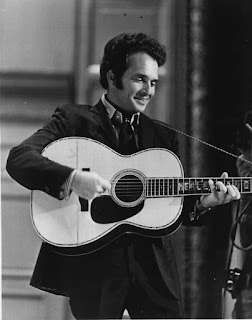
Merle Haggard 1971, photo courtesy Country Music Association
Merle Haggard 1971, courtesy CMA
This year was absolutely brutal for musicians...in a normal year, I sadly have to write up a couple dozen ‘end-of-year’ obituaries; for 2016, I had over 70 musicians, writers, and producers to memorialize. Our “In Memoriam” feature is so large this year that I’ve broken it down into three parts. To follow is in tribute to the artists that have made the music we love…

Part One: Mose Allison to Jimmy Guterman
Part Three: Prince to Bernie Worrell


Giorgio Gomelsky (81)
One of the major influential non-performers of the classic rock era of the ‘60s, Giorgio Gomelsky was a filmmaker, band manager, songwriter, and record producer. Gomelsky owned the Crawdaddy Club in London, hiring the Rolling Stones as his house band; he managed the Yardbirds and produced their albums from 1966 on; and he formed the Polydor-distributed Marmalade Records label, releasing albums by the Blossom Toes, Brian Auger & Trinity, and Graham Gouldman, who would later form 10cc. Gomelsky also had a hand in launching the careers of Soft Machine, Daevid Allen and Gong, Magma, Material, and Vangelis, among others. His fingers are all over the psychedelic and prog-rock of the ‘60s and, after a move to New York City in 1978, became involved with Big Apple bands like D Generation and Band of Susans.

Dale "Buffin" Griffin (67)
Drummer Dale “Buffin” Griffin was a founding member of legendary British cult rockers Mott the Hoople, performing on all seven of the band’s studio albums between 1969 and 1975. After Ian Hunter and Mick Ralphs left the band, Griffin regrouped with bassist Pete “Overend” Watts and keyboardist Morgan Fisher as ‘Mott,’ the new version of the band releasing two albums. After losing their singer and guitarist, Mott became British Lions with the addition of singer and guitarist John Fiddler (Medicine Head). British Lions released a pair of albums before breaking up in 1978. During the 1980s, Griffin moved into the studio, producing albums by the Cult, Hanoi Rocks, and New Model Army. Griffin also worked as a producer for BBC Radio 1, producing DJ John Peel’s legendary sessions from 1981 through 1994, recording bands like Pulp, Smashing Pumpkins, and Nirvana. Griffin was diagnosed with early-onset Alzheimer’s disease in 2007, and gradually faded away from the music scene, leaving behind a stellar reputation and musical legacy. 

Merle Haggard (79)
Country music legend Merle Haggard was a singer, songwriter, and guitarist who, along with contemporary Buck Owens, created what has been termed the “Bakersfield sound,” which was rougher-edged, twangier, and rawer than the music being cranked out in Nashville during the 1960s. Haggard’s troubled childhood led to a stint in San Quentin Prison as an adult, where he was inspired by a performance by Johnny Cash to pursue a career in music.

During his commercial peak, Haggard enjoyed 38 number-one hit songs on the U.S. country charts, and he continued to release critically-acclaimed albums up to the time of his death, collaborating with friend and fellow-legend Willie Nelson on the 2015 album Django & Jimmie, which hit #1 on the country charts. Haggard received a number of accolades during his lengthy career, including a 2010 Kennedy Center Honor, a 2006 Grammy™ Lifetime Achievement Award, induction into the 1994 Country Music Hall of Fame, and numerous Academy of Country Music and Country Music Association awards.

Bill Ham (79)
Best known as Texas blues-rock band ZZ Top’s longtime manager and producer, Bill Ham also made a name for himself in the country music industry as singer/songwriter Clint Black’s manager. Ham also formed several successful music publishing companies that, during the ‘90s, handled a large number of Top 10 charting country music songs. Ham also produced albums by Southern rock band Point Blank and Texas guitarist Eric Johnson.

The Black Crowes' The Southern Harmony and Musical Companion
Eddie Harsch (59)
Multi-instrumentalist Eddie Harsch was a Canadian keyboardist who joined the Black Crowes in 1991 in time to record their best-selling sophomore album The Southern Harmony and Musical Companion. Harsch subsequently played with the band through 2006, appearing on 1994’s Amorica, 1996’s Three Snakes and One Charm, 1999’s By Your Side, and 2001’s Lions albums. Harsch also played bass with the Detroit Cobras during the Crowes’ early ‘00s hiatus. Prior to hooking up with the Black Crowes, Harsch was a member of Chicago blues legend James Cotton’s band.

Ted Harvey (85)
Longtime drummer for Chicago blues legends Hound Dog Taylor & the Houserockers, Ted Harvey appeared on all of Taylor’s albums and toured the world with the guitarist. Harvey was a veteran of the cutthroat Chicago blues scene, playing with legends like Jimmy Dawkins, Big Walter Horton, Jimmy Rogers, and J.B. Hutto, among others. Alligator Records founder Bruce Iglauer, who released all of Hound Dog Taylor’s albums, said of Harvey, “besides being one of the best Chicago blues shuffle drummers ever, Ted was a jovial, friendly man with a nice word and a smile for everyone. He never looked for credit for himself; he just wanted to make the band sound good.”

Leon Haywood (74)
R&B singer Leon Haywood found only modest success as a performer but created a niche for himself as a talented and successful songwriter and producer. Haywood started playing piano at the age of three, and by the time he hit his teens he was performing with Guitar Slim’s band. Moving to L.A. in the early ‘60s, Haywood worked with Big Jay McNeely before joining Sam Cooke’s band as the soul legend’s keyboardist. The initial singles Haywood recorded for Fantasy Records gained no traction on the charts but, after moving to Imperial Records in 1965, Haywood enjoyed a minor R&B chart hit with “She’s With Her Other Love.” Two years later, Haywood scored a bigger hit with “It’s Got To Be Mellow,” which rose mid-way up the pop chart as well as hitting #21 on the R&B chart.

Haywood changed his style during the ‘70s, incorporating elements of funk and rhythm into his sound, and his 1975 hit “I Want’a Do Something Freaky to You” charted at #15 pop and #7 R&B. A few other minor hits followed, most notably 1978’s “Don’t Push It, Don’t Force It,” which also charted in the U.K. In the 1980s, though, Haywood eased into the production side of the industry, writing and producing Carl Carlton’s 1981 R&B hit “She’s a Bad Mama Jama.” Haywood worked as an A&R man for Edge Records in Los Angeles, and he also produced albums by bluesmen Jimmy McCracklin and Buddy Ace, among others, releasing them on his own independent Evejim Records label. Haywood’s funk-infused ‘70s records would provide inspiration for a generation of hip-hop stars, with rappers like 50 Cent, Common and, most notably, Dr. Dre sampling his songs on their own records.   

Dan Hicks & His Hot Licks' Original Recordings
Dan Hicks (74)
Eclectic singer/songwriter Dan Hicks is best-known for his band Dan Hicks and His Hot Licks, the artist exploring a wide range of styles with his music, incorporating folk, jazz, country, swing, bluegrass, and pop elements into a sound as unique as the artist himself. Born in Arkansas, Hicks’ family moved to northern California when he was 15 years old. He originally became interested in radio and TV, hosting a segment on a local radio program, Time Out for Teens. Hicks would study broadcasting at San Francisco State College in the late ‘50s, but after teaching himself guitar he became a familiar figure on the San Francisco folk music scene.

Hicks joined cult favorites the Charlatans in 1965 as the band’s drummer, but left in 1967 to form Dan Hicks and His Hot Licks with violinist David LaFlamme, who subsequently departed to form It’s A Beautiful Day. The Hot Licks would release a single self-titled album (also known as Original Recordings) in 1969 before breaking up in 1971. Hicks reformed the band shortly thereafter, the new Hot Licks line-up recording three albums, including the acclaimed Last Train To Hicksville, in 1973. Hicks went solo with 1978’s It Happened One Bite album, and continued to record and perform as both a solo artist and with various Hot Licks line-ups until his death. Hicks' last album was 2010’s Crazy For Christmas, the album’s humorous songs and biting mix of country swing, jazz, and pop showing that Hicks hadn’t lost a step in a career that had spanned nearly 50 years. 

Jerry Heller (75)
Controversial but undoubtedly influential, Jerry Heller was a promoter and manager who had his fingers in every major music trend for decades. During the 1960s and ‘70s, Heller promoted tours by Pink Floyd and Elton John and his booking agency represented artists like the Who, Black Sabbath, Humble Pie, Marvin Gaye, Otis Redding, Grand Funk Railroad, and others. During the 1980s, Heller began working with R&B and hip hop acts like the World Class Wreckin’ Cru, The D.O.C. and the Egyptian Lover.

Heller is best known for his association with pioneering rappers N.W.A as their manager and producer, co-founding Ruthless Records with N.W.A. member Eazy-E. Heller played a role in the emergence of West Coast rap through his support of N.W.A. and Ruthless, and Heller discovered, signed, or managed the Black Eyed Pea, Bone Thugs-N-Harmony, and Above The Law. Heller was portrayed by actor Paul Giamatti in the 2015 N.W.A. biopic Straight Outta Compton, later filing a lawsuit against the film’s producers and rappers Dr. Dre and Ice Cube, citing inaccuracies and false statements presented as fact in the movie.

Long John Hunter's Border Town Legend
Long John Hunter (84)
John Thurman Hunter, Jr. – best known by his stage name “Long John” Hunter – was an underrated Texas blues singer, songwriter, and guitarist. Born in Louisiana and raised in Arkansas, Hunter was working in Beaumont, Texas when he went to a B.B. King concert. The performance prompted Hunter to buy a guitar and learn how to play, and his first single – “She Used To Be My Woman” – was released by Duke Records in 1953. By 1957, Hunter had migrated to El Paso, Texas and he began performing regularly at the Lobby Club in Juárez, Mexico, where he stayed for 13 years.

Hunter released a number of singles throughout the early ‘60s on various regional labels, his “El Paso Rock” becoming his best-known song. The guitarist released his first album, Texas Border Town Blues, in 1988, Hunter subsequently signing with Chicago’s Alligator Records. Hunter’s efforts for Alligator included 1992’s Ride With Me, 1996’s Border Town Legend, and 1997’s Swinging From The Rafters. Hunter joined with fellow bluesmen Lonnie Brooks and Phillip Walker to release the critically-acclaimed Lone Star Shootout in 1999 for Alligator. A popular performer on the festival circuit, Hunter found an enthusiastic audience overseas and he toured frequently, releasing his last album, Looking For A Party, in 2009.  

Preston Hubbard (63)
Talented bass player Preston Hubbard is best known for his tenure both with Roomful of Blues and the Fabulous Thunderbirds. Hubbard played on Roomful’s 1983 Let’s Have A Party and 1984’s Dressed Up To Get Messed Up albums before jumping ship and reuniting with former bandmate Fran Christina in the Fabulous Thunderbirds. Hubbard was with the T-Birds during their late ‘80s commercial peak, playing with the band roughly eight years and appearing on albums like 1986’s Tuff Enuff, 1987’s Hot Number, and 1989’s Powerful Stuff.

Hubbard was in high demand as a session player as well, appearing on Bonnie Raitt’s 1989 comeback album Nick of Time as well as records by Big Joe Turner, Toni Price, Snooky Pryor, and former Roomful bandmate Duke Robillard. Hubbard also performed on the Stevie Ray and Jimmie Vaughan album Family Style. Hubbard’s demons caught up with him in the ‘90s, though, and he spent much of the decade addicted and dealing, finally going to prison in 1999. Hubbard got back into music in the 2000s, moving to St. Louis after getting out of prison and recording with artists like Candye Kane and Nick Curran. After a near-death experience in 2014 where Hubbard discovered he was diabetic, his health continued to decline after decades of drug and alcohol abuse.

Bobby Hutcherson (75)
Bobby Hutcherson was one of the premiere jazz vibraphone players of the 20th century, rivaling the legendary Gary Burton in talent and fame among jazz fans. The influential vibes player began his career in the late ‘50s while still a teen, working with saxophonists Curtis Amy and Eric Dolphy. Hutcherson made his recording debut in 1960 with a single for the Pacific Jazz label recorded with the Les McCann Trio. Hutcherson released his first solo album, The Kicker, in 1963 and would go on to record better than 30 albums for labels like Blue Note, Columbia, and Landmark Records. As a sideman, Hutcherson recorded with many of the most legendary jazz musicians of the era, including Dexter Gordon, Eric Dolphy, Herbie Hancock, McCoy Tyner, and Tony Williams among many others.

Wayne Jackson (74)
Trumpet player Wayne Jackson was a talented soul and R&B musician whose horn was an integral part of the Stax Records sound in the 1960s. As a member of the Mar-Keys, Jackson was part of the Stax house band, playing on hit records by Otis Redding, Isaac Hayes, Sam & Dave, and many others. Jackson formed the Memphis Horns with veteran saxophonist Andrew Love in 1969, the pair subsequently appearing on records by Elvis Presley, Al Green, Aretha Franklin, and Neil Diamond and touring behind artists like Stephen Stills, Rod Stewart, and the Doobie Brothers.

Jackson moved to Nashville in the late ‘70s, touring with country music legend Marty Robbins for three years. In the ‘80s, though, the horn player was called back to rock ‘n’ roll and Jackson performed on records by Sting, U2, and Peter Gabriel, who featured Jackson’s horn prominently in his hit “Sledgehammer.” Jackson and Love reunited in the late 1980s and would tour and record extensively for several years as part of bluesman Robert Cray’s band, performing on five of Cray’s albums including 1986’s Strong Persuader and 1988’s Don’t Be Afraid of the Dark. During the ‘90s, Jackson played in the studio with talents like Steve Winwood, Bonnie Raitt, Neil Young, and Jack White. The Memphis Horns received a Grammy™ Lifetime Achievement Award in 2012. Jackson died after several years of failing health.  

Sharon Jones & the Dap-Tones' 100 Days, 100 Nights
Sharon Jones (60)
She came to earn some degree of fame late in life, but for soul singer Sharon Jones, it wasn’t for lack of talent. Jones honed her vocal style singing in church and working as a backing vocalist in the studio during the 1970s, typically credited as Lafaye Jones. Seemingly without a career in music, Jones went to work as a corrections officer at Riker’s Island in New York City, and later as a Wells Fargo armored car guard. She got a break in 1996 at the age of 40 when she sang for a session behind soul/funk artist Lee Fields. The producers, Gabriel Roth and Philippe Lehman – then owners of the French record label Pure Record – were in awe of Jones’s performance and recorded a pair of solo tracks with the singer, “Switchblade” and “The Landlord” subsequently appearing on the 1996 Soul Providers album Soul Tequila.

Members of the Soul Providers, along with musicians from the Brooklyn bands Antibalas and the Mighty Imperials, formed the Dap-Kings, who would become Jones’s longtime backing band. Roth and musician Neal Sugarman of Sugarman 3 formed Daptone Records to release Jones’s music, beginning with Dap Dippin’ with Sharon Jones and the Dap-Kings in 2002. The album earned widespread critical acclaim, and subsequent Jones albums like 2005’s Naturally and 2007’s 100 Days, 100 Nights jump-started interest in soul and funk music with young record buyers. Jones was diagnosed with cancer in 2013, delaying the release of the Grammy™-nominated Give The People What They Want album as Jones underwent treatment.

The singer would return to touring after the release of the album, and would become the subject of a documentary film, Miss Sharon Jones!, which debuted at the Toronto International Film Festival in 2015. Appearing at the festival, Jones revealed that her cancer had returned, and she underwent further chemotherapy. Jones experienced a stroke in November 2016 and passed away roughly a week earlier, leaving behind an incredible musical legacy.   

Paul Kantner 1975
Paul Kantner 1975, courtesy Grunt Records
Paul Kantner (74)
Singer, songwriter, and guitarist Paul Kantner is best-known for forming the legendary psychedelic rock band Jefferson Airplane and its later spin-off, Jefferson Starship. The Airplane was formed in 1965 by Kantner and singer Marty Balin, and after adding musicians like guitarist Jorma Kaukonen, bassist Jack Casady, drummer Skip Spence, and singer Signe Anderson, the band recorded its 1966 debut album Jefferson Airplane Takes Off. Jefferson Airplane found its classic line-up with the additions of singer Grace Slick and drummer Spencer Dryden when Anderson and Spence departed, the latter going on the form the band Moby Grape.

Kantner appeared on all seven of the Airplane’s albums through 1972, at which time Kaukonen and Casady left to pursue a full-time career with their side band Hot Tuna. Kantner had previously used the Jefferson Starship name for his 1970 solo concept album Blows Against The Empire, and he and Slick revived the band name in 1974 for the Dragon Fly album. The Starship would prove to be even more commercially successful than the Airplane, and Kantner would appear on all eight of the band’s albums between their debut and 1984’s Nuclear Furniture.

After breaking up the band, Kantner took legal action to prevent the other band members from using the ‘Jefferson Starship’ name, singer Mickey Thomas subsequently spinning off the band Starship (later billed as Mickey Thomas’s Starship). Kantner later re-formed Jefferson Starship in 1992, the band releasing 1994’s Windows of Heaven and 2008’s Jefferson’s Tree of Liberty albums while continuing to tour until Kantner’s death. The guitarist was inducted into the Rock & Roll Hall of Fame in 1996.

Martin ‘Bap’ Kennedy (54)
Singer and songwriter Bap Kennedy was best known as the frontman of London-based Irish rockers Energy Orchard. The band was signed to MCA Records on the strength of their live performances, releasing two albums for the label – their 1990 self-titled debut and 1992’s Stop The Machine – before jumping to the indie Transatlantic Records label for a pair of studio albums and the band’s swansong, an acclaimed 1996 live disc, after which the band broke up. Energy Orchard never reached much of an American audience, but they found a fan in Nashville’s Steve Earle, who offered to produce Kennedy’s solo debut album, 1998’s Domestic Blues. Throughout the two decades of his solo career, Kennedy recorded nine albums and collaborated with artists like Earle, Van Morrison, Mark Knopfler of Dire Straits, and Shane MacGowan of the Pogues. Kennedy’s final album was 2014’s Let’s Start Again.    

Greg Lake (69)
We lost two-thirds of Emerson, Lake & Palmer this year when guitarist/bassist Greg Lake passed away in December. The prog-rock legend got his start with pioneering band King Crimson before leaving to form the influential supergroup with Keith Emerson and Carl Palmer. Read our complete obit… 

John D. Loudermilk (82)
American singer and songwriter John D. Loudermilk will forever be remembered for his classic song “Tobacco Road.” A 1964 Top 20 hit for British band the Nashville Teens, “Tobacco Road” has since been recorded by dozens of rock and soul artists including Lou Rawls, the Blues Magoos, Spooky Tooth, Rare Earth, Jefferson Airplane, and Edgar Winter’s White Trash, among others. Surprisingly, the song wasn’t a hit when Loudermilk released his version as a single in 1960.

After rocker Eddie Cochran had a hit with one of his songs, Loudermilk recorded some of his own material, which was released under the name “Johnny Dee.” After a number of his singles failed to chart for Columbia Records, Loudermilk experienced modest commercial success after signing with RCA Victor in 1961, songs like “Language of Love,” “Thou Shall Not Steal,” and “Road Hog” making the charts. Loudermilk’s true talent was his songwriting, however, and after moving from North Carolina to Nashville, he began a productive streak, scoring hits throughout the 1960s and ‘70s with pop and country artists like the Everly Brothers, Johnny Cash, Marianne Faithful, Chet Atkins, and many others. Loudermilk’s second best known song, “Indian Reservation,” was a #1 hit in 1971 for Paul Revere & the Raiders.    

Richard Lyons (57)
Richard Lyons was a founding member of comedic avant-garde sonic terrorists Negativland; among other characters he played on the band’s record were Dick Vaughan, auto trivia expert Dick Goodbody, and Pastor Richard Seeland. Lyons formed Negativland with his high school friend Mark Hosler when both were 17 years old, the pair releasing their self-titled debut album in 1980 with friend David Wills on their own Seeland Records label.

The band is best known for their “Christianity Is Stupid” hoax where they issued a press release stating that a mass murderer had killed his family after hearing the song of that name from their 1987 SST Records release Escape From Noise. Many media outlets picked up the story as factual and reported on it, which the band later lampooned on their 1989 album Helter Stupid. Negativland ran into some controversy when they sampled the band U2 for a 1991 EP of the same name, that band’s label Island Records suing Negativland (as did their own label, SST), leading to one of the first serious discussions of copyright in the digital age.       

George Martin (90)
Other outlets have written more eloquently about the death of Sir George Henry Martin, but we’ll gladly add our two cents. Often referred to as the “Fifth Beatle” for his groundbreaking work with the Fab Four, Martin was a British record producer, arranger, composer, musician, and audio engineer who contributed his considerable talents to all the band’s albums. Martin also produced records by a number of other artists, including Gerry & the Pacemakers, the Action, Jeff Beck, John McLaughlin, Cheap Trick, Elton John, and Kenny Rogers, among many others. Martin also had a hand in composing film scores, including the Beatles’ movies A Hard Day’s Night and Yellow Submarine and the 1973 James Bond film Live and Let Die. One of a handful of producers to enjoy #1 records in three of more decades, Martin produced thirty chart topping singles in the U.K. and 23 number one hits in the U.S. from the 1960s through the ‘90s. Martin was inducted into the Rock & Roll Hall of Fame in 1999.

Henry McCullough (72)
Talented Irish guitarist who first came to prominence with ’60s-era rockers Éire Apparent featuring vocalist Ernie Graham. McCullough went on to play with the Grease Band, backing Joe Cocker on the singer’s first two albums before accepting Paul McCartney’s invitation to join his new band Wings. McCullough’s guitar appears on McCartney’s 1971 album Ram and the 1973 album Red Rose Speedway. He left Wings to pursue session work while forging his own solo career, McCullough’s skilled fretwork appearing on albums by Spooky Tooth, Donovan, Frankie Miller, and Marianne Faithful, among others. As a solo artist, McCullough released eight solo and two live albums.  

Nick Menza (51)
Best known as the former drummer for thrash pioneers Megadeth, Nick Menza died on stage of an apparent heart attack during a performance by the band Ohm, which was formed by fellow Megadeth alum, guitarist Chris Poland. The son of jazz saxophonist Don Menza, Nick began playing drums at the age of two, and as a teen he kicked around as a member of a number of L.A. metal bands. Coming to the attention of Megadeth, he served three stints the band’s drummer, from 1989-98, in 2004, and one last time in 2014. Menza performed on four of Megadeth’s albums, including the groundbreaking 1990 set Rust In Peace, and 1992’s Countdown To Extinction.

George Michael's Faith
George Michael (53)
Georgios Kyriacos Panayiotou, better known to his fans as singer George Michael, came to prominence during the 1980s as part of the British pop band Wham! Formed with singer Andrew Ridgeley in 1981, the band scored big with its first album, 1983’s Fantastic, which shot up the charts to #1 in the U.K., the album yielding hits like “Young Guns” and “Club Tropicana.” Wham! broke through in the U.S. with their sophomore album, 1984’s Make It Big, topping the charts in both the states and the band’s homeland on the strength of its #1 single “Wake Me Up Before You Go-Go.” The band’s future came into question after Michael enjoyed two hit solo singles, 1984’s “Careless Whisper” and 1986’s “A Different Corner.” Wham! officially broke up after the 1986 release of Music From The Edge of Heaven, which was released exclusively in North America and Japan.

Michael began his solo career with the 1987 multi-platinum smash Faith, which sold better than 20 million copies worldwide and yielded half a dozen hit singles, including the title track and “I Want Your Sex.” Michael’s solo follow-up, 1990’s Listen Without Prejudice, Vol. 1, sold better than eight million copies worldwide, topping the charts in the U.K. and hitting number two in the U.S. The album Older was released in 1996, and while it sold over eight million copies worldwide, it failed to go Platinum™ in the U.S. Songs From The Last Century was released in 1999, selling nearly four million copies worldwide, but barely breaking 100k sales in the U.S. as Michael’s personal troubles were effecting his commercial prospects stateside. Michael remained a major star in the U.K., his final solo album, 2004’s Patience, moving over four million copies worldwide and once again topping the U.K. charts.

Michael’s drug use and problems with his sexuality resulted in several arrests and mini-scandals that threatened to derail his career more than once. Nevertheless, Michael ranks among the best-selling British artists ever and remained enormously popular, using his celebrity to headline several charity benefits. Michael earned nearly every accolade possible, including three American Music Awards, four MTV Video Music Awards, three Brit Awards, and two Grammy™ Awards.  

Billy Miller (62)
Musician, record collector, and Norton Records label founder Billy Miller was an integral part of the American rock underground for over three decades. Along with his wife Miriam Linna, the pair first launched the fanzine Kicks in 1979, sharing their love of obscure rock ‘n’ roll with appreciative (pre-internet) readers. They formed Norton Records in 1986 as a way to share the music of fringe rockers like Hasil Adkins and Link Wray, the label reissuing rare rockabilly sides from the 1950s and ‘60s as well as obscure artists like Esquerita.

Before forming Norton, Miller and Linna performed in the rockabilly band the Zantees and later with garage rockers the A-Bones. They put most of their focus into their label’s record releases, though, researching the artists’ backgrounds to provide detailed liner notes for each album. Through the years Norton released albums by the aforementioned artists as well as the Flamin’ Groovies, the Real Kids, Flat Duo Jets, Bobby Fuller, and others. In 2009, Miller and Linna formed Kicks Books, which has published pulp fiction titles by Harlan Ellison and Royston Ellis as well as poetry by jazz legend Sun Ra, and non-fiction works by rock critic and music historian Nick Tosches and producer/musician Kim Fowley. Miller was finishing up a history of the family-owned Detroit label Fortune Records with writer Michael Hurtt at the time of his death after a lengthy battle with cancer; the book is scheduled to be published in 2017 by Kicks Books.

Chips Moman (79)
Lincoln Wayne “Chips” Moman was an American record producer, musician, and Grammy™ Award-winning songwriter best known for helping shape the sound of soul and rock music during the 1960s and ‘70s. Moman first worked for Stax Records as an audio engineer, producing the label’s first hit, the 1960 Carla Thomas song “Gee Whiz.” After a dispute with Stax founder Jim Stewart over money, Moman left the label in 1964 and launched his own Memphis-based studio, American Sound Studio.

As a producer, Moman worked with talents like Elvis Presley, Wilson Pickett, Bobby Womack, and the Box Tops, among others. As a songwriter, Moman wrote or co-wrote (with fellow Memphis legend Dan Penn) hit songs for artists like Aretha Franklin, James Carr, Waylon Jennings, and B.J. Thomas. Living for a while in Nashville, Moman made his mark on country music by producing the first (and most successful) album by country supergroup the Highwaymen (Johnny Cash, Willie Nelson, Waylon Jennings, and Kris Kristofferson) in 1985.

Scotty Moore (84)
Early rock ‘n’ roll guitarist Winfield Scott “Scotty” Moore III is best known for playing with the legendary Elvis Presley during the singer’s early years. Credited by rock critic Dave Marsh with the invention of power chording (on the 1957 Presley hit “Jailhouse Rock”), Moore and drummer D.J. Fontana performed on all of Presley’s initial hits, songs like “Heartbreak Hotel,” “That’s All Right,” “Blue Suede Shoes,” and “Hound Dog,” the two musicians representing an integral part of Presley’s sound. Moore released a solo album in 1964 titled The Guitar That Changed The World and during the 1960s and ‘70s played on recordings by country, rock, and gospel artists. Moore is considered an extremely influential musician, providing inspiration to rockers like Keith Richards of the Rolling Stones, George Harrison of the Beatles, and the Yardbirds’ Jeff Beck.  

Alphonse Mouzon's Mind Transplant
Alphonse Mouzon (68)
Drummer Alphonse Mouzon first came to prominence as a founding member of the legendary jazz-fusion outfit Weather Report. Mouzon toured and recorded for the band for roughly a year, appearing on their self-titled 1971 album before departing to pursue other opportunities. Mouzon spent a couple of years as part of guitarist Larry Coryell’s band Eleventh House, performing on several albums, including 1973’s Introducing the Eleventh House and the following year’s Level One. Mouzon would later reunite with Coryell to record the 1977 album Back Together Again.

Mouzon had signed with Blue Note Records in 1972, releasing his solo debut album The Essence of Mystery. He recorded four albums for the label, the best-known and most successful of which was the 1974 set Mind Transplant, which featured rock guitarist Tommy Bolin, who had contributed to jazz drummer Billy Cobham’s album Spectrum. Mouzon’s 1980 album By All Means featured keyboardist Herbie Hancock and guitarist Lee Ritenour. Mouzon also performed with some of the biggest rock and soul stars of the 1970s and ‘80s, including Eric Clapton, Carlos Santana, Stevie Wonder, Jeff Beck, and Betty Davis, among others. Mouzon formed his own independent label, Tenacious Records, in 1992 to release his album The Survivor as well as future recordings, and to reissue the best of his past albums. Mouzon’s last work was the 2011 album Angel Face.

>>> In Memoriam 2016, Part Three    

Saturday, December 10, 2016

Progressive Rock Legend Greg Lake, R.I.P.

Greg Lake
It is with no little sadness that we have to report the death of progressive rock legend Greg Lake, who passed away on Wednesday, December 7th, 2016 after a lengthy fight with cancer. Lake was 69 years old. Lake’s death follows that of his longtime bandmate Keith Emerson, who passed away in March.

A talented singer, guitarist, and bass player, Lake started playing guitar at the age of twelve and, by the time he hit seventeen, Lake had joined his first band, the Unit Four. As most musicians did at the time, Lake played with several bands during the mid-to-late ‘60s (including the Gods, with future Uriah Heep member Ken Hensley). Lake first came to prominence with prog-rock pioneers King Crimson when founder Robert Fripp – the two friends shared a guitar teacher – asked him to join as the band’s singer and bass player.

Lake contributed to King Crimson’s ground-breaking 1969 debut album, In the Court of the Crimson King, and sung on the band’s sophomore effort, 1970’s In the Wake of Poseidon before leaving Crimson to form Emerson, Lake & Palmer with keyboardist Keith Emerson of the Nice and drummer Carl Palmer from Atomic Rooster. The trio released their self-titled debut album in late 1970, scoring a minor chart hit with Lake’s song “Lucky Man” (written when he was twelve). The album’s mix of rock, jazz, and classical music struck a chord with then-new FM radio and went Top 10 in the U.K. and Top 20 in the U.S. Along with King Crimson and Yes, ELP helped define the progressive rock genre during the early 1970s.

ELP would go on to commercial superstardom, scoring chart hits with albums like Tarkus (1971), Trilogy (1972), and Brain Salad Surgery (1973) before going on hiatus in 1974 and breaking up in the wake of the commercially unsuccessful 1979 album Love Beach. In 1975, while still ostensibly a member of ELP, Lake scored a major U.K. hit with “I Believe In Father Christmas,” the song selling tens of thousands of copies and becoming a holiday standard, subsequently reissued several times throughout the years as well as appearing on the 1977 ELP compilation album Works, Volume Two.

During his break with ELP, Lake recorded a pair of solo LPs – 1981’s self-titled album and 1983’s Manoeuvres – the former of which brought the guitarist modest chart success. After briefly performing with ‘80s-era chart-toppers Asia, Lake formed the short-lived Emerson, Lake & Powell with journeyman drummer Cozy Powell (Rainbow), the trio releasing a lone album in 1986 before breaking up. Lake toured throughout the 1980s with his own band, reuniting with his old ELP bandmates in 1992 for the Black Moon album and subsequent tour. ELP’s In The Hot Seat followed in 1994, but by the end of the decade, the band had broken up again.   

Lake toured in 2001 as part of Ringo Starr & His All-Starr Band and generally kept busy touring with his own Greg Lake Band through the 2000s before reuniting with Emerson for a 2010 acoustic tour. Emerson, Lake & Palmer reunited one last time for the 2010 High Voltage Festival in London in celebration of the band’s 40th anniversary, the performance subsequently released on CD and DVD as High Voltage. Lake was finishing writing his autobiography, titled Lucky Man, at the time of his death; the book is scheduled for 2017 publication. Although frequently criticized as ‘pretentious,’ ELP influenced a generation of musicians to follow, artists as diverse as Dream Theater, Iron Maiden, and Spock’s Beard, and there’s no denying Greg Lake’s enormous talents as a singer, songwriter, and guitarist. 

In a press release, Lake’s longtime manger and friend Stewart Young states, “Yesterday, December 7th, I lost my best friend to a long and stubborn battle with cancer. Greg Lake will stay in my heart forever, as he has always been. Despite his illness which he knew to be terminal he always took the view about his life, career and family that he was indeed a lucky man... His family would be grateful for privacy during this time of their grief. Many thanks.”

Friday, June 3, 2016

CD Review: Greg Lake's Greg Lake & Manoeuvres (2016)

Greg Lake's Greg Lake & Manoeuvres LPs
When British prog-rock legends Emerson, Lake & Palmer released the band’s self-titled debut album in 1970, progressive rock was just a fringe genre without any genuine commercial clout (King Crimson’s initial success notwithstanding). The album took off upon release, hitting #4 on the UK charts and #18 in the US, mostly on the strength of the classic rock staple, “Lucky Man.” They quickly followed their debut album with Tarkus, released a few months later and topping the UK charts while hitting #9 in the US.

ELP’s musical pedigree was impressive, the band considered a true rock “supergroup” when it formed – singer/guitarist Greg Lake came from the aforementioned King Crimson, drummer Carl Palmer from cult faves Atomic Rooster, and keyboardist extraordinaire Keith Emerson from classical art-rockers the Nice. Along with Yes, ELP was prog-rock royalty, helping define the genre and dominating the charts throughout the 1970s with subsequent albums like 1971’s live Pictures At An Exhibition (#10 US/#3 UK), 1972’s Trilogy (#5 US/ #2 UK), and 1973’s Brain Salad Surgery (#11 US/#2 UK). The band’s first eight albums achieved Gold™ Record status, with seven of them charting Top 20 or better.

But the ol’ black magic had begun to fizzle out by the time of 1978’s Love Beach which, although the album would eventually be awarded a Gold™ Record, failed to chart in the Top 30 at the time. The high expense of touring left ELP virtually broke, and the individual band members were exhausted and couldn’t stand each other’s company. ELP broke up (temporarily) in ’79, leaving frontman Greg Lake wondering what he would do next. Lake did what any good muso would do, launching a solo career and forming the Greg Lake Band. The guitarist released two solo albums – 1981’s self-titled debut and 1983’s Manoeuvres – both of which experienced only modest commercial success. Reissued by Cherry Red Records as a two-disc set with four rare bonus tracks, these unfairly obscure and long out-of-print albums are worth another listen.

Greg Lake’s Debut LP


Greg Lake's Greg Lake
Lake’s self-titled debut was recorded partly in the United States and partly at his own studio in the United Kingdom. In Los Angeles, Lake worked with members of Toto, with backing provided by guitarist Steve Lukather, bassist David Hungate, and drummer Jeff Porcaro, as well as studio guests like King Crimson drummer Michael Giles and E Street Band saxophonist Clarence Clemons. Lake’s band on the UK sessions included bassist Tristian Margetts (Spontaneous Combustion), keyboardist Tommy Eyre (Joe Cocker’s Grease Band), and drummer Ted McKenna (Tear Gas, Rory Gallagher). Legendary Irish blues-rock guitarist Gary Moore lent his talents to both of Lake’s solo efforts.

In the liner notes to Greg Lake, the guitarist refers to his “creative turmoil” at the time, and states in retrospect (and I’m paraphrasing) that he should have further explored his prog-rock roots rather than flitting from style to style as he does on this debut. Although Lake’s performances are exemplary, and his backing musicians are top-notch, the material often suffers from focus and, at times, from lack of understanding. For instance, the album-opening “Nuclear Attack” was written by Moore, and his fingerprints are all over this performance (Moore would subsequently release the song on one of his own albums). A scorching, at times symphonic heavy metal flamethrower, Moore’s fretwork is stunning, but Lake’s voice wasn’t built to deliver this sort of molten slag, and it shows…it’s an altogether solid song, but Lake is no Ronnie James Dio, if you know what I mean...

Dylan’s Love You Too Much


A more comfortable fit is “Love You Too Much,” an unfinished song that Lake solicited from Bob Dylan. The Scribe gave the tune to Lake to complete, and he did so nicely, retaining enough of Dylan’s original phrasing and melody to make the song sparkle while pumping up the performance on steroids with his impressive vocals, wonky guitarplay, ambitious instrumentation, and an overall breathless reading. Lake’s original “It Hurts” is an ELP-tinged ballad with his elegant acoustic guitarplay providing counterpoint to a wiry electric guitar. “Black and Blue” veers dangerously close to Fleetwood Mac’s stylistic turf, both lyrically and musically, complete with fey vocals and lovely harmonies – either a good thing or bad depending on your perspective – but a sound probably five years past expiration either way.

The rocker “Retribution Drive” was a bit commercial in orientation, perhaps, but does offer tasty, soaring guitars and dense rhythms and although it has a pretty cheesy middle section where Lake croons out his lyrics, the strident instrumentation and overall sonic dynamic should have made the song a chart hit. Definitely a product of the 1980s, “The Lie” is part rocker/part ballad with overstuffed production and busy instrumentation that almost buries Lake’s vocals at times. It sounds like Lake has gone MOR with “Let Me Love You Once,” a meager ballad that sounds more like Toto than ELP (and no, that’s not a good thing). Of the bonus tracks, an inspired cover of Smokey Robinson’s “You Really Got A Hold On Me” swings nicely on Lake’s vocal chops while “You’re Good With Your Love” is a poppy, new wave construct that Lake never really pulls off.

Greg Lake’s Manoeuvres


Greg Lake's Manoeuvres
Although Greg Lake, the album, experienced moderate chart success (hitting #62 in both the US & UK), Chrysalis Records was expecting a hit single and major league sales like ELP enjoyed, and the label was disappointed by the outcome. While Lake was still trying to find his solo musical identity, he had nevertheless swung for the fences, so it wasn’t for lack of trying that the album didn’t blow up. Dutifully, Lake had taken his band out on the road, touring in support of his solo debut. Comprised of bassist Margetts, keyboardist Eyre, and drummer McKenna, the Greg Lake Band developed a natural musical chemistry while on the road, the experience benefiting them greatly when they entered the studio to record Lake’s second album, Manoeuvres.

With an experienced and stable group of musicians behind Lake (instead of the hodge-podge of talents assembled to record the debut album), and with Gary Moore back in the studio to lend a hand, Manoeuvres is a vastly different album than its predecessor. Yes, the bombastic title track – a Lake/Moore co-write – is the sort of metal-edged hard rock that Moore was pursuing at the time, but toned down somewhat to create a more appropriate showcase for Lake’s lofty vocals. “Too Young To Love” is a mid-tempo rocker, Moore’s scorching fretwork and the band’s crashing percussion complimenting Lake’s vocal performance, which ranges from what is basically a spoken word delivery to shimmering, ethereal phrasing. Lake’s vocal gymnastics are match by the instrumentation, Moore’s frenetic guitarplay flying high above the busy rhythms.

I Don’t Know Why I Still Love You


Lake’s “Paralysed” is a curious construct, at once both the sort of moody, strident new wave music being made by contemporary bands like Berlin and Eurythmics at the time, but with guitar-driven hard rock roots. Lake’s vocals are emotionally-charged and slung low in the mix while Moore’s six-string squeals punctuate the lyrics. Another Lake/Moore co-write, “Don’t Wanna Lose Your Love Tonight” would have been the obvious choice to release as a single, and given the era, it could have scored big-time. A mid-tempo rocker wearing new wave fringe, the song offered Lake’s heartfelt lyrics, Moore’s imaginative guitarplay, and the band’s rock solid rhythmic foundation.

“Someone” provides the right framework for the singer’s best vocal performance on Manoeuvres. A mix of proggy ELP and poppy new wave melodies (think Simple Minds or Icehouse), Lake’s voice drives the haunting ballad while his classical-flavored acoustic strum provides a nice contrast with the lush instrumentation; with a little promotional push, “Someone” could have been another hit single. “I Don’t Know Why I Still Love You” is a beautiful, tearjerker of a ballad, with Lake’s delightful vocals soaring high above bittersweet instrumentation while “It’s You, You Gotta Believe” is a proggy, keyboards-driven ballad with a whimsical soundtrack that nevertheless could have used a bit more guitar. The bonus track included here, “Hold Me,” is a good song that would have fit perfectly within the scope of the original album, the song a lightweight melodic ballad with bright instrumentation, Lake’s warm (double-tracked?) vocals, and classically-inspired fretwork.

The Reverend’s Bottom Line


Greg Lake was no world-beater as a solo artist, and after Manoeuvres failed to chart, the guitarist accepted former ELP bandmate Carl Palmer’s 1983 invite to join Asia as bassist John Wetton’s replacement. A year or so later, when Wetton returned to the fold, Lake hooked up with Keith Emerson and journeyman drummer Cozy Powell in the ill-advised Emerson, Lake & Powell (ELP, geddit? Did they have t-shirts left over or what?). That band released a single, modestly successful album in 1986. Emerson, Lake & Palmer would reunite in 1991, releasing a pair of albums, including 1992’s critically-slagged Black Moon, and the band would tour sporadically throughout the ‘90s and ‘00s.

For Greg Lake, though, he seemingly set aside any further dreams of a solo career. Aside from a handful of late ‘80s demos recorded with Asia’s Geoff Downes, which were released in 2015 as Ride The Tiger, Lake largely stayed within the ELP universe. With these two solo albums, though, Lake experimented with different sounds; most notably, the melodic rock found on Manoeuvres would be extremely influential on a generation of European bands. Neither of Lake’s solo albums are earth-shaking recordings, but they’re solid efforts by a talented instrumentalist and songwriter and deserve to take their place as part of the rich ELP legacy. Grades: B- for Greg Lake, B+ for Manoeuvres (Cherry Red Records, released February 5, 2016)

Buy the CD from Amazon.com: Greg Lake's Greg Lake/Manoeuvres

Related Content: Emerson, Lake & Palmer's A Time and A Place CD review

Sunday, March 13, 2016

A Statement From Greg Lake About Keith Emerson

Keith Emerson & Greg Lake
Keith Emerson & Greg Lake, photo © Neal Preston/Corbis

 
To all ELP friends and fans all over the world, I would like to express my deep sadness upon hearing this tragic news. As you know Keith and I spent many of the best years of our lives together and to witness his life coming to an end in the way that it has is painful, both to myself and to all who knew him. 

As sad and tragic as Keith’s death is, I would not want this to be the lasting memory people take away with them. What I will always remember about Keith Emerson was his remarkable talent as a musician and composer and his gift and passion to entertain. Music was his life and despite some of the difficulties he encountered I am sure that the music he created will live on forever.

My deepest condolences go to Keith’s family. 

May he now be at peace.

Greg Lake
London - March 12, 2016

Archive Review: Emerson Lake & Palmer's A Time and A Place (2010)

Emerson Lake & Palmer's A Time and A Place
Formed in 1970 by keyboardist Keith Emerson (The Nice), guitarist/vocalist Greg Lake (King Crimson), and drummer Carl Palmer (Atomic Rooster), the trio known worldwide as Emerson, Lake & Palmer wasn’t the “supergroup” that it was heralded as at the time so much as a collaboration of disgruntled musicians looking for new artistic opportunities.

Commercially, ELP exploded onto the U.S. charts with a 1970 self-titled debut album that cleverly fused classically-oriented art-rock with the growing progressive rock trend to create a genre-smashing set of songs. Displaying a heretofore “Gothic” edge to their music that reminded (some) listeners of Atomic Rooster’s darkest hues, and easily displaying the instrumental virtuosity of rivals like King Crimson, Yes, or the Moody Blues, the album showcased the three members’ talents in the best possible light.

Subsequent albums would tumble quickly from the band’s creative efforts: 1971’s Tarkus, 1972’s live Pictures At An Exhibition and Trilogy, and 1973’s Brain Salad Surgery – considered by many fans to be the band’s best – would propel ELP to worldwide superstar status. The band burned too brightly, perhaps, and by the end of the 1970s, ELP experienced an acrimonious break-up that kept the three musicians from performing together until the early 1990s…and make no mistake, it was the band’s raucous live performances that fueled its record sales.

While Palmer would flail at his drum kit like he was bludgeoning it into submission, Emerson’s impressive array of electronics gear allowed the musician to stab recklessly at piano, keyboards, or synthesizers with the tact and subtlety of a rabid badger. In turn, Lake’s six-string gymnastics were positively sane when compared to the instrumental madness of his band mates. The band released three live albums during its first decade together, but even the several hours of music represented by those multiple-disc sets pales next to the band’s total commitment to live performances. The recently-released four-CD box set A Time And A Place balances out the band’s too-brief catalog, presenting a career-spanning oversight of the best of Emerson, Lake and Palmer live.

A Time And A Place is divided neatly into three distinct eras, the first representing the band’s early 1970s origins. The first CD in the set opens with “The Barbarian,” a lengthy piece adapted by the band from Bela Bartak’s “Allegro Barbaro.” While not quite involved as some of their other performances here, “The Barbarian” manages to cram a lot into its five-plus minutes nonetheless. Recorded at ELP’s first major concert performance at the 1970 Isle of Wight Festival in the UK, the band rages across the sonic landscape with fierce determination, seemingly wedging classical piano, psychedelic guitar, bombastic drumplay, and proggish keyboard riffs into the mix with a figurative crowbar. It’s a chaotic, powerful performance made all the more impressive by the band’s instrumental virtuosity and total lack of guile.

You’ll find several ELP fan favorites midst the 72-minutes-and-change worth of music on disc one. Emerson’s “High Level Fugue” brings the band indoors to London’s Lyceum Ballroom in late 1970 for a spirited romp. Fueled by the pianist’s manic pounding of the 88s, Emerson solos for approximately 2/3s of the song before Palmer’s jazzy drumbeats come crashing in, and Lake’s serpentine fretwork weaves its way through the maddening syncopation. The band’s re-imagining of composer Aaron Copeland’s “Hoedown,” captured live at the legendary 1972 Mar Y Sol Festival in Puerto Rico, is an energetic, measured performance that strays very little from the recorded version familiar to many in attendance, tho’ Emerson manages to wrangle a little space-noise from his trusty Moog synthesizer.

Performances of two of ELP’s best-known and beloved songs, “Still…You Turn Me On” and “Lucky Man,” are taken from a 1974 show at the Civic Center in Tulsa, Oklahoma. Both songs were written by Greg Lake, and both are fine examples of the best that progressive rock has to offer. The former is a moody, provocative tone poem with whimsical lyrics and imaginative instrumentation that perfectly melds each of the three musician’s strengths in the creation of a magical moment. The latter features a fine vocal performance by Lake, accompanied by folkish guitar-strum that places an emphasis on the lyrics. Shorn of its studio trappings, offering just Lake and his instrument, the song takes on a different vibe altogether. Disc one finishes up with a bang, a thirty-four minute jam on “Karn Evil 9” from 1974 that features more prog-rock raging at the machine than you may care to swallow in one sitting.

Emerson, Lake & Palmer

The second CD of A Time And A Place documents the band’s late 1970s work, basically 1977 and ‘78, really, before the big break-up that would send the band members in different directions for over a decade. Cranking to a stylish opening with a lively, synth-driven cover of the classic, menacing “Peter Gunn Theme,” the disc jumps immediately into the extended madness that was “Pictures At An Exhibition.” Performed here in a severely-condensed sixteen-minute version taken from a Memphis 1977 show, the song loses none of its power due to brevity, the band’s melding of the work of composer Modest Mussorgsky with mid-70s prog-rock instrumentation audacious even by ELP standards, a breathless roller-coaster ride across an art-rock horizon.

Although featuring few songs that are as well known as those on the first disc, tunes like “Tank” (from the self-titled 1970 debut LP) and “Tarkus” (from the 1971 album of the same name) are important entries in the ELP canon. This 1978 performance of “Tank” is a frenetic, nearly breathtaking tightrope sprint that condenses the original six-minute song into a two-minute race against time that provides urgency to Palmer’s drumbeats and an electrifying shock to Emerson’s stabbing synthesizer riffs, eventually leading into a lengthy and explosive drum solo. On the other hand, “Tarkus” is afforded an only slightly reduced running time, although the pace is no less frantic as the band plays its lines with alarming madness, the listener wondering what sort of hellhounds were on their trail. 

Still, it’s with their more obscure material that ELP often surprises. The band was never afraid to kick up a bit of kitsch now and then, and their breakneck take on Scott Joplin’s 1899 ragtime hit “Maple Leaf Rag” is no exception. A 1978 performance of Prokofiev’s “The Enemy God Dances With The Black Spirits” is exhilarating and illuminating in its fusion of the classical and progressive worlds, while Lake’s beautiful “Watching Over You,” from Works, Vol. 2, is as close as the band ever came to creating a conventional British folk-rock ballad. Emerson’s inspired, jazzy piano play is perfectly married to Lake’s fluid vocals on the 1920s British folk standard “Show Me The Way To Go Home.” Not surprisingly, there’s nothing on the second CD from ELP’s ill-fated “break up” album, 1978’s Love Beach, which is for the better, really.

By 1979, the rigors of the road and the pitfalls of the business had clearly gotten to Emerson, Lake and Palmer, and the trio was at creative odds with each other after cranking out seven studio and two live albums in a mere eight years. More than the result of mere artistic fatigue, hundreds of nights on the road in close proximity to one another had created tensions beyond ego, and the band broke up at the end of the decade with the three members allegedly unable to stand one another.

Lake would forge a moderately successful solo career during the 1980s, and Palmer would fall into the accidental goldmine that was the supergroup Asia, while Emerson wrote film scores. Lake and Emerson would briefly reunite for an album and tour in 1985, recruiting journeyman drummer Cozy Powell (Rainbow, Whitesnake) to replace the hesitant Palmer (who was making bank with Asia). This new “ELP” trio recorded a single unremarkable album that somehow still managed to place in the Top 40 in America, showing that a lot of original ELP nostalgia remained among the band’s fans. Suspecting that he had been chosen for the drum seat because his name began with a ‘P’, the prickly Powell scooted out of the ELP universe before the end of ‘86, leaving his bandmates high and dry. Things would pick up in 1991, however, as Asia met its inevitable end and Palmer rejoined his mates in a properly-reunited Emerson, Lakes and Palmer.     

The third CD in A Time And A Place documents the ‘90s-era Emerson, Lake and Palmer reunion with performances taken from 1993 through 1997. While not quite as bombastic as their 1970s-era shows could become, the 1990s version of ELP shows a talented, mature band that hasn’t lost a step, merely learned that you don’t have to end every musical sentence with exclamation marks. The band’s 1992 Black Moon album, its first collection of new material in over a decade, is represented here by three inspired performances.

While Greg Lake’s voice shows a distinct lessening of it warmth and richness a couple of decades on, his vocals on this 1993 performance of “Paper Blood” take on a timbre closer to Dave Cousins’ of Strawbs than his old ELP work. Backed by harmony vocals, the song is a stampeding rocker that benefits from Emerson’s heavy hand on the keyboards and Palmer’s heavier sticks on the drums. “Black Moon” sounds like vintage King Crimson, but with nastier six-string work, a heavier-than-lead bass line, imploding drumbeats, and lightning-bolts of synthesizer. The third song here from Black Moon, the album’s first single “Affairs Of The Heart,” is an engaging ballad with a warm vocal track and intricate fretwork by Lake and some nice keyboard flourishes by Emerson.

Sadly, disc three includes nothing from the band’s ill-fated and final (so far) studio album, 1994’s In The Hot Seat, an under-recorded and unsympathetic recording whose songs may have fared better in the live setting. Instead, we get a smattering of old-school ELP (an acoustic guitar-oriented reading of “From The Beginning” from Trilogy with some fine, nuanced Palmer drumwork; a full-bore prog assault on “A Time And A Place,” from Tarkus) mixed with rare odds ‘n’ sods like the surprising ragtime-styled piano instrumental “Honky Tonk Train Blues,” or the edgy art-rock instrumental “Creole Dance.” A 1993 performance of the dark-hued “Knife Edge,” from ELP’s long-ago debut, stands out for its malevolent voodoo vibe, Emerson’s restrained keyboard-bashing, and some great drumming by Palmer alongside Lake’s mesmerizing vocals.

The fourth and final disc of A Time And A Place takes a surprising and welcome tack, providing listeners with a collection of a dozen tracks culled from various fan-recorded bootlegs that span the entire 20-year career of the band. Admittedly, the sound quality lessens considerably on these covertly-recorded performances, but they stand out in contrast mostly because the rest of the live material in the box set sounds so damn good. Still, designed with the fan in mind, what true ELP follower is going to quibble with a 1972 performance of the art-rock/space-rock epic “The Endless Enigma” or a romp through “Abaddon’s Bolero” from the same year? ELP fanatics can sink their teeth into a haunting version of “Jerusalem” from 1974, or an enchanting reading of the hit “I Believe In Father Christmas” from 1993.               

If it seems like A Time And A Place is geared towards the ELP fanatic, well, yeah it is. While much of the material here was previously released on various collections, many long out-of-print, this four-disc set is a cost-effective way for the collector to gather up a 43 fine and entertaining performances by one of prog-rock’s most exciting and dynamic live bands. While the commercial success of Emerson, Lake and Palmer never matched that of contemporaries Yes or Genesis, and they seldom received the critical acclaim afforded King Crimson, their place in the prog-rock galaxy is safe and secure, ELP one of the most influential and ground-breaking bands in the genre. (Shout! Factory Records, 2010)

Review reprinted courtesy of Blurt magazine...

Buy the box set from Amazon.com: ELP's A Time and A Place

Friday, January 22, 2016

Greg Lake’s Solo Albums Reissued

Greg Lake's Greg Lake & Manoeuvres
As both an essential early member of progressive rock legends King Crimson and as a founding member of chart-toppers Emerson, Lake and Palmer, singer and multi-instrumentalist Greg Lake has certainly left his mark on rock ‘n’ roll. One aspect of Lake’s career that is too-frequently overlooked is his short tenure as a solo artist. During an ELP break-up in the early 1980s, the guitarist formed the Greg Lake Band and recorded a pair of critically-acclaimed LPs – a self-titled 1981 set and 1983’s Manoeuvres.

On February 5th, 2016 Cherry Red Records in the U.K. will reissue both of Lake’s long out-of-print solo albums as a single two-disc set, including four bonus tracks that have never appeared on any CD reissue of either album (only on separate rarities discs). Re-mastered and approved by Lake himself, the set includes a booklet with extensive liner notes. Lake handled vocals and guitars on the self-titled 1981 set, backed by guitarist Steve Lukather, bassist David Hungate, and drummer Jeff Porcaro of Toto as well as guests like King Crimson drummer Michael Giles and E Street Band saxophonist Clarence Clemons. 

For Manoeuvres, Lake was backed by a band that included bassist Tristian Margetts from the band Spontaneous Combustion, keyboardist Tommy Eyre of Joe Cocker’s Grease Band, and drummer Ted McKenna of Tear Gas and Rory Gallagher’s band. Irish blues-rock guitar Gary Moore lent his talents to both albums. Whereas Greg Lake, the album, inched its way up to #62 on the Billboard albums chart, Manoeuvres failed to break the Top 200, although not for lack of good material.

Both albums are fascinating collections that display a wider range of Lake’s talents than any of recordings with his notable bands, and solo efforts like “Nuclear Attack” (written by Moore) or “Manoeuvres” (co-written by Lake with Moore) have held up well through the years. The new set allows long-time fans to upgrade their collection and provides an opportunity for new listeners to discover the underrated talents of Greg Lake.

Buy the CD from Amazon.com: Greg Lake's Greg Lake & Manouevres

Friday, July 24, 2015

Greg Lake’s 1981 Hammersmith Odeon Performance Gets CD/LP Release!

Greg Lake's London '81
Greg Lake is best known as a founding member of King Crimson and, of course, and one-third of the prog-rock world-beaters that were Emerson, Lake and Palmer. The talented singer and multi-instrumentalist has dabbled in a solo career these past 30 years, releasing his self-titled solo debut album in 1981. Enlisting blues-rock guitarist Gary Moore and a studio band that included the E Street Band’s Clarence Clemmons and members of the band Toto, Lake ventured out of his prog-rock comfort zone to explore a guitar-driven, hard rock direction.

Touring in support of his debut album, Lake performed a legendary show at the Hammersmith Odeon in London on November 5th, 1981. The Greg Lake Band at the time featured Lake playing guitar, bassist Tristian Margetts, keyboardist Tommy Eyre, and drummer Ted McKenna, with special guest Gary Moore. The concert was recorded for a King Biscuit Flower Hour radio broadcast, and was originally released on CD in 1986 as Greg Lake In Concert. The performance re-appeared on disc again in 2004 as Nuclear Attack, but it’s been out of print for the better part of a decade.

On August 7th, 2015 Purple Pyramid Records – a subsidiary of Cleopatra Records – will be reissuing this classic concert on CD and vinyl as London ’81. Whether or not you’re an ELP fan (and the Reverend certainly is…), this concert is definitely worth your while. Lake and his skilled players crank out an inspired, high-octane performance of classic tracks by ELP and King Crimson as well as material from Lake’s solo debut. Recorded in front of 2,000 rabid fans, London ’81 offers up gems like “Love You Too Much,” a song co-written by Lake with Bob Dylan; “21st Century Schizoid Man,” from Crimson’s debut; Gary Moore’s enchanting “Parisienne Walkways,” and the ELP medley “Fanfare For The Common Man/Karn Evil 9.” Unlike previous CD releases of this frequently-revisited show, London ’81 includes a bonus track in the form of ELP’s “C’est La Vie,” recorded live at a 1981 show in New York City.       

Buy the CD from Amazon.com: Greg Lake's London '81

Greg Lake’s London ’81 tracklist:
1. Medley: Fanfare For the Common Man/Karn Evil 9
2. Nuclear Attack
3. The Lie
4. Retribution Drive
5. Lucky Man
6. Parisienne Walkways
7. You Really Got A Hold On Me
8. Love You Too Much
9. 21st Century Schizoid Man
10. In The Court of the Crimson King
11. C'est La Vie