Showing posts with label Deep Purple. Show all posts

Friday, May 27, 2022

Book Review: Glenn Hughes: The Autobiography (2011)

Glenn Hughes: The Autobiography
Glenn Hughes is a contradiction – the talented singer, songwriter, and musician remains a relatively obscure figure in America, in spite of his status as a bona fide rock ‘n’ roll legend. Although you may not have heard of Hughes, or maybe remember his name only vaguely, chances are that if you’re a fan of ye olde “classic rock,” you’ve probably heard the “voice of rock” upon a time.

Hughes’ tenure with bands such as Trapeze, Deep Purple, and Black Sabbath during the 1970s and ‘80s has long been the stuff of myth, while collaborations with like-minded musicians like Sabbath’s Tony Iommi, singer Joe Lynn Turner, and guitarist Pat Thrall have only added to his legacy. Throw in a moderately successful solo career (especially in Europe) that has yielded almost two-dozen recordings, and add Hughes’ role as an integral part of the classic rock supergroup Black Country Communion, and the question becomes not “who is Glenn Hughes” but, rather, “why haven’t you heard of Glenn Hughes?”

Glenn Hughes: The Autobiography


With better than 40 years of rock ‘n’ roll history behind him, Hughes has some stories to tell, and tell them he does in Glenn Hughes: The Autobiography. Unlike similar celebrity rock bios that either shovel mud on somebody else (Keith, I’m thinking of you) or mindlessly revel in behavioral excesses (ahem, Mutley Crew…), the punches that Hughes throws are almost exclusively thrown at himself. Glenn has been a bad boy through the years, and the decades of soul-seeking and struggling with addiction he reveals in these pages aren’t shared as thinly-veiled boasts but rather as cautionary tales.

Although Hughes’ longtime struggle with cocaine is certainly no secret to many in the industry, the extent to which it threatened to derail his career is shocking in its extremity. That Hughes managed to come out the other side of decades of abuse with his musical gifts and sense of humor intact is not only amazing, but downright encouraging. Aside from the obvious sincerity that shines from the pages of Glenn Hughes: The Autobiography, Hughes’ conversational style and the way he frames his story conveys a friendliness and down-to-earth personality that the average reader can relate with. Personally, I’ve spoken with Hughes on occasion, and have always been struck at the ease in which he engages you…it’s like meeting an old friend on the street and coming away thinking “what a hell of a guy!”  

As for the dirt in Glenn Hughes: The Autobiography, there’s little of it, really, although Hughes comes embarrassingly clean on a number of high-profile sexual and romantic liaisons, and offers the truth, from his perspective, of a number of high and low points throughout his storied career, most of the self-professed lows involving drugs of one sort or another. The bio begins with a brief overview of his childhood and teen years, and touches upon his early musical efforts. Hughes’ first band of note, the vastly-underrated Trapeze, is covered to some extent, leading up to the unexpected break that would launch his career into the stratosphere – his recruitment as a member of Deep Purple.

Joining Deep Purple


Joining Deep Purple in 1973 was a huge advance for the young singer and bass player’s career. Purple was already one of a handful of jet-setting, globe-spanning superstar rock bands at the time, and Purple’s choice to bring in Hughes and vocalist David Coverdale to replace Ian Gilliam and Roger Glover had the band’s longtime fans wondering. Hughes contributed bass and vocals to three of the band’s mid-to-late 1970s studio albums, and a handful of live discs, and he goes into detail on his time with the band, his relationships with both old members like Jon Lord and Ian Paice as well as newcomers like Coverdale and, later, Tommy Bolin. For a Purple fan, Hughes’ memories of his time with the band – positive and negative – provide priceless inside info.

After the break-up of Deep Purple, Hughes would be involved with a number of various projects, some more successful, creatively and/or commercially, than others. There would be a short-lived Trapeze reunion, a pair of well-regarded albums made with former Pat Travers guitarist Pat Thrall (Hughes/Thrall); an unsatisfying collaboration with blues-rock guitarist Gary Moore; and a number of projects with Tony Iommi, some better than others, that would culminate in the ill-conceived Iommi solo work cum Black Sabbath album-in-name-only Seventh Star. Some of these projects Hughes touches upon only fleetingly, others he offers more detail, but often they are just presented as an interesting aspect of the overall narrative flow.

Also only briefly addressed is Hughes’ seemingly secret career as a studio gun for hire. Although Hughes’ career is indelibly marked by high-profile band memberships and musical collaborations, he has also often lent his talents to a lengthy list of other artists’ recordings. Among Hughes’ session credits are those one would expect – guest appearances on albums by Purple alumni like Roger Glover, Jon Lord, and Tommy Bolin – the not entirely unexpected, such as singing with Pat Travers or Ken Hensley (Uriah Heep), and the surprisingly diverse, including sessions with the KLF, Motley Crue, Ryo Okumoto, and Quiet Riot, among many others. One gets the sense that Hughes brought his unique voice to many of these sessions not for monetary gain (although there probably was some) but rather because of the immense joy he has in the music.

Play Me Out


Given short-shrift by Glenn Hughes: The Autobiography is the artist’s lengthy and, at times, brilliant solo career, which began in 1977 has since resulted in a number of solid albums of Hughes’ trademark funk-infused rock ‘n’ soul music. Although Hughes touches upon a few of the milestones of his solo work, including his 1977 debut Play Me Out, he concentrates mostly on his post-sobriety recordings of the 21st century, which include such gems as 2003’s Songs In the Key of Rock, 2005’s Soul Mover, and 2006’s Music For the Divine.

A little more insight is provided Hughes’ role in the formation of Black Country Communion with blues-rock guitarist Joe Bonamassa, drummer Jason Bonham, and keyboardist Derek Sherinian. Hughes has seemingly found a new creative spark playing alongside these three talented musicians, and the overwhelming European acceptance of the band’s blues, rock, and soul hybrid sound has added another interesting chapter to Hughes’ still-ongoing story. Two studio albums and a live CD and DVD into the career of a band that’s only a couple of years old, only stateside dominance as eluded Black Country Communion so far.

Glenn Hughes: The Autobiography is constructed as a sort of oral history, with Hughes’ recollections punctuated by commentary from family (including his wife and parents), friends like Rob Halford (Judas Priest) and Tom Morello, and former bandmates like Coverdale, Thrall, and Iommi. Woven throughout Hughes’ tales of famous musicians and various girlfriends, however, is that of his struggle in the face of overwhelming addiction, including the self-deceit, the rationalized relapses, and the final moment of clarity where Hughes heard the voice of God (not literally, tho’ maybe…I’m not revealing any spoilers!) that led to his current sobriety and obvious joy of life.

The Reverend’s Bottom Line


Overall, Glenn Hughes: The Autobiography tells an amazing and engaging story – that of the rock star brought down to earth and subsequently resurrected to enjoy a second (third?) chapter of his career. One aspect of the book seemingly overlooked by others who have reviewed it is the perspective of the various people who have offered their comments on Hughes. Without exception, they all seem genuinely relieved that Hughes has found peace with himself, their comments displaying a fondness for the man and an appreciation of his talents…for Glenn Hughes is living proof that a nice guy can finish first… (Jawbone Press, published November 1st, 2011)

Review originally published by Blurt magazine, 2012

Buy the book from Amazon: Glenn Hughes: The Autobiography

Friday, December 31, 2021

Short Rounds: Calidoscopio, Deep Purple, Tom Guerra, The Specials, The Wildhearts, Sami Yaffa & 'I'm A Freak Baby 3' (December 2021)

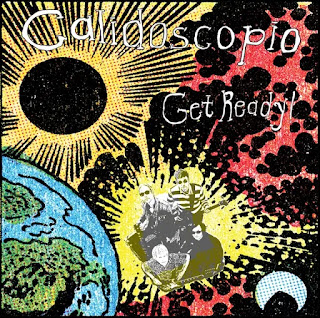
Calidoscopio's Get Ready!

New album releases in 200 words or less…

Calidoscopio – Get Ready! (Jargon Records)
Roaring out of the Flower City with sabers rattling and amps cranked up to eleven, at first blush Calidoscopio sounds like just another talented bunch of 1960s-styled garage-rock revivalists with six-string Sturm und Drang. Further spins of Get Ready! reveal hidden charms, however. The album is an international affair, members of Germany’s Golden Coats collaborating alongside Rochester NY’s Dave Anderson, with guest performances from Australia’s Joey Bedlam (Dollsquad) and garage-rock deity Sky Saxon (from beyond the grave). While the LP cover gives off serious Jack Kirby/psych-rock vibes, songs like the scintillating title track – with big beat drums, gang vocals, and twangy fretwork – evince a timeless, electric, rock ‘n’ roll sound. “The Lanky Gunman” mixes trembling ‘Spaghetti Western’-styled guitar strum with wall-of-sound instrumentation and an eerie story-song while a long-lost monologue from the Seeds’ frontman Saxon is integrated into “Green Forest,” a spacey, hippie-rock screed. “Demon Child” honors its shockabilly roots, benefiting from Bedlam’s breathless vox and Anderson’s jagged guitar licks while the punky “Koko the Gorilla” mixes Hasil Adkins with the Electric Prunes for a raucous good time. Calidoscopio’s Get Ready! provides a mind-bending trip back to the future with a timeless sound that is both familiar and yet innovative. Grade: A   BUY!

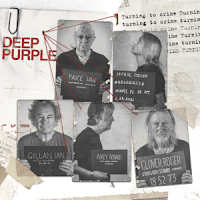
Deep Purple's Turning To Crime
Deep Purple – Turning To Crime (Ear Music)
British rock legends Deep Purple are in their sixth decade as a band and although they’ve never been adverse to recording the odd cover song (their 1968 hit “Hush” comes to mind), they’ve so far resisted the urge to record an album exclusively of covers…until now. Turning To Crime is a collection of twelve of the band’s favorites, ranging from bluesy 1950s-era R&B (Huey ‘Piano’ Smith’s “Rockin’ Pneumonia and the Boogie Woogie Flu”) and ‘60s psych (Love’s “7 and 7 Is”) to blues-rock (Cream’s “White Room”) and beyond. Although the current band is quite adept at playing any sort of music, Gillian’s aging pipes betray his intent at times. Still, Turning To Crime is quite the live wire, the band pulling off the performances more often than not. Fleetwood Mac’s classic “Oh Well” is given an altogether new coat of (hard rockin’) paint, the Yardbirds’ “Shapes of Things” is provided a stout psychedelic-pop sheen and, surprisingly, Little Feat’s “Dixie Chicken” is an excitingly funky strut. Bob Seger’s “Lucifer” is a deep-cut that mixes guitar-driven hard rock and Memphis soul, but it’s the album-closing Southern rock-inspired medley (with tunes by Booker T, Don Nix, Gregg Allman, and Steve Winwood) that will turn heads. Grade: B+   BUY! 

Tom Guerra's Sudden Signs of Grace
Tom Guerra – Sudden Signs of Grace (Casa del Soul Records)

Tom Guerra began his career nearly 40 years ago as a member of outfits like the Dirty Bones Band and the Mambo Sons. Guerra launched his solo career with 2014’s All of the Above and came to our attention with 2018’s acclaimed American Garden. Recorded during the pandemic, Guerra’s fourth solo effort, Sudden Signs of Grace, offers up everything that’s great about the artist – finely-crafted songs, hypnotic melodies, intelligent lyrics, and stellar guitarplay, all neatly packaged into three-minute, radio-friendly songs. Although Guerra dishes up a couple of nifty covers here – perfectly capturing the angst of Eddie Money’s “Gimme Some Water” with his fiery guitarplay while Harlan Howard’s country classic “The Streets of Baltimore” is provided a suitably melancholy, twang-drenched performance – it’s Guerra’s original material that really shines. “Lonely No More” is a gorgeous power-pop song with Duane Eddy-inspired guitar and winsome vocals; the jaunty “Lover’s Time” is a charming amalgam of the Byrds and Big Star; and the honky-tonk flavored “Down the Farm” rides on Guerra’s rapid-fire vocals, rollicking piano-play, and wiry fretwork. There’s not a duff track to be found on Sudden Signs of Grace, Guerra delivering an inspired collection of rock ‘n’ roll full of heart and soul. (See the video, below!) Grade: A   BUY!

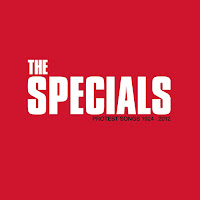
The Specials' Protest Songs
The Specials – Protest Songs 1924-2012 (Island Records)

God bless ‘em, the Specials still crank it out 40+ years after the band’s exhilarating debut. Breaking up in the mid-‘80s, several members reunited in 1993, and they’ve carried on ever since, releasing a handful of albums since reuniting, including 2019’s critically-acclaimed Encore. Crucially, the current line-up includes Specials’ founders Terry Hall, Lynval Golding, and Horace Panter. Protest Songs 1924-2012, is an exciting collection of themed cover songs inspired by the George Floyd protests of the summer of 2020. An eclectic collection it is, too, including classic material by the Staple Singers, bluesman Big Bill Broonzy, Bob Marley, the Dixie Jubilee Singers, and Frank Zappa, among others. The Specials are a long way from their days as ska revivalists, pursuing a soulful, R&B-drenched sound as evinced by their reading of Pop Staples’ powerful civil rights ode “Freedom Highway.” The Mothers of Invention’s “Trouble Every Day” is provided an appropriately menacing tone, complete with scorching guitars, while Leonard Cohen’s “Everybody Knows” is sung in Cohen’s droll style. The Wailers’ “Get Up, Stand Up” offers a powerful, albeit subdued performance that emphasizes Peter Tosh’s defiant lyrics. Totally unexpected, but pleasantly surprising, the Specials’ Protest Songs is one for the ages. Grade: A-   BUY!

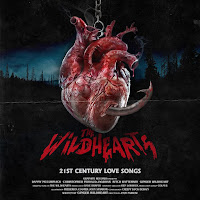
The Wildhearts' 21st Century Love Songs
The Wildhearts – 21st Century Love Songs (Graphite Records U.K.)

Wildhearts founder Ginger got the gang back together in 2012 for a series of gigs that led to a live album, but the reformed band wouldn’t go into the studio until 2019’s acclaimed Renaissance Men. With the brand-spankin’-new 21st Century Love Songs, the band comes full-circle, delivering its 10th studio work. It’s a real banger, too, with plenty of the Wildhearts’ trademark melodic hard rock that often times teeters on the razor’s edge of heavy metal. For instance, the album-opening title track hits your ears like a sledge, combining an erudite Mott the Hoople-style of British rock ‘n’ roll with thrashy molten slag. Much of the rest of 21st Century Love Songs follows a similarly-skewed blueprint: “Institutional Submission” sounds, at times, like Killing Joke on steroids until the vocal harmonies and elegant fretwork chimes in while “Sleepaway” could pass for a harder-rocking Cheap Trick. Underneath the instrumental clamor you’ll unearth undeniable melodies, often accompanied by football hooligan harmonies running interference for Ginger’s sweeter tones. Ginger could have been a hella successful pop star if he’d chosen a less debauched path but, lucky for us, he’s walked a sleazier, obstacle-strewn road to rock ‘n’ roll nirvana for almost 30 years now. Grade: A   BUY!

I'm A Freak Baby 3
Various Artists – I’m A Freak Baby 3 (Grapefruit Records/Cherry Red U.K.)

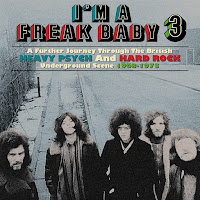
The late ‘60s and early-to-mid-‘70s provided an abundance of interesting rock ‘n’ roll as bands discovered their muse and experimented musically. This is the third volume in the U.K. archivists Grapefruit Records’ “Freak” series, exploring the exciting new sounds of 1968-1973, and it’s every bit as entertaining as the first two sets. Featuring 53 songs spread across three discs, they follow a simple blueprint – offer a few scattered obscurities by well-known bands (Free, Thin Lizzy, Deep Purple, Uriah Heep, Mott the Hoople, Procol Harum) and mix in songs by lesser-known but period-essential groups (Hawkwind, Spooky Tooth, Stray, Trapeze, Nazareth, Tear Gas). It’s when the madmen at Grapefruit dig into the pits that it gets really interesting, though, and I’m A Freak Baby 3 also includes rare (collectible) 7-inchers from diverse artists like Quatermass, Mighty Hard, Curtis Knight Zeus, and Steam Hammer and then caps off the set with previously-unreleased music from folks like Stack Waddy, T2, Red Dirt, Wicked Lady, and the Yardbirds (!). Toss in toons by cult rockers like Leaf Hound, Killing Floor, Third World War, and Budgie and you have yourself a party, I’m A Freak Baby 3 providing a lot of bang for yer hard-earned buck! Grade: A   BUY!

Sami Yaffa's The Innermost Journey...
Sami Yaffa – The Innermost Journey To Your Outermost Mind (Livewire Records)

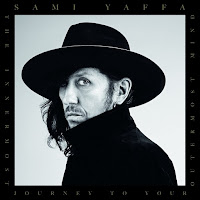
After 40 years in the trenches, former Hanoi Rocks and New York Dolls bassist Sami Yaffa finally got around to recording a solo album and, as one might expect, it’s a flamethrower. Yaffa approaches rock ‘n’ roll with a fierce Johnny Thunders/Stiv Bators aesthetic and songs like the album-opening “Armageddon Together,” a devastating take on modern religion, reflect this crash ‘n’ burn style of hard rock. There’s more than meets the eye here, tho’ – Yaffa’s undeniable sense of rhythm adds melody to cod reggae tunes like the mesmerizing “Rotten Roots,” which crosses the Clash with Lee “Scratch” Perry or “You Gimme Fever,” which pairs a deep Sly/Robby groove with lusty lyrics and elegant fretwork to great effect. “Fortunate One” flat-out rocks (not dissimilar to Lords of the New Church), with Yaffa’s whiplash vox punctuated by Michael Monroe’s bleating saxophones while “Germinator” slaps yer eardrums like a nail-studded baseball bat, fueled by Monroe’s raging harmonica and guitarist Christian Martucci’s razor-blade licks. “Cancel the End of the World” sounds downright Pink Floydish, with lofty vocals and gorgeous, atmospheric instrumentation. Yaffa is no one trick pony, displaying the many facets of his enormous instrumental and songwriting talents with The Innermost Journey… Grade: A-   BUY!

Previously on That Devil Music.com:

Short Rounds, September 2021: Marshall Crenshaw, Crack The Sky, Donna Frost, Mark Harrison & the Happy Tramps, Christone ‘Kingfish’ Ingram, the Rubinoos, and Jon Savage’s 1972-1976

Short Rounds, June 2021: The Black Keys, the Bummers, Michael Nesmith, Greg “Stackhouse” Prevost, Quinn Sullivan, and the Vejtables

Short Rounds, April 2021: Peter Case, The Fortunate Few, David Olney & Anana Kaye, Sour Ops, Joe Strummer, and the Thieves

Friday, November 13, 2020

Archive Review: Glenn Hughes' Music For the Divine (2006)

Glenn Hughes is one of those bona-fide rock ‘n’ roll leg¬ends that never seems to receive the credit and accolades that he deserves. His late ‘60s tenure with British rockers Trapeze resulted in three albums, including the band’s groundbreaking 1970 debut, Medusa. That album’s inspired mix of rock, funk, and soul would influence later bands such as Bad Company and Foreigner. His work as vocalist and bass player for Trapeze would move Hughes onto the next level of rock stardom when he replaced Roger Glover in Deep Purple.

Although his tenure with Deep Purple was brief, from 1973 until the band’s break-up in ‘76, Hughes’ presence helped breathe new life into the classic rock dinosaur. Purple’s 1974 album Burn benefited greatly from Hughes’ presence, the bassist providing a funky bottom line to the songs, his soulful vocals offering a fine counterpoint to those of bluesy shouter David Coverdale. This formula reinvigorated the band, Burn rising to number nine on the Billboard album charts. The band followed with the Top Twenty charting album Stormbringer later that year, and closed out this chapter of Deep Purple with Come Taste the Band in ‘75, American axeman Tommy Bolin replacing the departing Ritchie Blackmore for the recording. A live album from this era of the band was issued in 1976, featuring Coverdale, Hughes and Blackmore from a 1975 European performance.

Glenn Hughes’ Music For the Divine

If only for his work with Trapeze and Deep Purple, Glenn Hughes has earned his place in rock history. However, he has also enjoyed an impressive solo career that launched in 1977 and shows no signs of diminishing today, thirty years later. Throughout it all, Hughes’ enormous vocals have pounded out the songs in a series of collaborations with guitarslingers like Pat Thrall, Black Sabbath’s Tony Iommi, Pat Travers and Dave Navarro, among others. Hughes’ 2005 album Soul Mover was a career high among a lifetime scattered with such, but even Hughes has outdone himself with Music For the Divine.

Hughes had hooked up with drummer Chad Smith from the Red Hot Chili Peppers for Soul Mover, and the two found an immediate kinship and chemistry in the way that the best bass players and drummers do. With longtime Hughes’ foil J.J. Marsh on six-string, and keyboardist Ed Roth, the four created a great musical dynamic for the songs on Soul Mover. The guys must have enjoyed the experience, because Hughes, Marsh and Smith reconvened in Smith’s Hollywood Hills home to record Music For the Divine. Released last year in Europe by Italy’s forward-thinking, classically-minded Frontiers Records label, Music For the Divine is just now making its way to these shores. 

Sadly, Music For the Divine is the album that the Red Hot Chili Peppers should have delivered in ought-six, all sweat and soul, muscle and grit. The album’s lead-off track, “The Valiant Denial,” is the sort of driving funk-flavored rock that the Chili Peppers once excelled at, Hughes’ voice rising above the mix like a phoenix reborn while the band choogles along behind him. “Steppin’ On” features razor-sharp guitarwork courtesy of Marsh, the axeman tearing off great big greasy chunks of meat while Smith beats out some of his most explosive rhythms in a decade.

You Got Soul

Glenn Hughes poster
“Monkey Man” is a more conventional cut, of sorts, smoothly gliding from one funky curve to another as Hughes channels Sly Stone’s vocals and the band lays down a solid groove. The song would make a great radio single, with an infectious rhythm, staccato guitar leads and fluid changes in direction that leave the listener breathless. “You Got Soul” revisits 1973 with a loping groove set down by Smith, Hughes reciprocating with his best Curtis Mayfield impersonation, Marsh with a driving, multi-layered and slightly phased chukka-chukka six-string vibe. “Black Light” is another funk-rock rave-up, a high-flying track guaran-damn-teed to get yer feet a tappin’ and your ass moving. Marsh’s guitar solo rips from one speaker to another, his nimble fingers tickling the frets with a reckless abandon.

Hughes is a much better songwriter than a lot of critics have given him credit for, and it shows on Music For the Divine. His lyrics are short and punchy, yet imaginative and weighty with distinctive imagery. Musically, as described by the songs above, Hughes and crew jump deep into the murky depths of funkytown, rockin’ the house like the roof’s on fire. It comes as some surprise, then, that the band decided to tackle the Moody Blues’ classic “Nights In White Satin” as the album’s lone cover. I suspect that Hughes has been carrying the torch for this one for some time now, his vocals a powerful maelstrom of emotion and emoting while the band mostly plays it straight behind him. Chili Pepper guitarist John Frusciante drops by to contribute a wicked guitar line behind Hughes’ vocals, the result adding a haunting element to the song’s already elegant veneer.

The Reverend’s Bottom Line

You can’t spell “funky” without the word “fun,” and that’s what Music For the Divine sounds like. These guys obviously had a hell of a time recording these songs, and it shows. No label pressures, no commercial expectations, just a bunch of talented musicians getting together and jamming without a care. This looseness shows in the inspired performances of these grooves, making Music For the Divine as much fun to listen to as it probably was to make. Play it LOUD! (Frontiers Records, 2006)

Review originally published by Alt.Culture.Guide™, 2006


Saturday, August 1, 2020

New Music Monthly: August 2020 releases

Is it hot enough for ya?! Yeah, it's August and the summer has been every bit the slog we thought it would be. Half the country is eat up with the Covid and the other half is trying to avoid the virus. The good news is that while the month starts out slow, it picks up by week three with a slew of new music from folks like King Buzzo, Cidny Bullens, Guided by Voices, the Lemon Twigs, Chuck Prophet, Deep Purple, reggae legends Toots & the Maytals, and blues giants Walter Trout and Bobby Rush, among others. Throw in a live sets from Iggy & the Stooge and Nils Lofgren and reissues from the Flamin' Groovies, the Tom Tom Club, and Collective Soul and August is starting to look pretty good! 

Release dates are probably gonna change and nobody tells me when they do. If you’re interesting in buying an album, just hit the ‘Buy!’ link to get it from Amazon.com...it’s just that damn easy! Your purchase puts valuable ‘store credit’ in the Reverend’s pocket that he’ll use to buy more music to write about in a never-ending loop of rock ‘n’ roll ecstasy! If you're boycotting Amazon and don't have an indie record store close by, may we suggest shopping with our friends at Grimey's Music in Nashville? They have a great selection of vinyl available by mail order, offer quick service, and if you don't see what you want on their website, check out their Discogs shop!

Deep Purple's Whoosh!

AUGUST 7
Collective Soul - Collective Soul [vinyl reissue]   BUY!
Collective Soul - Hints, Allegations and Things Left Unsaid [vinyl reissue]   BUY!
Deep Purple - Whoosh!   BUY!
The Flamin' Groovies - Jumpin' In the Night   BUY!
Glass Animals - Dreamland   BUY!
The Stooges - Live At Goose Lake: August 8th, 1970   BUY!

Biffy Clyro's A Celebration of Endings

AUGUST 14
Biffy Clyro - A Celebration of Endings   BUY!
King Buzzo - Gift of Sacrifice   BUY!
Robbby Krieger - The Ritual Begins At Sundown   BUY!

Nils Lofgren's Weathered

AUGUST 21
Cidny Bullens - Walkin' Through This World   BUY!
The Georgia Thunderbolts - The Georgia Thunderbolts EP   BUY!
Guided By Voices - Mirrored Aztec   BUY!
The Killers - Imploding the Mirage   BUY!
The Lemon Twigs - Songs For the General Public   BUY!
Nils Lofgren - Weathered [live album]   BUY!
Old 97's - Twelfth   BUY!
Chuck Prophet - The Land That Time Forgot   BUY!
Tom Tom Club - Tom Tom Club [vinyl reissue]   BUY!
Various Artists - Willie Nile Uncovered [tribute album w/Nils Lofgren, Graham Parker, Elliott Murphy, others]   BUY!

Toots & the Maytals' Got To Be Tough

AUGUST 28
My Morning Jacket - The Waterfall II   BUY!
Dan Penn - Living On Mercy [Memphis soul legend]   BUY!
Bobby Rush - Rawer Than Raw   BUY!
Savoy Brown - Ain't Done Yet   BUY!
Toots & the Maytals - Got To Be Tough   BUY!
Walter Trout - Ordinary Madness   BUY!

Willie Nile Uncovered

Album of the Month: It's no secret that we're big Willie Nile fans 'round these parts (Willie is from WNY, after all!), but even in a month with new albums from the great Walter Trout and a live Nils Lofgren set, the tribute compilation Willie Nile Uncovered would stand out. Nile is an extremely gifted songwriter, and this two-disc, 26-song set features other very talented folks like Elliott Murphy, Graham Parker, Dan Bern, Richard Barone, Nils Lofgren, John Gorka, and Lucy Kaplansky, among many others, interpreting songs from across the four decades of Nile's critically-acclaimed career. If you're unfamiliar with Mr. Nile, you owe it to yourself to check out Willie Nile Uncovered!   

Monday, July 15, 2019

Spotlight on Deep Purple

Deep Purple circa 1983

Deep Purple Select Discography:


• Shades of Deep Purple (Tetragrammaton Records, 1968)
• The Book of Taliesyn (Tetragrammaton Records, 1968)
• Deep Purple (Tetragrammaton Records, 1969)
• Concerto for Group and Orchestra [live] (Tetragrammaton Records, 1969)
• Deep Purple In Rock (Warner Bros, 1970)
• Fireball (Warner Bros, 1971)
• Machine Head (Warner Bros, 1972)
• Made In Japan [live] (Warner Bros, 1972)
• Who Do We Think We Are (Warner Bros, 1973)
• Burn (Warner Bros, 1974)
• Stormbringer (Warner Bros, 1974)
• Come Taste the Band (Warner Bros, 1975)
• Made In Europe [live] (Warner Bros, 1976)
• Deep Purple In Concert [live] (Spitfire Records, 1980)
• Live In London [live] (Harvest Records, 1982)
• Perfect Strangers (Polydor Records, 1984)
• The House of Blue Light (Polydor Records, 1987)
• Nobody's Perfect [live] (Polydor Records, 1988)
• Slaves and Masters (RCA Records, 1990)
• The Battle Rages On... (Giant Records/BMG, 1993)
• Purpendicular (CMC International/BMG, 1996)
• Abandon (CMC International/BMG, 1998)
• Bananas (Sanctuary Records,2003)
• Rapture of the Deep (Eagle Records, 2005)
• BBC Sessions 1968–1970 (EMI Records, 2011)
• Now What?! (Eagle Records, 2013)
• Infinite (earMUSIC, 2017)

Deep Purple Mini-Bio


Deep Purple In Rock
British rockers Deep Purple are inarguably one of the most influential bands of all time. Purple's trail-blazing mix of operatic vocals, virtuoso guitar and keyboards, and unrelenting rhythms informed several generations of rock superstars, from Kiss, Queen, and Van Halen in the 1970s to Metallica and Iron Maiden in the '80s and even bands like Pantera and Alice In Chains in the '90s. Purple's imprint on the evolution of hard rock and heavy metal is enduring and undeniable.

Formed in 1968 by singer Rod Evans, guitarist Ritchie Blackmore, bassist Nick Simper, keyboardist Jon Lord, and drummer Ian Paice, Deep Purple were originally a psych-influenced progressive rock band. This line-up recorded three late '60s albums that were released by the indie Tetragrammaton Records and scored hits with cover songs like Joe South's "Hush," Neil Diamond's "Kentucky Rain," and Donovan's "Lalena." By 1970, however, as rock music was evolving, so was Deep Purple, towards a heavier, harder-rocking sound.

Evans and Simper, deemed "unsuitable" for the band's new direction, were ousted, replaced by singer Ian Gillan and bassist Roger Glover, who were also a songwriting team. This cemented the legendary "Mark II" line-up of the band that lasted from 1969 to 1973, re-forming again for a five-year run from 1984 to 1989. First finding success in the U.K. with albums like Deep Purple In Rock and Fireball, the band scored a multi-Platinum™ Top 10 U.S. hit in Machine Head, which yielded their classic song "Smoke On the Water." The band's Made In Japan live set went Platinum™ in the U.S. and sold over eight million copies worldwide. Purple's 1973 studio follow-up, Who Do We Think We Are, earned a Gold™ record for sales but tensions between the band members came to a head with Gillan quitting the band and Blackmore subsequently firing Glover.

Deep Purple's Machine Head
Purple soldiered on, recruiting singer David Coverdale (later of Whitesnake) and bassist/vocalist Glenn Hughes (Trapeze) for the recording of Burn, the band's eighth studio album, which became a Top 10 hit that was followed quickly by Stormbringer, both albums scoring Gold™ Record status. Disgruntled over the musical direction of the band, Blackmore quit to form Rainbow with singer Ronnie James Dio. Undaunted, Purple brought in guitarist Tommy Bolin for the disappointing Come Taste the Band, but after Bolin's death in 1976, Lord and Paice decided to break up the band.

After being offered a truckload of cash, the Mark II version of Deep Purple reunited in 1984 for a pair of studio LPs and a live album, but the bad blood between Gillan and Blackmore proved too much, the singer left the band once again. Purple brought in former Rainbow vocalist Joe Lynn Turner for the horribly mediocre Slaves and Masters album, but when the rest of the band wanted to bring Gillan back in the fold for the band's 25th anniversary, Blackmore acquiesced, but left the band himself after the release of The Battle Rages On, quitting during the album's support tour and temporarily replaced by shredder Joe Satriani. Accomplished six-string virtuoso Steve Morse (Dixie Dregs) took his place, and other than Jon Lord retiring in 2002 (R.I.P. 2012), to be replaced by journeyman keyboardist Don Airey (another Rainbow veteran), this Purple line-up has continued to tour and record to this day.

This is but a brief overview of Deep Purple's lengthy and complex 50-year career. If you want the full story, check out writer Martin Popoff's comprehensive history of the band. There are a bunch of dodgy Deep Purple live albums, some of 'em pretty good, but most of them not so much, and I haven't listed those here. There are also a slew of various compilation albums that I'd avoid, but if you really need to check out the band, look no further than Machine Head and/or Perfect Strangers. If you dig those LPs, the rest of these will end up in your collection sooner or later...


Wednesday, May 17, 2017

Roger Glover’s Butterfly Ball revisited

The Butterfly Ball and the Grasshopper’s Feast
Way back in 1974, former Deep Purple bassist Roger Glover agreed to produce an album by his longtime bandmate Jon Lord, The Butterfly Ball and the Grasshopper’s Feast a concept album based on a popular British children’s poem. When Lord couldn’t find time away from his obligations with Purple, Glover decided to go forward with the project, writing most of the songs and then opening up his phone book and recruiting a veritable “who’s who” of ‘70s British rock ‘n’ roll to record the project, including vocalists Ronnie James Dio, David Coverdale, and Glenn Hughes.

Released in November 1974 in the U.K. (almost a year later in the U.S.), the album earned a modicum of critical acclaim and performed respectively on its home turf, the Dio-sung “Love Is All” hitting the U.K. charts and reaching #1 in the Netherlands. As a result, a single performance of the production was held at the Royal Albert Hall in London on October 16th, 1975. With singer Ian Gillan (Deep Purple, duh…) appearing in place of Dio, who was touring with Ritchie Blackmore’s Rainbow, the performance also included narration from the great Vincent Price and included model/actress Twiggy as one of the singers. The live concert was filmed and released in 1976, produced and directed by Tony Klinger.

Klinger has produced a limited edition, deluxe edition of the live performance of The Butterfly Ball and the Grasshopper’s Feast which includes a double DVD containing the original concert film as well as the re-edited, re-mastered 2017 version; a previously-unreleased double-CD soundtrack from the live performance, a reproduction of the original press pack including five 8”x10” glossy promotional photos, and an A3 sized (roughly 11.5”x16.5”) reproduction film poster. Each box contains a numbered certificate signed by Klinger, and will be strictly limited to 250 copies. The deluxe edition of this beloved performance is available for order from the PledgeMusic website and runs roughly $129 plus shipping.

The Butterfly Ball and the Grasshopper’s Feast is also available in other, less expensive formats from PledgeMusic, including just the two-disc DVD set of the concert (roughly $26) and the two-disc CD set (roughly $19) as well as t-shirts, a poster, and other memorabilia of the event. This is a gift for the Deep Purple fanatic as the concert features vocals from Ian Gillan, David Coverdale, and Glenn Hughes as well as music by Roger Glover and Jon Lord. The concert also includes talents like John Gustafson and Eddie Jobson of Roxy Music, John Lawton (Lucifer’s Friend, Uriah Heep), and Eddie Hardin (Spencer David Group), among others. A cool relic of the classic rock era, check out all the goodies available on the PledgeMusic website.

Friday, March 24, 2017

New Music Monthly: April 2017 Releases

April seems to bring the "revenge of the indies" as a number of high-profile indie-rock artists are releasing new material, with Father John Misty, the New Pornographers, Guided by Voices, and Robyn Hitchcock all dropping new albums this month. Classic rock legends Deep Purple and Ray Davies are both offering new LPs, and there's also a cool Cheap Trick rarities collection and other great stuff to be had in April! And don't forget – Record Store Day 2017 happens on Saturday, April 22nd!

Imelda May's Life Love Flesh Blood

APRIL 7
Carptree - Emerger   BUY!
Deep Purple - InFinite   BUY!
Father John Misty - Pure Comedy   BUY!
Guided by Voices - August By Cake   BUY!
Nick Lowe - Nick The Knife   BUY!
Nick Lowe - The Abominable Showman   BUY!
Imelda May - Life Love Flesh Blood   BUY!
The New Pornographers - Whiteout Conditions   BUY!
Professor Louie & The Crowmatix - Crowin' The Blues   BUY!

Robyn Hitchcock's Robyn Hitchcock

APRIL 14
Brinsley Schwarz - It's All Over Now   BUY!

APRIL 21
The Black Angels - Death Song   BUY!
Ray Davies - Americana   BUY!
Robyn Hitchcock - Robyn Hitchcock   BUY!
Marc Jonson - Years   BUY!
Rhino Bucket - The Last Real Rock 'n' Roll   BUY!
Neil Young - Bottom Line 1974   BUY!

Cheap Trick'sThe Epic Archive, Vol. 1

APRIL 28
Cheap Trick - The Epic Archive, Vol. 1 (1975-1979)   BUY!
Mark Lanegan Band - Gargoyle   BUY!
Leon Russell - Leon Russell [vinyl]   BUY!

(Album release dates are subject to change without notice and they don't always let me know, so there...)

Neil Young's Bottom Line 1974

Album of the Month: Neil Young's Bottom Line 1974 is a semi-legit import release of the rock legend's fabled (and often bootlegged) 1974 show at the infamous NYC venue. This unannounced solo acoustic set of eleven mostly new (at the time) songs runs slightly more than an hour and was fortunately caught on tape by an anonymous fan. Five of the songs Young performed debuted with this show, and ten of the eleven songs were unreleased at the time. Surprisingly, as beloved as this Bottom Line show is among Neil Young fans, he has yet to provide it an authorized release as part of his archive series.  

Sunday, October 9, 2016

CD Review: Various Artists - I'm A Freak, Baby... (2016)

I'm A Freak, Baby...
The 1960s were, indeed, a magical time for rock ‘n’ roll as bands across the planet took on the challenge laid down by Chuck and Elvis and tried to make the music bigger, better, and bolder than before. From British Invasion bands like the Beatles and the Rolling Stones, the Who, the Kinks, and Eric Burdon and the Animals to the psychedelic revolution (R.I.P. 1968), folk-rock (The Byrds), country-rock (The Flying Burrito Brothers), blues-rock (Cream), roots-rock (The Grateful Dead) and all the other sub-genre hyphenates, the decade was one of innovation, experimentation, and youthful artistic expression that has yet to be equaled.

As for the Reverend, well, I’m a freak, baby…born too late in the ‘boom’ to be a ‘60s-era flower child and too early to be a hardcore punk, your humble critic was definitely a child of the 1970s. The early ‘70s, that is…the Flamin’ Groovies, the Dictators, the New York Dolls and all the ramblin’, rockin’ mutants of the monster that arose during the first five or six years of the last American decade. Although I appreciate and love much of the music of the ‘60s, it’s the harder-edged jams of my high school daze that still strike a chord with my jaded, beleaguered medulla oblongata. So when I found out about I’m A Freak, Baby..., a three-disc box set sub-titled “A journey through the British heavy psych and hard rock underground scene 1968-72,” well, as they say, that’s my cuppa...

I’m A Freak, Baby...


Any musical compilation of this sort has its omissions, usually due to licensing fees or refusals, so there is always somebody who stays home that really should have attended the party. In this case, the band most glaringly AWOL is Black Sabbath, who definitely played a part in Great Britain’s heavy psych and hard rock scene in the late 1960s and early ‘70s. Ozzy and his gang of hoodlums aside, I’m A Freak, Baby… features an impressive roster of heavy-hitting professionals (folks like Deep Purple, Uriah Heep, Fleetwood Mac, and the Yardbirds), hard-rockin’ obscurities (U.K. bands like Stray, the Move, the Pink Fairies, and the Groundhogs that should have been monsters stateside), and heavy-handed amateurs (the Mooche, Velvett Fogg, et al).

You’ll also find your share of eccentrics (Edgar Broughton), cult faves (Wicked Lady), and stepping stones (bands like Skid Row and Taste that gave us Gary Moore and Rory Gallagher, respectively) among the 48 tracks and number of bands spread across these three discs. The great, underrated Stray kick off the festivities on CD1 with the nine-minute-plus guitar-driven insanity that is “All In Your Mind,” as good a mind-blowing psych-rock jam as you’ll hear to date, with blistering percussion, swirling rhythms, and ear-splitting axe-wrangling creating more acid-drenched ambiance than you’d have thought possible in 1970. Guitarist Del Bromham led this band of merry pranksters for a decade and a handful of sadly overlooked, hard-rockin’ albums; but Stray was always on the outside looking in as friends and contemporaries like Free and Deep Purple became big rock stars.

Sweet Mistress of Pain


The Mooche only released one single during their lengthy existence, an inspired cover of the Texas psychedelic classic “Hot Smoke and Sassafras” that won’t make you forget the Bubble Puppy’s original, but it ain’t half-bad, either, with stinging fretwork and explosive percussion. Chicken Shack has been guitarist Stan Webb’s baby since the late ‘60s, the band one of the original British blues-rock pioneers but, as shown by their take on the blues standard “Going Down,” although Webb could wield a mighty riff, they lacked the spark of charisma that might have led to stardom. The Groundhogs were also first gen Brit blooze-rockers, and with singer, songwriter, and guitarist Tony McPhee at the helm, they cranked out such period gems as “Cherry Red,” a menacing, bluesy bludgeoning that boxes your eardrums into submission like a punch-drunk heavyweight.

One of the lesser-known but no less talented bands on I’m A Freak, Baby... is Factory, whose 1971 track “Time Machine” is a not-so-subtle cross of Black Sabbath-styled sonic tsunami and Hawkwind-flavored cosmic Sturm und Drang guaranteed to flip your wig. The box set takes its name from the previously-unreleased Wicked Lady track “I’m A Freak,” itself a lysergic-fueled romp across a surrealist landscape with locomotive rhythms and muddy, tho’ deceptively pointy-edged guitars. Speaking of Hawkwind, they show up here in one of their earliest incarnations as Hawkwind Zoo, longtime frontman Dave Brock’s “Sweet Mistress of Pain” a textbook example of psych-rock circa ’69, the song displaying just a hint of the stratospheric ambition that band would later pursue.

Fireball


Writing On The Wall’s “Bogeyman” launches CD2, the song’s sneaky Scottish jig intro rapidly giving way to a hypnotic riff and somber veil of sound. By contrast, “Fireball” provided Deep Purple Mark II with a Top 20 hit single on the strength of Ian Gillan’s soaring vocals, Ritchie Blackmore’s unforgiving six-string guillotine, and the bombastic rhythm second of bassist Roger Glover and drummer Ian Paice. Although Jon Lord throws in a few keyboard licks, this is definitely Gillan’s show here. Jerusalem is one of those legendary cult rock bands that many have heard of but few have actually heard. Their “Primitive Man” is a fair-to-middlin’ romper-stomper, but they’re definitely outshined by some of their colleagues here.

The Edgar Broughton Band is another obscure cult fave, and rightfully so, Edgar and his crew probably too damn weird for the Top 40 but mighty entertaining nonetheless. “Love In The Rain” is one of their better-known songs, a cacophonic mix of slash ‘n’ burn instrumentation and anguished vocals that channel pure white light/white heat. Little Free Rock were fellow travelers on the British blooze-rock circuit, their stoned classic “Dream” a Cream-inspired sludge of squealing guitar licks and throbbing bass riffs backed by bulldozer drums and an overall smothering, claustrophobic production that made them seem louder than they actually were. Speaking of loud, how about Iron Claw, a proto-metal outfit comprised of teenaged Sabbath acolytes. The dino-stomp of the band’s “Skullcrusher” is marred somewhat by its rattletrap production, but the sincerity and ambition of the band’s effort cuts through the dense, foggy mix.

Race With The Devil


I'm A Freak, Baby...
Members of the Phoenix were industry pros by the time they recorded the previously-unreleased “Street Walking Woman” in 1969, the band’s roots dating back to the ‘50s. They slotted nicely with the bluesy vibe of the era, though, and while this under-produced track suffers from a cavernous sound, the scorching guitar and stellar rhythmwork comes through. Skid Row (no, not the ‘80s nerf-rockers) was guitarist Gary Moore’s first band of note, and “Go, I’m Never Gonna Let You” certainly offers up plenty of six-string pyrotechnics amidst its dirge-like blues-rockin’ style. Not half bad, and fitting within the era, but Moore would go on to do (much) better.

The third disc of I’m A Freak, Baby... is perhaps the weakest of the set, but you can’t fault opening track “Race With The Devil” by proto-metal rockers Gun. Featuring one of the finest mind-bending riffs of the era, the early power trio (including brothers Adrian and Paul Gurvitz, later to form Three Man Army) delivered a performance that is an unrelenting terminator of heavy rock that influenced Jimi Hendrix, the song later covered by metal pioneers Judas Priest. Sam Gopal were an influential and innovative gang of late ‘60s acid-rockers whose chaotic, blustery “Escalator” features one Lemmy Kilmister before he lit out for Hawkwind and eventually forming the great Motörhead.

The Green Manlishi


Uriah Heep’s “Gypsy” is one of many fan favorites in the band’s epic catalog of songs, and although the lyrics are laughable today, you just can’t ignore the song’s Godzilla-strength riffs, Ken Hensley’s haunting keys, and frontman David Bryon’s soaring, operatic vocals. Although they were infinitely influential, the Yardbirds weren’t necessarily considered one of the heaviest bands of the era. This late-period track, “Think About It,” featuring Jimmy Page’s circular riff and driving percussion, is pretty tasty and about as heavy as the band ever achieved, the song itself a sort of sonic trial run for Page’s blues-rock experimentation with Led Zeppelin a mere year later. The power trio Andromeda was an early showcase for the immense talents of guitarist John du Cann, later of Atomic Rooster, Hard Stuff, and even Thin Lizzy. Andromeda’s “Too Old” is a fine example of the band’s craft, a flashy psych-rocker with staggering guitars and busy percussion.

When guitarist Peter Green left John Mayall’s band, he enlisted Bluesbreakers alumni John McVie and Mick Fleetwood to form Fleetwood Mac. A far different band than they’d later be, “The Green Manlishi” is a brilliant slab of acid-blues with a spooky vibe and a dense, complex, sound. The Taste introduced the world to the phenomenal talents of beloved blues-rock guitarist Rory Gallagher, “Born On The Wrong Side of Time” originally the B-side of the band’s first single. The performance is solid if unspectacular, showing only brief flashes of the electricity Gallagher would bring to his later solo work, the song nevertheless displaying a small part of the guitarist’s songwriting genius with a few musical swerves, interesting rhythmic choices and, of course, stunning fretwork.

The Reverend’s Bottom Line


Among the bands unmentioned above but included in I’m A Freak, Baby... are such über-cool outfits as the Deviants, the Pink Fairies, the original Iron Maiden, Stack Waddy, Blonde On Blonde, Third World War, and the Move, among others. If you’re a fellow ‘70s rock ‘n’ roll fanatic, the three discs here will introduce you to a handful of bands you many not know and remind you of a few bands you may already know and love. The mix of music is an inspired blend of the well-known, the barely-known, and the unknown, all of whom contributed to the evolution and vocabulary of rock ‘n’ roll music. What are you waiting for – get it! Grade: A (Grapefruit Records, released August 5, 2016)

Buy the CD from Amazon.com: I'm A Freak, Baby...

Sunday, July 31, 2016

Rhino Records celebrates Rocktober with Vinyl Reissues!

Flamin Groovies' Groovies Greatest Grooves
Archival specialists Rhino Records has announced their first ever “Rocktober” celebration, the label planning on releasing limited-edition vinyl reissue of some classic – and some not-so-classic – rock ‘n’ roll albums throughout the month of October. The party kicks off on Tuesday, October 4th, 2016 with an über-cool slate of titles that includes Deep Purple’s Machine Head and Twisted Sister’s Stay Hungry.

The celebration continues throughout the month, each Tuesday bringing a brand new batch of vinyl goodies from the likes of the Stooges, the Small Faces, Iron Butterfly, ZZ Top, and the Flamin’ Groovies, among others. These audio flapjacks will only be available at participating brick and mortar record stores, so fluff up your sleeping bag and get ready to camp out overnight to buy the cheap thrills vinyl of your choice from the handy list below.

October 4th
• Deep Purple – Machine Head (clear vinyl, limited edition of 2500 copies, $21.98 list) *
• Foreigner – 4 (red colored vinyl, limited edition of 2400 copies, $19.98 list) *
• Jet – Get Born (180gr black vinyl, $21.98 list) +
• Twisted Sister – Stay Hungry (pink & black starburst colored vinyl w/band poster, limited edition of 2500 copies, $21.98 list) *

The StoogesOctober 11th
• Iron Butterfly – Heavy (stereo version, 180gr black vinyl, $19.98 list)
• ZZ Top – Eliminator (red colored vinyl, $19.98 list)

October 18th
• Alice Cooper – Billion Dollar Babies (green, yellow & orange marble vinyl w/one billion dollar bill insert, limited edition of 3000 copies, $24.98 list) *
• Small Faces – First Step (orange vinyl, $19.98 list)
• The Stooges – The Stooges (gold & brown colored vinyl, $19.98 list)

October 25th
• Buckcherry – 15 (10th anniversary vinyl edition, $19.98 list) *
• Heaven & Hell – The Devil You Know (two-LP set on dark orange & gold colored vinyl w/band poster and etching on side four, limited edition of 2000 copies, $27.98 list) *
• T-Rex – T-Rex (remastered vinyl & CD release, $19.98 list each) +
• The Flamin’ Groovies – Groovies Greatest Grooves (two-LP vinyl set, $27.98 list)

* Only available in the U.S.
+ Only available in North America