Showing posts with label Megaforce Records. Show all posts

Friday, February 25, 2022

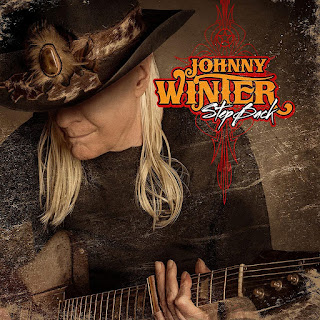
Archive Review: Johnny Winter’s Step Back (2014)

Johnny Winter’s Step Back
The death of blues guitarist Johnny Winter in July 2014 took us all by surprise. Sure, the man had been ailing for some time, but that didn’t stop him from touring non-stop and performing like a dervish for the audience each and every night. It seemed like he’d be with us forever, and while it’s sadly fitting that he should hang up his guitar for the last time while on the road, it did little to lessen the loss.

Before his death, Winter had all but finished up Step Back, his star-studded follow-up to 2011’s critically-acclaimed Roots set. Comprised of vintage blues and R&B songs that Winter grew up listening to as a teen in Texas, Step Back features covers of classics by artists as diverse as Ray Charles, Clarence “Gatemouth” Brown, Bobby “Blue” Bland, and Lightnin’ Hopkins, to name but a few. Winter was joined in the studio for his blues odyssey by such fellow fiends as Joe Bonamassa, Eric Clapton, Leslie West, Brian Setzer, and Dr. John, among other talents, the result being one of the best and most spirited albums of Winter’s lengthy career.    

Johnny Winter’s Step Back


Winter departs from his signature sound somewhat with the album-opening “Unchain My Heart.” Winter’s cover of the Ray Charles classic probably skews closer to Joe Cocker’s later version than Charles’ original hit, but he does it up right. Accompanied by the “Blues Brothers Horns,” led by trombonist Tom “Bones” Malone and saxman “Blue” Lou Malone, Winter infuses the track with a big band, R&B vibe complete with angelic female backing vocals. Winter’s voice is surprisingly smooth here, taking on a silkier feel even while his guitarwork retains its razor edge. It’s a wonderful and atypical performance that proves that, even in the latest stages of his career, Winter could still hit us with a creative curve ball.

“Can’t Hold Out (Talk To Me Baby)” is a lesser-known Elmore James track, but a blues gem nonetheless, written by Willie Dixon and recorded in 1960 for Chess Records. Winter is accompanied Ben Harper on vocals and guitar, and much as he did working with Charlie Musselwhite on the pair’s award-winning Get Up! album, Harper’s contribution perfectly complements the older bluesman’s performance. Winter is provided a chance to display his slide-guitar prowess on the raucous track, but Harper lays in a few nice licks as well. Winter is joined by Eric Clapton on a laid-back cover of Bobby “Blue” Bland’s “Don’t Want No Woman” and, as usual, when “Slowhand” is recording with and challenged by another talented guitarist, he rises to the challenge. The two guitarist’s solos are things of beauty, drenched in the blues and polished off with a soulful shine while pianist Mike DiMeo layers in some tasty honky-tonk fills in the background.

Killing Floor

 
Howlin’ Wolf’s “Killing Floor” is a tune familiar to anybody reading this, a blues standard that has been etched in wax by everybody from Jimi Hendrix and Electric Flag to Clapton and many others. Winter’s manager and rhythm guitarist Paul Nelson is featured here, acquitting himself nicely with a lively solo that keeps the song’s momentum going nicely. Winter’s vocals are playful and energetic, not as gruff as the Wolf’s but like fresh sandpaper nonetheless. Bo Diddly’s “Who Do You Love” is required reading for any young blues-rock band, and Winter and crew bite into it like a pride of hungry old lions on a gazelle. Meredith Dimenna’s backing vocals soften Winter’s raw tones somewhat, and his greasy slide-guitar licks are highlighted by Nelson’s accompanying acoustic and electric guitars; DiMeo’s spry piano-pounding adds a little livewire electricity to the performance.

ZZ Top’s Billy Gibbons guest stars on a Jimmy Reed’s “Where Can You Be,” his reckless six-string sound a perfect foil to Winter’s scorched tones. The mid-tempo number sizzles and sparks like a smoldering fire, and there’s not nearly as much difference in the two men’s solos as one might think; both are short, sweet, and strong and prove that while you can take the man out of Texas, you’ll never get the Texas out of the man. Joe Bonamassa stands alongside the Blues Brothers Horns for “Sweet Sixteen,” Winter proving with his opening solo that he can channel his inner B.B. King with the best of them. With DiMeo’s Hammond organ adding color, the two men put on an instrumental clinic certain to thrill any blues guitar fanatic. Winter’s vocals are soulful, the band keeps a steady, swaying rhythmic backdrop, and the horns add accent on what is a brilliant performance.  

Son House’s Death Letter


The heart and soul of Step Back, however, is Winter’s solo performance on Son House’s mournful “Death Letter.” Accompanied only by his National steel guitar and his weary voice, Winter’s intricate guitarplay is matched by the urgency of his gritty, haunted vocals. It’s a powerful performance, and one that shows how deep the blues ran through Winter’s DNA. His cover of Little Walter’s jaunty “My Babe” is much livelier by contrast. With the band laying down a traditional Chicago blues rhythm, Winter’s vocals are matched by harpist Jason Ricci’s dancing notes. Winter’s fluid guitar solo approximates Walter’s original harmonica solos, and sounds great next to Ricci’s underrated harpwork.

As a band, Aerosmith has always worn its blues fascination on its collective sleeves, and whatever one may think of them, there’s no denying that Joe Perry is a first class stringbender – a status proven by his appearance here. Dueting on Lightnin’ Hopkins' signature tune “Mojo Hand,” the band lays down a rollicking beat on top of which Winter and Perry slap out a pair of rattletrap solos that buzz and hum with unbridled blues electricity. Step Back closes out with a fine cover of Fat Domino’s finest, “Blue Monday,” Winter joined by Dr. John, who brings a bit of New Orleans flavor to the performance, his upbeat piano playing nicely off the Blues Brothers Horns and their nuanced R&B fills.    

The Reverend’s Bottom Line


Johnny Winter fans are a rabid, loyal bunch, so the Reverend’s definitely preaching to the choir; the faithful already have a copy of Step Back tucked away on their shelf. As for the rest of you, if you’ve been sitting on the fence about Mr. Winter, this is the album to tip you over to the right side. Hearing Winter hold his own with some of the best and brightest from the blues and rock worlds is impressive enough, but with Step Back the guitarist makes the argument that even if an individual man’s life is frail and finite, the blues ring eternal.

Kudos to producer Paul Nelson for capturing these fine performances on tape; to the guest musicians who brought their best to the studio; to Winter’s talented band for their spirited and supportive playing; and most of all to Mr. John Dawson Winter III, who plays guitar and sings on his final album with the same love and affection for the music that he brought to his first recording. A one of a kind talent and a charismatic performer, Winter’s death is a huge loss for the blues…but as swansongs go, you won’t find better than Winter’s Step Back. (Megaforce Records, released September 2, 2014)

Buy the CD from Amazon.com: Johnny Winter’s Step Back

Friday, February 18, 2022

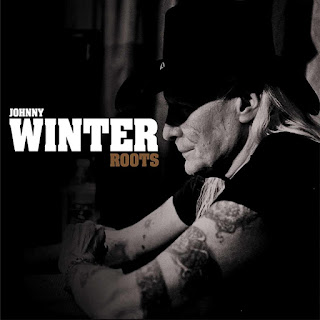
Archive Review: Johnny Winter’s Roots (2011)

Johnny Winter’s Roots
It’s been seven years since guitarist Johnny Winter’s last studio album, the acclaimed 2004 set I’m A Bluesman, and better than a decade before that since the release of 1992’s Hey, Where’s Your Brother? In the interim, there has been an abundance of live albums – some more legitimate than others – as well as seven volumes of Winter’s personally-curated Live Bootleg Series collections. Health issues, business problems, and overall lack of label interest have seemed to keep the guitarist sidelined rather than in the recording studio.

For what is essentially only his second new album in nearly two decades, Winter rounded up some friends to accompany him in the studio. It’s a mark of the guitarist’s status in the blues world that he managed to bring in such talents as Sonny Landreth, Warren Haynes, Susan Tedeschi, and Derek Trucks, among others, for the recording of Roots, a straight-talking, hard-rocking collection of blues and R&B standards. With so many gifted musicians surrounding him, you’d think that Winter could leave a lot of the heavy lifting to others, but that’s not the case here – Roots is Winter’s one of the best albums of his lengthy career, the guitarist playing and singing with the same belly full of fire that he brought to his work in the 1980s.   

Johnny Winter’s Roots


Roots kicks off with the smoother-than-silk “T-Bone Shuffle,” an almost-faithful re-creation of Texas blues great T-Bone Walker’s classic tune, featuring slide-wizard Sonny Landreth’s steely playing deep in the grooves. While the performance offers one of Winter’s best vocal performances in years, the intertwined guitars rattling away above the swinging rhythm section is a thing of pure beauty. Ditto for the Elmore James by way of the Allman Brothers Band cover of James’ swaggering “Done Somebody Wrong,” which includes ABB/Gov’t Mule guitar-banger Warren Haynes laying down some greasy slide alongside Winter’s stinging, high-velocity solos.

For “Got My Mojo Workin’,” a song that the guitarist originally recorded with the great Muddy Waters, Winter is joined by harp player Frank Latorre. This is a rabble-rousing rendition of the blues classic, upbeat and rowdy with a joyous Chicago blues-styled rhythmic base, Winter’s voice and fretwork joined at the hip with Latorre’s random blasts of harp. Rhythm guitarist and long-time Winter musical foil Paul Nelson adds a lot of flavor in the background, while the spot-on bass/drums combo of Scott Spray and Vito Liuzzi keep things rolling.

Dust My Broom


Winter brings in country music superstar and frequent blues LP guest guitarist Vince Gill for a raucous take on the Chuck Berry gem “Maybellene.” With a twang-and-bang that we haven’t heard since his Still Alive and Well album, Winter and Gill swap some tasty notes as pianist Mike DiMeo channels his inner Jerry Lee Lewis with a welcome bit of reckless key-bashing. The Jimmy Reed standard “Bright Lights, Big City” is a red-hot duet between Winter and guitarist Susan Tedeschi, the two giving off sparks with their incendiary solos, smoldering vocal turns, and the song’s jazzy arrangement. By contrast, Clarence “Gatemouth” Brown’s “Honky Tonky” is a throwback to the Texas coast circa 1955. The instrumental features Winter’s rattletrap guitar buzzing and dancing across the rhythms, his playing punctuated by brother Edgar’s raging saxophone, the resulting performance a welcome “cool down” after the fiery Winter/Tedeschi duet.

Winter revisits the Elmore James’ songbook with a blistering cover of the classic “Dust My Broom.” Joined by Derek Trucks on the track, the two talented instrumentalists slap more slide-guitar licks into four minutes than a fan could ever hope for, Winter’s growling, howling, playful vocals supported by ringing guitar notes. The two men have an easy chemistry, and their love of the material shines through in this stellar performance. The R&B gem “Come Back Baby” provides a classy outro to Roots, Winter’s soulful vocals accompanied by his subdued, albeit elegant fretwork and John Medeski’s chiming keyboards, a full horn section turning the performance into one worthy of the rhythm and blues revues of decades past.  

The Reverend’s Bottom Line


These sorts of patchwork albums, featuring a lot of guest musicians, are often a way to put new product on the shelf while masking the inadequacies of the name artist. Not so with Roots, Johnny Winter’s marquee status accompanied by some of the fiercest, most accomplished playing and singing of his career. Spurred on, perhaps, by the presence of so many distinguished blues and blues-rock talents, Winter rises to the challenge with an impressive performance on a slate of classic blues and R&B classics. Showing that he can still call up some fire and brimstone with his guitar, Winter knocks it out of the park with Roots. (Megaforce Records, released September 27, 2011)

Buy the CD from Amazon.com: Johnny Winter’s Roots

Friday, June 9, 2017

CD Preview: Living Colour’s Shade

Living Colour's Shade
Heavy metal legends Living Colour haven’t ventured into the studio very often since the band got back together in 2000, releasing a pair of well-received albums in 2004’s CollideƘscope and 2009’s The Chair In the Doorway. On September 8th, 2017 Megaforce Records will release the band’s third studio album this century in Shade.

Shade was produced by Andre Betts, who first worked with Living Colour on their 1993 album Stain. Betts has worked with the band over the past five years to craft an exciting new sound. Inspired by their live performance of blues legend Robert Johnson’s “Preachin’ Blues” at Harlem’s Apollo Theatre, Living Colour has incorporated elements of Mississippi Delta dirt into their trademark heavy metal thunder. “That was really the beginning of us thinking of the direction we want to take for our next project,” says Living Colour guitarist Vernon Reid in a press release for the new album. “Hearing that blend of blues and metal was really what got the wheels turning.”

While Shade offers Living Colour’s unique juxtaposition of hard rockin’ blues, the album isn’t just a collection of antiquated sounds but rather a mix of various influences. “What better way to talk to the world than through the blues?” vocalist Corey Glover asks in a press release for the album. “We recorded ‘Preachin’ Blues’ several times to jump start the project and that got everybody fired up. After that, we were ready. Shade, in its final outcome, is more of a deconstruction of the blues than an interpretation. It was the idiom that gave us our voice.”

Featuring thirteen white-hot performances, Shade offers songs like the old-school thrash of “Blak Out,” the acid-funk romp “Two Sides” (featuring a guest appearance of the legendary George Clinton), and Reid’s six-string showcase “Freedom of Expression (F.O.X.).” The album includes the band’s incendiary cover of The Notorious B.I.G.’s “Who Shot Ya?,” released late last year in protest of gun violence and racial profiling, as well as an inspired cover of the great Marvin Gaye’s “Inner City Blues,” which stirs a bit of guitar-driven hard rock into a heady R&B gumbo.
  
“To me, there seems to be a shadow cast across our collective lives,” says Reid. “We can either allow it to oppress us or we can shine a light on it. Shade is the sound of a band coming to terms with the shadows and shining a light by using the blues as a mirror.”

Buy the CD from Amazon.com: Living Colour's Shade