Showing posts with label Ian Hunter. Show all posts

Friday, February 3, 2023

The View On Pop Culture: Ian Hunter, Graham Parker, Joe Grushecky, The Ramones (2001)

The Ramones' The Ramones

V1.4

Forget all about your Creed, your Limp Bizkit, your Korn – the true heartbeat of rock ‘n’ roll isn’t going to be found on the top of the Billboard charts or on corporate radio; it may even be hard to find on the shelves of your local music retailer. Current releases from grizzled rock veterans like Graham Parker, Ian Hunter, and Joe Grushecky prove that giants still walk the earth and what the young pups don’t know, the old lions understand.

Although he’ll never shake off his status as the guiding light of Mott the Hoople – one of the greatest rock bands ever – Ian Hunter’s lengthy solo career is no chopped liver in its own right. From his early collaborations with Bowie axeman Mick Ronson to Rant (Fuel 2000 Records), his latest effort, Hunter has never fudged his legacy as a true son of rock ‘n’ roll. An eclectic and electric collection of songs, Rant lives up to every word of praise that Hunter has ever received. Combining personal reflections with a unique songwriting skill and guitar-driven roots rock, Hunter’s muse has mellowed only slightly during the passing years. “It ain’t my fault that I never grew up,” Hunter sings in “Still Love Rock and Roll”, “I got bitten by the bug,” something every artist mentioned below has in common.

With a career that has spanned twenty-five years and nearly two-dozen acclaimed albums, Graham Parker has earned his place in rock ‘n’ roll history. It seems that nobody bothered to tell Parker, however. Deepcut To Nowhere (Razor & Tie) slashes and burns through twelve songs with the same intensity and electricity of the artist’s 1976 debut. Parker’s skill as a songwriter has always been in his caustic wit and biting sarcasm and an uncanny ability to turn a clever phrase, and these traits are in evidence here in abundance. If the once-angry young man has gotten older, powerful songs like “High Horse”, “Syphilis & Religion”, and the cryptic, hard rocking “I’ll Never Play Jacksonville Again” show that he’s lost none of his rage. Parker’s soulful vocals have softened a bit through the years, improving with age, while his guitar playing is as strong as a tightwire. A high-octane performance, Deepcut To Nowhere is the rock ‘n’ roll soundtrack for the summer of 2001.

Unfairly dismissed as the “poor man’s Bruce Springsteen” during his lengthy career, Joe Grushecky continues to rock with a fervor and passion unmatched by musicians half his age. With the Houserockers, an outfit tempered to a razor edge by more than a decade of playing together, Grushecky has earned a well-deserved reputation as a dynamic live performer and an underrated guitarist and songwriter. From Steeltown To London Town, available only from Grushecky’s web site (www.grushecky.com), offers no-frills packaging but contains seventy minutes of uncompromising rock ‘n’ roll in a live setting. Taken from performances in London and Sheffield in February 2000, the disc includes several of Grushecky’s better songs, including “No Strings Attached”, “Only Lovers Left Alive”, and “Dark And Bloody Ground”. The band also tackles covers like Springsteen’s “Light of Day,” the Clash’s “Brand New Cadillac”, and Southside Johnny’s “I Don’t Want To Go Home” with style and energy. Joe Grushecky is one of rock music’s more obscure talents, but I suspect that the day will come when his name is spoken with the same reverence as those of his better-known musical contemporaries.

From April 1976 to October 1978 – less time than many contemporary artists take to record a single bloated album – the Ramones released four classic collections of rock music. Combining the charm and brevity of the traditional three-minute pop song with the inspired amateurism of 1960s garage bands, the Ramones launched a musical revolution on the strength of three chords and an attitude. Rhino Records has reissued these four discs, appearing on CD for the first time, in deluxe packages with the original LP artwork, liner notes and bonus tracks.

For the uninitiated, the band’s self-titled debut is a good place to begin, offering a dozen fast-and-furious tracks that clock in just short of 29 minutes. Rhino has padded the album with the band’s original demos, including several unreleased songs. Their second album, Leave Home, features many of the Ramones’ signature tunes; the CD reissue includes the band’s first Los Angeles appearance, 16 songs from an August 1978 show at the Roxy. The next two CDs, Rocket To Russia and Road To Ruin, offer unreleased tracks and obscurities alongside the original tunes. All four albums are milestones of rock ‘n’ roll and perfect for summertime listening at the beach, by the pool or even in the back yard. (View From The Hill, May 2001)

Friday, April 8, 2022

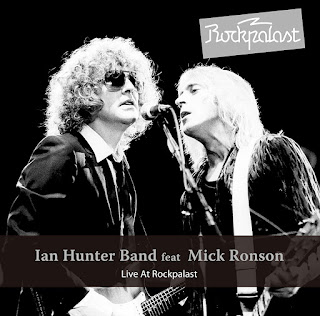
Archive Review: Ian Hunter Band featuring Mick Ronson - Live At Rockpalast (2012)

Ian Hunter Band featuring Mick Ronson - Live At Rockpalast
In the absence of legitimate contemporary rock ‘n’ roll heroes, a sort of “cult of personality” has grown up around a number of admittedly eccentric 1960s-and-‘70s-era musicians. From Nick Lowe and Robyn Hitchcock to Todd Rundgren and other aging rockers raised in the long shadows of the second World War, the digital era has been kinder to them than most, prompting a rediscovery of their early, acclaimed work by a younger audience, extending their careers long past the ostensible commercial “sell by” date. In many instances, it has enabled these artists to grow old with dignity and grace, allowing them to deliver some of the best music of their lives in the 21st century.

Of all of these fellow travelers, Ian Hunter is the oldest and, perhaps, the most iconoclastic. A late arrival to U.K. glam-rock cult faves Mott the Hoople, Hunter quickly took over the band’s creative reins and became its best-known member. (Don’t think so? Quick, name another Mott member other than Hunter or guitarist Mick Ralphs…) Hunter’s often-snarky, Dylan-inspired wordplay and the band’s guitar-heavy hard-rock sound would earn them a modicum of fame, if little fortune, and by the mid-1970s, realizing that the party was coming to a close, Hunter jumped the Mott ship for a solo career, taking former David Bowie/Lou Reed guitarist, and recent band addition Mick Ronson with him.

Although a direct line can be drawn from Mott the Hoople to the intelligent punk-rock of the Clash and the less-intellectual, but admittedly more commercially successful pseudo-metal of Def Leppard, it is Ian Hunter’s sporadic solo career that has influenced a generation of British, as well as a lesser number of American musicians. Beginning with his self-titled 1975 debut, which yielded the classic “Once Bitten Twice Shy,” through the end of the decade and a handful of albums culminating in 1979’s You’re Never Alone With A Schizophrenic, which entered “Just Another Night” and “Cleveland Rocks” to the rock ‘n’ roll lexicon, Hunter wrote a musical legacy that continues to resonate loudly even in recent works like 2007’s Shrunken Heads and 2009’s Man Overboard.

Ian Hunter Band featuring Mick Ronson Live At Rockpalast


In April 1980, reunited with his friend and longtime musical foil Ronson (management problems having kept the two madmen apart for several years), Hunter performed for the popular German TV show Rockpalast. Translating, roughly, as “Rock Palace,” the program has been broadcast since 1974, airing performances from, literally, hundreds of rock, blues, jazz, and other artists. Video clips from the TV show have been a staple of YouTube since the dawn of that website, but only within the last couple of years has Germany’s MIG Music made a number of full-length performances available on CD and DVD. Hunter’s 1980 Rockpalast performance, prominently featuring guitarist Ronson, stands as a true gem among an eclectic and varied catalog offered by MIG Music.

Fronting a band that included Ronson, bassist Martin Briley, a pair of keyboard players, and a drummer, Hunter rips through a baker’s dozen of songs from both his solo albums as well as his tenure with Mott the Hoople. Performing in front of an enthusiastic German audience at the large Grugahalle arena in Essen, Germany, the first half of Live At Rockpalast mimics the tracklist, if not the actual performances, found on Hunter’s 1980 live release Welcome To the Club. The album-opening instrumental “F.B.I.” is effectively a raucous band intro fueled by Ronson’s wiry fretwork and a driving rhythm that leads straightaway into “Once Bitten Twice Shy,” the hoary hard-rock chestnut stripped down here, provided a slight boogie-rock framework with Hunter’s wry vocals dancing atop a sparse arrangement that explodes into a full-blown rock ‘n’ roll cyclone.

The beautifully lovestruck “Angeline” (a/k/a “Sweet Angeline,” from Brain Capers) is the first of several Mott the Hoople treasures recreated here, the song’s simple, slightly-twangy construction reminiscent of Nick Lowe’s Brinsley Schwartz, Hunter’s passionate vocals rising above a cacophony of chiming guitars and cascading drumbeats. A pair of beloved tunes from that band’s breakthrough 1973 album Mott are provided similar reverence, the wistful “I Wish I Was Your Mother” benefiting from Ronson’s elegant guitarplay and Hunter’s haunting, weary vocals while the up-tempo “All the Way From Memphis” displays all the reckless abandon and joyful banter of the original.

Cleveland Rocks


Of Hunter’s modest solo hits, “Cleveland Rocks” may be better-known than “Just Another Night” due to its use as the theme of The Drew Carey Show for several years, performed there by the Presidents of the United States of America (remember “Lump”?). Hunter’s version kicks ass, hands down, the singer declaring the city one of the birthplaces of rock ‘n’ roll and then kicking out the jams with a high-octane performance that is over-the-top delicious in its unbridled energy. Hunter’s vocals ride a wave of distorted guitars and crashing rhythms, feedback creeping in at the edges as the singer delivers the lyrics with a punkish sneer and a sly grin. “Just Another Night” ain’t chopped liver, though…Hunter’s swaggering vocals sit comfortably within a blanket of sound, keyboards tinkling above a sweaty, grinding dancefloor rhythm.

Live At Rockpalast includes performances of several of Hunter’s lesser-known songs as well as an intriguing cover of the obscure mid-1960s Sonny Bono single “Laugh At Me.” A spry pop-rock tune with an undeniable melody, vocal harmonies, edgy guitarwork, and period-perfect alienated teen lyrics, Hunter and crew crank up the pathos and turn up the amps and deliver a riveting performance. “We Gotta Get Out Of Here” debuted on Welcome To the Club and, sadly, wouldn’t be reprised on any later studio albums. Here the song is a hard-rocking sledgehammer with an infectious chorus, scraps of honky-tonk piano, tense guitar, bashed cymbals, gang vocals, and an overall crescendo of chaotic instrumentation.

The set, somewhat appropriately, closes with the Mott hit “All the Young Dudes” and Ronson’s “Slaughter On 10th Avenue.” The former, handed to the band by the album’s producer David Bowie, is played embarrassingly straight. Ronson’s guitar mimics perfectly Mick Ralph’s original rakish note-picking, and Hunter’s vocals sound every bit as punkish in 1980 as they did in 1972. The upbeat “Dudes” leads right into Ronson’s languid instrumental; taken from the guitarist’s 1974 solo album by that name, the song starts out slow and jazzy and builds to an enormously satisfying finish.

The Reverend’s Bottom Line


Ian Hunter and Mick Ronson would more or less carry on their musical collaboration until Ronson’s untimely death in 1993, frequently touring throughout the early 1980s as the Hunter Ronson Band of which, sadly, only bootleg recordings seem to exist. When Hunter went on hiatus during the latter half of the 1980s, Ronson continued to record and produce, touring with Dylan and working with artists as diverse as Morrissey, Meatloaf, Roger McGuinn, and John Mellencamp, among others.

The two friends would reunite for Hunter’s 1990 album YUI Orta, and performed together one last time in 1992 during a tribute to Queen’s Freddie Mercury that would be documented on Ronson’s posthumous solo album Heaven and Hull. For a couple of nights in Germany in 1980, however, both artists were at the top of their game, and Live At Rockpalast captures the magic that was Ian Hunter and Mick Ronson together. (MIG Music, released August 8, 2012)

Buy the CD from Amazon: Ian Hunter Band featuring Mick Ronson - Live At Rockpalast

Review originally published by Blurt magazine

Sunday, June 3, 2018

Archive Review: Ian Hunter's Shrunken Heads (2007)

Ian Hunter's Shrunken Heads
Belying the idea that rock music is a young man’s game, Ian Hunter puts his lifer status on the line with Shrunken Heads. A superb collection that features Hunter’s typical fusion of witty, whip-smart lyrics and guitar-driven hard rock, Shrunken Heads also provides insightful and topical lyrical commentary from one of the sharpest writers in rock music history.

As frontman for British rockers Mott the Hoople during the early ‘70s, Hunter earned a reputation as somewhat of a grumpy old man with a poison pen, penning pithy commentary on culture and society with a satirist’s eye and a journalist’s tenacity, each packaged in three-minute bundles ready for radio airplay. His lengthy solo career has done nothing to disillusion the casual listener that they’re hearing nothing more than a crank, albeit one with no little skill as a rock ‘n’ roll tunesmith. Scratch beneath the surface, however, and you’ll discover a hopeless romantic that, much like Quixote, prefers to endlessly tilt at windmills rather than go gently into that good night.

Ian Hunter’s Shrunken Heads


Now, some forty years after first picking up the torch, Hunter has crafted one more minor masterpiece in a career littered with such. Hunter’s voice isn’t what it used to be, age and abuse lessening its power and leaving it ragged around the edges. The years have done nothing to dull the passion to be found in his vocals, however, and his undeniable British accent remains intact even after decades of living in America. Neither have the years diminished Hunter’s biting lyrical style, the inspired work of a formerly angry young man with enough experience under his belt to be deadly with his aim.

Shrunken Heads has a wealth of magical moments where the band and performance and song all come together to jump right out of the grooves. As a stranger living among philistines, Hunter has a perspective on the current social and cultural zeitgeist that we Americans may be too myopic to discern, and his views are scattered throughout the songs here. “Fuss About Nothin’” tackles the conservative snake oil salesmen that we continuously place in positions of power, whether they be corporate CEOs, preachers or politicians. Hunter sings “but if it’s left to the left…there won’t be nothing left,” his words a tongue-in-cheek swipe at the brainwashed legion of Fox News drones. Speaking of which, the hard-rocking “Brainwashed” challenges the media-bred, corporate-approved, celebrity-driven propaganda that we’re deluged with 24/7, concluding “if you walk like a duck, quack like a duck, baby you bin brainwashed.”

One of the finer moments on Shrunken Heads is the nostalgic “When the World Was Round.” Having just turned 50, I can attest to the reminiscent nature of running headfirst into the brick wall of the final 1/3 of your life; here Hunter humanizes the grumpy old man with a wistful arrangement and clever lyrical turns. Decrying the information overload of the modern age and remembering simpler times he asks “is it my imagination, when I look back thru the ages?” Wondering if the past isn’t seen through rose-colored glasses, Hunter pleads “give me a reason to believe in, give me a reason to believe in, I think I liked it better when the world was round.”

Soul of America


Ian Hunter
The title cut, “Shrunken Heads,” displays the sort of magnificent Dylanesque grandeur that has long been Hunter’s musical trademark. With brilliant lyrical imagery and offering the best vocal performance on the album, Hunter sings “nothin’ matters any more, the rich get richer, and the poor get sorer,” asking “who’s gonna save us from these shrunken heads?” The song is a tragic commentary on a once-mighty, now sadly-crumbling American empire that is run by uncultured, ignorant boors (the shrunken heads of the song) that are masters of the dimwitted soundbite but can’t see beyond their own greed to recognize the damage they’ve wrought.

The equally impressive “Soul of America” shows a keen understanding of native-born patriotism that many on the left just don’t understand. Praising the heroes who take up arms and lay down their lives for their country, Hunter sings “yeah them wild boys ‘n’ red, white and blue, them wild boys gotta see the mission through, come hell or high water, we’re rooting for you,” finishing with “let’s rock the soul, let’s rock the soul of America.” Hunter includes a broadside against those that Dylan called the “masters of war,” damning them as “them good old boys in their three piece suits, feathering their nests while they’re rallying the troops, they cut off the flowers, don’t worry ‘bout the roots, eroding the soul of America.”

The rest of Shrunken Heads is equally sharp and entertaining, Hunter leading a talented band through, perhaps, his best collection of songs in over two decades. Musically, it helps that he has the foresight to bring along some of the best and brightest, if underrated musicians in the rock world. Former Jason & the Scorchers/Hearts And Minds guitarist Andy York is Hunter’s secret weapon, the overlooked and unheralded talent co-producing the album with Hunter and providing subtle-yet-powerful accompaniment on guitar, keyboards and backing vocals. Hunter has recruited some other Grade ‘A’ talent for the album as well, from guitarists Jack Petruzzelli and James Mastro to drummer Steve Holley and longtime Joe Jackson bassist Graham Maby. Guest shots include Jeff Tweedy and violinist Soozie Tyrell.

The Reverend’s Bottom Line


Hunter has never been the most prolific of artists. Although he recorded six studio albums during the first eight years of his solo career, since the hiatus that began in the wake of 1983’s All of the Good Ones Are Taken, Hunter has preferred quality over quantity, releasing just five studio albums during the past two decades. Now nearing 70 years old, with his place in rock ‘n’ roll history insured, Hunter has delivered a stunning tour de force in Shrunken Heads. Regardless of whether he records another single note – and I personally hope that he does – this would be a good one to go out on… (Yep Roc Records, released May 15, 2007)

Review originally published by Trademark of Quality blog, 2007

Archive Review: Ian Hunter's All of the Good Ones Are Taken (1983/2007)

Ian Hunter's All of the Good Ones Are Taken
By the time of the 1983 release of Ian Hunter’s All of the Good Ones Are Taken, the rock legend’s career had survived at least two turns of the generational screw. The first, while Hunter fronted British rockers Mott the Hoople, came when the band’s foundering fortunes were revived by the timely contribution by David Bowie of his glam-era anthem “All the Young Dudes.” After Mott’s rendition of the song became a smashing success in both England and the U.S., they rode the subsequent record sales and radio airplay to a modicum of success in the glam-dominated early ‘70s rock ‘n’ roll world. By 1975, however, glam had fizzled out and punk was on the horizon, as was the “New Wave of British Heavy Metal,” and Hunter jumped ship to launch a solo career.

The second major turn for Hunter came with the critical acclaim and modest success of his fourth solo album, 1979’s You’re Never Alone With A Schizophrenic. Yielding AOR hits in the classic “Just Another Night” and fan favorite “Cleveland Rocks” (which was later popularized by its use as a theme song for The Drew Carey Show), the album hit Top 40 in America, Hunter’s best chart showing since his 1975 self-titled debut. His follow-up, 1981’s Short Back and Sides, was produced by Mick Jones of the Clash and featured a more aggressive rock ‘n’ roll sound, but failed to meet the expectations of its predecessor; it peaked at number 62 on the Billboard album chart but dropped no hit singles and quickly sank from sight in the face of the cresting “new wave” and MTV.

Ian Hunter’s All of the Good Ones Are Taken


All of the Good Ones Are Taken, then, proved to be Hunter’s last grab at the brass ring. He had tasted success before, most notably with Mott the Hoople, but his waning solo fortunes and a changing musical environment had the musician skating on thin ice. With a core band that included bassist-around-town Marc Clarke, guitarist Robbie Alter and drummer/solo artist Hilly Michaels, Hunter recorded an album that has often been unfairly slagged as falling behind the artist’s loftier and acclaimed early efforts. In reality, if you enjoy and appreciate Hunter’s fairly-consistent ‘70s-era albums (Overnight Angels notwithstanding), you’d probably like All of the Good One Are Taken. Aside from a couple of clunky song arrangements no doubt designed for MTV-influenced airplay, and elements of dated, thin ‘80s-styled production, the songs and performances here hold up reasonably well almost 25 years later.

The disc opens with the title cut, the sort of Dylanesque rocker that Hunter cut his teeth on, an erudite love song that offers a couple of whimsical vocal turns and an infectious chorus; it should have been a big hit upon its release. Cut from the same lyrical/musical cloth as better-known Hunter compositions like “Just Another Night” or “Once Bitten, Twice Shy,” and including a soulful sax solo courtesy of E Streeter Clarence Clemons, the song should be considered part of Hunter’s canon of great songs. It would also set the stage perfectly for much of the album to follow.

“Every Step of the Way” is an enjoyable, big-booted hard rocker with a pop chorus and a stomping beat while “Fun” is a more intricate song, with an ever-changing musical horizon and a somewhat confused self-identity. With chameleon-like vocals, big band horns, heavy guitar riffs and a recurring tinny lead that foreshadows the coming Miami Vice years, is this an honest rocker or merely a sad relic of the times? Speechless is another artistic mistake, with waaayyy too much Flock O’ Men At Work styled punchy synth and the sort of short-attention-span arrangement that was de rigueur on MTV at the time. Hunter’s vocals sound like he recorded them in a helium booth. In this day and age, the song sounds horribly dated.

That Girl Is Rock ‘N’ Roll


Ian Hunter
Luckily, there’s more muscle than flab on All of the Good Ones Are Taken. Starting with a moody synthesizer/keyboard crescendo, “Death ‘N’ Glory Boys” is a grand, epic spaghetti western of a song, filled with provocative instrumentation and one of Hunter’s best vocal turns. Representing longtime Hunter foil Mick Ronson’s only appearance on the album, his six-string contribution is priceless. Understated beneath Hunter’s vocals and the symphonic grandeur of the keyboard work, Ronson’s subtle yet wiry fretted punctuations add a truly ethereal dimension to the song. “That Girl Is Rock ‘N’ Roll” fakes us out with a Huey Lewis & the News-styled plinking synth intro before settling into a spirited, rockabilly-tinged rambler that would have fit perfectly on an early Mott LP.

The R&B influenced “Seeing Double” benefits from Clemons’ lush sax intro and some fine Northern Soul style backing vocals, the ballad offering up a smart set of lyrics and another fine Hunter performance, one that highlights the artist’s true range of talents. The original album version of All of the Good Ones Are Taken ended with a reprise of the title track, reinforcing the power of the original while taking on an identity of its own with a wonderfully wistful reading and slowed-down, almost melancholy arrangement.

This American Beat reissue of the album tacks on a bonus cut in the form of the single version of “Traitor,” an ultra-cool ‘70s stadium rock throwback that starts with a Billy Joel type piano roll before jumping headfirst into a sort of metallic K.O. of the Billy Squier sort with a big, staggered rhythm and angry OTT vocals. I’m not sure of the song’s pedigree, or why it wasn’t originally included on the album, but it certainly had a chance to be a monster hit.

The Reverend’s Bottom Line


For whatever reasons, All of the Good Ones Are Taken failed to capture the imagination of the record buying public at the time. Blame it on MTV, if you want, or on the strange days and times of the early ‘80s when punk and new wave and college rock and heavy metal clashed for our attentions. Regardless, after the album’s release and subsequent commercial dismissal, Hunter went on an extended hiatus that lasted until the 1990 release of YUI Orta, a collaboration with guitarist Mick Ronson that was credited to the Hunter Ronson Band.

In the 24 years following the release of All of the Good Ones Are Taken, Hunter has released but a half-dozen studio albums and a handful of live discs with mixed results. While his work since 1990 has enjoyed a significant amount of critical acclaim, Hunter has seemingly given up his quest for stardom and instead concentrated on making good music. Nearly everything that Hunter has recorded through the years has merit and there is a wealth of great songs waiting to be rediscovered on albums like this one. (American Beat Records, released January 9, 2007)

Review originally published by Trademark of Quality blog, 2007

Archive Review: Ian Hunter’s Welcome To The Club – Live (1980/2007)

Ian Hunter's Welcome To the Club - Live
Rock ‘n’ roll icon Ian Hunter always had something that his contemporaries didn’t – plenty of attitude. Although he came of age during the yellow mellow daze of hippiedom, Hunter was always too acerbic, too intelligent and too cranky to fall prey to the false aphorisms of the peace and love crowd. When the punk rock revolution hit the U.K. in 1977, many late ‘60s/early ‘70s British rock stars were swept away by the aggressive new cultural zeitgeist. Very few pop stars survived the explosion of punk and the swelling post-punk “new wave” that crested at the dawn of the new decade, most of them dismissed as tottering old duffers by the angry young men and women of the Mohawk-clad, safety-pin-wearing, torn-jeans crowd.

Outside of heavy metal, which rested comfortably on the edge of the musical mainstream, enjoyed its own set of rules, and which would experience its own genre-overturning moment as the NWOBHM raised its ugly head, only David Bowie, Thin Lizzy’s Phil Lynott, and Hunter came through the 1977-78 stretch relatively unscathed. For Bowie, it was because he was just too damn weird, too brilliant, and too chameleon-like to get pinned by the punk crowd – a moving target, as it were. Lynott recognized early on the promise and potential of punk and became a sort of older brother to the movement, but Hunter…his distinctive attitude expressed so wonderfully through both his own solo material and countless Mott the Hoople songs…became a sort of guiding light to the young punks, influencing bands from the New York Dolls and the Clash to Billy Idol and Generation X.

Ian Hunter’s Welcome To The Club – Live


By 1979, the British punk “revolution” had largely fizzled out, the genre splitting into three distinct factions – the hardcore underground, represented by Crass, Conflict, Discharge, et al; the mainstream, which could boast of the Clash and Stiff Little Fingers among its frontrunners; and the “new wave,” which spawned a thousand disparate bands suddenly freed from the constraints of commercial expectations that had been crippled (though not eliminated entirely) by the rise of punk. Also in 1979, Hunter would release his fourth studio album, You’re Never Alone With A Schizophrenic, which ironically would become the most commercially successful and critically acclaimed album of a career that now spans five decades.

All of which, in a roundabout way, brings us to Hunter’s Welcome To The Club – Live. A two-album set that was originally released in 1980 and subsequently reissued on CD in 1994 with bonus tracks; it has been further embellished and expanded for its 2007 reissue by American Beat Records. Culled from a week of performances at the infamous Roxy in Los Angeles in support of You’re Never Alone With A Schizophrenic, the two-CD set does a solid job of capturing Hunter’s onstage energy as well as the instrumental talents of a band that included long-time friend and former Bowie guitarist Mick Ronson and bassist Martin Briley.

Slaughter On Tenth Avenue


Ian Hunter
Welcome To The Club – Live features all of the songs that fans would expect: “Once Bitten, Twice Shy,” taken from Hunter’s self-titled 1975 debut; “Just Another Night” and “Cleveland Rocks” from Schizophrenic; and lesser-known gems like “Bastard” and “When The Daylight Comes.” Hunter throws a few surprises into the mix as well, like a scorching version of Ronson’s “Slaughter On Tenth Avenue” from his 1974 album of the same name, and a shockingly engaging reading of Sonny Bono’s “Laugh At Me.” Hunter reprises a number of songs from his Mott the Hoople days, including the breakthrough hits “All the Young Dudes” and “All the Way From Memphis,” both benefiting from wider arrangements, backing harmonies, and lush instrumentation.

Through several issues and reissues over the past 27 years, Welcome To The Club – Live has picked up some extra baggage along the way, and it mostly all fits into the intended scheme of things as laid out on the original vinyl release. Mott’s “The Golden Age of Rock and Roll” is provided an appropriately rollicking performance, and the additional medley of “Once Bitten, Twice Shy/Bastard/Cleveland Rocks” enjoys an energetic, rowdy rendering with Ronson’s screaming six-string licks and Hunter’s powerful honky-tonk-tinged piano work.

Three “live in the studio” tracks originally intended for the vinyl release resurface here; “We Gotta Get Out of Here” is a synth-driven new wave styled romp complete with chanted chorus that foreshadows Hunter’s work on albums like Short Back and Sides or All of the Good Ones Are Taken. “Silver Needles” is a slower, more deliberate ballad that shows Hunter at his most Dylanesque, with a fine vocal performance and sparse instrumentation, while “Man O’ War” is a mostly unremarkable, mid-tempo claustrophobic rocker that would fit comfortably on any of the artist’s solo albums.

The Reverend’s Bottom Line


Here’s where the attitude part comes into play, however. By 1979, the kind of roots-based rambling rock that Ian Hunter preached was supposed to be passé, dead in the water…the Sex Pistols had told us so…but Hunter, in his arrogance, refused to change directions even when the market seemed ready to force his hand. Both the joyous celebration of rock music displayed by You’re Never Alone With A Schizophrenic and the raucous, spirited performances preserved in wax by Welcome To The Club – Live represent a belief in the overwhelming power of rock ‘n’ roll and the value of a great song. This is probably one of the most honest live albums that you’ll ever hear, as well as a fitting document of Ian Hunter, one of rock music’s most respected cult artists, at the highest creative peak of his lengthy and storied career. (American Beat Records, released February 6, 2007)

Review originally published by Trademark of Quality blog, 2007

Friday, June 1, 2018

CD Review: Beside Bowie The Mick Ronson Story soundtrack (2018)

Even during an era of guitar heroes, Mick Ronson was exceptional, albeit underrated. Born in Kingston upon Hull, England Ronson was classically-trained as a pianist as a child, but was inspired to pick up a guitar after becoming enamored with early rocker Duane Eddy’s distinctive “twangy” sound. A veteran of various 1960s and ‘70s-era British rock bands (most notably The Rats), Ronson’s star began its ascent when he became an essential part of David Bowie’s short-lived Ziggy-era “Spiders From Mars” band. Ronson lent his six-string talents to such groundbreaking Bowie albums as 1971’s Hunky Dory, 1972’s classic The Rise and Fall of Ziggy Stardust and the Spiders From Mars, and 1973’s Aladdin Sane and Pin Ups.

When Bowie broke up the “Spiders,” Ronson launched his solo career with a pair of critically acclaimed albums in 1974’s Slaughter On 10th Avenue and 1975’s Play Don’t Worry. Neither disc sold particularly well and a third solo album, recorded in 1976, was subsequently shelved and Ronson dropped from the label. The guitarist soldiered on, however, recording and performing with his longtime friend Ian Hunter (Mott the Hoople) and serving as a “gun for hire” for stars like Bob Dylan, Lou Reed, and John Mellencamp. Ronson would also become an in-demand producer as well, working with artists as diverse as Midge Ure, Morrisey, the Rich Kids, and Slaughter and the Dogs, among others, before his tragic death in 1993 at the too-young age of 46 years. All of this history is recounted in the 2017 documentary film, Beside Bowie: The Mick Ronson Story, for which this CD and vinyl release serves as a soundtrack of the guitarist’s life.

Beside Bowie: The Mick Ronson Story


Beside Bowie: The Mick Ronson Story is essentially bookended by Ronson’s performance as part of the all-star crew appearing at The Freddie Mercury Tribute Concert for AIDS Awareness. Held in April 1992 – a mere year before Ronson’s death from liver cancer – the concert included members of Mercury’s band Queen as well as Bowie, Ronson, Hunter, and Def Leppard’s Joe Elliott and Phil Collen, among many others. Two songs are culled from that show, the first being a raucous performance of the classic “All the Young Dudes,” the Bowie-penned song that revived Mott the Hoople’s career in 1972. With all the hoopla surrounding the live performance of the revered Hoople song, it’s hard to pick out Ronson’s contribution from the fray, which isn’t necessarily the case with the epic live reading of Bowie’s “Heroes” that appears later on the album. Although Ronson was long gone from Bowie’s band by the time that the rock ‘n’ roll legend recorded “Heroes” (with guitarist Robert Fripp of King Crimson), his familiar wiry fretwork drives the performance’s inherent grandeur.

Far more intimate a portrait of Ronson’s immense talents can be heard on a track by British folk-rock legend Michael Chapman, whose “Soulful Lady” successfully blends Chapman’s not inconsiderable guitar skills with Ronson’s distinctive leads from an early session for Chapman’s 1970 album Fully Qualified Survivor. A lengthy alternative version of Elton John’s classic 1970 song “Madman Across the Water” features Ronson’s imaginative acoustic and electric guitar playing; it’s a damn shame that it wasn’t released on the original album, showing up years later as a bonus track and on rarities compilations. Ronson’s long-standing friendship with Ian Hunter is represented by Hunter’s popular solo track “Once Bitten, Twice Shy” which offers Ronson’s particularly jaunty git licks. More of this, please!

Ziggy’s Moonage Daydream


Mick Ronson's Slaughter On 10th Avenue
Joe Elliott’s previously-unreleased “This Is For You” was written in tribute to the universally-beloved guitarist, but its rather sedate performance is a real snooze. Ditto for pianist Mike Garson’s tepid instrumental “Tribute to Mick Ronson” which, however heartfelt, is nevertheless a somnambulant ending to an otherwise dynamic collection. The heart and soul of Beside Bowie can be found in four tracks taken from Ronson’s three extant solo albums along with three Bowie tracks that prominently feature the young man from Hull. Although the point of the documentary film is that Mick Ronson was so much more than his work with Bowie, there’s no denying the power of the performances created by the two men. Naturally, Bowie’s “Moonage Daydream” has to be included in any story written about Ronson, his electrifying fretwork melding with Bowie’s otherworldly vocals to create a rare bit of musical magick.

“Cracked Actor,” a favorite from Bowie’s 1973 album Aladdin Sane, is another bit of rock ‘n’ roll finery, a guitar-driven melody welded to a foot-tapping rhythm while the lesser-known Bowie track “Time,” also from Aladdin Sane, displays Ronson’s subtle side. Curiously, all four of Ronson’s solo tracks here were taken from posthumous albums released in 1994 (Heaven and Hull) and 1999 (Just Like This) – nothing from his earlier solo efforts. Recorded in 1976 as Ronson’s third solo album, but not released until ’99, Just Like This offers the excellent “Hard Life,” a muscular, melodic rocker with stellar guitar playing including a Ziggy-ish solo that soars above the mix. A cover of Dylan’s “Like A Rolling Stone,” from the acclaimed Heaven and Hull album, showcases Ronson’s six-string abilities in his familiar role as sideman, expertly backing up Bowie’s vox on the classic song. A pallid cover Giogio Moroder’s languid instrumental “Midnight Love,” where Ronson plays all the parts, would have best been replaced by anything from Ronson’s earlier solo albums.

The Reverend’s Bottom Line


Not having seen Beside Bowie: The Mick Ronson Story documentary film (yet), I can’t speak with certainty how representative this “soundtrack” album may be to the music actually included in the film, but I see how this CD could easily have been expanded into a two-disc set. Any of Ronson’s contributions to recordings by Lou Reed, John Mellencamp, Bob Dylan, or Roger McGuinn could have been included here, and we could have used more Bowie (with whom he recorded five studio albums) and Hunter (appearing on four studio albums).

That minor cavil aside, while the hardcore Ronson fan already has almost all of these songs, it’s nice to get them on one disc (or two vinyl LPs), and for newcomers to the music and magic that was Mick Ronson, Beside Bowie offers a rock solid introduction to the guitarist’s talent and charm, opening the door for the musically curious to Ronson’s underappreciated solo albums as well as his timeless work with Bowie and Hunter. Grade: A- (Universal Music, released June 8, 2018)

Buy the vinyl LP from Amazon.com: Beside Bowie The Mick Ronson Story


Sunday, April 29, 2018

CD Preview: Beside Bowie: The Mick Ronson Story

Beside Bowie The Mick Ronson Story
We have a fondness for guitarists here at That Devil Music.com world HQ, and few more so than the late Mick Ronson. An integral part of the sound of David Bowie’s “Ziggy Stardust” era, Ronson would go on to play alongside legends like Bob Dylan, Lou Reed, and John Mellencamp and the guitarist also had a lengthy friendship with former Mott the Hoople frontman Ian Hunter, playing on a number of Hunter’s solo albums during the 1970s and ‘80s. Ronson had also built a significant solo career before his untimely death 25 years ago, in April 1993, releasing a trio of critically-acclaimed albums including a bona fide classic in 1974’s Slaughter On 10th Avenue.

In 2017, filmmaker Jon Brewer unveiled Beside Bowie: The Mick Ronson Story, a feature-length documentary film about the guitarist’s life and career that enjoyed a limited theatrical run before its release on DVD and streaming via Hulu and Amazon Prime. Brewer, who had previously made documentary films on B.B. King and Jimi Hendrix, lined up some heavy hitters for his Ronson movie, which features narration by David Bowie and exclusive contributions from Ian Hunter, Def Leppard’s Joe Elliott, Queen’s Roger Taylor, and Rick Wakeman of Yes, among others.

On June 8th, 2018 Universal Music will release Beside Bowie: The Mick Ronson Story, The Soundtrack, a fourteen-song collection to compliment Brewer’s documentary film. Known to his friends as “Ronno,” the de facto movie soundtrack features songs from Ronson’s various collaborations with artists like David Bowie, Ian Hunter, Elton John, and Michael Chapman as well as a handful of the guitarist’s solo tracks. The album also includes a previously-unreleased cover version of “This Is For You” by Joe Elliott, as well as a piano tribute to Ronson by former Bowie keyboardist Mick Garson, who has also played with Nine Inch Nails and Smashing Pumpkins.

Mick Ronson's Slaughter On 10th Avenue
Beside Bowie: The Mick Ronson Story, The Soundtrack also features a live performance of Mott the Hoople’s “All The Young Dudes” from the 1992 Freddie Mercury Tribute Concert For AIDS Awareness held at Wembley Stadium in London that includes members of Queen, Bowie and Ronson, and Def Leppard’s Elliott and Phil Collen. The soundtrack includes a lengthy essay and liner notes and will be released on CD and heavyweight 180-gram black vinyl as well as a digital download. A limited edition red vinyl version of the album is available exclusively from the uDiscover website.

Mick Ronson was an imaginative and innovative guitarist whose work inspired a generation of British rockers to follow. If you’re not familiar with Ronson’s work, Beside Bowie: The Mick Ronson Story, The Soundtrack seems like a great place to start! The full tracklist for the album is provided below along with a handy Amazon.com link to buy a vinyl copy (that's the version I'm gonna buy!) of this long-overdue tribute to a great artist.

Buy the vinyl LP from Amazon.com: Beside Bowie: The Mick Ronson Story, The Soundtrack

Beyond Bowie: The Mick Ronson Story, The Soundtrack track listing:
1. Queen, Ian Hunter, David Bowie, Mick Ronson, Joe Elliott & Phil Collen – “All The Young Dudes” [live]
2. Michael Chapman – “Soulful Lady”
3. Elton John – “Madman Across The Water”
4. David Bowie – “Moonage Daydream”
5. David Bowie – “Cracked Actor”
6. David Bowie – “Time”
7. Ian Hunter – "Once Bitten, Twice Shy"
8. Mick Ronson – “I’d Give Anything To See You”
9. Mick Ronson – “Hard Life”
10. Mick Ronson – “Midnight Love”
11. Mick Ronson – "Like A Rolling Stone"
12. Joe Elliott – “This Is For You” *
13. Queen, David Bowie and Mick Ronson – “Heroes” [live]
14. Mike Garson – “Tribute To Mick Ronson” *

* Previously unreleased


Sunday, November 27, 2016

Ian Hunter’s enormous, spectacular Stranded in Reality box set!

Ian Hunter's Stranded In Reality
These premium-priced, multi-multi-multi-disc box sets are getting out of hand, especially since your humble scribe is too damn poor to be able to afford even a portion of what’s being released from the archives on CD and vinyl in these days and times. While it may sound like the death-rattle of the recording industry, but for new and old-school rock ‘n’ roll fans alike, these boxes are literal nirvana. Case in point: Ian Hunter’s Stranded in Reality, a whopping 30-disc anthology box set that features damn near everything the legendary Mott the Hoople frontman and influential solo artist has tacked his name to over the past five decades!

Stranded in Reality was compiled by Hunter and Mott the Hoople biographer Campbell Devine, and it covers the years 1975 to 2015 – a wide swath of the singer/songwriter’s career. Collecting seventeen original Hunter solo albums on nineteen discs, the set includes another nine “new” CDs of rare and unreleased recordings as well as a pair of DVDs with visual content. The box includes expanded “anniversary” versions of Hunter’s self-titled 1975 debut album, 1976’s All-American Alien Boy, 1979’s You’re Never Alone With A Schizophrenic, and the live 1980 album Welcome To The Club. Other acclaimed Hunter solo efforts like 1981’s Short Back n’ Sides, 1983’s All of the Good Ones Are Taken, 1996’s The Artful Dodger, 2007’s Shrunken Heads, and 2012’s When I’m President are presented with unique bonus tracks.

Ian Hunter
The “new” albums included in the box are titled Tilting the Mirror (two discs of rarities), If You Wait Long Enough For Anything, You Can Get It On Sale (two discs of live tracks from 1979-81), Bag of Tricks (three discs of live performances), Acoustic Shadows, and Experiments. These audio discs feature many previously-unreleased and “lost” songs from Hunter’s archive including “San Diego Freeway, “Nobody’s Perfect,” and “Salvation” as well as live versions of “Wild East, “The Outsider,” and a 2008 acoustic concert. The accompanying two-disc DVD It Never Happened features promo, live, and previously-unreleased archive material including a complete 1979 Hunter concert featuring friend and longtime guitarist Mick Ronson.

Stranded in Reality is a limited edition release of only 2,500 copies for sale worldwide, and is packaged in an LP-sized deluxe box with custom Escher-styled cover, an 88-page hardback book with a comprehensive essay, memorabilia, a signed lithograph, and Hunter’s track-by-track commentary for every song. The set is available through the Proper Music website, and the price breaks down to less than $11 a disc, a bargain for an artist of Hunter’s talent and history.