The same year that saw an orange-colored buffoon elevated to the highest position in the land also saw another 365 days of loss and tragedy. Last year was absolutely brutal in terms of musician deaths, and while 2017 tried its best to beat the Reaper, we still lost far too many talents from the ranks of the visionary. Our “In Memoriam” feature is so large again this year that I’ve broken it down into three parts, with each artist's age at death in parentheses. To follow is in tribute to the artists that have made the music we love…
Part Two: Roger Ferguson to Paul O'Neill
Part Three: Scott Putesky to Jessi Zazu
 |
| John Abercrombie photo by Filip Drabek |
John Abercrombie (72)
Abercrombie was a revered and influential jazz guitarist, composer, and bandleader who worked in, and helped define free jazz, jazz fusion, and avant-garde genres. Abercrombie graduated from the Berklee College of Music in Boston before moving to New York City in 1969. With his unparalleled six-string skills, Abercrombie soon became an in-demand session player, recording with artists like Gato Barbieri and Gil Evans. He later joined jazz-rock fusion outfit Dreams with drummer Billy Cobham and the Brecker Brothers; Abercrombie also appeared on several of Cobham’s solo albums, including critically-acclaimed releases like 1974’s
Total Eclipse and 1975’s
Shabazz.
Abercrombie recorded his solo debut, 1974’s
Timeless, with keyboardist Jan Hammer and drummer Jack DeJohnette for ECM Records. In 1975, Abercrombie formed the band Gateway with DeJohnette and bassist Dave Holland, the trio releasing two albums in the 1970s and another pair of albums after reuniting in the early ‘90s. Abercrombie continued to record and tour until his death, releasing better than three dozen albums over a career that spanned five decades as well as lending his talents to artists like Ralph Towner, Michael Brecker, Paul Bley, Lonnie Smith, and many others.
Martin Eric Ain (50)
Born ‘Martin Stricker’ in the U.S. but holding dual citizenship with Switzerland, Ain is best known as the longtime bassist for Swiss metal band Celtic Frost and its precursor, Hellhammer. Ain contributed to classic ‘80s-era Celtic Frost albums like
To Mega Therion and
Into The Pandemonium, his distinctive, rumbling bass style influencing bands like Sepultura and Opeth, among others. Ain’s collaborative work with guitarist Tom Warrior in Celtic Frost had a major impact on heavy metal and its evolution.
Pat Albert (52)
Pat Albert was a pioneer of the early Nashville rock scene that I wrote about in my 2012 book
The Other Side of Nashville. Albert was a member of the trailblazing punk outfit CPS (Committee for Public Safety) before joining former Dead Boys’ member Cheetah Chrome’s band when the legendary punk rocker moved to the Music City. Albert was later a member of the 1990s-era Nashville punk outfit Trauma Team.
The Nashville Scene wrote a nice obituary on Albert and his career.
 |
| Gregg Allman |
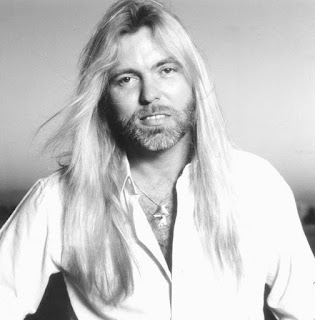
Gregg Allman (69)
Gregg Allman – a Rock
& Roll Hall of Fame inductee with the Allman Brothers Band and a
successful solo artist – passed away on May 27th at 69 years old due to
complications from liver cancer. [
read full obituary]
Joey Alves (63)
Alves joined the San Francisco hard rock/heavy metal trailblazers Y&T in 1974 as their guitarist and played and recorded with the band until 1989, performing on albums like
Yesterday and Today,
Earthshaker, and
In Rock We Trust. Alves last appeared on Y&T’s 1987 album
Contagious but reunited with the band in 2004 and toured with them in 2016.
Walter Becker (67)
Rolling Stone magazine and other outlets have reported the death of Steely Dan co-founder Walter Becker at the age of 67 years after an undisclosed illness. The talented musician and songwriter will forever be yoked to Steely Dan and his longtime creative partner, Donald Fagen, the pair creating a back catalog of innovative music that was meager in numbers but over-sized in influence and creativity. [
read full obituary]
 |
| Chester Bennington photo by Stefan Brending |
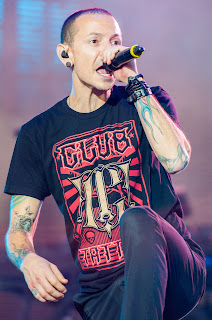
Chester Bennington (41)
Best-known as the lead singer of rap-metal band Linkin Park, Chester Bennington also spent time as frontman for Stone Temple Pilots and Dead by Sunrise. Bennington came to prominence after the 2000 release of Linkin Park’s Platinum™-selling debut album
Hybrid Theory. The band became a popular concert d
raw on the strength of a dynamic stage show and multi-Platinum™ albums like 2003’s
Meteora (7+ million copies sold) and 2007’s
Minutes to Midnight (4+ million copies sold), and is credited with selling better than 65 million records worldwide.
Bennington’s musical side-project, Dead by Sunrise, released a single Top 20 charting album,
Out of Ashes, in 2009 and the singer recorded with Stone Temple Pilots for their 2013 EP
High Rise. Bennington also dabbled in acting, appearing in cameos in films like
Crank,
Crank: High Voltage, and
Saw 3D.
Chuck Berry (90)
Chuck Berry, inarguably one of the founding fathers of rock ‘n’ roll, passed away at the age of 90 on March 18th, 2017. As reported by
Rolling Stone magazine
and elsewhere, St. Charles County Missouri police responded to a
medical emergency at Berry’s home Saturday after where they found the
rock legend unresponsive. First responders applied lifesaving techniques
but were unable to revive Berry, who had recently battled pneumonia. [
read full obituary]
 |
| Chuck Berry photo courtesy Universal Music |
John Blackwell, Jr. (43)
Blackwell was a master percussionist who performed with Prince for 15 years. Known for his unique style of drumming, Blackwell was a graduate of the Berklee College of Music before joining Prince’s New Power Generation band in 2000; Blackwell also performed with artists like Cameo, Patti Labelle, and Justin Timberlake, among others.
Charles Bradley (68)
American soul singer Charles Bradley enjoyed a modicum of late career success after being discovered by Daptone Records in the early 2000s. Up until that time, Bradley worked various odd jobs across the country while performing under stage names like The Screaming Eagle of Soul, Black Velvet, and James Brown, Jr. Bradley moved to Brooklyn during the mid-‘90s and, after signing with Daptone, released a number of singles circa 2002-2010 before recording his debut album,
No Time For Dreaming, in 2011. Bradley released two more albums for Daptone – 2013’s
Victim of Love and 2016’s
Changes – while becoming a popular live performer and touring extensively. In 2012, Bradley’s career was documented by the film Soul of America, directed by Poull Brien, which included performance footage from festivals around the world.
 |
| Lonnie Brooks photo courtesy Alligator Records |
Lonnie Brooks (83)
The blues world lost a bona fide legend on April 1st, 2017 with the passing of the great Lonnie Brooks, who was 83 years old at the time of his death. A brilliant guitarist and underrated, soulful vocalist, Brooks was a dynamic live performer who toured the world to no little acclaim. [
read full obituary]
Paul Buckmaster (71)
An accomplished cellist who graduated from the Royal Academy of Music at the young age of 21, Paul Buckmaster is best known as a skilled orchestral arranger that provided strings and things to hits by David Bowie (“Space Oddity”), the Bee Gees (“Odessa”), Carly Simon (“You’re So Vain”), and Harry Nilsson (“Without You”). Buckmaster also worked with artists as diverse as Miles Davis, the Rolling Stones, Leonard Cohen, and the Grateful Dead and served as Elton John’s musical director on albums like Tumbleweed Connection and Madman Across the Water.
 |
| Glen Campbell 1967/Capitol Records |
Glen Campbell (81)
Singer, songwriter, guitarist, and actor Glen Campbell was a beloved American musician and personality. Best known for his string of 1960s and ‘70s-era hits like “Gentle On My Mind,” “By The Time I Get To Phoenix,” “Wichita Lineman,” “Galveston,” and “Rhinestone Cowboy,” among others, Campbell was also the host of a music and comedy variety show on CBS called
The Glen Campbell Goodtime Hour. Over a career that spanned 50 years, Campbell released 70 albums, selling better than 45 million records worldwide, and placing 80 different songs on the charts. Campbell also dabbled in acting, earning a Golden Globe nomination for his supporting role alongside John Wayne in the 1969 film
True Grit.
Born in Arkansas, Campbell moved to Los Angeles in 1960 to become a session musician, hooking up with local L.A. band the Champs while also writing songs and recording demos for American Music, a publishing company. Campbell’s skills with guitar, mandolin, and banjo led to his becoming a member of the loose-knit group of session musicians known as The Wrecking Crew, performing on recordings by artists like Ricky Nelson, the Monkees, Nancy Sinatra, Phil Spector, and Elvis Presley, among others. He was signed as a solo artist by Capitol Records in 1962, releasing a series of unsuccessful singles and albums before scoring a hit with his 1965 cover of the Buffy Sainte-Marie song “Universal Soldier.” Campbell was a touring member of the Beach Boys during the mid-‘60s, and also toured as part of Ricky Nelson’s band before finally breaking through with the Top 20 country hit “Burning Bridges.”
Working with producer Al De Lory, Campbell broke through to the mainstream with the 1967 hit “Gentle On My Mind,” which was followed by a string of single releases that would earn Campbell four Grammy® Awards. Although Campbell’s career cooled off in the ‘80s, he would be inducted into the Country Music Hall of Fame in 2005 and continued to tour and record in spite of his 2010 diagnosis with Alzheimer’s disease. Campbell released his final album, 2017’s
Adiós, just two months before his death.
Wayne Cochran (78)
The prototypical “blue-eyed” soul man, Wayne Cochran provided the blueprint by which a generation of white soul singers (Van Morrison, Frankie Miller, Boz Scaggs, Daryl Hall, et al) would build their careers. Best known as the songwriter behind the classic song “Last Kiss” – a hit for J. Frank Wilson in 1964 and again later for Pearl Jam in 1999 – Cochran also wrote such gems as “Goin’ Back To Miami” and “Sleepless Nights” while his version of the old Ma Rainey song “C.C. Rider” set the standard for rock ‘n’ roll as well as providing Cochran with the name of his longtime band. Cochran never scored the monster hit that would have secured his legacy, and today’s he’s best known for his flamboyant stage presence and larger-than-life pompadour-styled stark white hair. Still, Cochran and the C.C. Riders toured from the late ‘50s until the mid-‘70s and recorded albums for the Chess Records, King Records, and Epic Records labels before retiring from music to become a minister.
Fred Cole (69)
Singer and guitarist Fred Cole was an influential artist on the American D.I.Y. scene, his garage-rock band Dead Moon releasing several indie albums throughout the 1980s and ‘90s, influencing bands like the Wipers, Nirvana, and Pearl Jam. Cole started his career at 15 years old and by the age of 18 he was fronting Pacific Northwest rockers the Weeds. The band changed its name to the Lollipop Shoppe and released a single classic psychedelic album,
Just Colour, on UNI Records, garnering comparisons to bands like Love and the Seeds.
When the Lollipop Shoppe broke up, Cole formed a number of various bands such as Zipper, King Bee, and the Rats that explored hard rock and punk. Dead Moon was formed by Cole and his wife Toody in 1987 and would release better than a dozen albums on their own labels, with Cole mastering the records himself on a vintage lathe that had been used on the Kingsmen’s version of “Louie Louie.” Dead Moon’s mix of psychedelic, garage, and punk rock earned the band a small but avid following in the U.S. and European underground. Cole broke up Dead Moon in 2006 after nearly three decades, forming a new band, Pierced Arrows. Our buddy Fred Mills at
Blurt magazine has a more thorough remembrance of Cole on the
zine’s website.
 |
| Chris Cornell photo by Gordon Correll |
Chris Cornell (52)
One of the leading lights of the ‘90s-era Seattle scene, Chris Cornell was found dead in the bathroom of his room at the MGM Grand in Detroit, Michigan after performing a show with Soundgarden at the Fox Theatre. Cornell’s cause of death was ruled to be suicide by hanging; he was only 52 years old. [
read full obituary]
James Cotton (81)
We’re immensely saddened to report on the death of blues legend James Cotton, who passed away on March 16th, 2017 of pneumonia at St. David’s Medical Center in Austin, Texas. Cotton was 81 years old. The powerful sound of Cotton’s harmonica helped define the evolution of the blues during the 1970s onward, and he was a constant presence on the stage, touring worldwide for better than 60 years. [
read full obituary]
Holger Czukay (79)
German multi-instrumentalist Holger Czukay is best-known as the co-founder of progressive rock pioneers Can. Czukay studied music under Karlheinz Stockhausen during the early ‘60s, and worked for a short while as a music teacher. Czukay was not interested in rock ‘n’ roll until a student played him the Beatles’ “I Am the Walrus,” which opened his mind to the experimental potential of rock music. He formed Can in 1968 with fellow Stockhausen student Irmin Schmidt on keyboards, adding guitarist Michael Karoli and drummer Jaki Liebezeit. The foursome explored the possibilities of minimalist, electronic, and world music into their avant-garde vision of psychedelic rock, serving as trailblazers on the fledgling German ‘krautrock’ scene.
Czukay recorded nine albums with Can between
Monster Movie, their 1969 debut, and 1977’s
Saw Delight, including acclaimed classics like 1971’s
Tago Mago and 1973’s
Future Days. Leaving the band to pursue a solo career, Czukay pioneered the use of sampling on his records, cutting and splicing tapes of shortwave radio sounds and incorporating them into his music. On his 1991 album
Radio Wave Surfer, he used the shortwave radio as a live, interactive musical instrument, a method of composition he called “radio painting.” Czukay also collaborated with a number of like-minded and adventuresome musicians through the years, including Brian Eno, Jah Wobble, David Sylvain, and the Eurythmics, among others. Sadly, Czukay’s Can bandmate, drummer Jaki Liebezeit, also passed away in 2017.
Robert Dahlqvist (40)
Robert Dahlqvist was the longtime guitarist for Swedish garage-rock cult favorites the Hellacopters from 1999 until 2007, recording four studio albums and four EPs with the critically-acclaimed band. During this time, the Hellacopters also collaborated with artists like the Flaming Sideburns, Gluecifer, the Backyard Babies, and Detroit rock legend Scott Morgan (The Rationals, Sonic’s Rendezvous Band). During his tenure with the Hellacopters, Dahlqvist had launched a side project called Thunder Express, named after a MC5 song in tribute to the Motor City rockers.
Thunder Express released a pair of albums –
We Play For Pleasure in 2004 and
Republic Disgrace in 2007 – before changing their name to Dundertåget, literally the Swedish translation of ‘Thunder Express.’ The band released two more albums under its new name before breaking up in 2011. Dahlqvist was a recurring member of Stefan Sundström’s backing band Sundström during the early 2000s, and toured with his former Hellacopters bandmate Anders Lindström’s band the Diamond Dogs in 2004. Dahlqvist also contributed to former MC5 guitarist Wayne Kramer’s 2003 album
Adult World and to
Communicate, the first studio album by the Solution, a collaboration between Scott Morgan and the Hellacopters’ Nicke Royale. Dahlqvist released an April 2016 single under the band name Strängen, one of the guitarist’s nicknames, and announced plans to record a solo album after a five-year hiatus from music. The album was reportedly near completion at the time of his death.
Warrel Dane (56)
Vocalist Warrel Dane (born Warrel Baker) was lead singer for the heavy metal bands Sanctuary and Nevermore. Trained as an opera singer and possessing a wide vocal range, Dane brought his soaring vocals to two influential major label albums by Sanctuary – 1988’s
Refuge Denied and 1990’s
Into the Mirror Black – but when Epic Records tried to remake the band from thrash-metal into ‘grunge,’ Sanctuary broke up. Dane formed the prog-metal outfit Nevermore with former Sanctuary bassist Jim Sheppard and guitarist Jeff Loomis; released by notable metal imprint Century Media, the band’s self-titled 1995 debut album found an appreciative audience among metal fans. Nevermore would release a total of seven studio albums and a live disc before going on hiatus in 2011. Dane released a solo album,
Praises to the War Machine, in 2008 and would reform his old band Sanctuary in 2014, releasing
The Year the Sun Died that year. At the time of his death, Dane had completed a new Sanctuary album,
Dead Again, which will be released posthumously, and had been working on a second solo album.
CeDell Davis (91)
Bluesman CeDell Davis began playing guitar as a young child, but a bout of polio when he was ten years old left him with little control over is left hand and restricted use of his right. Davis adapted by using a butter knife in his fretting hand to approximate a sort of slide-guitar sound which became his signature. The Arkansas native began playing clubs and juke-joints throughout Mississippi and in 1953 he began a decade of playing with blues legend Robert Nighthawk. A police raid on a club in 1957 led to a stampede that broke both of Davis’s legs, and he used a wheelchair from then until his death. A life of hardship and obscurity was expressed in his lyrics, and Davis would come to the attention of Mississippi’s Fat Possum Records, which released Davis’s Robert Palmer-produced 1994 debut
Feel Like Doin’ Something Wrong.
Capricorn Records released
The Best of CeDell Davis a year later, the bluesman backed by Col. Bruce Hampton and the Aquarium Rescue Unit.
The Horror of It All was released by Fat Possum in 1998, followed by 2002’s
When Lightnin’ Struck the Pine, which included contributions by REM’s Peter Buck and the Minus 5’s Scott McCaughey and Alex Veley. Davis continued to perform and record until his death, his last album – 2016’s
Even the Devil Gets the Blues – featuring guests and admirers like producer/drummer Barrett Martin (Screaming Trees), Mike McCready (Pearl Jam), and McCaughey.
 |
| The Smithereens |
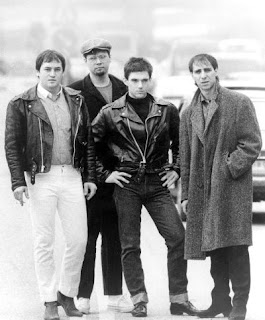
Pat DiNizio (62)
Singer, songwriter, and guitarist Pat DiNizio formed the Smithereens in New Jersey in 1980 with guitarist Jim Babjak, bassist Mike Mesaros, and drummer Dennis Diken. The four friends enjoyed a string of minor hits during the late 1980s and early ‘90s like “Only A Memory,” “A Girl Like You,” and “Too Much Passion,” but it was albums like
Especially For You (1986),
Green Thoughts (1988), and
11 (1989) that earned the band a loyal following that stuck with them through the lean years and a handful of albums for various labels, culminating in
2011, the band’s swansong, released in 2011 by eOne Music.
DiNizio also pursued a career as a solo artist, releasing four critically-acclaimed solo efforts beginning with 1997’s
Songs and Sounds. DiNizio dabbled in acting, appearing in a bit role in the hit 1992 film
Singles as well as on TV shows like
Space Ghost: Coast to Coast. He ran an unsuccessful campaign for the U.S. Senate seat in New Jersey in 2000 on the Reform Party ticket, garnering 19,312 votes and polling fourth; the campaign was later documented in the 2001 documentary film
Mr. Smithereen Goes to Washington. An early supporter of satellite radio, DiNizio became the host and program director of XM Radio’s
Unsigned program in 2001, and he was the focus of 7th Inning Stretch, an ESPN2 reality special, in 2006. DiNizio released an audio book,
Confessions of A Rock Star, in 2009 and continued to perform solo acoustic shows, and with the Smithereens, until his death.
Fats Domino (89)
American pianist, singer, and songwriter Antoine “Fats” Domino Jr. was one of a handful of pioneers of rock ‘n’ roll music. Between 1955 and 1960, Domino had eleven Top 10 charting hits and the singer would sell more than 65 million records in a career that spanned six decades. Born in New Orleans, Domino incorporated the city’s jazz-influenced R&B sound into the creation of his own unique style, and his million-selling debut single, 1949’s “The Fat Man,” is widely considered by many historians to be the first rock ‘n’ roll record.
As one of the best-selling African-American rockers of the ‘50s, Domino racked up the hits, timeless songs like “Goin’ Home,” “Ain’t That A Shame,” “I’m In Love Again,” “Blue Monday,” and his signature song, “Blueberry Hill.” The hits dried up in the ‘70s, but Domino was beloved in his hometown, and appeared annually at the New Orleans Jazz & Heritage Festival. Domino was among the first class of inductees into the Rock & Roll Hall of Fame in 1986 and was awarded the Grammy® Lifetime Achievement Award in 1987. Although his commercial accomplishments are unassailable, Domino’s groundbreaking music is often overshadowed by the critical acclaim heaped on contemporaries like James Booker and Professor Longhair. Domino’s influence on the evolution of rock ‘n’ roll is undeniable, however, his music inspiring artists from Elvis Presley and the Beatles to Cheap Trick and Willie Nelson. Domino’s innate sense of radio-friendly rhythm also influenced many of Jamaica’s ska and reggae artists.
 |
| The Tragically Hip photo courtesy MCA Records |
Gordon Downie (53)
Long considered a Canadian musical treasure, singer/songwriter Gordon “Gord” Downie was the beloved frontman and lyricist for rockers Tragically Hip from the band’s beginning in 1984 until his 2017 death. Downie recorded 13 studio albums and a live set with Tragically Hip, the band becoming superstars in Canada but achieving only modest cult band status in the U.S. where their albums barely charted. Downie also released a half-dozen acclaimed solo albums in Canada, beginning with 2001’s
Coke Machine Glow, with the posthumously-released 2017 LP
Introduce Yerself topping the Canadian music charts. Downie was as famous in his homeland for his offstage efforts as he was for his rock stardom, the singer using his celebrity to champion the rights of Canada’s indigenous people.
Downie was also involved in a number of environmental causes, especially the issue of water rights, and he became a board member of the Lake Ontario Waterkeeper group and was part of the Swim Drink Fish Music club which united artists and environmentalists to raise money for Waterkeeper groups across the country. Downie was diagnosed with a terminal brain tumor in early 2016 and although the glioblastoma responded to radiation and chemotherapy, it was nevertheless incurable. Downie launched a “farewell tour” of the U.S. and Canada with Tragically Hip during the summer of 2016 in support of the band’s album
Man Machine Poem. The tour’s final performance in Kingston, Ontario was broadcast live by the Canadian Broadcasting Corporation and watched by an estimated 11.7 million people. In June 2017, Downie and Tragically Hip were appointed as Members of The Order of Canada for their “contribution to Canadian music and for their support of various social and environmental causes.”
Dennis Dragon (70?)
Drummer Dennis Dragon is best-known for his 1980s-era band the Surf Punks, who recorded several albums for Epic Records during the decade. Dragon’s musical pedigree was much deeper, however, the child prodigy playing professionally at the age of 12 after he’d mastered drums and piano. During the late ‘60s and throughout the ‘70s he performed and recorded with folks like the Beach Boys, the Byrds, Rick Springfield, Neil Young, and the Captain & Tennille (his brother Daryl was ‘The Captain’). Dragon would also get involved in video production and sound engineering, working on albums by artists like Johnny Rivers, Carole King, and Cheech & Chong.
>>> In Memoriam 2017, Part Two


