This nifty little box came to me courtesy of old friend Cary Baker, who had great taste in music as a critic, and even better taste as a publicist. If not for him, I might have completely overlooked Hi Times: The Hi Records R&B Years as, unfortunately, a lot of music lovers may do as well. It’s a shame, too, because this is a wonderful collection, on par with anything that Atlantic, Rhino, or Capricorn have done these past few years.
Hi Records was founded in Memphis, Tennessee in 1957 by a trio of Sun Records session musicians. They found financial backers for the project, and began to kick out a series of jazzy, almost big band instrumental hits and R&B vocal tunes. The label’s discovery and signing of the talented Willie Mitchell proved to be a fortunate stroke of fate as well as a wise business decision. As an artist, Mitchell was to pull Hi from the brink of bankruptcy with a string of R&B hits that stretched throughout the 1960s; as a songwriter and producer, he became the cornerstone of Hi’s entire operation. The first disc of Hi Times: The Hi Records R&B Years showcases a number of Mitchell’s hits, including “20-75,” “The Crawl,” and “Everything Is Going To Be All Right” with the Four Kings.
It was during the early ‘60s that Hi Records was to make its greatest impact on the pop and rock music worlds, scoring hit after hit from a pair of Mitchell-produced artists, Al Green and Ann Peebles. Green began his career with a series of solid covers, songs like the Beatles’ “I Want To Hold Your Hand,” the Box Tops’ “The Letter,” or the Motown classic “I Can’t Get Next To You.” When he began working out his own material, he struck literal gold, and his hits topped the pop charts for the better part of the decade: “Let’s Stay Together,” “Tired of Being Alone,” “I’m Still In Love With You,” and others.
Although Peebles didn’t experience nearly the success that Green did on the pop charts, she held her own, singing her heart out in a series of soulful, sultry R&B hits like “(I Feel Like) Breaking Up Somebody’s Home,” “I’m Gonna Tear Your Playhouse Down,” and the classic “I Can’t Stand The Rain.” Hi Records was about more than just Green and Peebles, however, with artists like Ace Cannon, Otis Clay, Syl Johnson and O.V. Wright contributing to the label’s legacy.
Each benefited from Willie Mitchell’s enormous production skills, spurred on to give their greatest vocal performances by Mitchell’s quiet genius. The Hi house band, led by Teenie Hodges, cranked out a steady groove and a trademark sound that matched that of Stax, their cross-town rivals. All the above artists and more are included among the 68 songs collected on Hi Times: The Hi Records R&B Years, with other highlights including Johnson’s “Take Me To the River,” Clay’s “Trying To Live My Life Without You,” and Cannon’s “Drunk.”
Hi Records was sold in 1977 and, in the midst of the dreaded disco years, never regained the success and prestige that it had enjoyed for twenty years. When Mitchell left his post two years later, the label lost its greatest asset and with him, any chance of recapturing its past glory. Along with Stax Records, however, Hi Records helped to define what would become known as the “Memphis sound,” as influential a force on the future of rock and pop music as there has ever been. Hi Times: The Hi Records R&B Years showcases the reason behind this influence, a valuable collection of vital music, songs that sound as fresh and electric today as they did at the time of their release. Highly recommended... (Hi Records/The Right Stuff, released 1995)
A musical documentation of the struggle for equality and justice by people of color, the Movin’ On Up series is interesting as both a historical and an artistic artifact, a time capsule preserving the voices of a movement and a moment in American social and cultural experience. Whereas the first volume concerned itself with the fight for civil rights in the 1960s, volume two captures the thoughts and dreams and fears of the African-American community as they fought for the respect and dignity that they deserved during the riotous and uncertain ‘70s.
The collection of artists gathered here is an impressive one, indeed. Performers such as Curtis Mayfield, Marvin Gaye, Stevie Wonder, and War utilized their positions of popularity with audiences black and white to spread a lyrical message of unity, equality and brotherhood. Many of these songs were risky at the time of their release, ground-breaking works that continue to influence artists of all styles and genres, even today. Among the highlights to be found on Movin’ On Up, Volume Two are Curtis Mayfield’s haunting “We the People Who Are Darker Than Blue,” Marvin Gaye’s beautiful “Inner City Blues,” “The World Is A Ghetto” from War, Stevie Wonder’s landmark “Living For The City,” Gil Scott Heron’s “Winter In America,” and The Isley Brothers’ electric “Fight the Power.” The Staples Singers, Labelle, Donny Hathaway, The O’Jays and others are also represented on the disc.
Sadly, a few of the voices found on Movin’ On Up, Volume Two have been silenced by time and tragedy, others by the forced obscurity of commercial oblivion. Many, though, are still vital, creative artists, contributing to a still-influential body of work. The Movin’ On Up series serves to remind all of us of the importance of these artists, and that although a lot of work has been done, we still have a long way to go before we achieve the goals that these musical contributors fought for so long ago. (The Right Stuff, released 1995)
The truncated solo career of
Shuggie Otis
is one of those great mysteries of modern music. An enormously gifted guitarist
and multi-instrumentalist born into a musical family (dad was R&B legend
Johnny Otis – a singer, bandleader, and record producer who discovered Etta
James), young Shuggie was playing professionally, in his father’s band by the
age of twelve. He grew up amidst brilliant blues, jazz, and R&B musicians
that helped inform and shape his talents, but Shuggie also found influences in
1960s-era artists like Jimi Hendrix, Sly Stone, and Arthur Lee of Love.
Otis
had recorded several albums with his father as well as working on Al Kooper’s
second Super Session LP (later re-named Introducing Shuggie Otis)
before recording his solo debut, Here Comes Shuggie Otis in 1970, when he
was just 16 years old. The phenomenal Freedom Flight album would follow a
year later, yielding the classic song “Strawberry Letter 23,” a huge chart hit
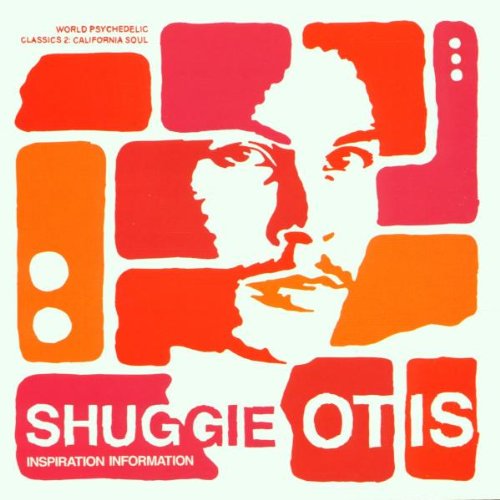
for the Brothers Johnson in 1977. Inspiration Information, which Otis
began recording in 1971 and which was released in 1974, is widely considered to
be the artist’s masterpiece. An understated collection of psychedelic soul and
funk with the barest of blues influences, the album has grown in stature since
its release, and artists as diverse as David Byrne of Talking Heads, Lenny
Kravitz, Prince, and British electronic pop pioneers Stereolab have sung its
praises.
Shuggie Otis’s Inspiration Information
Although a commercial disappointment upon its release in 1974,
Inspiration Information has only grown in influence and importance
since. The album opens with the title track, a low-key, soulful affair that
boasts of a deep funky groove and syncopated vocals, with a little blues vibe
creeping in at the edges. The lush instrumentation is balanced by ethereal
backing harmonies, making for an odd combination of (then) contemporary
soul-funk but harking back to the R&B jams of the 1950s and early ‘60s.
The effervescent “Sparkle City” brings the fatback in a big way, Otis’s funky
chicken-pickin’ accompanied by a big bass line and a slippery rhythm, the song
boldly mixing jazz, blues, soul, and funk into a single invigorating listening
experience. Otis’s vocals are understated and don’t drop into the mix until
around two minutes in, but the meter of the lyrics matches the song’s overall
rhythmic blueprint to create one fun mess!
Using a bossa nova
styled rhythmic backdrop, “Aht Uh Mi Hed” is an odd piece, the tick-tock
percussion running throughout the song delivered a stark counterpoint by lush
strings and swells of exotic instrumentation, Otis adding minute amounts of
finely-crafted, filigree guitar layered beneath the unusual vocals and violin
flares. The short-but-sweet instrumental “Rainy Day” perfectly showcases
Otis’s immense six-string skills, his jazz-infused licks bouncing off of
mournful strings, while the sci-fi instrumental “XL-30” is electronic
space-rock at its best, strange musical tangents jumping out unexpectedly from
a droning keyboard hum.
This 2013 reissue of
Inspiration Information includes four previously-unreleased bonus
tracks tacked onto the original nine, two of which – the soulful, bluesy
“Magic” and “Castle Top Jam” – were originally recorded in 1971 for the album
but ultimately rejected, although both are quite good enough to have made the
cut. “Things We Like To Do,” laid on tape in ‘77, is an unlikely marriage of
old school R&B and 1970s-era soul, with muted vocals embroidered through a
lush soundscape of rhythmic percussion, sumptuous strings, and “come hither”
lyrics.
Wings of Love
Inspiration Information circa 2013 also includes a second disc of tunes
titled Wings of Love, a baker’s dozen of previously unreleased live and
studio tracks pulled from the archive, cleaned up, and remastered by Otis
personally. Offering material dating from as early as 1975 and as current as
2000, a lot of the songs on Wings of Love sound as good as, if not
better, than those on Inspiration Information. Any combination of these
13 songs would have made a killer album in their own right, and the quality of
performances from the late 1980s a the lone 1990 track show that Otis was still
making great music even if few got the chance to hear it.
As Otis
himself explains in the album’s liner notes, it’s not so much that he gave up on
the music business when he all but disappeared from the spotlight after the 1974
release of Inspiration Information, it’s really more of a case of the
business giving up on him. A lot of Wings of Love delves into the same
soul-blues-funk turf as Information Inspiration, but material like the
bouncy “Special” (1980) is every bit as satisfying as anything that Prince was
dominating the R&B airwaves with at the time. “Give Me Something Good”
should have owned radio in 1977, the song a dynamic mix of Hendrixian guitars
and icy, Isley Brothers-styled funk, with strong vocals and a little R&B
flavor added to the brew for good measure while “Tryin’ To Get Close To You”
predates the aforementioned Prince’s best soul-funk efforts by a
decade.
Wings of Love’s title track
is an ambitious eleven-minute jam recorded in 1990 that blows anything Otis had
done previous right out of the water. With gorgeous Spanish guitar leading into
classically-styled synthesizer riffs, the song explores decades of musical
themes, and the careful listener can hear elements of jazzy, 1940s-era torch
songs (think Billie Holiday); 1970s-era prog-rock (with a pop edge, like Todd
Rundgren); adventurous 1950s-styled rhythm and blues; 1970s influenced flights
of fanciful guitar; and much, much more. It’s a stunning musical tour de force.
The shorter-by-half “If You’d Be Mine” is, perhaps, its creative equal, the 1987
recording perfectly fusing rock, soul, and pop music together seamlessly in the
creation of a truly electrifying performance.
The Reverend’s Bottom Line
To be honest, there’s not much in the way of blues music to be heard on
Inspiration Information, Otis’s R&B roots hidden beneath mountains
of psychedelic-soul and raunchy funk. “Fireball of Love” from the
Wings disc probably veers the closest to a blues sound, the song’s
raucous vocals and fretwork reminiscent of Johnny “Guitar” Watson’s funky
1970s era recordings. The acoustic “Black Belt Sheriff,” from 2000, is the
most recent track and it displays a sort of Delta-styled country-blues vibe
with some mighty tasty slide-guitar work.
Truth is, Shuggie Otis
was a visionary musician of no little genius, his brilliance and talent
unrecognized until a raft of acolytes picked up on Inspiration Information in
the 1990s and spread the word to fellow travelers. Listening to the better
than two-dozen tracks on this reissue, one can easily hear the pop, rock,
soul, jazz, funk, and blues influences that Otis used to create a blueprint
for some of the biggest, brashest, and most commercially-successful music of
the 1980s and ‘90s. This is ambitious, sometimes complex stuff, to be sure,
but it’s never difficult to listen to, and quite entertaining for those
looking for depth, honesty, and artistry in their preferred music. (Legacy
Recordings, released April 16, 2013)
When the annals of ‘60s soul are finally written, the name of Gary ‘U.S.’ Bonds is sure to be included. Although not as famous as Otis or Aretha or even Solomon Burke, Bonds’ immense influence on rock ‘n’ roll was sealed with the 1961 hit single “Quarter To Three,” a rollicking musical party that inflamed the imaginations of numerous future rockers, including Bruce Springsteen.
Twenty years after his commercial peak, Bonds was “rediscovered” in 1981 by Springsteen and Little Steven (Van Zandt), the trio creating a pair of excellent rock-n-soul recordings. After an overlooked 1984 album that suffered due to the lack of an Asbury Park connection, Bonds quietly hit the oldies circuit…
Gary U.S. Bonds’ Back In 20
Two decades later, Gary ‘U.S.’ Bonds has returned with a fine collection of red-hot R&B and scorching blues tunes titled, well, Back In 20. If the slashing opening guitarwork on “Can’t Teach An Old Dog New Tricks” sounds familiar, it’s because guest Bruce Springsteen has used variations on the riff before, if not always as effectively. When Bonds comes in with his semi-biographical tale, the song explodes into a raucous blend of soulful vocals, madcap instrumentation and jump-n-jive spirit. Much of Back In 20 hits a similar groove, Bonds jumping between original rave-ups like “Murder In the First Degree” and classic soul covers like “Fannie Mae” or the Otis Redding ballad “I’ve Got Dreams To Remember.”
Guests on Back In 20 include Springsteen and Southside Johnny, Phoebe Snow and former Allman Brothers guitarist Dickey Betts. The guests don’t overshadow Bonds’ fine soul band, however. Led by guitarist Mark Leimbach, who co-wrote several of the original songs, the band builds a solid foundation for Bonds’ powerful vocals. With a unique vocal inflection and a raw quality that has more in common with Chuck Berry than with the church-nurtured, silk crooning of Sam Cooke or Jackie Wilson, it’s easy to see why a handful of early-60s Bonds hits proved so influential with young rockers. Gary U.S. Bonds may not roll out any new tricks with Back In 20, but why should he when the old tricks still sound so good? (MC Records, released 2004)
Review originally published by Community Free Press (Springfield MO)
Flamethrower soul vocalist Beth Hart sang on blues-rock guitarist Joe Bonamassa’s 2011 album Dust Bowl, thus beginning a beautiful relationship that has since resulted in a bevy of mighty fine studio collaborations, beginning with 2011’s critically-acclaimed Don’t Explain and followed by 2013’s Grammy® Award-nominated Seesaw. The duo added a stunning live disc, Live In Amsterdam, to their growing catalog in 2014.
Black Coffee is the third studio album recorded by Hart and Bonamassa, and the pair’s first work together in five years, during which time Hart released a pair of well-received solo albums in 2015’s Better Than Home and the following year’s Fire On the Floor while Bonamassa released something like a zillion live and studio LPs. With producer Kevin “Caveman” Shirley back on the boards for round three, and much like their first two albums, Black Coffee is a collection of well-chosen cover tunes that run the gamut from pure blues to R&B and even Americana. With Joey B. holding down the six-string chores, the pair is backed by Bonamassa’s talented, road-tested touring band of veteran musicians.
Beth Hart & Joe Bonamassa’s Black Coffee
Hart and Bonamassa dug deep into the annals of rock ‘n’ blues for Black Coffee, kicking the album off with “Give It Everything You Got,” a minor 1971 FM radio hit for Edgar Winter’s White Trash. Hart’s voice is more soulful than White Trash vocalist Jerry Lacroix, if not quite as funky, but a full-blown, gale-force horn section provides the groove atop of which Bonamassa embroiders his molten fretwork while Hart punches out the lyrics like a champion prizefighter. The title track is an obscure Ike & Tina Turner deep cut from a 1972 album, but a rocker like Bonamassa would be more familiar with the Humble Pie version from their 1973 album Eat It. The Hart/Bonamassa version treads much closer to Steve Marriott’s reading of the song, from the sludgy, bass-heavy instrumentation and shimmering guitar to Hart’s gritty, whiskey-soaked vox.
Not everything on Black Coffee works, or even rocks – a cover of the 1960 Teri Thornton jazz classic “Lullaby of the Leaves” allows Hart to indulge in her torch singer persona, which displays a lot of emotion but seldom moves the meter for me, even with Bonamassa’s nuanced and melodious guitar solos. In a similar vein, but much tastier, is a cover of “Kansas Joe” McCoy’s 1936 blues/jazz standard “Why Don’t You Do Right.” Originally recorded by the Harlem Hamfats as “The Weed Smoker’s Dream,” Hamfats member McCoy later rewrote the song, which later became a 1941 hit for Lil Green, with Big Bill Broonzy on guitar, and an even bigger hit a year later for Peggy Lee and Bennie Goodman. In Hart’s hands, the jazzy big band arrangement offers her blustery, albeit playful vocals and stunning guitar playing as an integral part of the song’s lush instrumentation.
Hart and Bonamassa blow up Howlin’ Wolf’s “Sitting On Top of the World” with brassy hornplay, scorching guitar licks, and Reese Wynans’ honky-tonk keyboards. There’s no way that Hart could blow gruffer and grittier than the legendary Wolf; instead she brings a subtle but strong soulfulness to the lyrics rather than duel with history. Their cover of Lucinda Williams’ “Joy” takes the Americana legend’s original, pumps up the volume and paints it blue with slithery guitarplay, vocal gymnastics, and a menacing rhythmic soundtrack. Their version has taken some heat from Williams’ hardcore fans for its funky reconstruction, but Hart and Bonamassa bring a punkish blues vibe to the song while still capturing the heartbeat of the original. The LaVern Baker 1953 single “Soul On Fire” is the sort of emotionally-singed R&B that Hart cut her teeth on, and her rendition here is simply priceless, the singer paying tribute to Baker’s original while exorcising a few demons of her own with the performance.
The Reverend’s Bottom Line
In its heart (no pun intended), Black Coffee is retro as hell…Hart and Bonamassa wear their love of these songs and the artists that originally sang them on their sleeves, which isn’t necessarily a bad thing. They imbue their performances with enough old-school tradition to honor the O.G. recordings, but bring an energy, musical chemistry, and contemporary edge that helps pull the songs into the second decade of the 21st century.
Hart is at her very best when she’s paired with Bonamassa, belting out these tunes like she’s singing for her supper, and he gladly relinquishes the glare of the spotlight for a while, content to channel his restless creative muse through his fingertips. Black Coffee is the pair’s most accomplished effort yet, a too-quick romp through the great American rock ‘n’ soul songbook by a pair of talented artists that have found magic in the music. Grade: A (J&R Adventures, released January 26, 2018)
Best-known as a longtime buddy of both Bruce Springsteen and Little Steven Van Zandt, “Southside” Johnny Lyon and the Asbury Jukes enjoyed a couple of minor hits in the late 1970s and early ‘80s before sinking below the pop culture radar. It hasn’t stopped the crew from cranking out new music, however, and save for a few years during the 1990s sitting on the sidelines in Nashville (recharging his batteries), Southside and his gang of rhythm and blues true believers have continued to deliver Memphis soul, Chicago blues, and old-school rock ‘n’ roll with the fervor of a traveling R&B revue, the band just as likely to kick up some dust with a vintage Willie Dixon number as they are to belt out a custom-fit Springsteen song.
Exhibit A for the defense is this nifty lil’ two-disc import set Cadillac Jacks Number One Son, brought to our attention by our friends at Secret Records in the U.K. and containing a red-hot 22-song performance from a sold-out November 2002 show at The Opera House in Newcastle upon Tyne in jolly ole England. Originally released on DVD back in the early-oughts, as well as on CD as From Southside to Tyneside four years ago, its subsequent re-birth on compact disc is a boon for we original Jukes fanatics, and if you’ve ever loved Southside Johnny’s soulful howl of a voice, you’re going to want to beg, borrow, or steal a copy of Cadillac Jacks Number One Son for yourself. It has just about everything you could ask for from Southside Johnny and the Asbury Jukes on a live disc, an exciting mix of old and new, rhythm and blues, and all the blue-eyed soul your hungry ears can handle.
Southside Johnny and the Asbury Jukes' Cadillac Jacks Number One Son
Cadillac Jacks Number One Son finds the band performing with a renewed vigor thanks to the addition of longtime Jersey cohort Bobby Bandiera on guitar and keyboardist Jeff Kazee. The set includes a handful of tunes from the band’s then-current release, 2000’s Messin’ With The Blues, Lyon’s furthest sojourn onto blues turf on record, and songs like the horn-driven big-band rave-up “Baby Don’t Lie” or the Albert King doppelganger “Living With The Blues” (which offers up some incredible Southside vox and meaty Bandiera solos reminiscent of you-know-who) are barely-controlled wildfires. A cover of Tom Waits’ “Gin Soaked Boy” is cranked-up-and-tight like a Little Walter joint, with greasy git licks from Bobby B and flaming harp tones from Lyon’s capable hands.
The performance doesn’t eschew the old crowd favorites though, and several of the best and brightest from the Jukes’ 1970s-era releases shine famously in this new light. The Little Steven-penned “This Time Baby’s Gone For Good” (from 1978’s Hearts of Stone) is a lush heartbreaker worthy of Otis Redding while the bittersweet “Some Things Just Don’t Change” (from 1977’s This Time It’s For Real) is simply, eternally divine. Southside has probably performed the title track to his 1976 debut, “I Don’t Want To Go Home,” literally thousands of times, but he refuses to phone it in, imbuing the song with the same lonesome heartache that he did some 25 years earlier, while the romance-gone-bad finality of “Hearts of Stone” will induce tears from all but the most emotionally-choked listener. Van Zandt’s blissfully wonderful “All I Needed Was You” (from 1991’s comeback LP Better Days) is reminiscent of everything you ever loved about 1950s-and-60s-era rock ‘n’ soul music, while the band’s lively cover of the Willie Dixon-penned, Sonny Boy Williamson gem “Help Me” is a slice of blues heaven.
The Reverend’s Bottom Line
Altogether, getting a promotional copy of Cadillac Jacks Number One Son in my mailbox was like getting an early Christmas present...it’s just that damn good! If you love rhythm and blues and want to hear it from one of the funkiest, tightest, blue-eyed soul bands that’s ever been, you owe it to yourself to track down Southside Johnny & the Asbury Jukes’ overlooked but perfectly-cooked Cadillac Jacks Number One Son and have your bad self a house party! Grade: A (Secret Records U.K., released September 13, 2012)