Showing posts with label Other Side of Nashville. Show all posts

Monday, December 22, 2025

Nashville Cats: Richie Owens & Steve Boyd (2025)

Richie Owens’ Redemption
Back in 1966, the Lovin’ Spoonful’s John Sebastian sang “there’s thirteen hundred and fifty-two guitar pickers in Nashville” later adding “and any one that unpacks his guitar could play twice as better than I will.” That loving ode to the Music City, “Nashville Cats” would peak at #8 on the Billboard singles chart, the seventh Lovin’ Spoonful song to hit Top Ten in the U.S. 

As Sebastian told writer Jeff Tamarkin (note: a former editor of mine) of the Best Classic Bands website, he drew inspiration for the song after he and Spoonful guitarist Zal Yanovsky were shocked by a talented unknown guitarist playing in their hotel’s bar, concluding that “how is it that this guy that doesn’t even have a stage can take us to town, and just kill it, in 20 minutes?” Although Nashville has long been known as the home of country music, there’s never been a lack of über-talented “Nashville cats” playing rock, blues, and jazz music. As I posited in my 2012 book The Other Side of Nashville, the Music City’s “rock era” started with the release of R. Stevie Moore’s Phonography album in 1976.

Back in the mid-‘70s, Moore and his friends – notably Roger Ferguson and Victor Lovera – were among the few artists making original, non-country music in Nashville. Moore later lit out for New Jersey and made a name for himself as the “Godfather of Home Recording.” But others would follow, diverse rockers like David Olney & the X-Rays, the White Animals, and Cloverbotton who would later be followed by Jason & the Scorchers, Afrikan Dreamland, and many others. The city’s rock scene thrived throughout the 1980s and ‘90s through today with talents like Sour Ops and William Tyler representing the city alongside immigrants like Jack White and Dan Auerbach.   

Richie Owens’ Redemption


New albums by a couple of the city’s O.G. rockers – Richie Owens and Steve Boyd – show that there’s still plenty of great music being made by the first generation of Music City rockers. Singer, songwriter, and guitarist Richie Owens grew up in a musical family (he’s Dolly Parton’s cousin and has toured as a member of the country legend’s band) and played around town during the ‘80s in beloved bands like Placid Fury, The Dayts (with my old high school buddy Norm Rau!), The Resistors, and The Movement. Most recently, he’s fronted Richie Owens & the Farm Bureau, the band creating an inspired blend of roots-rock and twangy country on albums like 2011’s In Farm We Trust, 2014’s Tennessee, and 2020’s Reconstruction. Owens has also worked in the studio with bands like Jason & the Scorchers, the Georgia Satellites, and Raging Fire.

Redemption, however, is credited to Owens by himself, and billed as “a gutter gospel for the damned,” so don’t let the poppy, melodic album-opener “Welcome To the Evening Show” fool you…this is a deeply-insightful (and disturbing) take on our apocalyptic days delivered by Owen with a smile on his face and a preacher’s fervor as his warm vocals and gorgeous guitar-play support an otherwise devastating message. The song also sets the stage for Redemption, the album, as a sort of rock ‘n’ roll parable, a clarion call for the faithful who have been conned and confused and debased for their empathy and humanity. “Sacrifice” carries the message into blues turf, with Owens’ Delta-dirty guitar lines punctuating his somber vocals. 

“The Hammer” digs even deeper, Owens’ voice warped and obscured by an electronic haze, the song’s deep blues roots modernizing the John Henry myth for a chaotic era. The somber “Muddy the Water” plays like a dirge slotted between “The Hammer” and the up-tempo “All That Matters,” which buzzes like the parasocial hum we find ourselves in daily, the song’s dire message buoyed by a glammy rock ‘n’ roll soundtrack with some tightwire guitar and a driving rhythm. It’s back to the hammer and tongs for “Nameless,” a bruising, metallic, Biblical message with oblique lyrics and a menacing vibe fueled by the flames of a dozen burning bushes.

The electrifying spaghetti western-styled guitarplay of “Trouble” is accompanied by a galloping arrangement and vocals that ride hard above the relentless rhythm to deliver the ‘Sturm und Drang’ while the late night bluesy feel of “Note To Self” offers up an exotic ambience that reminds of Santana’s Caravanserai. Featuring fluid, jazzy guitar lines that soar and dip across the musical landscape, it’s a joyful noise that flows as a counterpoint to the song’s lyrical struggle. “Fighting For Our Sins” is an unbridled rocker with taut guitar lines and a Beatlesque melody which creates a deceptively sunny soundtrack for an otherwise stormy lyrical journey.

“Miggido” is another brilliant, western-flavored romp with twangy guitar and a wide rhythm that strides the same dark side of the street as some of the best work from Luther Perkins, James Burton, or Hank Garland to ride alongside Owens’ brilliant, provocative, and poetic lyrics. Album-closer “The Last Song Written” is a bigger and bolder rocker than anything previous with the sound of a guitar army marching lockstep to Owens’ reflective albeit reflective lyrics, one final sermon for the end of the world. It’s the perfect closer for Redemption, a masterpiece painted with Owens’ effortless mastery of rock, blues, and country music to deliver a timeless message. “Redemption” is on the horizon, but we’re going to have to keep walking through hell to get there…

Steve Boyd’s King of the Losers


Steve Boyd’s King of the Losers
The White Animals were one of the most popular local bands during the first half of the ‘80s, releasing five studio and a live recording on their own independent Dread Beat Records label circa 1981-1987. Bassist Steve Boyd was along for the ride from the very beginning, and while fat-string players generally get short-changed on receiving credit for a band’s success, Boyd was integral to the Animals’ heavy rhythmic sound, playing off drummer Ray Crabtree like Entwistle and Townshend in the Who, or maybe Aston Barrett and Carlton Barrett in the Wailers.

Boyd also had a hand in the band’s songwriting, contributing fan favorites like “Constant Attention,” “Such A Long Time,” and “This Girl of Mine” to the Animals’ songbook. He brought similar pop/rock sensibilities to the Claimstakers’ self-titled 1988 album; a well-regarded side project Boyd recorded with White Animals bandmate Rich Parks. Boyd’s solo debut, King of the Loners, starts up front with a wry bit of humor…credited to Boyd and “The Loners,” in reality, the talented musician wrote all the songs, played all the instruments, and produced the album save for cameos by guitarist Will Kimbrough on two songs. By definition, Boyd would be “King of the Loners” as he was largely alone when he created this stunningly impressive solo debut effort. 

“Drowning” kicks off the album, the song reflecting more than a little Tom Petty influence; although Boyd’s vocals are slightly more flexible than the late rock superstar’s, they’re every bit as engaging. The folkish influences evident on “Scattered Down the Road” only add to the song’s enormous charm, Boyd’s wistful vocals accompanied by a filigree acoustic guitar strum. The mournful harp-play evokes Dylan, but with less grandiosity and more humility. The result is an overall gorgeous performance with intricate lyrics and wonderful vocal/guitar interplay. The title track is an upbeat rocker with a rollicking arrangement and a melody that’s two lanes wide and supported by wiry fretwork and power-pop vocals.

The loping rhythm that opens “Sands of Idle Time” draws you in with effortless grace, offering vocals that verge on melancholy accompanied by gossamer guitarplay that delights even as it mesmerizes. By contrast, the country twang of “Now I Understand” brings a bit of honky-tonk authenticity to a deep personal song that delves into the ages-old father/son divide. The languid “Lazy Tuesday” pairs swampy, Creedence-styled guitar twang to a slow-rolling lyrical feast while the ballad “The House Where Blue Light Lives” showcases a different facet of Boyd’s talents, lyrically and musically capturing an innocence too-often lost in the void of social media-driven “content,” relying instead on heartfelt, plaintive vocals and immaculate guitarplay. The lilting “A Prison Song” – originally recorded by the White Animals – offers a sublime 1960s-era country-rock vibe with weeping pedal-steel guitar and a gentle acoustic strum; “Up For Air” closes King of the Losers with an up-tempo performance that echoes the ‘Laural Canyon’ sound of the 1970s with glimmering vocals and guitar.

While I’ve always enjoyed and respected Boyd’s contributions to the White Animals, the bassist’s first solo shot at the brass ring is simply stunning in the heart and soul displayed by King of the Loners’ delicate wordplay as well as Boyd’s carefully-crafted instrumentation that wields either a velvet glove or brass knuckles, depending on which best serves the song. These are intelligent, carefully considered songs akin to artists like Dwight Twilley, Peter Case, and Big Star-era Alex Chilton as well as another Nashville cat, Bill Lloyd. Boyd’s ability to fuse classic pop and rock to a contemporary sound is a welcome breath of fresh air.

With apologies to John Sebastian, there’s more to Nashville than just “guitar pickers.” As these albums from Owens and Boyd – as well as recently releases by Tommy Womack and the late Todd Snider (R.I.P.) and a 2024 album by the White Animals – prove, the Music City is teeming with talent, even if it’s not always recognized.

Friday, January 28, 2022

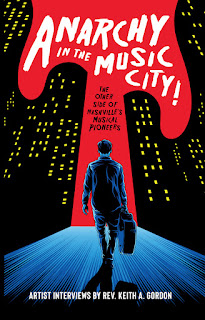
Anarchy In The Music City! The Other Side of Nashville's Musical Pioneers

Anarchy In The Music City!
Since the early 1960s, Nashville has been known worldwide as the "Music City" for its robust country and gospel music industries. For over 40 years now, Nashville has also been home to a thriving hotbed of rock, blues, rap, and Americana music. "The Other Side of Nashville" has grown from a few makeshift bands playing original songs and scraping for gigs into an internationally-respected scene that has attracted creative immigrants from across the globe.

Anarchy In The Music City! is an oral history of the origins and evolution of Nashville's alternative music scene as told by the pioneers that made the music. Using artist interviews culled from the pages of Rev. Keith A. Gordon's critically-acclaimed book The Other Side of Nashville, this illustrated volume includes conversations with both well-known music-makers like Jason & the Scorchers, Webb Wilder, Tony Gerber, David Olney, and Chagall Guevara as well as regional cult rockers like Tommy Womack, the Dusters, Donna Frost, and Aashid Himons, among many others.  

The “Reverend of Rock ‘n’ Roll,” Rev. Gordon has been writing about rock and blues music for 50 years. A former contributor to the All Music Guide books and website, and the former Blues Expert for About.com, Rev. Gordon has written or edited 25 previous music-related books and eBooks, including Blues Deluxe: The Joe Bonamassa Buying Guide, Planet of Sound, The Other Side of Nashville, and Scorched Earth: A Jason & the Scorchers Scrapbook.

Buy an autographed copy for $14.99 directly from the Reverend:

 
Prefer to buy from Amazon.com? Here's a link to the print version of Anarchy In The Music City! (also available as a Kindle eBook)

Friday, January 21, 2022

Archive Review: Mark Germino's Rank & File (1996)

Mark Germino's Rank & File
In a city like Nashville, filled with mostly mediocre songwriters churning out tunes for Music Row’s country music machine, it’s always a breath of fresh air to hear Mark Germino. One of the city’s greatest underrated and overlooked talents, Germino stands tall alongside wordsmiths like Steve Forbert, Bill Lloyd, and Steve Earle who don’t quite fit into the system, square pegs  in a round hole world who are creating some of the best music that you’ll ever hear. Case in point: Rank & File, Germino’s wonderful acoustic collection from late ‘95.

Mark Germino’s Rank & File


Germino is a story-teller, more in the vein of a Dylan, perhaps, than either Bruce Springsteen or Joe Grushecky, although he brings to his work more country, rather than folk, influences. Germino is working class all the way, a self-described “politically incorrect, liberal redneck.” With an artist’s soul and a wanderer’s experience, with more angry attitude and self-righteous frustration than any punk rocker could ever muster, Germino breaths life and energy all of its own into every song that he puts to music and sings.

From the self-crucifixion of the artist in “Poet’s Lament” (“Well the poet laid his pencil down/excused himself and took/A loaded pistol in his hand/and shot himself in the foot”) to the not-so-subtle social commentary of “Field’s of Man’s New Order” (“I don’t like your tabloids, I don’t like your networks/they manipulate me while keeping me informed/your misuse of headlines, your sad propaganda/I hate your self interest as sure as you’re born”), Germino has an eye for the small details that effect our lives, and the superb ability to relate them in stories that will touch us.

With “Fire In the Land of Grace,” a fanciful retelling of the singer’s visit to Graceland, Germino takes back the spirit of rock ‘n’ roll and delivers Elvis from purgatory, while “Rosemary’s New Constitution” is a call to arms for the average man, a fantastic outline of a utopian nation: “And all the blacks own the food and the whites own the fuel/and the natives own the land so they’re covered/the rich own the schools, the poor own the banks/so we’re all forced to deal with each other.” Germino’s songs often express radical ideas, related simply through song without the bombast and bullshit that often accompany public discourse.

Rex Bob Lowenstein


Even for a songwriter as masterful as Germino, he sometimes outdoes even his best work. “Felix Tucker’s Biggest Lie” is one such moment, a classic story of “an honest man from the hills of East Tennessee” that evokes the spirit of an innocence long passed, a tale of  morality that showcases man’s constant philosophical struggle with what’s right and what’s wrong. The song’s chorus, the delightfully paradoxical “And he was and he is and he will be, he’s been honest since he was a kid/but the biggest lie that he ever told is the most honest thing that he ever did” perfectly frames the verses (and the moral) sung in between. Delivered in a Delta-influenced, talking blues style, “Felix Tucker’s Biggest Lie” is a perfect example of art at its best, entertaining and thought-provoking. To go into too much detail would weaken the song’s strength; you’ll just have to check it out on your own.

Rank & File’s other transcendent moment is in the story of “Rex Bob Lowenstein,” retold from Germino’s electric album Radartown. The song’s protagonist, a mythical deejay at radio station W.A.N.T. is the music lover in all of us, playing a loose format of songs: “You can call and request Lay Lady Lay/he’ll play Stanley Jordan, U2 and Little Feat/he’ll even play the band from the college down the street.” Rex Bob is a champion for music in all of its diversity, a friend on the box that will play your tunes and keep you company (a purpose that radio serves for many late-shift and all-night workers who fight fatigue with the songs sent out across the airwaves).

The station, of course, changes formats and Rex Bob, like many of the talents of his generation, is sent out to pasture (albeit not quietly). The song is less about what we’ve gained by technological advances in entertainment (equipment, formats, delivery systems) and more about what we’ve lost by placing profit before pride and personality. At once both tragic and triumphant, “Rex Bob Lowenstein” may well be the most fervent damnation of corporate domination in the entertainment world that will ever be written.

The Reverend’s Bottom Line


Germino collected a fine group of musicians to play on Rank & File. Veteran Mac Gayden, a talented songwriter in his own right, offers his multi-instrumental skills, while bassist Tom Comet played previously with Germino on Radartown. Drummer Pat McInerny keeps the entire affair solid, while keyboardist Michael Webb’s contributions are subtle, though necessary. They’ve together created a soundtrack that is sparse and minimalist, perfectly echoing the spirit and nature of these songs. Like those artists mentioned alongside him in this piece, Germino offers music direct from his heart, allowing the songs to speak for him, and, by extension, for us, as well... (Winter Harvest, released 1995)
 
Review originally published by R.A.D! music zine, Spring 1996

Buy the CD from Amazon: Mark Germino’s Rank & File

Friday, November 12, 2021

Archive Review: Giles Reaves’ Nothing Is Lost (1988)

Giles Reaves’ Nothing Is Lost
It may surprise you, but Nashville is rapidly gaining a reputation as a hotbed of “space music,” that ethereal art form which includes a myriad of musical styles and genres, consisting mostly of instrumental pieces and including everything from experimental jazz and esoteric classical works to aggressive noise and electronic wizardry. Creative and innovative musicians such as Anthony Rian, Kirby Shelstad, and William Linton have put the Music City on the “New Age” music map. The best-known of all our local creators is Giles Reaves.

Reaves, known locally for his engineering skills while associated with the Castle Studio, released his first collection of space music a year ago, the brilliant and effervescent album Wunjo. Inspired by the clairvoyant Nordic runes and performed on keyboards and synthesizers with the aid of a computer, Wunjo was a highly-textured and forceful work, and it captured the attention and imagination of listeners all over the globe.

Giles Reaves’ Nothing Is Lost

As wonderful as his previous album was, Reaves’ latest, Nothing Is Lost, is a more realized work. Exploring a different reality than that on his first recording, Reaves’ new album is a masterful and introspective creation, a rare combination of artistic vision and technical proficiency. Blending traditional instrumentation with synthesizers and a computer, Reaves has created a fully-developed, cohesive collection of pieces.

Nothing Is Lost draws from a more diverse sphere of influences and inspiration than Wunjo. An Asian feel pervades side one, incorporating the rhythms and syncopations of the islands to create a textured veil of sound and sensory appeal not unlike the lesser-known works of Brian Eno or the magnificent, Malaysian-influenced dreamworks of Jon Hassell. The second side of Nothing Is Lost is equally enjoyable, more fragile and mystically-oriented than the first side.

The Reverend’s Bottom Line

Reaves deserves any success or accolade heaped upon him and I, for one, hope that he continues to follow this particular music in creating further works of this nature. Space music composers are often ridiculed and patronized by lesser talents in other fields as mere panderers of spiritual Muzak. But, at their best, they are our generation’s equivalent to the classical composers of centuries past. Nothing Is Lost is no mere New Age snooze Muzak, but an intelligent and demanding work of art. It deserves to be listened to, judged, and appreciated on these lofty terms of sophistication. It requires nothing less. (MCA Masters Series, released 1988)

Review originally published by The Metro, 1988

Friday, May 28, 2021

Archive Review: John Hiatt & the Goners' Beneath This Gruff Exterior (2006)

John Hiatt & the Goners' Beneath This Gruff Exterior
As a recording artist, John Hiatt has never achieved much more than cult status. He has never sold a lot of records; certainly not as many as other artists have recording Hiatt’s songs. Over the course of almost thirty years, however, Hiatt has forged a career of quiet excellence, creating nearly twenty consistently solid albums and writing hundreds of remarkable songs that lesser talents will be recording for decades to come. Entering his fourth decade of writing and performing, Hiatt epitomizes the spirit of rock ‘n’ roll, and if he never makes the Hall of Fame, it will be that institution’s loss.

Hiatt’s Beneath This Gruff Exterior is another fine effort on the part of the underrated songwriter and his top-notch band the Goners. For those unfamiliar with Hiatt’s creative “modus operandi,” he pens literate songs that are peopled with brilliant characters – losers and lovers, the lost and the redeemed. Hiatt’s rough, soulful vocals are kind of like a frayed blanket, scratchy and worn but warm and familiar. The music is a mix of roots-rock, Memphis soul, Delta blues, country, and folk, which is why Hiatt’s material lends itself so well to various interpretations. Beneath This Gruff Exterior showcases both Hiatt’s songwriting skills and the road-worn chemistry of the Goners. Hiatt is not a bad guitarist, but he smartly steps aside and lets maestro Sonny Landreth fill his songs with whiplash slide work and a hint of bayou swamp-rock instrumental gumbo. The seasoned rhythm section of bassist Dave Ranson and drummer Kenneth Bevins keep an admirable beat beneath the festivities so that the magician Hiatt can weave his lyrical tales.

The radio-ready "The Nagging Dark” rolls along like the runaway hearts of the song’s characters while “Circle Back” remembers the fleeting nature of friendships and family and the passage of time. “Almost Fed Up With the Blues,” fueled by Landreth’s red-hot picking, is a brilliant anti-blues blues song, the protagonist sick and tired of being sick and tired. Hiatt’s imagery on “The Most Unoriginal Sin” is nearly the equal of vintage Dylan, Landreth’s shimmering fretwork creating an eerie atmosphere behind Hiatt’s somber vocals, the song’s star-crossed lover doomed before the first chorus strikes. Beneath This Gruff Exterior may not be the hall-of-fame caliber talent’s best album, but it doesn’t fall far from the top. (New West Records, released December 15, 2006)

Review originally published by Alt.Culture.Guide™ zine, 2006

Also on That Devil Music.com: John Hiatt - Crossing Muddy Waters CD review

Buy the CD from Amazon.com: John Hiatt’s Beneath This Gruff Exterior

Friday, May 1, 2020

Archive Review: Tommy Womack's Stubborn (2000)

After listening steadily to Tommy Womack’s debut album, Positively Ya-Ya, constantly for over a year I’ve finally figured it out, put my finger on Womack’s place in this great rock ‘n’ roll whatsis. The recent arrival of Stubborn, Womack’s brilliant sophomore effort, reinforces my conclusion: Tommy Womack is the new Harry Nielsen! Now, now, stay with me here – much like that maligned and often-overlooked pop genius, Womack is capable of performing in a number of musical genres, from rock and blues to country and everywhere in between.

Both artists write great songs with slightly skewed lyrical perspectives, and both have a keen eye for skilled sidemen. Whereas Nielsen would enter the studio with various Beatles in tow, Womack records with the cream of Nashville’s underrated rock music scene, talents like Will Kimbrough, George Bradfute, Mike Grimes, Ross Rice, and Brad Jones. Womack may have a more southern-fried perspective than Nielsen, but the parallels are obvious. 

Tommy Womack’s Stubborn


Womack’s Stubborn opens with the chaotic “Rubbermaid,” a short stream-of-consciousness rant similar to Captain Beefheart or John Trubee, backed by syncopated drums and flailing harmonica. It jumps from there right into “Up Memphis Blues,” an energetic rocker with a blues edge that includes some tasty slide guitar courtesy of Al Perkins. “Christian Rocker” is a hilarious interlude with fantastic imagery dropped in between songs while “I Don’t Have A Gun” is an angry blues tune featuring appropriately tortured vocals from Womack and some southern rock styled six-string work from Womack and George Bradfute.

“For The Battered,” a song from Womack’s old band and Southeast legends Govt. Cheese, is recycled here as an electric blues with some wicked, dark-hued slide guitar from Will Kimbrough supporting the story. It’s the most powerful musical statement that I’ve heard on domestic violence and I still get chills every time the asshole girlfriend beater’s karma catches up with him. Stubborn’s lone cover is of the Kink’s “Berkeley Mews,” a somewhat obscure Ray Davies gem offered here in a fairly straight-forward rendition that says as much about Womack’s sophisticated musical tastes as it does about his ability to pull the song off on record.

Intelligent Lyrical Bombs & Poetic Explosives


Most critics, when writing of Womack, praise his songwriting abilities, pointing out the numerous characters that live in his songs. They’re really missing Womack’s strongest skill, however – any hack can people their songs with junkies, whores, and ne’er-do-wells of various stripes (listen to any heavy metal lately?). Womack’s strength is in his composition of memorable lines, clever and intelligent lyrical bombs often thrown into the middle of songs to infect the listener’s consciousness days after hearing a song. Witness some of the poetic explosives hidden in the songs on Stubborn: “I’d crawl back in the womb right now if Jesus would show up and point the way.” “Gonna find me a woman who won’t fall apart on the witness stand.” “I want to be a Christian rocker but the devil’s got all the good drummers.” “She was a Presbyterian in a porno picture, tossing her values aside.” “You can all go straight to hell, you’d better cut and run, get on your knees and thank the lord that I don’t have a gun.”

It’s a skill that separates Womack from the mundane “Music Row” factory writers in Nashville even as it marginalizes him from the whitebread world of radio and mainstream music. It also shows his Southern heritage as religious tradition and rock ‘n’ roll yearnings clash for the soul of the songwriter with the resulting imagery creating some of rock’s best rhymes. Among southern rockers, only Jason & the Scorchers’ Jason Ringenburg and, perhaps, Alex Chilton match Womack word for word.

The Reverend’s Bottom Line


The material and performances on Stubborn sound more confident, Womack’s talents sharply honed by a couple of years of live shows and collaborations with other artists. A gifted storyteller, an amazing songwriter and an energetic performer, Womack is one of Nashville’s best and brightest. Although an indie rocker in style and attitude, Womack’s work deserves the widest audience possible, distribution and promotion that only a major label could provide – if any of the corporate A&R geeks could get their collective heads out of their respective boss’ rear ends long enough to listen. Personally, as long as Womack gets to keep making records like Stubborn, I’ll be happy enough. (Sideburn Records, released February 22, 2000)

Review originally published by Alt.Culture.Guide™, 2000


Friday, April 17, 2020

Song of the Week: Sour Ops' "The Sexy Sadist" (2020)

Price Harrison and his gang o' sonic terrorists, Sour Ops, released (today!) a brand spankin' new digital single, "The Sexy Sadist." The song is a molten slab of Motor City meets the Big Apple rock 'n' roll that draws as much from Iggy & the Stooges as it does from Lou Reed's Velvet Underground, with the Harrison Brothers (Price & Mark) dancing a switchblade tango with clashing lead guitars while the rest of these Nashville thugs pound out a skull-splitting rhythm track above a snaky, sensual synth line. "The Sexy Sadist" is gar-an-damn-teed to rattle
yer bones, or your money back...check out the song below and discover more cool tunes by Sour Ops on the band's website...

Also on That Devil Music:  Sour Ops' Family Circuit CD review


Sunday, January 19, 2020

Archive Review: David Olney's The Stone EP (2012)

David Olney's The Stone EP
Nashville’s David Olney is one of the city’s truly underrated musical treasures…forget Kenny Chesney and Tim McGraw and all that Music Row pap, ’cause while they may be selling more records they’re not, at heart, true storytellers. They simply take clichéd words cranked out by some Music City songwriting assembly line and imbue the material with a modicum of personality. By contrast, Olney is an old-school wordsmith in the Townes Van Zandt tradition, mixing folk and blues with roots-rock in spinning tales that shoot straight for the heart of the human condition.

Olney’s second mini-album, The Stone – following last year’s Film Noir EP and released in time for the Easter holiday – is a six-song EP providing a unique accounting of the death and resurrection of Jesus. Olney revisits three older songs on The Stone, providing his previous creations with new interpretations, adding three new songs to complete his insightful personal take on “the greatest story ever told.” What makes Olney’s version here so mesmerizing is that each song takes a different lyrical view of Christ’s resurrection, the story told, in turn, by a con man, a donkey, a murderer, and a soldier.

David Olney’s The Stone EP


David Olney
David Olney photo by John Halpern, 2006
The Stone opens with “Jerusalem Tomorrow,” Sergio Webb’s classical-styled guitarplay weaving a beautiful tapestry of sound behind Olney’s rich, sonorous spoken word vocals. This is the con man’s tale, originally appearing on Olney’s 1989 album Deeper Well and later recorded by Emmylou Harris. An intricate first-hand tale of Christ’s ministry, it’s a prelude, of sorts, of the story to follow. Another older song, the largely-forgotten “Brays” from Olney’s 1995 album High, Wide and Lonesome, offers the perspective of a lowly donkey who feels like a stallion after carrying a humble Jesus on his back. “Blessed am I of all creatures, blessed am I of all beasts,” sings the donkey in Olney’s haunting voice, the lyrics accompanied by producer Jack Irwin’s ethereal orchestration, which creates a fascinating musical atmosphere.

One of the EP’s new compositions, “Brains” is a funky blues romp fueled by Olney’s growling vocals and fluid harmonica playing. Told from the perspective of a policeman looking to find out “the brains of the operation” behind Jesus and his disciples, with a sly reference to Judas on the side, it’s an unlikely but effective way to recount the story, and probably the most playful song on the EP. David Roe’s subtle bass lines and Irwin’s nuanced percussion lay down a solid foundation beneath Olney’s voice, the lyrics calling to mind every cop-show cliché you’ve ever seen on TV, delivered with tongue only partly in cheek. Seemingly referring to the last supper, “Flesh and Blood” is a more traditionally folk-oriented performance, with Olney’s droning guitar-strum providing a counterpoint to his warm vocals, a bit of Woody Guthrie-styled harmonica complimented by Webb’s piercing guitar tones.

The last of the old tracks, the amazing “Barabbas,” originally appeared on Olney’s 1999 album Through A Glass Darkly. A central character in the Christ narrative, the thief Barabbas had his death sentence commuted by Pontius Pilate while Jesus of Nazareth was crucified. Astride Webb’s strident classical fretwork, Olney tells his rambling tale of Barabbas’s imprisonment with Jesus and subsequent freedom, the thief later questioning his release and traveling across the land to tell his tale which, in itself, represents a form of spiritual redemption. Irwin lays in mariachi-styled horns in places, their odd dissonance adding nicely to the overall vibe of the story while Webb’s intricate and beautiful guitar playing is simply breathtaking.

The Stone ends with “A Soldier’s Report,” the tale of Christ’s resurrection told in the somber voice of a confused and troubled soldier present at the crucifixion and charged with guarding the tomb of Jesus. Above Webb’s insistent and sometimes discordant fretwork, with a few cacophonic blasts of horn thrown in, Olney unfolds the soldier’s shame at discovering that Christ’s body had disappeared, and his subsequent misgivings about the future that the mysterious event portends. It’s a powerful performance, Olney closing out The Stone with an open ending that invites further musical examination.

The Reverend’s Bottom Line


David Olney is not a Christian songwriter, per se, nor does he frequent religious themes often, but when he does address matters of faith, he does so with the same intelligence and in the same thought-provoking manner as every song he pens. With The Stone, Olney has successfully wrestled with difficult religious mythology, adding his artistic voice to the history of the tale with no little majesty and grace. (Deadbeet Records, released March 20, 2012)

Review republished courtesy of Blurt magazine...


Sunday, September 29, 2019

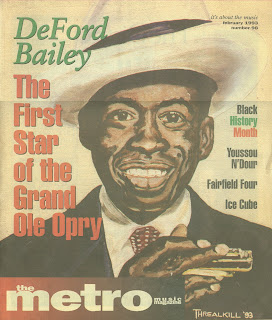
Country Music History: The First Star of the Grand Ole Opry

The Metro magazine, art by James Threalkill
During the past decade, many of the stars of country music have become household names on par with rock musicians or movie stars. To many fans, the Grand Ole Opry in Nashville represents the history of country music. Superstars like Garth Brooks, George Strait, and Vince Gill are well-known members of the Opry, while hardcore fans would recognize artists like Skeeter Davis or Porter Wagoner, names from country’s past, as long-time members of this hallowed institution. Few country fans or historians remember, however, the first star of the Opry.

Who was the first star of the Grand Ole Opry? If asked, most people would think for a minute, then mistakenly name such country greats as Jimmie Rogers, Uncle Dave Macon, or maybe even Roy Acuff. Contrary to popular belief, however, the Opry’s first performer and, arguably, its first star, was none other than DeFord Bailey, an African-American performer born and raised in Tennessee.

Originally known as the WSM Barn Dance, the Grand Ole Opry was given its name by popular radio announcer George D. Hay in 1927. Nashville’s WSM radio had just become part of the fledgling NBC Radio Network and, in response to a network broadcast of conductor Walter Damrosch’s “Musical Appreciation Hour,” Hay quipped, “friends, the program which just came to a close was devoted to the classics. Doctor Damrosch told us that it was generally agreed that there is no place in the classics for realism. However, from here on out, for the next three hours, we will present nothing but realism. It will be down to earth for the ‘earthy’.”

DeFord Bailey: The First Star of the Grand Ole Opry


DeFord Bailey
Hay then introduced one of the Barn Dance’s most frequent and popular performers, a man he dubbed the “Harmonica Wizard,” DeFord Bailey, who performed his classic train song, “Pan American Blues.” After Bailey’s typically spirited performance, Hay mouthed the phrase that would become music history: “For the past hour we have been listening to music largely from Grand Opera, but from now on, we will present ‘The Grand Ole Opry’.” The legendary Opry and Bailey, its first star, were born.

Bailey’s road to the Opry was a difficult one. Born in 1900 in rural Smith County, Tennessee, about 40 miles east of Nashville, Bailey was the grandson of a freed slave who had fought for the Union Army during the Civil War. DeFord’s mother died when he was only a year old; his father’s sister, Barbara Lou, and her husband, effectively became his foster parents, caring for him throughout the rest of his childhood.

As a boy, DeFord grew up among a musical family, a passion he passed on to his own children and grandchildren, who are also musicians. His son, DeFord the Second, a multi-instrumentalist himself says, “it ran through the family.” DeFord learned the traditional tunes of what he would later call “black hillbilly music” from his grandfather, aunt and other family members. He learned to play the mouth harp while a child and it remained his favorite instrument. DeFord was a multi-talented musician, however, able to play a banjo, guitar, mandolin, and even a bit of violin. During DeFord’s teens, the Bailey family would often perform together at church gatherings and barn dances.

DeFord had toyed with the idea of actually making a living performing the music he loved so much; in 1925 he received his first big break. Radio had come to Nashville in the form of station WDAD, owned by a radio supply storeowner named L.N. Smith. The store – called “Dad’s” – was managed by Fred “Pop” Exum, a radio enthusiast and a fan of DeFord’s who quickly asked Bailey to perform on the air. Though the station was small by any standards, broadcasting at a mere 150 watts, its signal reached out hundreds of miles through the night air, drawing fan mail from such far-flung locales as Atlanta, Philadelphia, and New York.

Nashville’s WSM radio, owned by regional economic powerhouse National Life and Accident Insurance, went on the air a month later. It was here that Hay, lured to the station from WLS in Chicago, began the Saturday night show of authentic folk and country music that would become the “Barn Dance.” The line-up of musicians would often include many WDAD regulars, who would play at both stations on Saturday nights.

WSM Barn Dance


DeFord Bailey
One of these regulars, Dr. Humphrey Bate, a respected country doctor and well-known musician, talked DeFord into joining him up on the hill at WSM one night. Arriving while the show was already in progress, Bate told Hay that he wanted DeFord to play on the air. It was only with Bate’s insistence that Hay begrudgingly agreed to allow DeFord to play a couple of tunes. After Bailey’s performance, though, Hay was elated at the young man’s talents and added him as a regular to the show. DeFord appeared as a weekly regular, bringing in large quantities of fan mail, as well as telegrams and phone calls with special song requests.

As an Opry performer, DeFord helped to carry the show during its early years, offering an excellent balance to other performers such as Uncle Dave Macon and the McGee Brothers. Bailey’s popularity led the enthusiastic Hay to believe him ready for the stardom proffered a recording artist and chose him as one of the three Opry acts to be recorded by Columbia Records in an Atlanta session in early 1927.

These sessions proved to be ill advised and unproductive, leading Hay to cancel the deal and instead contract with the Brunswick label to record Bailey in New York. The two New York sessions would yield eight songs, including the classic “Pan American Blues.” The songs were released in 1927 as part of Brunswick’s Songs From Dixie series – the only recordings by a black performer among the series. They were also issued by Vocalion, Brunswick’s sister label, and several were also reissued in 1930, again by Brunswick.

Though evidence exists to support the contention that the records were commercial hits, DeFord saw little in the way of royalties (an occurrence not uncommon with black performers to this day). As David C. Morton relates in his excellent biography of Bailey, DeFord Bailey: A Black Star In Early Country Music, DeFord was supposed to receive $400 cash for the recordings, as well as 2% royalties on each record sold. George Hay took 25% of the cash payment for arranging the sessions, paying out the remaining $300 in weekly increments of $10 (which also supplanted the $7 he was paid weekly for his Opry performances). Bailey also received three royalty checks totaling $128 for the songs, less than half, by any estimates, than he should have been paid.

A year later, Hay had set up the first recording session to ever take place in what would later become the “Music City,” luring the Victor label (later RCA) to town to record his Opry performers. DeFord took part in this historic session, cutting eight new songs in four and a half-hours. Three of these songs would later be released by Victor, the last, “John Henry,” was released in 1932. Reissues of the material were released as late as 1936.

Although DeFord saw little gain from these recordings – his entire catalogue of commercial releases weighing in at just eleven songs – their influence on a generation of harp players can still be felt today. No other harmonica player during those early days of recording and radio was captured so well onto vinyl; Bailey’s success led to a rash of field recordings of other Black harmonica soloists and paved the way for popular artists such as Sonny Boy Williamson. After the disappointing pay-off of recording (DeFord received a lump sum of $200 for the Victor sides), Bailey never really tried to record again after 1928.

Unhappy with the money he was receiving from WSM, and with George Hay, Bailey was lured to Knoxville by W.C. “Pay Cash” Taylor to appear on WNOX radio (for $20 a night, nearly three times what Hay was paying him!). Bailey’s debut performance was a smash success, running two hours past the scheduled ending time and prompting dozens of long distance calls to the station from satisfied listeners. His regular appearances drew fan mail from several states to the small station. DeFord soon began to itch for something else, though, even considering a trip to California to try his luck there. Convinced by Taylor and Hay into returning to Nashville, Bailey, after insisting on the same money he was making in Knoxville, rejoined the Opry in 1929.

Roy Acuff & Bill Monroe


David Morton's DeFord Bailey: A Black Star In Early Country MusicDuring the 1930s, Bailey toured constantly with several bands, playing tent shows, county fairs, and theaters across the country, always returning to the Opry stage for Saturday night’s performance. Being a black man in a white man’s world presented many problems as segregation forced DeFord to find other places to eat and sleep than his fellow performers. The old shibboleth of money also raised its head again, as the five dollars a day DeFord received for performing barely paid his travel expenses and was often significantly less than that which his fellow (white) performers were paid. Often times Bailey was cheated in the amount paid him, or offered whiskey as payment (which Bailey, a teetotaler, politely refused). His was the star that attracted crowds out to the shows during the depression as people paid fifty cents apiece to see DeFord and the other Opry performers in person.

By the late ‘30s, DeFord had befriended a young fiddler from East Tennessee by the name of Roy Acuff. Acuff came to the Opry in 1938 as an unknown; realizing the popularity of the harp player, he asked DeFord to tour with his band. DeFord did so, helping publicize Acuff’s “Smoky Mountain Boys” with his drawing power over the next couple of years, directly lending a hand to Acuff’s future stardom. Bill Monroe, the King of Bluegrass music, also utilized Bailey’s talents and drawing power on tour to publicize his band.

The spring of 1941 saw Bailey start his sixteenth year with the Grand Ole Opry and its radio broadcast. Even though his airtime had been cut back, he still appeared as frequently as any other artist, including thirty weeks during 1939, and remained one of the show’s most popular performers. Within a couple of months, though, in May of 1941, Bailey was fired by the Opry, a mystery often covered up or neglected by country music historians. Although authors through the years have come up with many theories or facts, claiming racial reasons or, as the official party line stated, the fact that DeFord wouldn’t learn any new songs, the truth behind his dismissal probably lies somewhere in betwixt the two.

According to George Hay, the Opry’s founder and guiding light through the early years, as written in his account of the Opry, “like some members of his race and other races, DeFord was lazy. He knew about a dozen numbers, which he put on the air and recorded for a major company, but he refused to learn any more, even though his reward was great…” Bailey biographer David C. Morton believes that Bailey was merely caught up in an industry-wide boycott of songs administered by the ASCAP licensing agency. Prohibited for legal reasons from performing many of his best-known songs on the air, DeFord lost his value to the Opry. After leaving the Opry, Bailey opened a shoe shine stand in downtown Nashville that he worked until his death in 1982.

Actually, DeFord knew dozens of traditional songs that he had grown up playing and had written many more. Of his refusal to learn any new songs, his son DeFord the Second says, “that part I know is wrong. The songs that I know today that he taught to me, he learned to play different after I had grown up.” According to most accounts, DeFord had the soul of a jazz artist, often improvising on the spot, with each performance being slightly different and equally special.

Country Music Hall of Fame


The Legendary DeFord Bailey CD
Bailey’s role as the Opry’s first performer and an important factor in the show’s future success, as well as his role as country music’s first African-American star, has been sadly overlooked by the Nashville establishment. To this day Bailey remains an obscurity, a footnote in the history that he helped create. Even at the Opry, his status has been forgotten, as observes DeFord the Second, “all these stars have gold and bronze framed pictures on the wall, Dad’s picture is nowhere to be seen.” In 2001, the Academy of Country Music got a lot of press out of the nomination of Charlie Pride as the first African-American member of the Country Music Hall of Fame. Bailey remains the only founding member of the Grand Ole Opry refused this great honor.

Although racism has certainly played a part in denying this musical pioneer his place in the Country Music Hall of Fame, and thus a permanent place in musical history, many industry insiders dismiss Bailey as an insignificant artist. The simple fact however, is that black or white, people loved DeFord Bailey. He was a musician of considerable talent, depth and charisma, drawing large audiences with his live performances and creating a legion of dedicated fans with nearly two decades of radio appearances – people who cared not of color, but came to hear the music that DeFord Bailey loved playing so well.

[Note: The story of DeFord Bailey was brought to me by my late musician friend Aashid Himons, who was a friend of the Bailey family and an outspoken advocate for the artist’s induction into the Country Music Hall of Fame. Nothing happened for better than a decade after our article on DeFord was first published in 1993 by Nashville’s The Metro magazine. Reprinted by my friends at Big O magazine in Singapore the early 2000s, however, the article caught the eye of country music fans in Australia, who reportedly deluged the institution with letters asking why Bailey wasn’t a member, often accompanied by copies of this article. Curiously, Bailey was subsequently inducted into the Country Music Hall of Fame in 2005.]


Buy the book from Amazon.com: David C. Morton's DeFord Bailey: A Black Star In Early Country Music


Sunday, September 23, 2018

CD Review: Sour Ops' Family Circuit (2018)

Sour Ops' Family Circuit
Sour Ops is a collection of some of the most talented rock ‘n’ roll musicians from Nashville and Memphis, veterans of beloved Tennessee bands like Sixty-Nine Tribe, Snake Hips, Triple X, Neighborhood Texture Jam, and Tav Falco and the Panther Burns, among many others. Led by singer, songwriter, and guitarist Price Harrison – a ridiculously-talented polymath who, aside from being a talented musician, is also an architect, photographer, video producer, and owner of the band’s Feralette Records label – Sour Ops also includes skilled music-makers like bassist Tony Frost, guitarist Mark Harrison (Price’s brother), and drummer George Lilly who contributed to the hellfire and brimstone rock ‘n’ roll debut album that is the band’s Family Circuit.

Sour Ops’ Family Circuit


Family Circuit opens with a rowdy, mostly-instrumental song that captures the listener’s ears with a torrential downpour of psychedelic-drenched, multi-tracked guitars, crashing drumbeats, and throbbing bass lines that roar beneath a rowdy chant of “U.S.A.” (which, appropriately, is also the song’s title). The song is either a sly commentary on blind American patriotic rhetoric or else it merely echoes the mindless jingoistic cheering of fans at a sporting event; either way, it’s a rockin’ little sucker. The album’s title track reminds of Neil Young’s poppier ‘70s-era records like After the Gold Rush, the song an up-tempo rocker with a discerning melody, Harrison’s nasally, Neil-like vox, and shards of angular guitarplay.

Nashville pedal-steel wizard Paul Niehaus brings the twang to the sublime “Everything,” a lonesome country-rock ballad that displays a different side to Sour Ops’ sonic Sturm und Drang. Harrison’s sprawling vocals again evoke Young, channeling the rock legend’s country side but with a softer, more distinctive emotional heft. Harrison’s former Sixty-Nine Tribe bandmate John Sheridan (a musical genius, IMHO) contributes the slinky, sensual “Photograph,” the mid-tempo rocker reminiscent of the Stones but with a lil’ bit more soul. Guitarist Mark Harrison takes the microphone here, his vocals complimented by splashes of wiry guitar, Tony Frost’s tough-as-nails bass lines, and drummer George Lilly’s driving rhythms. In a more enlightened musical era, this one could have been a chart-topping, FM radio contender.

Mind Like Glue


Sour Ops' Photograph
The key to Sour Ops’ entertaining stroll through rock ‘n’ roll history is the band’s uncanny ability to provide familiar vintage sounds with their own unique edge. Nowhere is this more evident than on “Not Enough,” the best song the Replacements never recorded. Written by the Harrison brothers and sung by Mark with his signature sandpaper drawl, the song’s shambolic vibe and reckless instrumentations combines the ‘Mats’ trademark swagger with a (appropriate) Big Star melodic undercurrent. But the addition of background harmonies, ringing guitars, and subtle percussion creates a new flavor from old ingredients. The shimmering “Mind Like Glue” also treads dangerously close to power-pop turf with its big chords, Beatle-esque harmonies, and livewire guitar licks. An unbridled rocker with cutting fretwork, a deep melodic line, and explosively lead-footed drumbeats supporting a brilliant lyrical tale, “All That I Want” combines the muscle and sinew of the Stooges or Iggy Pop’s best solo work with a menacing vibe and an underlying, ‘80s-styled instrumental palette.

“Stockcar” is another Sheridan song, a metaphoric rocker that careens from guardrail to guardrail at an alarming pace, Sheridan taking on the vocals above jagged shards of feedback-laden guitar that crackle like lightning above a uranium-heavy rhythmic foundation courtesy of Messrs. Frost and Lilly. “See the Light” is another Alex Chilton-styled, pop-turbocharged tune full of spiraling guitars and shimmering keyboards, timely backing harmonies, and wall-of-sound instrumentation that creates a certain chaotic energy that is anchored by Harrison’s soulful, plaintive vocals while the album-closing “Alabama Mall Child” is yearning story-song with vibrant lyrical imagery and solid instrumentation that blends just the merest of folk and country influences into the song’s otherwise rockin’ soundtrack.

The Reverend’s Bottom Line


Contrary to conventional industry wisdom, rock ‘n’ roll ain’t dead – and Sour Ops proves my point with the delightfully raucous Family Circuit. Price Harrison and his musical gang take their obvious cues from the legends of classic ‘70s and ‘80s rock but manage to provide this original material with a contemporary spin via their imaginative songwriting and skilled instrumentation. In addition to Family Circuit, Sour Ops has also released a fab 12” single comprised of “Photograph” and “Mind Like Glue,” two of the album’s best tunes and a safe bet for vinyl collectors looking for cheap thrills. Covers of both the Sour Ops CD and the vinyl single feature striking (different) photos of African-American model Indya James, the images perfectly capturing the dignity, mystery, and soul inherent in the band’s music. Grade: A+ (Feralette Records, released October 26, 2018)

Get it from Amazon.com!


Sunday, June 10, 2018

CD Review: Webb Wilder and the Beatneck's Powerful Stuff! (2018)

Webb Wilder and the Beatneck's Powerful Stuff!
Back in the mid-1980s, Webb Wilder (née John McMurry) burst onto the Nashville rock scene like a revelation. Sure, we local fans enjoyed bands like Afrikan Dreamland, the White Animals, and Jason & the Nashville Scorchers which pursued their own individual muse, but the musical immigrant from Hattiesburg, Mississippi brought with him a love of British Invasion rock, 1950s-era rockabilly and blues, and classic 1960s-era country music. Wilder created a unique musical hybrid that helped define the “Americana” genre that would follow a decade later representing, as he did, the influence and resulting confluence of nearly every native musical style.

Launching his lengthy career with 1986’s It Came From Nashville, Wilder and his talented, often underrated bands – primarily the Beatnecks and the NashVegans – toured relentlessly and delivered five groundbreaking albums over the following ten years, including a pair of bona fide classics in 1991’s Doo Dad and 1996’s Acres of Suede. Sadly, Wilder was a man both ahead of and behind the times, and after failing to achieve much more than a cult following during the time of grunge and hair metal, he virtually disappeared for nearly a decade, popping back up as a DJ for Sirius XM radio’s “Outlaw Country” channel – an appropriate forum for a quick-witted, humorous, and glib talker like Webb (whom I’ve known and interviewed many times since his arrival in the Music City).

When Wilder reappeared with 2005’s About Time album, he showed that he still had plenty of gas in the tank, and he’s since almost doubled the number of titles in his catalog. Powerful Stuff! could be seen as a “stopgap” measure between studio albums, but it’s really a look back at the artist’s past, a carefully-curated collection of previously-unreleased studio outtakes and live performances that should thrill any longtime WW fan. Scatted among these sixteen exhilarating tracks are a handful of original songs that beg the question of their obscurity along with a number of electrifying cover tunes that not only prove Wilder’s skill as an interpreter of classic rock, blues, and R&B material but also serves to properly earn the singer revered status as a “songster” like so many Mississippi artists of yore.

Webb Wilder’s Powerful Stuff!


Slapping a Webb Wilder album on whatever twin-speaker rig you might own is like finding the “Trademark of Quality” stamp – you’re guaranteed a good time every time! Even a hodge-podge collection like Powerful Stuff! has more than enough cheap thrills to get you through your hectic day. The disc kicks off with the rollicking “Make That Move,” a vintage ‘90s locomotive rocker originally done by Levi & the Rockats, an early ‘80s rockabilly outfit that obviously made an impression on a young WW. The song receives the full treatment from the “Last of the Full Grown Men” here, complete with mile-a-minute rhythms, studio-distorted vocals, and wiry guitarplay. The 1960s-styled, pop-leaning “New Day” is a psych-drenched Wilder original recorded in ’93 but lost in the studio until now. The trippy, swirling fretwork of guitarist Donny “The Twangler” Roberts perfectly complements Wilder’s melodic vocals while the rest of the band creates a miasmic din of clashing instrumentation.

The blustery “Lost In the Shuffle” is one of longtime Wilder friend, producer, and compatriot R.S. “Bobby” Field’s many songs recorded by the singer. Why this one was never released I can’t figure out, even with an abacus and a slide-rule…the song’s bluesy undercurrents support a surprisingly deft R&B delivery, with the legendary Al Kooper adding his inspired keyboards, the talented Jim Hoke blowing his sax, and Field providing some tasty six-string flourishes. The song stands up with anything that Webb has recorded over his lengthy career, and that’s saying something. Field’s “Animal Lover,” a 1988 studio track that takes Wilder out of his comfort zone, veers dangerously close to ‘80s-era new wave pop territory with a bouncy melody and an unusual chorus, Webb straining his vocals to match the song’s wordy albeit erudite story-telling lyrics. The dueling guitars of Wilder and Roberts anchor the song firmly on rock ‘n’ roll planet earth.

Nutbush City Limits


As much fun as the long-lost studio tracks may be, Powerful Stuff! offers plenty of crackerjack live performances by the talented Beatnecks. The album’s title track was captured at Mountain Stage show in 1988; Webb and the Beatnecks wisely shelved the track after the Fabulous Thunderbirds picked it up and scored a hit, even naming their 1989 album for the song. Featured in the mondo-successful Tom Cruise movie Cocktail, “Powerful Stuff” was the first single released from a soundtrack album that sold better than ten million flapjacks around the globe. Webb’s reading of the song is less bluesy, but offers up shards of stinging, vibrant guitar and Wilder’s awestruck vocals. It takes cajones to cover Ike & Tina Turner, but Wilder does just that with a raucous live take of the classic “Nutbush City Limits,” delivering the panache that Bob Seger promised (but failed) by hewing closer to the original with a ramshackle arrangement, shotgun vocals, and a recklessly-rocking soundtrack delivered with punkish intensity.

Wilder covers fellow underrated Nashville rocker Steve Forbert’s “Catbird Seat,” a twangy lyrics-heavy tale that mixes a rockabilly rhythm and a classic country heart with fretwork as sharp as concertina wire and Wilder’s machinegun vocal delivery. The Cajun country of Doug Kershaw’s “Hey Mae” is close to Wilder’s heart, and with this performance – captured live at the world-famous Exit/In club in Nashville – Webb displays another facet of his talents. With backing vocal harmonies from the band that offers a sort of “call and response,” Wilder leads his troops through a rowdy performance that is equal parts Bo Diddley and Charlie Feathers. Ditto for his cover of Johnny Paycheck’s “Revenooer Man,” which is provided an inspired Webb performance complete with lively chicken-pickin’ and a choogling rhythm; by comparison, the Field song “Dead and Starting to Cool” is a somber tale of romantic heartbreak with Webb’s deep baritone vocals, menacing guitar riffs, and ominous rhythms. Powerful Stuff! closes out with Little Richard’s classic “Lucille,” Wilder and the Beatnecks finding a deep rhythmic groove for Webb’s free-flowing vocals to ride atop, the band rocking with joyous abandon.

The Reverend’s Bottom Line


As I alluded to above, if you don’t have a good time playing a Webb Wilder album, then you’ve probably assumed room temperature. Sure, Powerful Stuff! is an “odds ‘n’ sods” collection culled from Wilder’s archives, but the material is delivered with every bit the same level of energy and commitment as anything that Webb has previously put on record. For those of us who became fans with Wilder’s It Came From Nashville LP, Powerful Stuff! is yet another welcome addition to the (slowly-growing) Webb Wilder canon. As the man says, “work hard, rock hard, eat hard, sleep hard, grow big, wear glasses if you need ‘em.” Amen… Grade: A (Landslide Records, released April 27, 2018)

Previously on That Devil Music:
Webb Wilder’s Mississippi Mōderne CD review
Webb Wilder’s It Came From Nashville CD review

Buy the CD from Amazon.com: Webb Wilder’s Powerful Stuff!

Sunday, April 1, 2018

CD Preview: Webb Wilder’s Powerful Stuff!

Webb Wilder's Powerful Stuff!
Americana legend and Nashville’s favorite son Webb Wilder has been making great music for better than 30 years with a dozen studio and live albums to his credit. With his band of various ne’er-do-wells the Beatnecks, Wilder has cranked out a heady, unique blend of roots-rock, rockabilly, blues, and country music that owes as much to the British Invasion as it does the Delta blues. It’s a sound that could only be pulled off by the big man from Mississippi.

Wilder’s last album was 2015’s critically-acclaimed Mississippi Mōderne, of which the Reverend wrote “in the hands of a lesser artist, this ramshackle mix of garage-rock, blues, and old-school country music would sink like an over-inflated soufflé, and the album’s often over-the-top lyrics would lack in sincerity coming from a singer without Wilder’s charismatic personality. Backed by the grizzled veterans that comprise the Beatnecks, though, Wilder delivers a powerful and entertaining collection…” Mississippi Mōderne was Wilder’s first studio effort in six years and only his second since 2005’s excellent About Time, so none of us thought that we’d hear from him again anytime soon.

On April 27th, 2018 however, Landslide Records will release Wilder’s odds ‘n’ sods collection Powerful Stuff! A sixteen-song album comprised of previously-unreleased studio and live tracks dating from 1985 to 1993, the album primarily features the original Beatnecks band of Wilder on vocals and guitar, guitarist Donny “The Twangler” Roberts, bassist Denny “Cletus” Blakely, and drummer Jimmy Lester.

Much of the material on Powerful Stuff! was produced by Wilder’s longtime friend and collaborator R.S. “Bobby” Field and special guests include keyboardist Al Kooper, noted guitarist David Grisman, and bassist Willie Weeks. Powerful Stuff! features seven studio tracks and nine live performances including original material written by Wilder and Field and raucous covers of songs by Ike & Tina Turner (“Nutbush City Limits”), fellow Nashvillian Steve Forbert (“Catbird Seat”), Cajun fiddle legend Doug Kershaw (“Hey Mae”), and Little Richard (“Lucille”). Among the originals, “Powerful Stuff” was originally recorded by Wilder and the Beatnecks but remained unreleased after the Fabulous Thunderbirds had a hit with the song; it’s presented here as a rowdy live version. 
 
If you’re in the Music City at the end of the month, Webb Wilder and the Beatnecks will perform at the official CD release party for Powerful Stuff! on Sunday, April 29th at Nashville’s Exit/In, a venue where several of the tracks on the new CD were originally recorded live in 1986. The current Beatnecks lineup includes Webb Wilder, drummer Jimmy Lester, bassist Tom Comet, and guitarist Bob Williams. Check out the album’s tracklist below and then order your copy from Amazon.com!

Webb Wilder's Powerful Stuff! track list:

1. Make That Move
2. New Day
3. No Great Shakes
4. Lost In The Shuffle
5. Powerful Stuff *
6. Ain’t That A Lot Of Love
7. Wild About You Baby *
8. Animal Lover
9. Nutbush City Limits *
10. High Rollin’
11. Catbird Seat *
12. Hey Mae *
13. Revenooer Man *
14. Is This All There Is? *
15. Dead and Starting To Cool *
16. Lucille *

* live tracks

Also on That Devil Music.com: Webb Wilder’s Mississippi Mōderne CD review 

Buy the CD from Amazon.com: Webb Wilder and the Beatnecks’ Powerful Stuff!

Tuesday, August 1, 2017

CD Review: The Mark Robinson Band's Live at The 5 Spot (2017)

The Mark Robinson Band's Live at The 5 Spot
Nashville blues guitarist Mark Robinson picked an odd place to move once he “quit his job” to play guitar, the Music City not especially known for blues music after Jimi fled Jefferson Street for London all those years ago. So mark Robinson as a trailblazer in the city’s growing blues-rock scene that includes talented fellow pickers like Ted Drozdowski and recent immigrants like Keb’ Mo’, Jack White, and Dan Auerbach of the Black Keys. Robinson released his debut album, Quit Your Job – Play Guitar, back in 2010 and followed it up three years later with the equally-impressive sophomore effort Have Axe – Will Groove.

The Reverend has had the good fortune of following Robinson’s career since his 2010 debut, writing in Blues Revue that the album “offers a nuanced mix of blues, soul, and twangy roots-rock in its grooves” and that “Robinson successfully balances bluesy ballads with mid-tempo rockers, all of which feature his taut fretwork.” Writing about Have Axe – Will Groove in 2013 for Blues Music magazine I said that the album “surpasses all expectations, delivering a high-wattage jolt of blues, rock, soul, and Southern¬‐fried funk that enhances Robinson's reputation as a gifted songwriter and guitarist with a fluid technique that he applies effortlessly to a myriad of styles.”

Other than a couple of digital single releases, Robinson has been largely quiet as far as recording goes, the guitarist producing an excellent 2015 album by folk-rocker David Olney (When The Deal Goes Down) as well as recordings by Americana artists Ray Cashman and Mark Huff. This absence from the studio makes the release of Robinson’s Live at The 5 Spot all the more welcome. Fronting a classic power trio through its paces during a September 2016 performance at the popular Nashville nightspot The 5 Spot, Robinson takes the opportunity to expand his songs instrumentally and explore a myriad of sonic turf, from blues, soul, and rock ‘n’ roll to jazz and even adding psychedelic textures to some performances.

The Mark Robinson Band’s Live at the 5 Spot


Spanking the amps from note one, Robinson leads the band through “Baby’s Gone to Memphis” a smoky rock ‘n’ soul ripper with great guitar tone, a foot-shuffling rhythm, and Robinson’s smooth, silky vocals telling a tale of losing his gal to “The King.” There’s plenty of twang ‘n’ bang chicken pickin’ to be had, as well as a badass rhythm that evokes the “Peter Gunn Theme,” but the performance takes a cool, clever jazzy instrumental turn as well, leading the listener off into parts unknown before pulling the line back in for a big, bluesy finish. The band ramps up the soul with a cover of the Temptations’ hit “Can’t Get Next To You.” The band acquits itself nicely in mimicking the Temps’ hearty harmony vocals, but it’s Robinson’s imaginative, high-flying guitarplay that drives this stripped-down but mighty powerful take on the Motown classic.

Robinson’s original, “Poor Boy” is from the guitarist’s debut album and, as good as it is in its studio version, it’s a hoary beast of myth when performed on stage. Based on a long-lost traditional blues song, Robinson mangles its swamp-rock vibe with jagged, broken-glass guitar licks and drummer Rick Schell’s martial rhythms, delivering the lyrics in an anguished howl befitting the Wolf’s best screeds. The original “One Way Ticket” is a new addition to the Robinson milieu in that it appears on neither of his previous albums; the song’s Chicago blues influences are readily apparent in its deep rhythmic groove. Robinson and the gang play it like Butterfield would, minus the harmonica but with a sturdy, steely bass line courtesy of Daniel Seymour and fine brushwork and cascading beats from Schell, atop of which Robinson embroiders his multi-hued fretwork.

Mississippi Hill Country Stomp


After spending some time in the Mississippi Hill Country, Robinson put the experience to good use in penning the darkly delightful “I Know You’ll Be Mine,” a stomping ‘n’ stammering force of nature that reminds of the great R.L. Burnside and Junior Kimbrough without being derivative. Schell’s drumbeats hit your ears like a sledge hammer, Seymour’s underlying bass pumps like a heartbeat, and Robinson’s guitar squeals like a tortured instrument as he cuts through the mix with menace and purpose. By contrast, Robinson’s “Under Her Spell” is exotic in an entirely different manner, the guitarist taking his cue from Carlos Santana and embellishing his performance with an undeniably hypnotic Latin groove that reminds a little of Fleetwood Mac’s Peter Green and “Oh Well” in its instrumental virtuosity and trembling tone. The band’s shuffling rhythm is the perfect backdrop for the guitar, with Seymour throwing in an underlying bass line that serves as a perfect complement to Robinson’s guitar.

Befitting its real-world inspiration, “Drive Real Fast” choogles along with a 600-horsepower heartbeat, the rhythm section’s raucous boogie riff fleshed out by the contributions of guest performers Ben Graves (rip-roaring harp) and Mark T. Jordan (trip-hopping keyboards). It’s Robinson that drives this hell-bound hot-rod, though, his otherworldly guitar licks swirling and dancing atop the mix like a manic dervish as his vocals tell a malevolent tale of rage on the asphalt. The extended jam that closes the song is more in the vein of ZZ Top/Canned Heat styled booger-rock than aimless noodling, every instrument meshing like gears in a high-performance engine. Live at The 5 Spot closes out with a fiery rendition of bluesman Eddie “The Chief” Clearwater’s “Wouldn’t Lay My Guitar Down,” Robinson playing it straight in paying tribute to the Chicago blues legend with a rockin’ performance that rolls heavy on wiry guitar licks and big beat rhythms.

The Reverend’s Bottom Line


Quite simply, Mark Robinson is the best independent contemporary bluesman I’ve run across in the past decade that I’ve been closely watching the scene. His vocal skills are underrated, perfectly servicing the need of the song whether it’s one of his well-written originals or inspired cover tunes. It’s Robinson’s fretwork that shines, however, the guitarist always expanding his musical palette to incorporate new influences and styles while never losing his focus as a skilled blues instrumentalist. Robinson reminds me a lot of both Roy Buchanan and Danny Gatton not only with his unique guitar tone but also in his ability to synthesize varying styles in creating an entirely original sound of his own. If you dig blues-rock guitar, you’re gonna love Mark Robinson’s Live at The 5 Spot. Grade: A (Blind Chihuahua Records, released June 1, 2017)

Buy the album from Mark Robinson’s website

Sunday, March 20, 2016

Video of the Week: Blackfoot Gypsies’ Under My Skin

Blackfoot Gypsies' Handle It
Blackfoot Gypsies hail from Nashville, which is an absolutely horrible place to be in a rock ‘n’ roll gang unless you’re willing to King’s wax Jann Wenner’s limo every weekend (and on holidays). The east-and-west-coast-based major labels want nothin’ to do with your band unless you sound exactly like everybody else on their roster, which has been hand-picked for conformity and exploitation by some coke-snorting empty suit with a six-figure expense account.

Even when a record label does take a chance on a band from the Music City, they usually don’t know how to “sell them,” which makes one wonder how they got their job in the first place ‘cause, well, selling records is really their only job…a task at which they fail as often as not (just ask Jason & the Scorchers, Webb Wilder, the Features, et al…). Instead, Blackfoot Gypsies are signed to local label Plowboy Records, co-founded by the legendary Cheetah Chrome, a man who knows a thing or two about both major label hijinx and making a joyous noise.  

Handle It is the band’s second full-length album, from which our video of the week comes from. “Under My Skin” has nearly everything you could want in a visual representation of the song – a scantily-clad, pissed-off voodoo priestess laying some serious black cat moan down on the band with her hoodoo witchery; a throbbing Delta blues mojo sound combined with eerie, hollowed-out production; wailing harmonica; and wiry, razor-edged fretwork that helps bring those long-gone Mississippi ghosts back to life.

The Gypsies lead singer looks like a cross between Buddy Holly and Rivers Cuomo, the harp player resembles a long lost Neville Brother, and the drummer looks like he should be behind the kit playing for some sludge-metal outfit like Mastodon. As for the bassist, well…he’s the bassist, the band’s pretty boy and the holy keeper of a heavy bottom end. Handle It is a pretty spiffy LP, though, the band cranking out an inspired mix of psychedelic blues, asphalt-munching hard rock, and roots-bound country twang that proves that these guys have visited Tootsie’s Orchid Lounge a time or two. Captured on tape, Blackfoot Gypsies evince a fierce groove that proves their status as young soul rebels. Don’t believe me? Check out the video for “Under My Skin” and make up your own damn mind...

Buy the CD from Amazon.com!

Friday, January 29, 2016

Archive Review: Webb Wilder's It Came From Nashville (2006)

Webb Wilder's It Came From Nashville
Brothers and sisters, I want to share the good word about Webb Wilder and the Beatnecks and their magnificent debut It Came From Nashville! This will make the third time since 1987 that the Reverend has reviewed this particular album. Not surprisingly, in a corporate music world dominated by airheaded, lip-syncing Barbie dolls and angry male fashion models with out-of-tune guitars, It Came From Nashville holds up remarkably well. In fact, much like fine wine, this version – the album's third incarnation (vinyl, CD w/bonus tracks, CD w/more bonus tracks) – has only gotten better with age.

For you poor souls who have never experienced the greatness of the man known to legions as "WW," this is where it all began, a humble introduction to a Wilder world. Roaring into the Music City like a drunken tornado sometime during the mid-80s, WW quickly assembled a top-notch musical hit squad, a finely-tuned machine of rock 'n' roll salvation helmed by the man behind the throne, Bobby Field. Although a vinyl recording is a poor substitute for the magnificence that is WW in person, It Came From Nashville did a pretty doggoned good job of capturing the spirit – the zeitgeist, if you will – of the man from Mississippi. Wilder, Fields and crew masterfully mixed roots-rock, country, and blues with elements of psychdelica, swamp rock and surf music. Imagine Hank Williams, Robert Johnson and Screamin' Jay Hawkins sharing a beer at the crossroads in a midnight jam session and you'd come close to the sound of It Came From Nashville.

Friends, Webb Wilder and the Beatnecks hit Nashville like a double-shot of whiskey with a six-pack chaser. Along with Jason & the Nashville Scorchers, WW and his posse allowed a bunch of cornpone punk rockers to break loose and embrace the reckless country soul of their ancestors. After eighteen years, the songs on It Came From Nashville still rock like a house afire! From "How Long Can She Last," Field's ode to youthful indiscretion, to the original album-closing instrumental rave-up "Ruff Rider," these songs are muscular, electric and 100% high-octane rock 'n' roll. An inspired cover of Steve Earle's "Devil's Right Hand" showcases both Wilder's sense of humor and his deep, friendly baritone in this tragic tale. "One Taste Of The Bait" speaks of the dangers of love while "Is This All There Is?" is a kiss-off to failed romance on par with Dylan's "Positively 4th Street."

The original CD reissue bonus tracks are included here, a motley bunch of spirited covers that illustrate Wilder's range and tastes. From a raucous rendition of Johnny Cash's "Rock 'n Roll Ruby" to a swinging reading of Steve Forbert's "Samson And Delilah's Beauty Shop," these are all keepers. Fields' instrumental "Cactus Planet" provides a rollicking good time while "Dance For Daddy" is a down-and-dirty, leering rocker with scrappy guitarwork. The six new live tracks included here were culled from a vintage 1986 Nashville performance at the world-famous Exit/Inn and include rarities like the rockabilly-flavored "Hole In My Pocket" and an early version of fan favorite "Rocket To Nowhere."

If It Came From Nashville introduced the world to its rock 'n' roll savior, the album also marked Bobby Field's emergence as a songwriter of some skill and knowledge. These songs have held up so well over time because they are rooted in the deep tradition of rock, blues and country that was forged by pioneers like Elvis, Hank and Chuck. Unfortunately, the world has turned so much that these men have mostly been lost in the haze of pre-fab pop stars and soft drink advertising. Even a prophet like WW is without honor in his own country, although a loyal cult of followers continues to keep the flame burning. Rescued from the abyss of obscurity, It Came From Nashville is an important document of a time when giants roamed this planet and men were unashamed to follow the Webb Wilder Credo:

"Word hard…rock hard…eat hard…sleep hard…grow big…wear glasses if you need 'em."

Amen...

# # #

Review republished from the Reverend's The Other Side of Nashville book

Related content: Webb Wilder - Mississippi Mōderne CD review