Showing posts with label Michael Bloomfield. Show all posts

Friday, April 25, 2025

Book Review: Al Kooper’s Backstage Passes & Backstabbing Bastards (1999)

Al Kooper’s Backstage Passes & Backstabbing Bastards
Musician, songwriter, label executive, producer – Al Kooper has made a living out of being the “Forrest Gump” of rock music. For better than thirty years, whenever something momentous was about to occur in rock ‘n’ roll, Kooper was certain to be involved in it. From his haphazard entry as a keyboardist on Dylan’s classic “Like A Rolling Stone” and playing with Dylan onstage in Newport to producing Lynyrd Skynyrd’s first three albums, Al Kooper has a resume that’s every bit as long and impressive as anybody’s in rock music. With this revised and expanded edition of Kooper’s earlier memoir, Backstage Passes, Al brings the tales of his storied career full circle.

Al Kooper’s Backstage Passes & Backstabbing Bastards


A lively writer with an easily read, conversational style and more than a few stories under his belt, Kooper documents with Backstage Passes & Backstabbing Bastards a career that has seen its shares of ups and downs. Beginning with the earliest stirrings of his interest in music, playing in teen bands and sharpening his skills, Kooper takes the reader on a romp through his rock ‘n’ roll universe. High points of the book include Kooper’s early days as a musical hustler, a samurai of songs writing tunes on spec for producers in need of material. Here Al provides the reader with a lesson in the economics of songwriting and the real history of the Brill Building.

Kooper’s major league breakthrough as a session player begins with his hilarious story of the session for Dylan’s “Like A Rolling Stone” and its aftermath. It’s as a session player that Kooper is best known, sitting in on recordings with notable artists like Dylan, Jimi Hendrix, the Rolling Stones, Mike Bloomfield, and far too many others to list here. Although Kooper speaks of his own solo career in Backstage Passes & Backstabbing Bastards, he tends to give it short shrift in light of his stories of superstar session work. He goes into some detail on the formation and careers of Blues Project and Blood, Sweat & Tears, both projects in which he was an integral part until egos got in the way and Kooper would move onto the next challenge. His discovery of Lynyrd Skynyrd is, perhaps, the real feather in his cap; Kooper producing and playing on that band’s first three albums, arguably among the most important Southern Rock records ever made.

By the end of Backstage Passes & Backstabbing Bastards, circa 1998, Kooper has pretty much given up on the music biz, going into teaching at the noted Berklee School of Music in Boston. Some reviewers of this book have made much ado over Kooper’s distinctively sour grapes attitude during the book’s last few chapters, Kooper viewing with some bitterness the current atmosphere in the music industry. Given my own fringe involvement with the industry as a critic and journalist, I can’t say that I disagree with him. The industry turns its back on older artists who aren’t still cranking out hits (and, therefore, profits).

The Reverend’s Bottom Line


As an artist, musician and producer Kooper comes from a time when, perhaps, the music mattered more than the marketing and labels weren’t quite the greedy conglomerate bastards that they’ve become today. As such, Backstage Passes & Backstabbing Bastards is a captivating document, the honest, heartfelt memoir of, as Kooper terms himself, “a rock ‘n’ roll survivor.” Anybody who loves music should have a copy of this book on his or her shelf, right beside their latest CD purchases. Kooper’s Backstage Passes & Backstabbing Bastards will entertain you, inform you, and keep you honest. (Billboard Books, published 1999)

Review originally published by Alt.Culture.Guide™ music zine...

Friday, December 22, 2023

The View On Pop Culture: Al Kooper & Michael Bloomfield (2003)

Al Kooper & Mike Bloomfield's Super Session
V2.54

Al Kooper and Mike Bloomfield are two of the most underrated and influential talents in the canon of blues-rock. Both were phenomenal musicians (Bloomfield died in 1981, Kooper now only plays sporadically), insightful and knowledgeable with a true love of music. Both men’s credentials are impeccable. Kooper was, perhaps, the most valuable session player in the ‘60s rock universe, adding his considerable talents to records by Bob Dylan, Jimi Hendrix, and the Rolling Stones. A founding member of two seminal ‘60s bands – Blues Project and Blood, Sweat and Tears – Kooper also discovered Lynyrd Skynyrd, producing their first three albums.

Bloomfield was an equally decorated veteran of the rock ‘n’ roll army. A familiar presence on the early ‘60s Chicago club scene, Bloomfield made his bones as a guitarslinger with the Butterfield Blues Band. He toured with Dylan, formed Electric Flag with Nick Gravenites, and subsequently played sessions with Kooper, Muddy Waters, James Cotton and folks of that caliber. Between the two, they have played on/produced/written some of the most memorable music in rock music. So why aren’t more people familiar with these two? Blame it on the short-term memory, perhaps, of pop culture or blame it on an industry that no longer nurtures talents of extraordinary vision like Kooper and Bloomfield.

Two recently released recordings help document the pair’s legacy. At the time of its 1968 release, rock fans had never heard anything like Super Session (Legacy Recordings). Kooper was a staff producer at Columbia Records at the time, dreaming up a project to produce. Kooper thought of his old Dylan session cohort Bloomfield and, with a crack rhythm section in tow, retreated to a Los Angeles recording studio to “jam.” Half of Super Session offers day one of the sessions, Bloomfield’s guitar ringing clear as a bell on the Chicago blues-styled instrumental romp “Albert’s Shuffle,” the nine-minute ‘90s-jam band precursor “His Holy Modal Majesty” and the mournful blues jam “Really.”

Bloomfield was AWOL come day two of the session, his health problems and insomnia aggravated by a growing heroin addiction. Bloomfield simply picked up his guitar and went home, forcing producer Kooper to recruit Stephen Stills, fresh from a stint with Buffalo Springfield, to fill in for the missing guitarist. The Stills-dominated tracks travel in a more psychedelic direction than Bloomfield’s blues-rock virtuosity. A faithful cover of Dylan’s “It Takes A Lot To Laugh, It Takes A Train To Cry” leads into a dynamic eleven-minute reading of Donovan’s “Season of the Witch.” Kooper’s vocals and keyboard work on the song are spot-on, Stills’ wah-wah driven six-string providing the fire while the rhythm section of bassist Harvey Brooks and drummer Eddie Hoh provide the pulse.

Super Session spent several weeks in the top twenty upon its release and helped spawn the first generation of “jam” bands (including the Grateful Dead), opening the door to greater instrumental improvisation. This remastered reissue of Super Session includes four bonus tracks, including original takes of “Albert’s Shuffle” and “Season of the Witch” sans horns (which were added to the final mix later) and two interesting outtakes. The success of Super Session led to a sort of sequel in The Live Adventures of Mike Bloomfield and Al Kooper, the live album a document of three nights at the Fillmore West in San Francisco featuring mostly new material.

Al Kooper & Mike Bloomfield's Fillmore East: The Lost Concert Tapes 12/13/68
The previously unreleased Fillmore East: The Lost Concert Tapes 12/13/68 (Legacy Recordings) is the second of two new releases that further highlight the often-overlooked talents of Mike Bloomfield and Al Kooper. Recorded two-and-a-half months after the “live adventures” disc, these tapes were all but discarded after the performance due to engineering problems and musical incompatibilities between some of the players. Rediscovered by Kooper a couple of years ago, the performance has been carefully resurrected, masterfully remixed, and skillfully remastered for the digital age. A real treat for Bloomfield fans, any young musician with an interest in the blues should check out this set and hear the playing of a true blues aficionado.

Fillmore East: The Lost Concert Tapes 12/13/68 is a veritable showcase for Bloomfield’s enormous talents, the guitarist dazzling the audience with his fiery fretwork. Bloomfield pulled every trick he had out of the bag for covers of Sonny Boy Williamson’s “One Way Out” and “Big Boy” Crudup’s “That’s All Right Mama” and his original “(Please) Tell Me Partner.” He wasn’t afraid to share the stage, bringing out Texas guitarist Johnny Winter for a scorching take on B.B. King’s “It’s My Own Fault,” the red-hot performance subsequently earning Winter a recording contract. Throughout Fillmore East, Bloomfield’s six-string work is fluid and graceful, Kooper’s keyboard work is subtle and if the rhythm section often seems at odds with itself, it does little to distract from the prominent guitar pyrotechnics offered by Bloomfield.

It could be argued that Mike Bloomfield never played better than he did circa 1968, the Super Session album and accompanying live performances spotlighting his talent at its peak. Bloomfield wrote the blueprint for the white blues guitarist, informing the work of those who would follow, from Jimmie and Stevie Ray Vaughan to Kenny Wayne Shepherd and David Jacobs-Strain.

Kooper would become the architect of the mid-70s “Southern Rock” sound through his work with Lynyrd Skynyrd, and he penned one of the best books about rock & roll, Backstage Passes and Backstabbing Bastards. Because of his uncanny knack for being in the right place at the right time, I once called Al Kooper the “Forrest Gump” of rock ‘n’ roll. After listening to these two incredible CDs, however, this scribe has taken another look at Kooper’s legacy. Reconsidered, Kooper seems to have made his own opportunities, his place in rock history assured by his own diverse talents. (View From The Hill, April 2003)

Friday, March 18, 2022

Archive Review: Muddy Waters’ Soundstage: Blues Summit In Chicago, 1974

Muddy Waters’ Soundstage
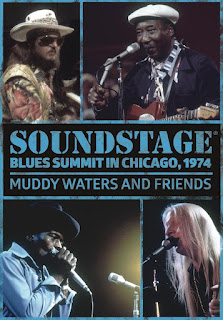
In July 1974, Muddy Waters was chosen to host the inaugural episode of Soundstage, the beloved live concert series broadcast by PBS stations around the country for thirteen subsequent seasons. Waters was the first in a long run of talented performers to appear on the acclaimed TV show, and he brought some friends with him, resulting in what the producers called a “Blues Summit In Chicago.” The King of Chicago Blues brought along his Queen, the phenomenal Koko Taylor, and a full suite of acolytes and admirers, including Junior Wells, Michael Bloomfield, Johnny Winter, Buddy Miles, and Dr. John, among others.

Muddy Waters’ Soundstage Blues Summit In Chicago 1974


After a solid performance of Waters’ “Blow Wind Blow” that’s interrupted by introductions, the show gets down to business with a sizzling take on “Long Distance Call.” Muddy is in fine voice, belting out the lyrics with perfect timing and emotion, accompanied by Wells’ icy harp and Bloomfield’s twangy guitar licks, with Pinetop Perkins banging the piano keys. Singer/songwriter Nick Gravenites joins Wells on his signature “Messin’ With the Kid,” the pair ripping the roof off the sucker with an energetic performance, Bloomfield’s wiry solos underlining a smiling Wells’ lively vocals.

Waters returns to the stage for a raucous read on his “Mannish Boy,” the band delivering a white-hot groove for Waters to croon above while Winter and Bloomfield swap licks. Taylor is joined by Willie Dixon for a romp through “Wang Dang Doodle,” guitarist Phil Guy receiving a well-deserved spotlight while Koko outshines her male colleagues with an electrifying performance. With his usual modesty, Johnny Winter introduces “Walking Through the Park,” leading the band on a livewire cover of the Buddy Guy tune featuring three dueling guitarists and Wells’ raging harp play.

An extended take on Waters’ “Got My Mojo Workin’” literally has the audience on its feet as everybody hits the stage. Wells offers a freight-train solo, Winter lays down a finger-blistering lead, and Pinetop hammers the keys alongside Dr. John. There are other solid performances here, ten in all for this first Soundstage release, the DVD a definite “must have” for any old-school Chicago blues fan! (Legacy Recordings, 2015)


Review originally published by Blues Music magazine, 2015

Buy the DVD from Amazon.com: Muddy Waters’ Soundstage

Friday, September 18, 2020

Archive Review: Al Kooper & Mike Bloomfield's Super Session & Fillmore East The Lost Concert Tapes (2008)

Al Kooper & Mike Bloomfield's Super Session
Al Kooper and Mike Bloomfield are two of the most underrated and influential talents in the canon of blues-rock. Both were phenomenal musicians (Bloomfield died in 1981, Kooper now only plays sporadically), insightful and knowledgeable with a true love of music. Both men’s credentials are impeccable. Kooper was, perhaps, the most valuable session player in the ‘60s rock universe, adding his considerable talents to records by Bob Dylan, Jimi Hendrix and the Rolling Stones. A founding member of two seminal ‘60s bands – Blues Project and Blood, Sweat and Tears – Kooper also discovered Lynyrd Skynyrd, producing their first three albums.

Bloomfield was an equally decorated veteran of the rock ‘n’ roll army. A familiar presence on the early ’60s Chicago club scene, Bloomfield made his bones as a guitarslinger with the Butterfield Blues Band. He toured with Dylan, formed Electric Flag with Nick Gravenites and subsequently played sessions with Kooper, Muddy Waters, James Cotton and folks of that caliber. Between the two, they have played on/produced/written some of the most memorable music in rock music. So why aren’t more people familiar with these two? Blame it on the short-term memory, perhaps, of pop culture or blame it on an industry that no longer nurtures talents of extraordinary vision like Kooper and Bloomfield.

Al Kooper & Mike Bloomfield’s Super Session

Two recordings document the pair’s legacy. At the time of its 1968 release, rock fans had never heard anything like Super Session. Kooper was a staff producer at Columbia Records at the time, dreaming up a project to produce. Kooper thought of his old Dylan session cohort Bloomfield and, with a crack rhythm section in tow, retreated to a Los Angeles recording studio to “jam.” Half of Super Session offers day one of the sessions, Bloomfield’s guitar ringing clear as a bell on the Chicago blues-styled instrumental romp “Albert’s Shuffle,” the nine-minute ‘90s-jam band precursor “His Holy Modal Majesty” and the mournful blues jam “Really.”

Bloomfield was AWOL come day two of the session, his health problems and insomnia aggravated by a growing heroin addiction. Bloomfield simply picked up his guitar and went home, forcing producer Kooper to recruit Steve Stills, fresh from a stint with Buffalo Springfield, to fill in for the missing guitarist. The Stills-dominated tracks travel in a more psychedelic direction than Bloomfield’s blues-rock virtuosity. A faithful cover of Dylan’s “It Takes A Lot To Laugh, It Takes A Train To Cry” leads into a dynamic eleven-minute reading of Donovan’s “Season of the Witch.” Kooper’s vocals and keyboard work on the song are spot-on, Stills’ wah-wah driven six-string providing the fire while the rhythm section of bassist Harvey Brooks and drummer Eddie Hoh provide the pulse.

Super Session spent several weeks in the top twenty upon its release and helped spawn the first generation of “jam” bands (including the Grateful Dead), opening the door to greater instrumental improvisation. This remastered reissue of Super Session includes four bonus tracks, including original takes of “Albert’s Shuffle” and “Season of the Witch” sans horns (which were added to the final mix later) and two interesting outtakes. The success of Super Session led to a sort of sequel in The Live Adventures of Mike Bloomfield and Al Kooper, the live album a document of three nights at the Fillmore West in San Francisco featuring mostly new material.

Al Kooper & Mike Bloomfield’s Fillmore East: The Lost Concert Tapes

Al Kooper & Mike Bloomfield's Fillmore East

The previously unreleased Fillmore East: The Lost Concert Tapes 12/13/68 is the second of two releases that further highlight the often-overlooked talents of Mike Bloomfield and Al Kooper. Recorded two-and-a-half months after the “live adventures” disc, these tapes were all but discarded after the performance due to engineering problems and musical incompatibilities between some of the players. Rediscovered by Kooper a couple of years ago, the performance has been carefully resurrected, masterfully remixed and skillfully remastered for the digital age. A real treat for Bloomfield fans, any young musician with an interest in the blues should check out this set and hear the playing of a true blues aficionado.

Fillmore East: The Lost Concert Tapes 12/13/68 is a veritable showcase for Bloomfield’s enormous talents, the guitarist dazzling the audience with his fiery fretwork. Bloomfield pulled every trick he had out of the bag for covers of Sonny Boy Williamson’s “One Way Out” and “Big Boy” Crudup’s “That’s All Right Mama” and his original “(Please) Tell Me Partner.” He wasn’t afraid to share the stage, bringing out Texas guitarist Johnny Winter for a scorching take on B.B. King’s “It’s My Own Fault,” the red-hot performance subsequently earning Winter a recording contract. Throughout Fillmore East, Bloomfield’s six-string work is fluid and graceful, Kooper’s keyboard work is subtle and if the rhythm section often seems at odds with itself, it does little to distract from the prominent guitar pyrotechnics offered by Bloomfield.

The Reverend’s Bottom Line

It could be argued that Mike Bloomfield never played better than he did circa 1968, the Super Session album and accompanying live performances spotlighting his talent at its peak. Bloomfield wrote the blueprint for the white blues guitarist, informing the work of those who would follow, from Jimmie and Stevie Ray Vaughan to Kenny Wayne Shepherd and David Jacobs-Strain. (Legacy Recordings, released 2008)

Review originally published by Trademark of Quality (TMQ) blog, 2008

Buy the CD from Amazon.com:
Al Kooper & Mike Bloomfield Super Session
Al Kooper & Michael Bloomfield’s Fillmore East: The Lost Concert Tapes 12/13/68

Friday, November 29, 2019

Archive Review: Electric Flag’s Old Glory The Best Of Electric Flag (1995)

Old Glory: The Best Of Electric Flag
If Michael Bloomfield was still alive today, he would surely enjoy the same sort of elder statesman status that has been bestowed upon Eric Clapton. During the late 1960s/early ’70s, Bloomfield – a middle class white kid from Chicago – was accorded the kind of critical acclaim that only British guitarists like Clapton, Jeff Beck, and Jimmy Page received. Poor health, a fragmented recorded legacy, and his mysterious death in 1981 has instead relegated Bloomfield to the history books as an interesting, if obscure, icon of the period.

It’s a shame, too, because as anyone who has heard Bloomfield at his best would testify to, he was one of the most exciting and intricate axemen of the era – Hendrix included. Electric Flag, Bloomfield’s ill-fated stab at success, was conceived of as an "American” music band, that is, a vehicle for gathering together two decades of rock, soul, and blues into one musical entity. The original band only released one album, A Long Time Comin’ before splintering into different factions, with Bloomfield the first to leave due to his health.

Most of that album is represented by Old Glory: The Best of Electric Flag, the eight cuts culled from Flag’s debut illustrating a band that is trying to cover too much artistic ground at one time. It nevertheless serves as an excellent showcase for Bloomfield’s six-string prowess, building upon his work with the Butterfield Blues Band and opening the door for the solo work to follow. Cuts taken from The Electric Flag: An American Music Band, the band’s second album are sans Bloomfield and mostly provide a forum for the less subtle musical tendencies of ersatz band leader Buddy Miles.

A few rarities and a pair of unreleased live cuts taken from the band’s debut performance at the Monterey Pop Festival in 1967 round out the compilation. I’d recommend Bloomfield's solo material or his work with the Butterfield Blues Band first, but if you're hungry for more after that, check out Old Glory: The Best of Electric Flag for another look at this unheralded talent. (Sony Legacy Recordings, 1995)

Buy the CD from Amazon.com: Old Glory: The Best of Electric Flag


Friday, November 4, 2016

Get “Real Gone” with Paul Butterfield & Timothy Leary This Black Friday!

Paul Butterfield Blues Band's Got A Mind To Give Up Living – Live 1966
Record Store Day’s November “Black Friday” event is rapidly becoming as big a deal as the original “Record Store Day” held every April. While there is a diverse selection of vinyl goodies available for purchase at your local indie retailer on Friday, November 25th, 2016 why not consider one of these daring releases from our friends at Real Gone Music?

The Paul Butterfield Blues Band’s sophomore effort East-West is now considered a classic blues-rock album, one upon which a lot of other musicians have built their own sound and careers. At the time of its release, though, East-West was a daring, adventuresome collection that grabbed the improvisational aspects of jazz and retro-fitted the concept to a Chicago blues framework. Featuring the raging harp play of frontman Butterfield, the band also boasted of two world class fretburners in guitarists Michael Bloomfield and Elvin Bishop, whose intertwined instruments broke through the barriers of blues tradition to soar into free-form jams with modal instrumental passages that were unlike anything previously heard in blues or rock ‘n’ roll.

Earlier this year, Real Gone released Got A Mind To Give Up Living – Live 1966, the first legit release of a legendary bootleg that captured the Paul Butterfield Blues Band in its full glory on the stage of Boston’s Unicorn Coffee House some 50 years ago, just prior to the release of East-West. The Reverend reviewed this live set back in July, and now Real Gone is making this longtime tape-traders’ favorite available for the very first time on vinyl.

This special “Black Friday” vinyl release adds four previously-unreleased songs that weren’t included on the CD, including red-hot covers of Percy Mayfield’s “Danger Zone” and the classic “In The Midnight Hour,” featuring the band’s bassist Jerome Arnold on vocals. With liner notes by Chris Morris that include new quotes from Bishop and keyboardist Mark Naftalin, as well as rare photos and re-mastered sound courtesy of Mike Milchner at SonicVision, Got A Mind To Give Up Living – Live 1966 will be released on “Butter” yellow and “Bloom” blue vinyl in a limited edition of 2,000 copies in a gatefold package.

Timothy Leary, Ralph Metzner, and Richard Alpert's The Psychedelic Experience
The other notable “Black Friday” release from Real Gone Music is the return of the notorious The Psychedelic Experience LP to vinyl. In the mid-1960s, authors and psychedelic experimenters Timothy Leary, Ralph Metzner, and Richard Alpert (a/k/a “Ram Dass”) wrote The Psychedelic Experience, a groundbreaking 1964 book based on The Tibetan Book of the Dead that addressed themes of death and rebirth in the context of the use of hallucinogenic drugs like LSD, psilocybin, and peyote. The three authors recorded an audio version of the book which was released by Broadside Records in 1966, the album proving to be a major influence on John Lennon of the Beatles, among many other musicians.

For the 50th anniversary of the original album’s release (it was reissued on CD in 2003 but has long been out-of-print), Real Gone is reissuing The Psychedelic Experience as a “Black Friday” exclusive as a limited edition of 1,700 copies on psychedelic magenta ‘splatter’ vinyl in a package that features the original album’s four-page insert and vintage album graphics. Look for both of these vinyl albums at your favorite vinyl sales location; check out the Real Gone Music website for more info.

Sunday, July 10, 2016

CD Review: The Paul Butterfield Blues Band’s Got A Mind To Give Up Living - Live 1966 (2016)

The Paul Butterfield Blues Band’s Got A Mind To Give Up Living
The Paul Butterfield Blues Band were musical trailblazers not because they were fusing blues music and rock ‘n’ roll unlike any band before them – John Mayall’s Bluesbreakers and the Yardbirds, among others, had already been doing so on the other side of the pond, even if they were relatively unknown to American audiences. No, Butterfield’s group was influential because they were the first interracial band to emerge from the 1960s, and they played Chicago blues with a rock ‘n’ roll edge that retained the emotional soul of the former and the unbridled energy of the latter.

The band was formed in Chicago in 1963 by homegrown blues fan Paul Butterfield and transplanted Oklahoman Elvin Bishop, both of who were ostensibly attending the University of Chicago at the time but, in reality, spent more time in the city’s notorious blues clubs than in classes. The offer of a regular performing gig prompted Butterfield to lure bassist Jerome Arnold and drummer Sam Lay from Muddy Waters’ band, and the Paul Butterfield Blues Band was formed. The band caught the eye of Elektra Records producer Paul Rothchild and, adding the phenomenal guitarist Michael Bloomfield to the line-up, they secured a record deal with the label and thus a legend was born.

The Paul Butterfield Blues Band’s Got A Mind To Give Up Living


After several misfires in the studio, the band released its self-titled debut album in late 1965; keyboardist Mark Naftalin was brought on board during the album’s recording sessions to expand the band’s sound. With Butterfield on the microphone and blowing a mighty blues harp (influenced by the likes of Junior Wells and Little Walter), Bloomfield adding his innovative lead guitar, Bishop providing solid rhythm guitar, and a seasoned rhythm section holding down the bottom end, the Paul Butterfield Blues Band quickly made a name for themselves as an electrifying and imaginative live outfit. Although the band’s debut album only rose to #123 on the Billboard album chart, it has since become a blues-rock touchstone and is widely considered one of the truly pioneering albums of the blues.

The band toured across the country in the wake of their debut album, appearing at the Newport Folk Festival in ’65 (even playing behind Bob Dylan); opening for the Jefferson Airplane in San Francisco; and hitting the east coast with a May 1966 performance at the Unicorn Coffee House in Boston, Massachusetts. By this time, Sam Lay had fallen ill and was replaced by jazz drummer Billy Davenport, himself an alumnus of Muddy Waters’ and Howlin’ Wolf’s bands. One of the Butterfield band’s rafter-shaking performances at the Unicorn Coffee House was recorded, the performance recently rediscovered and released on CD by the good folks at Real Gone Music as Got A Mind To Give Up Living – Live 1966. Previously unreleased – I can’t even find mention of this particular show in any of my bootleg LP references – this dynamite 13-track live set earns its legit release status.

Born In Chicago


Capturing the band at the peak of its performance skills, Got A Mind To Give Up Living offers up a mix of songs from the band’s debut and their upcoming musical tour de force, East-West, which was recorded and released later in 1966. Providing an hour-plus of low-fidelity, high-energy jams, the albums kicks off with a rattletrap instrumental vamp to introduce the band, jumping directly into an inspired take on Elmore James’ “Look Over Yonders Wall” that features Butterfield’s vibrant harp, Bloomfield’s stinging guitar licks, and the rhythm section’s rollicking instrumental backdrop. The band’s signature song, the Nick Gravenites-penned “Born In Chicago,” offers up a rowdy good time; Butterfield’s rapid-fire reading of the lyrics matched by a similarly fast-paced but multi-textured rhythm track, which itself is neatly embroidered by the frontman’s fluid harp playing.

“Love Her With A Feeling” is a vintage 1930s-era Tampa Red blues song famously covered by guitarist Freddie King; never recorded to album by Butterfield and crew, it’s delivered this night as a slow-burn Chicago blues dirge, Bloomfield’s amazing fretwork leaping out of the arrangement as Butterfield’s emotional vocals are underlined by his mournful harp and the band’s steady, traditional Chicago blues beat. Later recorded for East-West, “Get Out Of My Life, Woman” was written by New Orleans music legend Allen Toussaint, and the band evinces a funky Crescent City groove atop which Butterfield lays down his vocals and Naftalin adds his lively, melodic keyboard flourishes. With a similar vibe, the band’s cover of Smokey Robinson & the Miracles’ R&B gem “One More Heartache” is an up-tempo lil’ rocker that benefits from Davenport’s jazzy percussion and Butterfield’s upbeat vocals and brilliant accompanying harp.

The instrumental “Work Song,” also from the band’s then-forthcoming album, is a romping, stomping extended jam courtesy of jazz trumpeter Nat Adderley (brother of saxman Cannonball), the song allowing each of the band members to step into the spotlight for a little solo time. The performance never loses cohesion or energy, though (and the listener never loses interest, even after 12+ minutes). The title track here is one of the darker numbers from East-West, a real blues tear-jerker that features some of Butterfield’s most emotional and nuanced harp-play as well as Bloomfield’s frenetic guitar solos. The Muddy Waters’ blues standard “Got My Mojo Working” closes out the album, Arnold and Davenport laying down a fine shuffling groove that allows Butterfield’s harp and Bloomfield’s guitar to run free.

The Reverend’s Bottom Line


Let’s address the elephant in the room first, shall we? The sound on Got A Mind To Give Up Living is, to put it mildly, “less than perfect.” I have no doubt that engineer Mike Milchner did the best he had with the tapes he was provided, but as the old adage goes, “you can’t make a silk purse out of a sow’s ear.” Recording technology in 1966 was still in the cave-painting era, and whatever rig was used to capture this otherwise blistering performance was probably somewhat Neanderthal in nature. Bloomfield’s usually nuanced vocals are often washed out or redlined, too hot for the tape. There’s an overall echoed sound that club spelunkers will readily recognize, and more than a little fuzz growing on the cave walls, if you catch my meaning...

That being said, Got A Mind To Give Up Living documents a prime performance by the Paul Butterfield Blues Band, and there just ain’t that many of those around, Bunkie! Milchner seems to have brightened up the instruments so that, for instance, Butterfield’s wired harp playing and Bloomfield’s electrifying fretwork stand tall in the mix, while Davenport’s steady pounding of the skins provides an anchor for many of the performances. Arnold’s fluid bassplay is almost altogether lost in the din and distortion, and Bishop’s skilled rhythmic work is mostly indiscernible.

Longtime fans of Butterfield and Bloomfield will certainly appreciate the performance, but newcomers should probably start with The Paul Butterfield Blues Band and East-West albums before venturing into these waters. There’s no arguing, though, that at their prime the Butterfield gang was simply explosive on stage, and Got A Mind To Give Up Living captures the full megatonnage of the band’s performance. Grade: B+ (Real Gone Music, released June 3, 2016)

Buy the CD from Amazon.com: The Paul Butterfield Blues Band’s Got A Mind To Give Up Living - Live 1966 

Monday, April 25, 2016

Real Gone releases Paul Butterfield Blues Band and Fairport Convention live albums

Paul Butterfield Blues Band's Got A Mind To Give Up Living – Live 1966
Due to a quirk in European copyright laws, there’s a steady stream these days of semi-legit CD releases featuring rare, live performances by legendary artists like Steve Miller, Warren Zevon, Randy California, and Country Joe & the Fish (and those are only those that I’ve recently acquired). Caught in some gray area between authorized releases and underground bootlegs, these loophole CDs typically use FM radio broadcasts and/or live-in-the-studio performances as their source, so the sound quality of these dodgy discs is frequently lo-fi, and there’s typically little in the way of liner notes, photos, or other perks expected by those fans who still buy compact discs.

As much as we hardcore collectors may appreciate these releases, you can’t really beat the quality of the albums you get from a dedicated archive label like Real Gone Music. On June 3rd, 2016 the label will release the often-bootlegged but never surpassed Got A Mind To Give Up Living – Live 1966 by the legendary Paul Butterfield Blues Band. The first legitimate release of this classic performance, Real Gone has done Got A Mind To Give Up Living – Live 1966 up right, including rare photos and band memorabilia as well as liner notes by Chris Morris including new quotes from band members Elvin Bishop and Mark Naftalin.

Got A Mind To Give Up Living – Live 1966 presents the earliest incarnation of the Paul Butterfield Blues Band, featuring the band’s namesake on vocals and harmonica, and the incredible fretwork of guitarists Bishop and Michael Bloomfield. Recorded live in May 1966 at Boston’s Unicorn Coffee House, the band’s performance was two months before the release of their classic East-West album and features songs from that album, as well as tunes that would be recorded for subsequent albums, and a pair of previously-unreleased songs that were never recorded by the band. A significant historical find, Got A Mind To Give Up Living – Live 1966 is one that every blues fan is going to want to check out.

Fairport Convention's Live In Finland 1971
But Real Gone isn’t just rolling the Butterfield CD down the distribution highway and taking the rest of the month off, nosirree! Also on June 3rd, the label will be rescuing another gem from obscurity when they release Fairport Convention’s Live In Finland 1971on CD. Legitimizing another fan-fave bootleg, Live In Finland 1971 features the lesser-known – but no less talented – Fairport Convention line-up of guitarist Simon Nicol, bassist Dave Pegg, fiddler Dave Swarbrick, and drummer Dave Mattacks. This is the roster that recorded a pair of acclaimed but underrated studio albums in 1971’s Angel Delight and the conceptual “Babbacombe” Lee.

This post-Richard Thompson incarnation of the band shared vocals and, as displayed by Live In Finland 1971, they leaned harder toward the rock side of their trademark British folk-rock sound. Capturing the band performing in support of the U.K. Top 10 charting Angel Delight, Live In Finland 1971 features a set that includes fan favorites like “Sir Patrick Spens” and “Matty Groves” as well as rare tracks like “Mason’s Apron” and “Sir B. McKenzie’s Daughters Lament.” The Real Gone Music release of Live In Finland 1971 includes liner notes by noted rock historian Richie Unterberger that feature quotes from band members Simon Nicol and Dave Pegg as well as rare photos and memorabilia from the band’s archive. Both the Butterfield and Fairport sets feature re-mastered sound courtesy of Mike Milchner at SonicVision…so you really can’t go wrong with Real Gone!  

Paul Butterfield Blues Band - Got A Mind To Give Up Living – Live 1966 setlist:

1. Instrumental Intro
2. Look Over Yonders Wall
3. Born in Chicago
4. Love Her with a Feeling
5. Get Out of My Life, Woman
6. Never Say No
7. One More Heartache
8. Work Song
9. Coming Home Baby
10. Memory Pain
11. I Got a Mind to Give Up Living
12. Walking by Myself
13. Got My Mojo Working

Buy the CD from Amazon.com: Paul Butterfield Blues Band's Got A Mind To Give Up Living

+ + + + +

Fairport Convention - Live In Finland 1971 setlist:

1. Bridge Over the River Ash
2. The Journeyman's Grace
3. Mason's Apron
4. Sir Patrick Spens
5. Matty Groves
6. Sir B. McKenzie's Daughter's Lament
7. Sir William Gower

Buy the CD from Amazon.com: Fairport Convention's Live In Finland 1971

Sunday, January 3, 2016

The Reverend's Favorite Reissue & Archive CDs of 2015

2015 was a golden year for classic rock and blues fans. The major labels continued to mine gold with high-budget archival box sets and budget-priced reissues of albums from artists both obscure and legendary. Listed below are the Reverend’s favorite reissue and archive releases of the year, those titles that found the most playing time here in our That Devil Music World HQ.

Noticeable by their absence are any of those aforementioned premium box sets. As much as I’d like to include stuff like Bruce Springsteen’s The Ties That Bind: The River Collection (roughly $90 on Amazon) and the Pretty Things’ Bouquets From A Cloudy Sky ($180), or similarly-priced boxes from Bob Dylan, Velvet Underground, Them, and others on my year-end list, I can’t afford to buy them and thus can’t review them. One would think that the labels would eventually price themselves out of the market, but it didn’t happen this year. Here are ten fine CDs that all of us can afford to buy… 

The Beckies – The Beckies
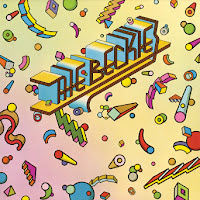
The Beckies' The BeckiesThe Beckies are one of those “Holy Grail” bands for power-pop fiends. Featuring talented frontman Michael Brown (Left Banke, Stories), the Beckies made one album in 1976 of rockin’ pop not dissimilar to Badfinger or the Raspberries. The band’s self-titled LP quickly went out-of-print and then disappeared, and it hasn’t been reissued on CD until this year. The Beckies were Brown’s final stop in rock ‘n’ roll, and he co-produced the album and co-wrote all of the songs with drummer Gary Hodgden as well as played keyboards on the album. Released at least a half-decade before its time, the album’s fusion of classic rock and energetic power-pop is timeless. Although some fans are chuffed about the lack of bonus tracks on the CD reissue, others have found solace in music historian Jeremy Cargill’s detailed liner notes. (Real Gone Music)

Michael Bloomfield, Nick Gravenites & Friends' Steelyard Blues OST
Michael Bloomfield, Nick Gravenites & Friends – Steelyard Blues OST
The long-lost soundtrack to an obscure 1970s movie, Steelyard Blues, was put together by legendary guitarist Michael Bloomfield and underrated singer/songwriter Nick Gravenites with help from friends like Paul Butterfield, Maria Muldaur, and Merl Saunders. The album’s inspired blend of original blues, rock, and country tunes still sounds fresh and vital today. Sometimes albums become lost for a reason, but for any blues and/or roots-rock fan, Steelyard Blues is worth your time and money. (Real Gone Music)

The Dictators Go Girl Crazy!
The Dictators – The Dictators Go Girl Crazy!
One of the best-known cult bands in rock ‘n’ roll, the Dictators’ classic 1975 debut album, The Dictators Go Girl Crazy!, has proven to be an enduring classic. Critically acclaimed at the time for its proto-punk sound – a fast ‘n’ loud aesthetic heavily influenced by 1960s-era garage-rock and British Invasion bands – and irreverent lyrics littered with pop culture references to pro wrestling, crappy television shows, hot rods, and fast food, the album has outlived its early. This deluxe 40th anniversary reissue is the album’s first re-vamping in 20 years, and includes nine bonus tracks to accompany the nine original songs, including two inspired remixes by Dictators fan Andrew W.K. Band member Adny Shernoff contributed liner notes for this reissue, and the package include several rare, previously unseen photos. The Dictators would go on to make better albums, but the charm and the energy of their debut is unrivaled. (Real Gone Music)
Read the Reverend's review...

Michael Fennelly's Lane Changer
Michael Fennelly – Lane Changer
Singer, songwriter, and guitarist Michael Fennelly isn’t the most obscure of cult heroes, but his status as a critic’s darling and favorite of 1960s-era rock aficionados is undeniable. After fronting the revered power-pop band Crabby Appleton for a pair of acclaimed albums, Fennelly launched his solo career with this 1973 debut, Lane Changer. An awe-inspiring collection of pure, inspired rock ‘n’ roll songcraft that, in any other year, may have exploded into the mainstream, Fennelly’s superb initial effort was buried in a veritable landslide of great music released during 1973. This long-overdue reissue on CD provides fans and newcomers a chance to rediscover Fennelly’s enormous talents. (Wounded Bird Records)
Read the Reverend's review...

Jimi Hendrix Experience's Freedom: Atlanta Pop Festival
Jimi Hendrix Experience – Freedom: Atlanta Pop Festival
One of the last major touchstones from the seemingly endless Hendrix back catalog to see release, Freedom: Atlanta Pop Festival is simply stunning. Performing in front of the largest audience Hendrix would experience, his headlining appearance at the Atlanta Pop Festival was assisted by bassist Billy Cox and drummer Mitch Mitchell. The seasoned trio would tear through a set of familiar songs – rockers like “Fire,” “Foxey Lady,” and “Purple Haze” among them – as well as dabble in a bit of sonic experimentation (“Stone Free”), rare cuts (“Room Full of Mirrors”), new songs (“Straight Ahead”) and, of course, the blues (“Red House,” Hear My Train A Comin’”). An explosive reading of the “Star Spangled Banner” beats the Woodstock version hands down and is accompanied by real fireworks. Although portions of this performance had previously been released on the Hendrix box set, and the Atlanta show overall had been heavily bootlegged, this long-overdue legit release of the July 4th, 1970 show puts Hendrix’s talents back on the pedestal. (Legacy Recordings/Experience Hendrix)

Led Zeppelin's Physical Graffiti
Led Zeppelin – Physical Graffiti
Although Zep guitarist Jimmy Page finished up the album reissue program he began in 2014 with re-mastered versions of the band’s last four albums, there’s little you need for your collection after Physical Graffiti (although Page might disagree). Certified 16x Platinum™ for better than eight million flapjacks sold (it was a double LP, so every sale counted as two towards certification), Physical Graffiti represents the zenith of the band’s creativity and energy. Offering up 15 diverse tracks that explore the band’s incredible musical range and stylistic obsessions, Physical Graffiti finally earned the band a measure of long-overdue critical acclaim. As with the other Zep catalog reissues, Physical Graffiti was offered in a deluxe three-disc package with original artwork and previously-unreleased studio outtakes. My only complaint with the Zep reissues – a dearth of live material (only Led Zeppelin I included a live concert) – but maybe that will be Page’s next project (go ahead, Jimmy, dig into that Zep bootleg collection we all know you have). (Atlantic Records)

Harvey Mandel's Snake Box
Harvey Mandel – Snake Box
Guitarist Harvey “Snake” Mandel made his bones as part of Chicago blues legend Charlie Musselwhite’s early band, and honed his skills as a member of both Canned Heat and John Mayall’s Bluesbreakers while still pursuing a solo career. This box set is comprised of Mandel’s first five solo albums, mostly instrumental masterworks like Cristo Redentor and Righteous, complimented by the inclusion of a sixth disc, Live At The Matrix, which offers an unreleased December 1968 jam between Mandel and pals like the Grateful Dead’s Jerry Garcia and Mickey Hart, Elvin Bishop, and Steve Miller. Mandel’s Snake Box is a wonderful portrait of an unsung artist and skilled musician plumbing the depths of rock, blues, and jazz music. (Purple Pyramid/Cleopatra Records)

John Mayall’s Bluesbreakers' Live In 1967
John Mayall’s Bluesbreakers – Live In 1967
John Mayall has fronted a lot of different Bluesbreakers line-ups through the years, but few were as special as the version of the band that featured the talents of guitarist Peter Green, bassist John McVie, and drummer Mick Fleetwood alongside ringleader Mayall. They performed some memorable shows together during a short time and, luckily, a hardcore Bluesbreakers fan from Holland recorded a number of the band’s 1967 shows in London, the performances rediscovered and released as Live In 1967. A momentous musical find, the album is a literal time capsule of classic British blues-rock, offering thirteen lively, inspired, and long-lost Bluesbreakers performances, a high-energy mix of classic blues covers and Mayall originals that should thrill any British blues fan...and Mayall himself has said that there’s enough usable stuff on tape for another whole album. Blues fans, rejoice! (Forty Below Records)

Lee Michaels' The Complete A&M Records Collection
Lee Michaels – The Complete A&M Records Collection
Nobody sounded quite like singer, songwriter, and keyboardist Lee Michaels during his seven-album run with A&M Records, circa 1968-1973, and while some have tried, nobody has quite nailed his unique, frequently minimalist creative vision since. A soulful vocalist often accompanied on album by only a lone percussionist, Michaels explored the use of piano, keyboards, and even harpsichord in rock music unlike any other artist at the time. For much of the past 20 years, all of Michaels’ albums have been out of print with the exception of 5th, which featured the singer’s lone hit, “Do You Know What I Mean.” For the long-suffering, but preternaturally loyal Michaels’ fan, The Complete A&M Album Collection offers the singer’s complete run of LPs for the label, seven CDs digitally re-mastered from the original tapes, priming Michaels’ for a long-overdue re-discovery. (Manifesto Records)
Read the Reverend’s review...

The Textones' Midnight Mission
The Textones – Midnight Mission & Cedar Creek
Yeah, technically I’m sneaking two LPs into a single spot, but as these were reissued as a pair, I’m keeping them that way. Part of the vital early ‘80s L.A. rock scene that included bands like Los Lobos and the Dream Syndicate, the release of Midnight Mission, the Textones’ 1984 debut album, was a revelation at the time. Carla Olson and crew basically melded the roots-rock of the Byrds with the bluesy roots and sandpaper grit of the Rolling Stones in creating a new amalgam of emotionally-raw rock ‘n’ soul music with a little country twang and a lot of heart, creating an underrated jewel of early Americana. The band had undergone some misfortune on the way to recording their sophomore album in 1987, delivering more of the same high-energy roots-rock. Although often overshadowed by its predecessor, Cedar Creek is still an engaging, entertaining slab o’ wax, and a brilliant bookend to Midnight Mission. (Omnivore Recordings)
Read the Reverend’s review...

Honorable Mention: Bruce Springsteen’s ongoing “beat the boots” campaign, The Boss providing classic performances from the length of his career as special, limited edition releases available as multi-CD sets and as digital downloads in MP3 or 24-bit hi-def lossless format. Vintage Springsteen shows like The Angora in Cleveland 1978 or the Tower Theater in Philadelphia 1975 have only been available as hard-to-find bootleg discs, but are now available legitimately from the man himself through his website.

Tuesday, June 16, 2015

Real Gone Music rocks August with Steppenwolf and Steelyard Blues!

Nick Gravenites & Michael Bloomfield's Steelyard Blues
Our friends at Real Gone Music have announced their August release schedule, and it includes some hot titles, indeed! The Reverend’s pick from among the label’s upcoming reissues would be the long-lost soundtrack album from the oddball 1973 comedy Steelyard Blues. Directed by filmmaker Alan Myerson, the film starred Jane Fonda, Donald Sutherland, Howard Hesseman, and Peter Boyle as anti-establishment types trying to get over on the system. Because of its definite anti-war slant (and that of its stars), Steelyard Blues never got half a chance to become a movie blockbuster.

Even more unlikely than the movie was the soundtrack to Steelyard Blues which, to the best of my knowledge, received only sparse distribution in 1973 and has never been reissued on CD. Which is a damn shame, really, ‘cause the film soundtrack features a slate of original songs created by Chicago bluesmen Nick Gravenites and guitarist Michael Bloomfield. While the material was penned to specifically accompany the movie, it stands up quite well on its own, and also includes the talents of vocalists Maria Muldaur and Annie Sampson (from the band Stoneground) as well as frequent Jerry Garcia collaborator Merl Saunders. Gravenites produced the soundtrack and wrote or co-wrote all 14 songs, and it features some of Bloomfield’s best guitar playing. Real Gone will release Steelyard Blues, the soundtrack, on August 7th, 2015.

Steppenwolf was the tonic of choice for 1970s-era teens with a thirst for hard rock. Formed in 1967 by members of the Canadian blues-rock band Sparrow – singer John Kay, keyboardist Goldy McJohn, and drummer Jerry Edmonton – Steppenwolf scored its first hit in 1968 with the classic “Born To Be Wild,” taken from its self-titled debut album. Written by former Sparrows band member Mars Bonfire (Edmonton’s brother), “Born To Be Wild” hit #2 on the U.S. charts and launched a string of seven Top 20 albums which would achieve Gold™ Record status between 1968 and 1970.

Strangely enough, although Steppenwolf was considered an AOR band – a status confirmed by its album sales and accompanying FM airplay – they enjoyed significant success on the singles chart as well. Songs like “Magic Carpet Ride,” “Rock Me,” “Move Over,” and “Monster” would all hit Top 40 status and two of the band’s singles (yeah, you can guess which ones…) would sell in excess of one million copies and be featured in numerous movies like Easy Rider and Candy and in TV shows like Miami Vice and Married…With Children. Steppenwolf songs have been covered by artists as diverse as Bruce Springsteen, Slayer, Blue Oyster Cult, and Status Quo, among many others.

These hit singles have largely been unavailable on CD in their original 45rpm mixes, an oversight corrected by Real Gone Music. The label will release Steppenwolf’s The ABC/Dunhill Singles Collection on August 14th, 2015, the two-CD set featuring every A and B-side of every one of the band’s singles for ABC/Dunhill, 38 monster tracks in all, compiled in a set that includes liner notes with John Kay’s comments for each song as well as a number of rare photos. Compiled from the best sources available (legend has it that the original 45rpm mixes of this material were trashed years ago), The ABC/Dunhill Singles Collection showcases the many different facets of an often overlooked classic rock era band remembered, really, for just two songs.

Buy the CDs from Amazon.com:
Nick Gravenites & Michael Bloomfield's Steelyard Blues
Steppenwolf's The ABC/Dunhill Singles Collection

Tuesday, March 31, 2015

Muddy Waters & Friends Jam In Chicago (circa 1974)

Soundstage: Blues Summit In Chicago, 1974 DVD
Thirty-plus years after his death, the great Muddy Waters remains the undisputed King of Chicago Blues. Sure, Buddy Guy may be his heir apparent, but with a wealth of Waters’ back catalog CDs and DVDs remaining in print for new listeners to discover, and with new treasures from the archive trickling out each year, it’s going to be hard – if not impossible – for anybody to claim Waters’ throne anytime soon…

Legacy Recording will be adding another priceless gem to the Waters’ treasure chest on April 21st, 2015 when they reissue Soundstage: Blues Summit In Chicago, 1974 on DVD for the very first time. Credited to “Muddy Waters and Friends,” the DVD documents a July 1964 concert by Waters and a few friends that would be broadcast as the first episode of Soundstage, a beloved live concert series that was broadcast by PBS stations around the country for 13 seasons during the late 1970s and early-to-mid-1980s (and was resurrected for more episodes in the early ‘00s).

Waters by himself is a potent onstage presence, especially with a band at the time that included talents like guitarists Bob Margolin and Luther “Snake Boy” Johnson, bassist Calvin “Fuzz” Jones, pianist Pinetop Perkins, and drummer Willie “Big Eyes” Smith. Among the heavy “friends” appearing with Waters are fellow Chicago blues giants Koko Taylor and Willie Dixon; guitarists Michael Bloomfield, Nick Gravenites, and Johnny Winter; former Waters’ band harp player (and solo star) Junior Wells; and pianist Dr. John, among others. Together, these storied musicians put on a hell of a show (the full DVD tracklist can be found below).   

“This first edition of our Soundstage series definitely stands the test of time,” says Soundstage producer Ken Ehrlich in a press release for the DVD. “The same greatness that these blues legends like Muddy Waters, Willie Dixon, Junior Wells and Koko Taylor showed in this iconic gathering of blues greats continues to influence current generations of blues players and fans. The only difference is that now, 40 years later, the other artists on the show like Johnny Winter, Mike Bloomfield, Dr. John and Buddy Miles have now achieved similar legendary status as those first generation blues artists they came to honor back in 1974.”

Soundstage: Blues Summit In Chicago, 1974 tracklisting:

Muddy Waters – “Blow Wind Blow”
Muddy Waters – “Long Distance Call”
Junior Wells & Nick Gravenites – “Messin’ With The Kid”
Junior Wells – “Stop Breaking Down”
Muddy Waters –  “Mannish Boy”
Willie Dixon & Koko Taylor – “Wang Dang Doodle”
Johnny Winter – “Walking Through The Park”
Muddy Waters & Willie Dixon – “Hootchie Kootchie Man”
Dr. John – “Sugar Sweet”
Muddy Waters – “Got My Mojo Workin’”

Buy the DVD from Amazon.com: Muddy Waters and Friends' Soundstage: Blues Summit Chicago 1974

Sunday, July 20, 2014

Michael Bloomfield, Al Kooper & Stephen Stills - Super Session

Bloomfield, Kooper & Stills' Super Session
It is, perhaps, the “Holy Grail” of Michael Bloomfield recordings, the ground-breaking 1968 album Super Session with Al Kooper and Stephen Stills. All of the marquee names on Super Session were “in between” bands – Bloomfield having left Electric Flag, Kooper kicked out of Blood, Sweat & Tears after producing that band’s magnificent Child Is Father To The Man album, and Stills in the process of leaving Buffalo Springfield (but before Crosby, Stills & Nash). They were joined by Bloomfield’s former Electric Flag bandmates bassist Harvey Brooks and keyboardist Barry Goldberg as well as drummer Eddie Hoh.

On August 19th, 2014 Audio Fidelity will release a limited-and-numbered edition of Super Session as a 5.1 Multichannel Hybrid SACD. This new version pares back the 2002 reissue’s four bonus tracks in favor of improved sound for the original nine album tracks; Kooper produced the original album and completed the previously unreleased 5.1 Surround Sound mix in 2006.

In a press release for the album Kooper says “Surround Sound allows the listener to get up close to each musician and hear details you can't hear in stereo.” The two-channel CD stereo can be played on all standard CD players while the SACD stereo requires a SACD player. SACD Surround Sound requires a Multichannel SACD player and system to be properly heard.

Super Session has its roots in the free-wheeling ‘60s. Kooper had become an A&R executive with Columbia Records after leaving Blood, Sweat & Tears, and would go on to work with talents like Nils Lofgren, the Tubes, and Lynyrd Skynyrd. Kooper had an idea to record a studio jam session with guitarist Bloomfield, who he had worked with on sessions for Bob Dylan. He enlisted the other instrumental talents to back them in the studio on a set of rock, soul, and blues tunes mixing newly-minted originals with covers like Curtis Mayfield’s “Man’s Temptation” and the Philly soul classic “Stop.”

Bloomfield worked one day in the studio, recording the five tracks that would become the first side of Super Session, before packing his bags and going home. Kooper knew that his unpredictable friend suffered from insomnia and heroin addiction and, without dropping a beat, he recruited Stills for the second studio session, recordings that would become side two of the album including a lengthy jam on Donovan’s “Season of the Witch,” Dylan’s “It Takes A Lot to Laugh, It Takes A Train to Cry,” and bluesman Willie Cobbs’ “You Don’t Love Me.”

The result would be a classic of late 1960s rock ‘n’ blues, the album rising to #12 on the Billboard albums chart and eventually earning a Gold Record for sales. Super Session has been reissued numerous times through the years, and it’s earned its classic status, displaying timeless performances that still sound great 45+ years later.  

Super Session track list:

1. Albert's Shuffle
2. Stop
3. Man's Temptation
4. His Holy Modal Majesty
5. Really
6. It Takes A Lot to Laugh, It Takes A Train to Cry
7. Season of the Witch
8. You Don't Love Me
9. Harvey's Tune

Buy the SACD from Amazon.com: Super Session (Hybrid Multichannel SACD)