Showing posts with label Muddy Waters. Show all posts

Monday, March 16, 2026

Archive Review: Muddy Waters’ The Montreux Years (2021)

Muddy Waters’ The Montreux Years
The Montreux Jazz Festival was launched in June 1967 and while the esteemed annual event, held on the Lake Geneva shoreline in Switzerland, may be best-known as the setting for Deep Purple’s classic early ‘70s hit “Smoke On the Water,” there’s a lot more to the festival than the infamous casino fire that served as the song’s antagonist. Whereas the festival originally featured jazz (or jazzy) artists like Miles Davis, Bill Evans, Weather Report, and Soft Machine, by 1970 the three-day musical celebration had expanded to include rock ‘n’ blues performers like B.B. King, Pink Floyd, the Mothers of Invention, Buddy Guy, Chuck Berry, Van Morrison and, well, Deep Purple playing alongside folks like Herbie Hancock, Chick Corea, and Billy Cobham. Chicago blues legend Muddy Waters was one of many talented artists to grace the Montreux Jazz Festival stage, an event he performed three times before his death in 1983, appearing in 1972, 1974, and 1977. 

The decade of the ‘70s was a fruitful one for Waters, critically and commercially, beginning with winning his first Grammy™ Award for his 1971 album They Call Me Muddy Waters. A year later he released The London Muddy Waters Sessions, the blues great recording with British acolytes such as Rory Gallagher, Mitch Mitchell, and Rick Grech, the album earning Waters his second Grammy™. Muddy would continue to work with younger musicians, The Muddy Waters Woodstock Album featuring Levon Helm and Garth Hudson from the Band as well as a friend from back in Chicago, Paul Butterfield. Waters’ association with blues-rock guitarist Johnny Winter lead to a critically-acclaimed trio of late ‘70s studio albums (and one live set) that would earn Waters two more Grammy™ Awards and cap off a truly legendary career.

Muddy Waters’ The Montreux Years 


The recently-released The Montreux Years cherry-picks sixteen of the finest songs from Waters’ three appearances at the Montreux Jazz Festival. The first of a planned series that now includes releases by Etta James, Marianne Faithful, and Nina Simone, The Montreux Years albums dig into the festival’s rich half-century-plus of musical history. The Muddy Waters CD is packaged in a classy square-bound book with several rare photos and extensive liner notes by writer Brett J. Bonner, and it is also available as a two-LP set with all the songs. Waters’ three appearances at Montreux saw him fronting some of the best blues bands he ever enjoyed as a bandleader. The 1972 performance features the Aces – brothers Louis and Dave Meyers on guitar and bass, with drummer Fred Below – as well as pianist Lafayette Leake and harmonica player George ‘Mojo’ Buford.

Waters’ 1974 appearance featured a band that included talents like guitarists Buddy Guy and Terry Taylor, harmonica wizard Junior Wells, bass player Bill Wyman (yes, that Bill Wyman!), pianist Pinetop Perkins, and drummer Dallas Taylor (who had played with Crosby, Stills & Nash, Van Morrison, and others). His final appearance at Montreux, in 1977, offered what was probably his strongest band ever, with guitarists ‘Steady Rollin’ Bob Margolin and Luther ‘Guitar Junior’ Johnson, bassists Calvin Jones and Bill Wyman, old friend Pinetop Perkins, harmonica player Jerry Portnoy, and drummer Willie ‘Big Eyes’ Smith, who would later form The Legendary Blues Band with other Waters’ band alumni. 

It is with a song from the 1977 show that The Montreux Years kicks off, Waters taking control of the stage with a slow-burning cover of former band member Otis Spann’s “Nobody Knows Chicago Like I Do.” Waters’ performance is deliberate, albeit powerful, his vocals accompanied by Portnoy’s creative harmonica trills, Perkins’ dancing 88s, and silver threads of elegant fretwork. The tracklist on The Montreux Years isn’t in any sort of chronological order, so we jump backwards from 1977 to ‘74 and a raucous performance of one of Waters’ signature songs, “Mannish Boy.” Waters’ swaggering vocals propel the song, with the band rock steady and locked into a groove as Guy embellishes Waters’ vocals with shards of jagged guitar and Wells blasts his harp on the edges.

Muddy Waters at Newport photo by Diana Davies

Old School Chicago Blues


Returning to 1972, The Montreux Years offers three blistering, dynamic, knock-yer-sox off performances from oldest-of-the-old-school Chicago blues talents. Fronting a band featuring the Aces, who had previously played behind Junior Wells and Little Water, Waters takes listeners back to the classroom with scorched-earth readings of “Long Distance Call,” “Rollin’ and Tumblin’,” and “County Jail.” A Top 10 R&B chart hit for Waters in 1951, twenty years later he still belts out “Long Distance Call” like the club is on fire, including a humorous spoken-word finishing verse that leads to the band’s vamping outro. “Rollin’ and Tumblin’” is an obvious crowd favorite, the band digging a rhythmic groove so deep you could drive a truck into it, Waters’ hearty vox rising above ‘Mojo’ Buford’s subtle harpwork and Fred Below’s firm timekeeping.

A pair of well-worn Waters’ tunes from the 1977 show brighten up the grooves after the slow-walking, dark-hued blues of “Country Jail.” A number three R&B chart hit in 1954, “I’m Your Hoochie Coochie Man” is a staggering, blustery blues classic while 1956’s “Got My Mojo Working,” although it didn’t perform nearly as well on the charts as its predecessor, would nevertheless become an audience favorite and a blues standard in its own right. The former song demands your respect as Waters’ lays waste to any modern rapper’s boasts with his testosterone-fueled braggadocio while the latter song is a runaway freight train of screeching guitars, shouted backing vocals, raging harmonica work, and fleet-fingered honky-tonk piano-pounding. 

“I’m Ready,” another 1954 Top Ten chart hit, sounds almost pedestrian by comparison to the two previous performances, but this 1974 take plays up the song’s jazzy undercurrents with smooth yet menacing vocals by Waters accompanied by Wells’ fluid harp-play and Perkins’ lively piano riffs. The Montreux Years includes a number of songs from Waters’ extensive catalog that aren’t as well-known despite their mileage, and the performances here display the full extent of the singer, songwriter, and bandleader’s immense talents. The love-gone-wrong blues “Rosalie” dates back to the early ‘40s and Waters’ earliest recordings, made by Alan Lomax for the Library of Congress on the Stovell Plantation in Mississippi. It benefits here from some crazed guitar-wonkery by Waters, matched in electricity by Buford’s manic harmonica. 

“Howlin’ Wolf” is an odd song, sharing a name with Waters’ longtime ‘frenemy” and fellow blues great Chester Burnett a/k/a the mighty Howlin’ Wolf. Originally recorded in 1951, it remained unreleased until 1971’s They Call Me Muddy Waters compilation. This 1977 performance showcases Margolin’s fiery fretwork and Portnoy’s hurricane-force harmonica blasts, which drive home the intensity of Waters’ vocals. From 1974’s often-overlooked Unk In Funk album, the last Waters album he would record for the venerable Chess Records before it went belly-up, comes a 1974 performance of “Electric Man,” co-written by Terry Abrahamson. A Chicago Blues Hall of Fame inductee, Abrahamson had songs recorded by Waters, George Thorogood, John Lee Hooker, Johnny Winter, James Cotton, and several others, so he was a big part of the scene at the time. “Electric Man” is a classic Chicago-styled blues tune with larger-than-life lyrics delivered pitch-perfect by Waters and accompanied by Wells’ nuanced harmonica playing and Perkins’ graceful keyboard runs. 

The Reverend’s Bottom Line


Reaching him by email, former Waters’ guitarist Bob Margolin pointed to an article he wrote for Blues Revue magazine that offered his memories of the blues giant. “What kind of person can so powerful a musician be? I’ve been asked that constantly in interviews and by blues lovers ever since I joined Muddy’s band right up until now. I’ve developed a stock (but sincere, concise, and informative) answer: “Muddy was one of those very few who had true ‘charisma.’ He affected people in a spiritual way, both with his music and personally. I’ve had a lot of thrills while I was in Mud’s band, but the biggest was playing his blues with him onstage.” As displayed by The Montreux Years, Muddy Waters was an artist of great talent, vision, and dignity and he’s the perfect choice to launch the Montreux Sounds series. (Montreux Sounds/BMG, released 2021)

Review originally published by the Rock and Roll Globe...

Friday, August 23, 2024

Archive Review: Little Walter's The Complete Chess Masters (2009)

Little Walter's The Complete Chess Masters
Little Walter Jacobs was, without argument, the greatest blues harmonica player ever, an instrumental virtuoso that revolutionized the use of the instrument and influenced virtually every harpist that would attempt to follow in his footprints. Sodbusters like Paul Butterfield, Charlie Musselwhite, Rod Piazza, and Jason Ricci were all influenced by Walter’s enormous shadow.

For a while, blues harp master Little Walter was Chess Records’ biggest and best-selling star…bigger than Muddy Waters or Howlin’ Wolf. From 1952 through 1958, Walter ran off a string of fourteen Top Ten R&B chart hits, and even his recordings from the late-50s and early-60s display a dazzling presence, a willingness to take chances, and an uncanny skill as both an instrumentalist and vocalist.

The Complete Chess Masters (1950-1967) collects better than ten-dozen tracks recorded by Walter, including nine previously unreleased performances. Across the five CDs included with the set, Little Walter is accompanied by a veritable “who’s who” of Chicago blues royalty, including Muddy Waters, Willie Dixon, Otis Spann, and Jimmy Rogers.  

The first disc includes some of Walter’s early big hits, including the career-making “Juke,” from 1952. A fluid, swinging instrumental with an easily-recognizable central riff and some tasty six-string fills courtesy of Jimmy Rogers, the song would spend an incredible 20 weeks on the R&B charts. Backed with the soulful “Can’t Hold Out Much Longer,” the single created a blueprint that Chess would follow for much of Walter’s career, featuring an instrumental ‘A’ side backed by a ‘B’ side that would feature Walter’s underrated vocals.

When “Juke” hit the top of the charts, Little Walter ditched Waters mid-tour and, scooping up Junior Wells’ band the Aces, launched his solo career in earnest. Recording with the new band, sessions from late-1952 and early-1953 resulted in another big hit in “Sad Hours.” Paired with T-Bone Walker’s “Mean Old World,” the steady shuffling “Sad Hours” offers the first use of Walter’s unique “warble” method that created a multi-dimensional sound for the instrument.

The second disc kicks off with one of Little Walter’s signature songs (and a blues standard), “Blues With A Feeling.” With Chess Records finally letting him put his soulful vocals up front alongside his instrumental prowess, the song was the perfect framing of mood and performance, drenched in emotion and bristling with energy.

Little Walter’s recording of Bo Diddley’s houserockin’ instrumental “Roller Coaster,” with Diddley himself providing some rattling fretwork alongside Walter’s frantic harp, represented something of a changing of the guards. By 1955, the commercial market was beginning to thin out for blues music as rock ‘n’ roll and rhythm & blues took over the charts. “Roller Coaster” would be the last of Walter’s instrumental hits.

Between 1956 and ‘58, Little Walter recorded a number of tracks that, while standing up with some of his best work, none of it proved to be a commercial success. Bo Diddley and Chuck Berry were Chess Records’ latest stars, and otherwise red-hot songs like the spry instrumental “Flying Saucer” or the hard-driving, Berry-styled rocker “It Ain’t Right” were ignored by record buyers.

In January 1959, Little Walter would record with guitarist Luther Tucker and pianist Otis Spann, producing a number of strong sides, although only one – the smoldering “Everything’s Gonna Be Alright” – would inch midway up the R&B chart. Benefiting from Spann’s rollicking piano-bashing, the song features one of Walter’s most emotional harp performances, the lonesome desperation of his solos matched by his mournful vocals.

Other songs recorded in 1959 showed that, while Walter’s skills with the harmonica remained unsurpassed, his once-expressive voice was slowly being eroded by alcohol. In some instances, his diminished vocal capabilities worked to his advantage, as in the tear-jerking “Blue And Lonesome.” Backed by Freddie Robinson’s hypnotic fretwork, Walter’s low-register vocals define sadness and depression, his blistering harp a reflection of his inner turmoil.

Little Walter’s commercial fortunes continued to decline from 1960 until his death in 1968, and the sessions he was offered became few and far between. Still, there are some treasures to be plucked from Walter’s increasingly obscure recordings. Willie Dixon’s “As Long As I Have You” is a precursor to the British blues-rock that would rise up during the ‘60s, the song full of switchblade guitar and rough-hewn vocals. From one of Walter’s last sessions, in 1967, a final shot of “Juke” recorded with Buddy Guy and Otis Spann would cement Little Walter’s legacy as the greatest.

Yeah, you’ve probably figured out that five discs, featuring better than two-dozen tracks apiece, is a heck of a lot of material to wade through, and you’d be right. Although The Complete Chess Masters (1950-1967) might only appeal to the most rabid of fans, it is also an important historical document. The set provides a portrait of a musical genius in the prime…and decline…of his talent, and it’s a worthwhile addition to the library of any serious blues collector. (Hip-O Select, released March 6th, 2009)

Review originally published by Blurt magazine

Friday, October 28, 2022

Archive Review: Ann Arbor Blues & Jazz Festival 1972 (2014)

Ann Arbor Blues & Jazz Festival 1972
In the 40+ years since the event, the 1972 Ann Arbor Blues & Jazz Festival has become known as one of the premiere live concerts in blues history. Although the event was only attended by roughly 16,000 intrepid souls, it has since been blown up and exaggerated much like the original Woodstock Festival so that two or three times the actual number of attendees feel like they experienced the magic that occurred over that three-day weekend in September 1972, a familiarity bolstered, perhaps, by Atlantic Records’ release of a two-album set of performances from the festival in early 1973.

The festival was the brainchild of a group of University of Michigan students, with organizer Cary Gordon (no relation) at the helm. Receiving backing from both the school and Canterbury House, an Episcopal Church, the first Ann Arbor Blues Festival was held in September 1969. To find artists for the event, however, first Gordon, John Fishel, and other students travelled to Chicago, where they met with Bob Koester of Delmark Records and checked out artists at some of the city’s Southside clubs. To give their fellow students a taste of the blues, they booked a successful performance by the Luther Allison Trio at the school in the spring of 1969, and held the full-fledged festival in September.   

Ann Arbor Blues & Jazz Festival 1972


Although the 1969 and 1970 Ann Arbor Blues Festivals were artistic successes, bringing a wealth of talent to perform, neither event was financially successful. After a year’s absence, during which time both Gordon and Fishel had left school, new U of M Events Director Peter Andrews was asked by the university to promote another festival. Working with former MC5 manager and White Panther Party founding member John Sinclair, they expanded the musical focus of the event and renamed it the Ann Arbor Blues & Jazz Festival. The pair held shows in 1972 and 1973, but after a disastrous attempt at promoting a 1974 festival in Windsor, Ontario, the event went on hiatus until the early 1990s.

As mentioned above, the 1972 festival was released on vinyl months after the event, but the album has been largely out-of-print until its 2014 rescue and reissue by Wounded Bird Records, a U.S. based archival label. Although Wounded Bird is primarily known for 1970s-era rock and jazz releases, they’ve done the blues world a large favor by releasing Ann Arbor Blues & Jazz Festival 1972 as a two-CD set. The briefest of glances at the track list will convince even the most traditional of blues fans to add this budget-priced set to their library. Boasting of performances by legends like Hound Dog Taylor, Koko Taylor, Bobby “Blue” Bland, Muddy Waters, Howlin’ Wolf, Freddie King, Luther Allison, Otis Rush, Bonnie Raitt, and others, how much more value could you expect for your dollar?

Hound Dog Taylor’s Kitchen Sink Boogie

   
After a brief introduction, disc one of Ann Arbor Blues & Jazz Festival 1972 kicks off with the raucous “Kitchen Sink Boogie,” courtesy of Hound Dog Taylor & the Houserockers. Hot on the heels of his inaugural Alligator Records album release, Taylor and his red-hot band rip through the nearly-four-minute instrumental like a hot knife through soft butter, Taylor’s guitar screaming and screeching like a rabid beast while the rhythm section holds down a swinging boogie beat. Koko Taylor follows with her equally audacious performance of “Wang Dang Doodle.” Accompanied by the song’s writer, Willie Dixon, and backed by a band that includes guitarist Mighty Joe Young, pianist Rick Wright, and a full horn section, the duet raises the rafters with an energetic and rowdy showing.   

The great Bobby “Blue” Bland brings a bit of smooth R&B vibe to his reading of “Ain’t That Loving You,” the singer silkily crooning the romantic lyrics while Dr. John (a/k/a Mac Rebennack) adds some elegant guitar licks. Speaking of Mr. Rebennack, his original “I Walk On Guilded Splinters” brings some New Orleans-styled swamp-blues to the stage, the original voodoo “Night Tripper” growling his vocals above a smothering, claustrophobic arrangement while backing singers add sweet backing harmonies. Howlin’ Wolf simply dominates the stage with his high-octane reading of “Highway 49.” Backed by a talented band that included guitarist Hubert Sumlin, pianist Detroit Junior, and sax legend Eddie Shaw, the Wolf roars through the song like a hurricane staggering through southwest Michigan.  

Dedicated to Otis Spann


Not to be outdone by his Windy City rival, the great Muddy Waters delivers an equally powerful rendition of his classic “Honey Bee.” With his wiry slide-guitar dancing in the background and harp player George “Mojo” Buford blowing a mournful riff, the performance captures the essence of the Chicago blues. Waters joins promoter John Sinclair and Lucille Spann, widow of former Waters band pianist Otis Spann, in dedicating the festival to the late bluesman. Mrs. Spann, joined by guitarist Mighty Joe Young, acquits herself well on “Dedicated To Otis,” a slow-burning, Chicago-style three-alarm fire fueled by Wright’s jaunty piano and Spann’s gritty, emotional vocals. Guitarist Freddie King keeps the party going with his lively take of Don Nix’s “Goin’ Down.” With David Maxwell banging away at the piano keys and Deacon Jones chiming away on the organ, King tears through the song with reckless abandon, his high-flying solos bringing down the house.

The great Luther Allison returned to Ann Arbor to brilliantly cover the classic Percy Mayfield ballad “Please Send Me Someone To Love.” While Allison’s stellar fretwork dominates any performance, the guitarist’s brassy horn section adds some punch to the song with its blustery blasts. Ann Arbor Blues & Jazz Festival 1972 offers just two bona fide jazz performances, the first of which – CJQ’s “Form Kinetic” – providing a little too much shrill instrumentation for my taste. By contrast, Sun Ra & His Solar-Myth Arkestra tickles your ears with their dissonant, improvisational take on “Life Is Splendid.” Both jazz numbers may sound a little harsh to the average blues fan, but they both provide a valuable snapshot of musical undercurrents in the early 1970s.        

The Reverend’s Bottom Line


As good as all the above performances may be, I’ve barely scratched the surface of the eighteen artists represented on Ann Arbor Blues & Jazz Festival 1972. Junior Walker & the All Stars, Johnny Shines, Otis Rush, and the Boogie Brothers all deliver exemplary performances. Bonnie Raitt offers a fine tribute to her mentor Mississippi Fred McDowell with a three-song medley, and later joins Sippie Wallace on the stage for a lively recreation of the singer’s 1929 song “Women Be Wise.”  

Taken altogether, there’s barely a wrong note on Ann Arbor Blues & Jazz Festival 1972, and if the artists and performances included on the set don’t prompt you to put down some hard coin for a copy, you’re probably not much of a blues fan in the first place. I hear that Taylor Swift has a new album out that might be more your taste. For those of us whose blood runs blue, listening to Ann Arbor Blues & Jazz Festival 1972 proves why the event has exceeded its humble roots to live on in memory. As good as this stuff is, however, I have to ask – is there any more tape from the festival in the vaults? I’m surely not alone in wanting to hear more music from this weekend in Ann Arbor… (Wounded Bird Records, released July 15, 2014)

Buy the CD from Amazon: Ann Arbor Blues & Jazz Festival 1972

Friday, April 22, 2022

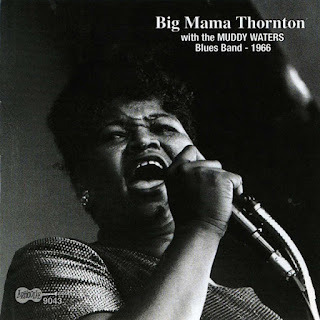
Archive Review: Big Mama Thornton's With the Muddy Waters Blues Band - 1966 (2007)

Big Mama Thornton's With the Muddy Waters Blues Band - 1966
If she is remembered by any but the most dedicated blues historians, Willie Mae “Big Mama” Thornton is best known for her 1953 hit single “Hound Dog.” The song spent seven weeks on top of Billboard magazine’s R&B charts and made Thornton a minor star on the SE/SW chitin’ circuit. Later appropriated by Elvis Presley, his 1956 recording of the song overshadowed Thornton’s considerable success and launched Presley’s career beyond the confines of Sun Records.


It’s high time that modern blues fans rediscovered the talented Thornton. Signed to Peacock Records in 1951, Thornton released a number of singles for the label throughout the decade. None hit as big as “Hound Dog,” however, and Thornton was eking out a meager living through sporadic performances well into the ‘60s. The singer with the giant voice hooked up with blues fan and Arhoolie label founder Chris Strachwitz for a handful of mid-‘60s album releases that helped redefine her career. Strachwitz had recorded an inspired Thornton performance in Europe with a band led by guitarist Buddy Guy, and he thought that lightning might strike twice. He arranged for Muddy Waters’ band to back Thornton on these April 1966 sessions; Thornton’s powerful vocals perfectly matched by the group of veteran performers.

Big Mama Thornton’s With the Muddy Waters Blues Band - 1966


After all these years, the release of Thornton’s With the Muddy Waters Blues Band - 1966 is a revelation. Thornton is in good form on songs like the soulful “I’m Feeling Alright” and the dirty blues of “Black Rat.” Waters’ band – which included Otis Spann on piano and James Cotton soaring on harmonica – embraced the material, their immense skills amplifying Thornton’s performances. Especially welcome is Waters himself on guitar, the blues giant’s often-overlooked six-string prowess on display in songs like “Everything Gonna Be Alright” and “Sometimes I Have A Heartache.” The gospel-tinged “Guide Me Home” foreshadows what might have been if Thornton had been able to record the album of spiritual tunes that she wanted to while “Big Mama’s Bumble Bee Blues” is a more secular example of traditional blues double-entendre lyrics.
 
The long overdue CD release of With the Muddy Waters Blues Band - 1966 also includes seven previously unreleased bonus tracks, including alternate takes of “Black Rat,” “Gimme A Penny” and “I’m Feeling Alright.” It is the new songs that really stand out, though. The lively instrumental “Big Mama’s Shuffle” showcases Thornton’s harmonica skills, an instrument she would use more and more on her work into the 1970s, the song becoming a literal battle between Thornton and the raging James Cotton. “Since I Fell For You” is an old-fashioned torch song, drenched in emotion and dripping with passion. The album-closing “Big Mama’s Blues” is a slow, smoky Chicago-styled blues, Spann providing rhythm on the ivories while Cotton plays off of Thornton’s vocals with an impressive performance. It was well worth the almost three-decade wait to hear these tracks.  

The Reverend’s Bottom Line


Remastered for CD from the original three-track (!) recordings, Thornton’s With the Muddy Waters Blues Band – 1966 sounds damn good for its age, suffering little from the digital transfer and playing loud, raw and vibrant. Hopefully some blues fans will pick up the album simply because of the Muddy Waters connection, or maybe the recent Janis Joplin tributes and revivals, which include Joplin’s version of Thornton’s “Ball And Chain,” will cause some young listeners to seek out the original. Either way, they’ll be rewarded with the ample talents of one of the blues most underrated and unique vocalists, Big Mama Thornton. (Arhoolie Records, released January 29th, 2007)

Review originally published by Alt.Culture.Guide™ zine, 2007

Friday, March 18, 2022

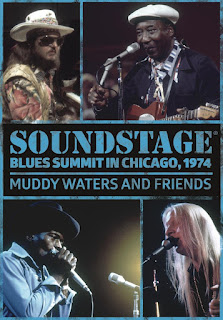
Archive Review: Muddy Waters’ Soundstage: Blues Summit In Chicago, 1974

Muddy Waters’ Soundstage
In July 1974, Muddy Waters was chosen to host the inaugural episode of Soundstage, the beloved live concert series broadcast by PBS stations around the country for thirteen subsequent seasons. Waters was the first in a long run of talented performers to appear on the acclaimed TV show, and he brought some friends with him, resulting in what the producers called a “Blues Summit In Chicago.” The King of Chicago Blues brought along his Queen, the phenomenal Koko Taylor, and a full suite of acolytes and admirers, including Junior Wells, Michael Bloomfield, Johnny Winter, Buddy Miles, and Dr. John, among others.

Muddy Waters’ Soundstage Blues Summit In Chicago 1974


After a solid performance of Waters’ “Blow Wind Blow” that’s interrupted by introductions, the show gets down to business with a sizzling take on “Long Distance Call.” Muddy is in fine voice, belting out the lyrics with perfect timing and emotion, accompanied by Wells’ icy harp and Bloomfield’s twangy guitar licks, with Pinetop Perkins banging the piano keys. Singer/songwriter Nick Gravenites joins Wells on his signature “Messin’ With the Kid,” the pair ripping the roof off the sucker with an energetic performance, Bloomfield’s wiry solos underlining a smiling Wells’ lively vocals.

Waters returns to the stage for a raucous read on his “Mannish Boy,” the band delivering a white-hot groove for Waters to croon above while Winter and Bloomfield swap licks. Taylor is joined by Willie Dixon for a romp through “Wang Dang Doodle,” guitarist Phil Guy receiving a well-deserved spotlight while Koko outshines her male colleagues with an electrifying performance. With his usual modesty, Johnny Winter introduces “Walking Through the Park,” leading the band on a livewire cover of the Buddy Guy tune featuring three dueling guitarists and Wells’ raging harp play.

An extended take on Waters’ “Got My Mojo Workin’” literally has the audience on its feet as everybody hits the stage. Wells offers a freight-train solo, Winter lays down a finger-blistering lead, and Pinetop hammers the keys alongside Dr. John. There are other solid performances here, ten in all for this first Soundstage release, the DVD a definite “must have” for any old-school Chicago blues fan! (Legacy Recordings, 2015)


Review originally published by Blues Music magazine, 2015

Buy the DVD from Amazon.com: Muddy Waters’ Soundstage

Friday, July 24, 2020

Archive Review: Bo Diddley, Muddy Waters & Little Walter's Super Blues (1967/2013)

Bo Diddley, Muddy Waters & Little Walter's Super Blues
The late 1960s were a difficult time for the good folks at Chess Records. The legendary Chicago blues label was struggling to stay relevant in the face of changing musical currents, and the 1950s commercial heyday of its biggest stars – marquee names like Bo Diddley, Chuck Berry, and Muddy Waters – had seemingly long since passed. This led to a number of various musical experiments, attempts to capture lightning in a bottle that extended well into the 1970s, long after the label had been sold before shutting down for good in 1975.

Although the label's experiments in electric blues, rock, and funk found varying levels of critical and commercial success, few of them prompted the debate garnered by 1967's Super Blues and the following year's The Super, Super Blues Band. The former featured the trio of Bo Diddley, Muddy Waters, and Little Walter Jacobs performing in an informal studio jam session, while the latter album replaced the late Little Walter with the great Howlin' Wolf. Super Blues is the better of the two releases, although the second is criminally underrated, and while blues traditionalists have largely dismissed both albums, they served as an important gateway to the blues for many young fans at the time of their release.

Bo Diddley, Muddy Waters & Little Walter's Super Blues


The truth is, Super Blues is a heck of a lot of fun! Although harp legend Little Walter was hanging on by a thread during the recording sessions, the backing band – including guitarist Buddy Guy and longtime Waters' sideman Otis Spann on piano – picked up the slack. The spotlight deservedly shines on Diddley and Waters, the two talents sparring with each other in the studio while delivering solid performances. Super Blues opens with the low-slung Waters' track "Long Distance Call," the master's slide-guitar complimented by Walter's subtle harp while the vocals are nicely split between all three men; Little Walter's hoarse, underpowered voice is overshadowed by the bravado of his co-stars.

Diddley's "Who Do You Love" is provided a reckless, almost riotous performance as Bo and Muddy jawbone with each other above the song's familiar, reliable rhythm. The guitars scream and soar while drummer Frank Kirkland and bassist Sonny Wimberley hold down a fat bottom line. Waters' signature song "I'm A Man" – actually penned by Diddley – represents a duel for the ages, the two aging stars vying for top dog status on a tale that in and of itself is fueled by ego-driven braggadocio. As the song's notorious riff circles the studio like a raging tornado, Waters and Diddley deliver a heavyweight championship bout that could only end in a draw.

You Can't Judge A Book By The Cover


Chicago blues legend Willie Dixon – a talented musician, producer, and songwriter – was instrumental in the success of both Diddley and Waters, so it's only right that he is represented on Super Blues by three of his better songs. "You Can't Judge A Book By Its Cover" was Diddley's last chart hit back in 1962, and had subsequently been covered by blues-loving rockers like the Rolling Stones and the Yardbirds. The version here is down and dirty, with unrelenting rhythms, a chaotic harp line, and chiming guitars dancing alongside Kirkland's machine-gun drumbeats. Waters' entry from the Dixon songbook, "I Just Want To Make Love To You," dates back to 1954 and represented one of the Chicago blues king's biggest hits. A bona fide blues standard, the song has also been successful in the hands of the Stones and, most notably, Foghat, although it's also been covered by Etta James, Chuck Berry, and Buddy Guy, among many others.

On Super Blues, "I Just Want To Make Love To You" is slowed to a smoldering, languid pace, the song's circular riff surrounding Waters' sultry vocals like a halo around his head, Walter spending the last of his strength blowing a fiery solo while Spann pounds the ivories like a madman. It's a strong performance, made all the more entertaining by the verbal jousting between Waters and Diddley. Little Walter takes the spotlight for a low-key replay of his 1955 Dixon-penned #1 hit "My Babe." The vocals are wisely shared by the three stars, as Walter's voice is barely heard in the mix, but it's an engaging performance nonetheless. The album closes with Diddley's spry "You Don't Love Me," Walter's jaunty harp paving the way for some imaginative fretwork on an electrified mix of blues and rock that was a good decade ahead of its time.

The Reverend's Bottom Line


Both Bo Diddley and Muddy Waters would experience ebbing fortunes in the wake of Super Blues and 1968's The Super, Super Blues Band. Although Diddley's commercial peak pre-dated the British invasion of the early-to-mid-1960s, his studio flirtations with funk and rock on albums like 1970's The Black Gladiator and 1972's Where It All Began failed to reignite his career, although they've since been reappraised as solid efforts. Hitting the rock 'n' roll oldies circuit, Diddley remained a popular live performer until his death in 2008.

By contrast, experiments like Waters' Electric Mud (1968) and After The Rain (1969), while doing little to breathe new life into the blues legend's then-moribund career, did lead to triumphs like 1969's Fathers and Sons album, recorded with Michael Bloomfield and Paul Butterfield, as well as The London Muddy Waters Sessions in 1972. These, in turn, led to Waters' late-career resurgence with a brace of albums produced by guitarist Johnny Winter, efforts like 1977's Hard Again and the following year's I'm Ready cementing Waters' already considerable legacy as the greatest the blues has to offer.

Super Blues is by no means a groundbreaking album, but it has withstood the test of time to become a minor classic in its own right, a raucous affair that's well worth another listen for Bo Diddley and Muddy Waters fans alike. Although this Get On Down Records 2013 reissue of Super Blues omits a pair of Little Walter songs from a previous 1992 CD reissue, considering Walter's health when they were recorded, listeners might be better off tracking down one of the esteemed bluesman's "greatest hits" albums for his timeless versions of the missing "Juke" and "Sad Hours." (Get On Down Records, released November 19, 2013)

Also on That Devil Music:
Muddy Waters' Electic Mud CD review
Bo Diddley's The Black Gladiator CD review

Friday, October 4, 2019

Archive Review: Muddy Waters' One More Mile (1994)

Muddy Waters' One More Mile
Muddy Waters is one of the most respected bluesmen in history, and perhaps the most revered (and thus, imitated) artist in the genre. Waters, it can be argued, defined the Chicago blues style, while his raucous slide-guitar technique was destined to influence a legion of white rock guitarists. It was long thought that the well had run dry, however, and that every side of note that Waters had recorded had been issued and analyzed, captured on one of his many albums. Thus the pleasant surprise that is One More Mile, a two CD set and the first in the proposed ‘Chess Collectibles’ series that will also see the release of rare material from Howlin’ Wolf, Etta James, and Little Walter, among others.

One More Mile presents material covering a time span from 1948 through 1966, offering a sort of musical chronology of Waters’ career and development. Many of the 41 cuts here are alternate takes and acoustic or unreleased versions of Waters’ signature songs, although there are several obscure B-sides included as well. Alongside versions of such blues classics as “Hoochie Coochie Man,” “Baby Please Don’t Go” and “Crawlin’ Kingsnake” are such wonderful finds as “You Gonna Need My Help” and “My Dog Can’t Bark.” Regardless of the many changes in band members, Waters’ own Delta-influenced style and forceful musical personality always shined through the material.

One of Waters’ greatest strengths was his ability to recognize other artists’ talents, and to successfully blend them with his own. As One More Mile shows, not only did Waters know a great song when he heard one – he recorded material written by a number of songwriters, including Sonny Boy Williamson, Willie Dixon, and Jimmy Reed alongside his own considerable creations, but he also had an ear for other players. Through the years, he played with many great bluesmen, such as Dixon, James Cotton, Otis Spann, Little Walter, and Ernest Crawford, among many others. The resulting collaborations created a legend, one well served by the work found on One More Mile. (Chess Records, released March 15, 1994)

Buy the CD from Amazon.com: Muddy Waters’ One More Mile

Sunday, August 5, 2018

The Rolling Stones are Confessin’ The Blues

Confessin’ The Blues
It’s not really a secret on either side of the Atlantic that British rock legends the Rolling Stones have long been fans and supporters of American blues music. The named themselves after a song by Chicago blues great Muddy Waters, and started their time-defying career in the early ‘60s as a blues and R&B covers band. The Stones have flirted with the blues ever since, celebrating their lengthy love affair with the release of the 2016 album Blue & Lonesome, a collection of heartfelt covers of classic blues tunes.

Given their relationship with, and knowledge of the blues, it only makes sense that the Stones’ band members could curate an authoritative collection of blues music. On November 9th, 2018 BMG and Universal Music will release Confessin’ The Blues, a 42-track collection of classic blues music chosen by the Stones and featuring red-hot tracks by folks like Muddy Waters, Howlin’ Wolf, John Lee Hooker, Robert Johnson, Elmore James, Chuck Berry, and many others. Confessin’ The Blues will be released in two-CD, double-vinyl, and a 5”x10” vinyl book-pack that mimics the original 78rpm releases. All versions feature liner notes by music journalist Colin Larkin while the book-pack includes removable art card prints by noted blues illustrator Christoph Mueller. The album’s cover was painted by Stones guitarist and resident artist Ron Wood.

The band and BMG decided that 10% of the label’s net receipts from the sale of the album will be donated to Willie Dixon’s Blues Heaven Foundation, an educational non-profit organization that keeps the history and spirit of the blues alive. Named after the legendary blues musician, songwriter, and producer Willie Dixon, the organization’s President and CEO Jacqueline Dixon says in a press release for the new album, “we are extremely honoured, grateful and humbled that Willie Dixon’s Blues Heaven Foundation has been included in such an astonishing project. It means so much that my father’s dream of creating an organisation that promotes, protects and preserves the Blues for future generations is being recognised and supported by artists that have achieved so much.”

Rolling Stones founding member and guitarist Keith Richards says it best, “if you don't know the blues... there’s no point in picking up the guitar and playing rock and roll or any other form of popular music.” The blues is where it all began and, judging the complete track listing below, Confessin’ The Blues includes some of the best music the genre has to offer. 

Confessin’ The Blues track listing: 

Disc One:
01. Muddy Waters - Rollin’ Stone
02. Howlin’ Wolf - Little Red Rooster
03. John Lee Hooker - Boogie Chillen
04. Little Walter - Hate To See You Go
05. Chuck Berry - Little Queenie
06. Bo Diddley - You Can’t Judge A Book By It’s Cover
07. Eddie Taylor - Ride ‘Em On Down
08. Slim Harpo - I’m A King Bee
09. Magic Sam - All Your Love
10. Elmore James - Dust My Broom
11. Little Walter - Just Your Fool
12. Muddy Waters - I Want To Be Loved
13. Big Bill Broonzy - Key To The Highway
14. Robert Johnson - Love In Vain Blues
15. Mississippi Fred McDowell - You Gotta Move
16. Jimmy Reed - Bright Lights, Big City
17. Big Maceo - Worried Life Blues
18. Little Johnny Taylor - Everybody Knows About My Good Thing (Part 1)
19. Howlin’ Wolf - Commit A Crime
20. Otis Rush - I Can’t Quit You Baby
21. Jay McShann & Walter Brown - Confessin’ The Blues

Disc Two:
1. Howlin’ Wolf - Just Like I Treat You
2. Little Walter - I Got To Go
3. Chuck Berry - Carol
4. Bo Diddley - Mona
5. Muddy Waters - I Just Want To Make Love To You
6. Elmore James - Blues Before Sunrise
7. Eddie Taylor - Bad Boy
8. Boy Blue - Boogie Children
9. Jimmy Reed - Little Rain
10. Robert Johnson - Stop Breakin’ Down Blues
11. Reverend Robert Wilkins - The Prodigal Son
12. Lightnin’ Slim - Hoodoo Blues
13. Billy Boy Arnold - Don’t Stay Out All Night
14. Bo Diddley - Craw Dad
15. Dale Hawkins - Suzie Q
16. Amos Milburn - Down The Road Apiece
17. Howlin’ Wolf - Little Baby
18. Little Walter - Blue and Lonesome
19. B.B. King - Rock Me Baby
20. Buddy Guy - Damn Right I’ve Got The Blues
21. Muddy Waters - Mannish Boy

Also on That Devil Music.com:
The Rolling Stones - Blue & Lonesome CD review

Tuesday, May 1, 2018

1968 Revisited: Muddy Waters' Electric Mud

Muddy Waters' Electric Mud
The mid-to-late 1960s were a difficult time for the bluesmen of the 1950s. The young African-American audiences they once ruled had largely turned their back on the blues, preferring the pop-soul of Motown or the Memphis soul of Stax Records to what they increasingly saw as their “parent’s music.” Young white rock ‘n’ roll fans had just begun to embrace the blues, leaving legends like Muddy Waters, Howlin’ Wolf, and Little Water, among others, to scramble for every hard dollar. For Waters, this meant his record label – Chess Records – trying to bring a contemporary edge to his music by forcing the bluesman into the uncomfortable position of a blues-rock artist.

Many, if not most, blues purists shudder and shake their collective heads in revulsion at the very mention of Waters’ Electric Mud album, the result of a grand experiment by producer Marshall Chess to introduce the bluesman to a young, white audience. For some of us, though, the 1968 recording was our first exposure to the Chicago blues legend, and while many of the album’s performances don’t meet the highs of either Waters’ classic 1950s sides or his late-career, Johnny Winter-produced 1970s era albums, Electric Mud still has its charms. The album sold exceptionally well upon its release and has proven to be quite influential in the years since, with artists as diverse as guitar-god Jimi Hendrix and rapper Chuck D singing the praises of Electric Mud.

Muddy Waters’ Electric Mud


Chess had a simple concept for Electric Mud: re-imagine Muddy’s classic songs as psychedelic blues-rock romps (it was 1968, after all) and back the master with a band of young players like guitarists Pete Cosey and Phil Upchurch, and keyboardist Charles Stepney, the latter two men from the great psychedelic-soul outfit Rotary Connection. While many of the song choices for Electric Mud were pretty good, others – like a horrible cover of the Rolling Stones’ “Let’s Spend the Night Together” – makes one wonder what Chess was thinking in making what he termed a “concept album.” Still, as mentioned previously, there’s a lot to like on Electric Mud.

Waters’ classic “She’s All Right” is re-tooled as a dark-hued voodoo stomp, Waters’ hypnotic vocals reaching up from the boggy swamp, his voice surrounded by squalls of swirling wah-wah guitar and crashing drumbeats, the song’s extended jam evolving into a soft-peddled instrumental fade-out of the Temptations’ “My Girl” complete with dancing flute. The raucous Waters/Bo Diddley gem “I’m A Man (Mannish Boy)” benefits greatly from a more rock-oriented arrangement, wiry guitars entwined with Waters’ swaggering vocals and explosive rhythms to great effect.

The Willie Dixon-penned “I’m Your Hoochie Coochie Man” welds jazzy guitar licks to blustery rock ‘n’ roll percussion and bluesy vocals for a powerful performance. Although Waters’ vocals are all but lost in the din, the unbridled psychedelic zeal of “Herbert Harper’s Free Press” made the song one of Hendrix’s favorites, while Dixon’s “Same Thing” displays Waters’ ability to rise above the mix to deliver a strong vocal performance amidst smothering instrumental chaos, with (I’m guessing) Upchurch’s jagged, fractured guitarplay embroidered throughout the performance.

The Reverend’s Bottom Line


While critics, almost to a man, hated Electric Mud, the album equally reviled by the aforementioned blues purists, young white rock fans – especially those in England, the land of Eric Clapton and Jimmy Page – flocked to the LP in droves. It was, for a while, Waters’ most commercially-successful album, so when it came time to start thinking about a follow-up, Chess decided to deliver fans more of the same, but with a few significant changes. For 1969’s After the Rain, producer Chess got rid of the awkward, ill-fated cover tunes and instead went with tried-and-true blues treasures from Waters’ deep catalog of songs.

Nevertheless, Electric Mud remains a valuable document of Waters’ lengthy and unusually varied (for a bluesman of his vintage) career, the psychedelic-blues sounds of Electric Mud definitely a product of their era. The guitars of free-jazz master Pete Cosey (who would go on to play with Miles Davis) and psychedelic-soul innovator Phil Upchurch (vastly underrated, in my estimation) positively light up Electric Mud, an album that continues to find a new audience on CD and vinyl in spite of itself...

Buy the CD from Amazon.com: Muddy Waters’ Electric Mud & After the Rain twofer

Buy the vinyl from Third Man Records: Muddy Waters’ Electric Mud

Sunday, April 8, 2018

Book Review: Robert Gordon's Can't Be Satisfied (2003)

Robert Gordon's Can't Be Satisfied
There are precious few cultural icons as important as McKinley Morganfield, better known to most people as Muddy Waters. A Mississippi Delta sharecropper working on the Stovall Plantation, the thirty-year-old Morganfield would travel to Chicago in 1943 to eventually become the musical link between Delta bluesmen like Charlie Patton, Robert Johnson, and Son House and early rockers like the Rolling Stones and the Yardbirds.

During the next forty years, Waters would find fame as a bandleader, singer and guitarist, influencing a generation of blues and rock musicians while scrabbling for every hard dollar. Robert Gordon, music journalist and author of the acclaimed It Came From Memphis, has written the definitive biography of the blues legend, Can’t Be Satisfied.

Robert Gordon’s Can’t Be Satisfied


Can’t Be Satisfied is based on interviews conducted by Gordon with family and former Waters band members and on four decades of published material, from obscure manuscripts in university libraries to books, newspapers and magazines and, of course, the music of Muddy Waters itself. The resulting book is, perhaps, the most comprehensive music biography outside of Peter Guralnick’s excellent books on Elvis Presley. Gordon finds Waters in the Mississippi cotton fields of his youth, recounting his formative years and early field recordings with Library of Congress historian Alan Lomax and Fisk University professor John Work. We travel along with Waters when he first arrives in Chicago, already a booming blues town during the unpredictable World War II years. Waters’ relationship with famed label magnate Leonard Chess is covered in detail, as are the studio sessions for Chess Records and the Aristocrat label that resulted in a number of late ’40s and early ’50s R&B chart hits for Waters.

After Water’s popularity waned with African-American record buyers more interested in soul records than in Delta-dirtied blues, Gordon takes us on the road to England and across the United States with Waters and his touring band. Throughout the 1960s and ‘70s, Waters played to a younger white, middle class audience, influencing rockers like the Rolling Stones, who took their name from a Waters’ song. Gordon recounts the early ‘60s folk era when Waters and contemporaries like Mississippi John Hurt were recast as “folk blues” artists. Can’t Be Satisfied winds down with Waters’ late ‘70s studio work with Johnny Winter and death in 1983 from cancer.

Gordon writes in a fluid style, his enthusiasm sometimes getting the best of him when describing a
certain song or performance. Brought up on the blues in Memphis, Gordon has an ear for the music and brings a great deal of passion and empathy to his treatment of Waters. He offers up the blues giant with warts intact, covering Waters’ frequent autocratic manner as bandleader, his considerable womanizing that would lead to numerous children, and his infrequent mean streak that would cause band members to quit.

Gordon also does an admirable job in relating Waters’ generosity, his love of family, and his sense of responsibility for his many children and his creativity, which was never more than a few steps away from the Delta. More importantly, Gordon tells the story of the blues, the music’s roots and its importance and explains its influence on music today. The book’s appendixes offer up a suggested discography and other historical minutiae while Gordon’s exhaustive notes bring Waters’ life into finer detail.

The Reverend’s Bottom Line


Muddy Waters is an important figure in American music, not only for his own recordings, which would be enough to ensure his legacy, but also for the many talented musicians Waters brought into his band and launched into the spotlight. Little Walter, Otis Spann, Jimmy Reed and James Cotton all got their start in Waters’ bands, each contributing to Waters’ reputation even while creating musical history with their own work. Muddy Waters helped define the Chicago blues sound, putting the wheels in motion for much of what would follow in the music world, from blues and jazz to R&B and rock ‘n’ roll. Waters’ story is a phenomenal tale, expertly told by Robert Gordon in Can’t Be Satisfied, an excellent book that should not be overlooked by anyone with more than a passing interest in blues or rock music. (Back Bay Books, published 2003)

Review originally published in Alt.Culture.Guide™ zine, 2003

Buy the book from Amazon.com: Robert Gordon’s Can't Be Satisfied

Thursday, February 1, 2018

New Music Monthly: February 2018 Releases

The floodgates open this month with a wealth of domestic releases, cool imports, and "blast from the past" archive releases that promise to rock your world! February may be a short month, but there's a lot of quality packed into these four release weeks, including new albums from Simple Minds, the James Hunter Six, Neal Morse, John Mayall, Superchunk, and others. Throw in archive releases from Roxy Music, Jethro Tull, Chris Hillman, and Muddy Waters and there's a lot of mighty fine music coming our way!

If we wrote about it on the site, there'll be a link to it in the album title; if you want an album, hit the 'Buy!' link to get it from Amazon.com...it's just that damn easy! Your purchase puts money in the Reverend's pocket that he'll use to buy more music to write about in a never-ending loop of rock 'n' roll ecstasy!

Roger McGuinn's Peace On You
 
FEBRUARY 2
James Hunter Six - Whatever It Takes   BUY!
Jethro Tull - Heavy Horses [deluxe reissue]   BUY!
Roger McGuinn - Peace On You [reissue]   BUY!
Lou Reed - Thinking Of Another Place (import)   BUY!
Roxy Music - Roxy Music [deluxe reissue box]   BUY!
Simple Minds - Walk Between Worlds   BUY!
Wishbone Ash - Raw To The Bone [reissue]   BUY!
Wishbone Ash - Twin Barrels Burning [reissue]   BUY!
Frank Zappa - The Roxy Performances [box set]   BUY!

Phil Manzanera's Live In Japan

FEBRUARY 9
Brian Fallon - Sleepwalkers   BUY!
Fu Manchu - Clone of the Universe   BUY!
Chris Hillman - The Asylum Years   BUY!
Phil Manzanera - Live In Japan (import)   BUY!
Various Artists - Stax Singles, Vol. 4: Rarities & the Best of the Rest   BUY!
The Wombats - Beautiful People Will Ruin Your Life   BUY!
Muddy Waters - Live at Rockpalast   BUY!

J.D. Wilkes' Fire Dream

FEBRUARY 16
The Choir - Artifact: The Unreleased Album   BUY!
Neal Morse - Life & Times   BUY!
Superchunk - What A Time To Be Alive   BUY!
J.D. Wilkes - Fire Dream   BUY!

Alice Cooper's The Sound of A

FEBRUARY 23
Alice Cooper - The Sound of A EP   BUY!
Isaac Hayes - Black Moses [vinyl reissue]   BUY!
Isaac Hayes - Hot Buttered Soul [vinyl reissue]   BUY!
Isaac Hayes - Shaft [vinyl reissue]   BUY!
Janiva Magness - Love Is An Army   BUY!
John Mayall - Three For the Road   BUY!
Grant-Lee Phillips - Widdershins   BUY!


Album of the Month: Roxy Music's self-titled 1973 debut gets a super-duper deluxe box set reissue for the album's 45th anniversary. The set includes three CDs and a DVD and includes a remastered version of the original album (which features the hit single "Virginia Plain") as well as previously-unreleased performances from BBC Sessions and In Concert as well as a 1971 demo tape and other groovy stuff. The DVD includes an unreleased 1972 performance from the Bataclan in Paris, UK TV performances, and a 5.1 mix of the album. The box also includes a 136-page hardcover book with rare photographs and Roxy Music memorabilia. It's pricey ($160+), in keeping with similar releases, but there's plenty hear to like for the hardcore Roxy fan...

Sunday, September 24, 2017

Third Man Records remembers Muddy Waters

Blues legend Muddy Waters
Third Man Records – Jack White’s boutique label of oddities and delights – has decided to dip its toe into the rich back catalog of the legendary Chess Records with a series of 7” single reissues. Much as they previously did with Sun Records, reissuing sizzling slabs o’ hot wax from the likes of Johnny Cash, Jerry Lee Lewis, Roy Orbison, and Elvis Presley; and as they did with Detroit’s Tamla Records, with too-cool reissues of musical gems by Marvin Gaye, the Supremes, Barrett Strong, and the Miracles, so too does Third Man plan on revisiting long-lost treasures from the beloved Chicago blues label.

Appropriately enough, the first seven-inchers in Third Man’s Chess reissue series focus on the King of the Blues, the almighty Muddy Waters. Unearthing three musty singles from the darkest recesses of the Chess Records vault, Third Man has pressed high-quality 45rpm discs from the early days of Waters’ career – 1950’s “Rollin’ Stone” b/w “Walkin’ Blues,” 1953’s “She’s All Right” b/w “Sad, Sad Day,” and 1955’s hit “Manish Boy” b/w “Young Fashioned Ways.”

Waters would re-record several of these songs in various sessions over the ensuing years, but Third Man is offering the raw, vibrant early versions, the first two of which were originally issued only on fragile 10” shellac 78rpm records (“Manish Boy” seems to have been released as both 10” 78rpm and 7” 45rpm singles). “She’s All Right” is a straight-up solo performance featuring just Muddy and his guitar while “Manish Boy” includes Junior Wells’ harp flourishes.

Third Man is offering these three first Chess singles on gorgeous black vinyl for $6 each or as a three-disc bundle for $15 plus shipping (that’s what I bought). Get ‘em via the Third Man Records website. There is also a limited edition of each single pressed up on electric “Chess-nut” brown vinyl and available only from the Third Man Records storefronts or from Reckless Records in Chicago, while supplies last. Can’t wait to see what the next batch of Chess singles brings!

Muddy Waters' Rollin' Stone single

Saturday, October 1, 2016

The Band's The Last Waltz 40th Anniversary Celebration

The Band's The Last Waltz
It’s one of the most famous shows in rock ‘n’ roll’s long, storied history. On Thanksgiving Day in 1976, roots-rock legends The Band took the stage at the Winterland Theatre in San Francisco, California for their farewell concert. Filmed with a whopping seven 35mm cameras by acclaimed director Martin Scorsese, the show was released theatrically in April 1978 as The Last Waltz, widely considered one of the greatest concert films ever made. The concert also spawned the release of a three-LP live set that peaked at #16 on the Billboard album chart.

The members of The Band – Levon Helm, Rick Danko, Garth Hudson, Richard Manuel, and Robbie Robertson – were joined during the concert by a literal “who’s who” of mid-‘70s rock and blues royalty, including Bob Dylan, Muddy Waters, Eric Clapton, Joni Mitchell, Neil Young, Ronnie Hawkins, Ron Wood, Ringo Starr, Neil Diamond, and Van Morrison, among others. The concert overall lasted better than five hours, and a lot of performances were cut from the final film, including two improvised jam sessions, the first of which included Clapton, Young, Wood, and Chicago blues legend and the other including the aforementioned artists plus guitarist Stephen Stills.

On November 11th, 2016 Rhino Records will celebrate the 40th anniversary of The Last Waltz with the release of three new reissues, including the first pairing of the audio and video in a single set. The Last Waltz 40th Anniversary Deluxe Edition is a four-CD plus Blu-Ray set that includes the complete audio recording of the concert (54 tracks), including rehearsals and outtakes along with the complete film on Blu-Ray disc. This set includes a number of rare performances that didn’t show up on the original soundtrack album, including Joni Mitchell singing “Furry Sings The Blues” and “All Our Past Times,” with Clapton and Dr. John’s “King Harvest (Has Surely Come).” Limited to 2,500 copies this edition includes new liner notes by David Fricke and Ben Fong-Torres.

For those that just want the music, love vinyl, and don’t care much about the visuals, the complete audio recording from The Last Waltz, including rehearsals and outtakes, will also be released as a six-LP set pressed on 180gram vinyl and packaged in an ornate lift-top box. For those on a budget, the original soundtrack will be released as a two-CD set, newly re-mastered from the original master tapes. Finally, for those with deep pockets, there’s The Last Waltz 40th Anniversary Collector’s Edition, which will be released on December 9th, 2016 in a limited edition of 2,500 copies worldwide.

This set includes the entire audio recording of the concert and the film on Blu-Ray (like the ‘deluxe edition’) and features a second Blu-Ray disc with rarely seen vintage ‘90s interviews with Scorsese and Robbie Robertson and a 5.1 audio mix of the original album. The 'Collector’s Edition' also includes a red faux-leather bound 300 page book with a full replication of Scorsese’s shooting script, rare photos, set sketches, fold-out storyboards, and a foreword by Scorsese. It’s all in all a pretty swank presentation of a top drawer event…check 'em all out on the Rhino Records website.

Buy the CD from Amazon.com: The Band's The Last Waltz 40th Anniversary Edition (4 CD+Blu-Ray)

Tuesday, March 31, 2015

Muddy Waters & Friends Jam In Chicago (circa 1974)

Soundstage: Blues Summit In Chicago, 1974 DVD
Thirty-plus years after his death, the great Muddy Waters remains the undisputed King of Chicago Blues. Sure, Buddy Guy may be his heir apparent, but with a wealth of Waters’ back catalog CDs and DVDs remaining in print for new listeners to discover, and with new treasures from the archive trickling out each year, it’s going to be hard – if not impossible – for anybody to claim Waters’ throne anytime soon…

Legacy Recording will be adding another priceless gem to the Waters’ treasure chest on April 21st, 2015 when they reissue Soundstage: Blues Summit In Chicago, 1974 on DVD for the very first time. Credited to “Muddy Waters and Friends,” the DVD documents a July 1964 concert by Waters and a few friends that would be broadcast as the first episode of Soundstage, a beloved live concert series that was broadcast by PBS stations around the country for 13 seasons during the late 1970s and early-to-mid-1980s (and was resurrected for more episodes in the early ‘00s).

Waters by himself is a potent onstage presence, especially with a band at the time that included talents like guitarists Bob Margolin and Luther “Snake Boy” Johnson, bassist Calvin “Fuzz” Jones, pianist Pinetop Perkins, and drummer Willie “Big Eyes” Smith. Among the heavy “friends” appearing with Waters are fellow Chicago blues giants Koko Taylor and Willie Dixon; guitarists Michael Bloomfield, Nick Gravenites, and Johnny Winter; former Waters’ band harp player (and solo star) Junior Wells; and pianist Dr. John, among others. Together, these storied musicians put on a hell of a show (the full DVD tracklist can be found below).   

“This first edition of our Soundstage series definitely stands the test of time,” says Soundstage producer Ken Ehrlich in a press release for the DVD. “The same greatness that these blues legends like Muddy Waters, Willie Dixon, Junior Wells and Koko Taylor showed in this iconic gathering of blues greats continues to influence current generations of blues players and fans. The only difference is that now, 40 years later, the other artists on the show like Johnny Winter, Mike Bloomfield, Dr. John and Buddy Miles have now achieved similar legendary status as those first generation blues artists they came to honor back in 1974.”

Soundstage: Blues Summit In Chicago, 1974 tracklisting:

Muddy Waters – “Blow Wind Blow”
Muddy Waters – “Long Distance Call”
Junior Wells & Nick Gravenites – “Messin’ With The Kid”
Junior Wells – “Stop Breaking Down”
Muddy Waters –  “Mannish Boy”
Willie Dixon & Koko Taylor – “Wang Dang Doodle”
Johnny Winter – “Walking Through The Park”
Muddy Waters & Willie Dixon – “Hootchie Kootchie Man”
Dr. John – “Sugar Sweet”
Muddy Waters – “Got My Mojo Workin’”

Buy the DVD from Amazon.com: Muddy Waters and Friends' Soundstage: Blues Summit Chicago 1974