In their time – which was almost thirty years ago – Cream was every bit as big commercially as Nirvana, Pearl Jam or Green Day are today. The band that introduced the term “supergroup” to the lexicon of rock ‘n’ roll, the trio of Eric Clapton, Jack Bruce, and Ginger Baker managed to live up to everyone’s lofty expectations and then some during their brief tenure. Their long-standing influence upon rock music is often overlooked these days, however, overshadowed by legends like Led Zeppelin or the Doors. The band’s seminal fusion of blues, jazz, and rock was to form the bedrock upon which many bands were to build their sound in the decades to follow, while one of the architects of Cream, guitarist Clapton, currently lives a revisionist daydream as an elder statesman of rock while most of his brightest moments lie in the past.
The Very Best of Cream is the first Cream “greatest hits” album to be released on CD that pulls together material from across the stylistic spectrum that the band musically explored. A collection of twenty songs, it includes the expected – ground-breaking covers of blues gems like Willie Dixon’s “Spoonful” and Robert Johnson’s “Crossroads” as well as metal-tinged rockers like “Sunshine of Your Love” and “White Room” – as well as the unexpected, songs like the surprisingly popish “Wrapping Paper” or the psychedelic “Dance the Night Away.” Other Cream standards, such as “Badge,” with its incredible Clapton solo, “Strange Brew,” or the blues-tinged “Tales of Brave Ulysses” sound remarkably undated even with all the years that have passed. The Very Best of Cream draws heavily from the band’s three original studio recordings and the hits they yielded, filling out the edges with the handful of remaining singles that the band had released.
Given the benefit of hindsight, rock critics such as yours truly can make all sorts of claims about bands. Suffice it to say that Cream were...and still are...important. I can’t think of many recent hard rock and heavy metal bands that don’t some sort of musical debt to the trio. Clapton’s work with the band earned him a place in the pantheon of rock, regardless of what was to follow, and it was with Cream that he took his budding stardom to the heights of the music world. The Very Best of Cream is an excellent look at a band that, given their short time in the musical landscape – a little over two years – burned brightly, nonetheless. (Polydor Chronicles, released 1995)
Review originally published by R.A.D! (Review and Discussion of Rock ‘n’ Roll) zine
These days, Eric Clapton is considered one of rock’s elder statesmen, a blues-oriented artist working in a narrow musical vein. Many of his current fans have only fleeting memories of his early career, and those that do are saddened by what he has become: a commercial shill getting by on reputation and mediocrity ... even if he is selling more records than ever.
At one time, however, Clapton made great music. By the time that he formed Cream with Jack Bruce and Ginger Baker and released their 1966 debut, Fresh Cream, he was already considered rock’s premiere guitarist. Stints with the Yardbirds and John Mayall’s Bluesbreakers had earned him a reputation as a superstar axeman; by the time that Cream’s second album, Disraeli Gears, spawned the hit “Sunshine of Your Love,” the trio sat alone atop the rock world.
Post-Cream projects such as the Blind Faith collaboration and his 1970 solo debut carried Clapton’s reputation until the release, later in 1970, of the landmark Derek and the Dominos’ album, Layla and Other Assorted Love Songs. Spurred on by a superstar band that included Duane Allman, Clapton reached his artistic and musical peak with the creation of classic songs like “Layla” and “Bell Bottom Blues” from that album. Solo albums would follow throughout the 1970s, artistically sporadic affairs that yielded a handful of hit singles in songs like “I Shot the Sheriff,” “Cocaine,” and “Wonderful Tonight.” By the time that the ‘80s dawned, Clapton had lost his artistic edge to heroin addiction, becoming a painful musical anachronism until his rediscovery in the current decade.
If all you know of Eric Clapton is beer commercials and his recent CD releases, allow me to suggest The Cream of Clapton. Kicking off with his seminal work with Cream in the mid-‘60s and carrying through late 1970s/early ‘80s solo discs like Backless and Another Ticket, this nineteen song collection showcases “Slowhand” Clapton at his very best. All of the aforementioned cuts are included here, as is Blind Faith’s “Presence of the Lord” and solo cuts like “Blues Power,” “Let It Rain,” and his haunting rendition of Dylan’s “Knockin’ On Heaven’s Door.” It’s not a perfect collection of Clapton – I could have easily filled up a second disc with favorites – but it’s a wonderful sampler of a great talent at his artistic peak. If you want more, you’ll have to wait for the upcoming A&M/Polydor release of a “best of Cream” collection. Along with The Cream of Clapton, the two discs will stand as a monument to one of the icons of rock ‘n roll. (A&M Chronicles/Polydor Records, released 1995)
Review originally published by R.A.D! (Review and Discussion of Rock ‘n’ Roll) zine
In 1970, Chess Records producer Norm Dayron had the idea of pairing Chicago blues legend Howlin’ Wolf in a London studio with a bevy of his young British blues-rock acolytes to record an album of the Wolf’s old songs. After all, Dayron had found a modicum of chart success the previous year by hooking up the great Muddy Waters and his pianist Otis Spann with a group of young turks that included guitarist Michael Bloomfield and harp player Paul Butterfield, the resulting album, Fathers and Sons, slipping into the Billboard Top 200 albums chart at number 70 and receiving overall positive critical reviews.
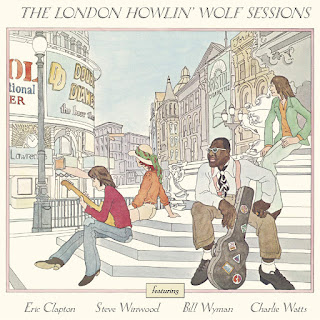
The London Howlin’ Wolf Sessions
For The London Howlin’ Wolf Sessions, Dayron enlisted a band that included the Rolling Stones’ rhythm section of bassist Bill Wyman and drummer Charlie Watts, and guitarist Eric Clapton, who was still flush with fame and fortune from the success of his blues-rock power trio Cream. The producer flew Wolf, his longtime guitarist and musical foil Hubert Sumlin, and young harpslinger Jeffrey Carp to London to record with the British chaps for a week. The sessions weren’t without drama, however – by 1970, Wolf was a sick man, with heart and kidney problems that made the mercurial bluesman even grouchier. Wolf didn’t know what he was doing messing around with these damn fool kids, and some of his performances were tentative, at best.
However, as music journalist and blues historian Bill Dahl outlines in his excellent liner notes to the deluxe edition of The London Howlin’ Wolf Sessions, eventually everything began to gel in the studio and Wolf and the assembled band knocked out an acceptable, if not remarkable album of classic blues music. As a kid I was enchanted by both Howlin’ Wolf and The London Howlin’ Wolf Sessions, one of the first blues albums I’d heard at the time. I had no idea in 1971 or 1972, when I first picked up the album, that blues purists had dismissed it as a trivial work on the part of those involved; or that Clapton had virtually disowned the album (perhaps “Slowhand” should be so frank in reconsidering much of his mediocre 1980s work!).
Built For Comfort
For a fourteen-year-old budding blues fan, however, everything from the painted cover art to the B&W session photos inside, not to mention the music found on The London Howlin’ Wolf Sessions, all came as a revelation that would lead to a deeper study of the blues. Through the years, the initial harsh critical reception afforded the album would soften somewhat, and I’ve since spoken with many musicians that revere these performances. So, some 40 years after its recording, how does The London Howlin’ Wolf Sessions stand up to the master’s body of work?
The album holds up better than might be expected, and maybe even moves up a notch or two towards minor classic status in my estimation. Sure, nothing here is going to match the Wolf’s powerful mid-1950s work for Chess Records, or even his earlier recordings for Sam Phillips in the Sun Studio in Memphis; then again, nothing ever could. Truth is, as the Wolf’s early-to-mid-1960s “albums” were really nothing more than collections of previous singles releases, he wasn’t really an album-oriented artist like Waters would become. Later attempts to appeal to young, album-oriented blues-rock fans with releases like 1969’s This Is Howlin’ Wolf’s New Album or 1971’s Message To the Young would fail miserably commercially and critically. That leaves us with The London Howlin’ Wolf Sessions, a spirited collection of new performances of old songs, delivered with a fresh perspective on the blues while retaining their traditional appeal.
Sittin’ On Top of the World
The London Howlin’ Wolf Sessions leads off with the spry, slightly funky Wolf original “Rockin’ Daddy,” the performance fueled by Sumlin’s loping fretwork and Clapton’s Southern-fried licks. Wolf roars and bellows like the artist of yore, while Phil Upchurch’s (later overdubbed) bass line plays nicely off of Charlie Watt’s timekeeping. Willie Dixon’s classic “I Ain’t Superstitious” is afforded a lush, busy mix with Wolf’s rote vocals nearly lost amidst a wash of overdubbed horns. Clapton’s fretwork here is nuanced and imaginative, if buried in the din, while Ringo Starr’s drums (the musician credited as “Ritchie” on the original album) rise above the otherwise messy mix.
It’s with “Sittin’ On Top of the World” that the album really begins to cook, with Jeffrey Carp’s greasy harpwork sizzling beneath Wolf’s languid vocals; Lafayette Leake’s later overdubbed piano play tinkling in the background as Sumlin’s solid rhythm guitar serves as a foundation on top of which Clapton lets fly with an elegant, undeniably bluesy solo. The rollicking “Worried About My Baby” also makes good use of Carp’s harp, his blasts of harmonica reminding of Junior Wells as Wolf belts out the lyrics above Leake’s lively piano. Wolf’s classic cover of James Oden’s “What A Woman!” (a/k/a “Commit A Crime”) is the most traditional Chicago blues number on the album, the song’s distinctive hypnotic rhythm punctuated by Clapton’s short, shocking leads and a fine, blustery Wolf vocal turn.
The Red Rooster
Another Dixon gem, “Built For Comfort,” was tailor-made for Wolf, and he walks his way through the lyrics with a familiar swagger as the horns flare brightly behind him and Ian Stewart’s intricate piano play is matched by Clapton’s intermittent solos. As Dahl recounts in the album’s liner notes, it was the recording of “The Red Rooster,” with Clapton asking Wolf to show him how to play the song, which would break up the tension of the sessions. While critics like Cub Koda have expressed their dislike of the studio dialog that serves as an intro to the song, it’s intriguing to hear at this late date, and by the time the full band roars into the actual song, everybody is rockin’ full-tilt, from Clapton’s fluid riffing to Wolf’s sly vocals to Leake’s trilling piano.
Although Dixon’s “Do the Do” sounds an awful lot like a Bo Diddley song with its familiar beat, it’s all Wolf, baby, the singer slipping into the fat groove with a fine vocal performance that is itself enveloped by Wyman and Watt’s gorgeous lockstep rhythms and Clapton’s rattletrap fretwork. “Highway 49” rocks hard, with a strong Wolf vocal bolstered by Clapton’s innovative leads, Sumlin’s bedrock rhythms, and Steve Winwood’s lofty piano-pounding, which was dubbed in later. The original album ended with a spirited take of “Wang Dang Doodle,” the song’s mesmerizing rhythms captured perfectly by the band, the slightly-echoed production adding to the song’s exotic vibe, Carp’s harmonica creeping in on the fringes as Stewart’s energetic piano notes dance in the background.
Rockin’ Daddy
This 2012 “deluxe edition” of The London Howlin’ Wolf Sessions includes three bonus tracks at the end of the first disc, performances originally released in 1974 as London Revisited. Of the trio, Wolf’s “Killing Floor” stands out, the song’s sparse arrangement and familiar rhythm complimented by a fair Wolf vocal performance, and some intricate interplay between Wolf and Clapton on guitar. This set also includes a second disc of alternate takes from the London sessions, some varying only slightly from the released version, some drastically so. For instance, an alternative “What A Woman!” includes Winwood’s overdubbed organ, which adds to the general cacophony but does little to enhance the performance.
By contrast, a sparse rehearsal take of “Worried About My Baby,” features Wolf on harmonica, Clapton’s subtle guitar fills, and Wyman’s throbbing bass, the performance displaying a different possibility for the song. The alternate “I Ain’t Superstitious” sounds even funkier than that used on the original album, bassist Klaus Voorman and drummer Ringo Starr doing a fine job on the rhythm while Carp adds some inspired harpwork, but Wolf’s vocals slight and unsatisfying. An extended version of “Do the Do” stretches the song into a bona fide blues jam with Clapton and Stewart in particular playing above the locomotive rhythm. Wolf’s original “Poor Boy” is provided different lyrics and instrumental mix, but Wolf’s vocals still shine brightly amidst the claustrophobic arrangement which is busy with Clapton’s wiry guitar and Carp’s emotional harpwork.
The Reverend’s Bottom Line
A lot of blues have passed through these ears since I first heard The London Howlin’ Wolf Sessions as a teen. While I’d like to think that my musical tastes have expanded and grown more sophisticated through the years, the comfort of the familiar relics of our early years grows larger in our minds. Even when viewed apart from the prism of sentimentality, this most-maligned of albums from the great Howlin’ Wolf’s career sounds better than its most vocal critics dare to admit.
In retrospect, The London Howlin’ Wolf Sessions was a successful experiment that captured the great Howlin’ Wolf during the waning days of his strength and power, the elder bluesman still providing many of his performances with a brittle ferocity. Hubert Sumlin, the rock upon which Wolf’s legacy was built, provides the singer with a familiar face and shared history, while the British players – especially Clapton, who has seldom played better than he does here – infuse the performances with energy and zealous enthusiasm. In short, The London Howlin’ Wolf Sessions stands up well to re-inspection, outliving decades of unfair criticism to achieve classic status on its own numerous merits. (Chess Records, released 1971, reissued August 31, 2012)
Blind Faith was one of the classic rock era’s first ‘supergroups’, comprised of members of the chart-busting blues-rock band Cream (guitarist Eric Clapton and drummer Ginger Baker) and prog-rock pioneers Traffic (singer/keyboardist Steve Winwood) and Family (bassist Ric Grech). Growing out of informal jam sessions by Clapton and Winwood in the wake of the break-ups of their previous bands, Blind Faith was never really built to last. The same ol’ tensions that helped Cream crack-up surfaced again and Clapton’s artistic restlessness found him increasingly isolated while on tour, where he spent more time with opening act Delaney & Bonnie than his own bandmates.
Clapton jumped ship after the last tour date, hooking up with the aforementioned D&B and associated musicians that would later become Derek & the Dominoes. The remaining members of Blind Faith formed Ginger Baker’s Air Force but, after a single album with the mercurious drummer, Winwood rang up his former mates in Traffic and the re-formed band recorded its classic comeback LP, John Barleycorn Must Die. This isn’t to say that Blind Faith didn’t accomplish anything during their lone year of existence – the band’s much-ballyhooed debut concert was played in front of 100,000 fans in Hyde Park in London, and their self-titled debut disc would top the charts in both the U.S. and the U.K. They stirred up a bit of controversy as well over the artwork of the British release of the album, which featured a photo of a topless eleven-year-old girl. A bog-standard group photo graced the front of the U.S. album release.
Blind Faith’s Blind Faith
As successful as the album may have been commercially, it received mixed reviews at the time as rock critics like The Village Voice’s Robert Christgau and Rolling Stone magazine’s Ed Leimbacher slagged the band’s efforts. Regardless, the album has withstood the test of time as not only one of the best works of the classic rock era but also representing a creative highpoint in the musicians’ careers. Blind Faith, the album, only offers us six songs but they run a collective 40+ minutes, which was actually long for the vinyl era. Album-opener “Had To Cry Today” is a Winwood original that is indistinguishable from past and future Traffic tunes save for Clapton’s savage riffing and the band’s stunning instrumental jam, which extended the piece to almost nine minutes.
Winwood’s “Cant Find My Way Home” is one of three bona fide gems on the album, the band weaving an intricate, soulful combination of blues, rock, and jazzy prog with wistful vocals, elegant filigree guitar, and uncharacteristically subdued drumwork by Baker which, combined with Grech’s underrated bass playing, creates a melodic rhythmic backdrop for Winwood’s haunting vocals. A cover of Buddy Holly’s “Well All Right” brings a contemporary prog-rock complexity to the rockabilly legend’s three-chord pop, although Winwood’s lengthy piano solo breaks whatever spell the band had woven with the song.
Baker’s “Do What You Like,” which runs 15 minutes and dominates the album’s second side, is perhaps the only misstep here. The Afro-funk-flavored performance mirrors what the drummer would creatively expand upon with Air Force (and with his work with African legend Fela Kuti), but while it’s not without its charms, it wears out its welcome here with too much meandering. Two shorter songs would have been more effective. The album’s other two treasures can be found in Clapton’s “Presence of the Lord” and Winwood’s “Sea of Joy.” The former is an ethereal, Gospel-tinged number with gracious Winwood vocals and somber keyboards while Clapton lights up the instrumentation with a soaring, innovative, and appropriately-toned guitar solo. The latter song is in a similar vein, with deft guitarplay, a sympathetic rhythmic track, scraps of wiry fretwork and autoharp, and truly otherworldly vocals by Winwood.
Although Clapton disliked his short time with Blind Faith, his friendship with Winwood continues to this day, and both men are justifiably proud of the music they made together. Both have enjoyed solo careers of varying degrees of success, and both are Rock ‘n’ Roll Hall of Fame inductees (Clapton with The Yardbirds, Cream, and solo and Winwood with Traffic). Blind Faith was but one notable stop along the journey for two classic rock legends. (Polydor Records, 1969)
It’s hard to believe by listening to the sort of watered-down pap that Eric Clapton has cranked out the past few years, but at one time the big “King of all Guitar Gods” played with great style, passion and ingenuity. Look no further than Bluesbreakers with Eric Clapton to find documentation of the artist’s early six-string prowess.
Clapton first made a splash on the collective rock consciousness while handling the heavy axework for the Yardbirds. Although not the first posse of British dandies to get their hands dirty playing the blues, the Yardbirds were one of those who did it best, and Clapton’s early contributions went a long way towards establishing that band’s reputation. Clapton left the Yardbirds in 1965, beginning a lengthy artistic journey that would inevitably lead him to becoming the corporate shill that he is today.
John Mayall’s Bluesbreakers with Eric Clapton
First stop on the evolutionary express for the youthful Clapton was with John Mayall & Bluesbreakers, one of England’s best-known traditional blues outfits. Luring Clapton away from the Yardbirds was a major coup for bandleader Mayall. Getting the guitar wizard into the studio to record Mayall’s third album resulted in what may well be the best British blues romp to find its way onto tape. Clapton is allowed to stretch out on a set of blues and R&B standards such as Ray Charles’ “What’d I Say,” Freddie King’s “Hideaway,” the Otis Rush hit “All Your Love” and the blues classic “Parchman Farm.”
Choice Mayall originals compliment the covers on Bluesbreakers with Eric Clapton, especially the Mayall/Clapton co-written “Double Crossing Time,” which features an incredible Clapton solo that sounds like it descended straight from Maxwell Street in Chicago. Clapton even makes his debut as a vocalist, offering a fine rendition of Robert Johnson’s “Ramblin’ On My Mind.” Throughout Bluesbreakers with Eric Clapton, the guitar star’s axework is first rate, his playing fluid and innovative. Backed by a solid rhythm section that included future Fleetwood Mac namesake John McVie on bass and drummer Hughie Flint (who would go on to play on several Clapton solo elpees), Clapton had the necessary support to let his imagination fly.
Mayall was a strict bandleader, demanding a lot from his players but here he lets Clapton become the superstar he had the potential to be. Clapton would leave Mayall’s outfit after Bluesbreakers with Eric Clapton to form Cream and achieve international stardom. Mayall would run through a thousand and one band members during the next 35 years, discovering such talents as Peter Green (Fleetwood Mac) and Mick Taylor (Rolling Stones) along the way. Bluesbreakers with Eric Clapton would reach the British top ten and became one of the biggest albums of 1966 in the U.K.
The Reverend’s Bottom Line
The album remains a cult favorite in the United States while Clapton is better known for his subsequent work with Cream and Derek and the Dominoes. While rock ‘n’ roll fanboys continue to genuflect at the mention of the Yardbirds name, worshipping the trio of guitar gods that legendary band would produce (Clapton, Jeff Beck, and Jimmy Page), John Mayall’s Bluesbreakers are unfairly consigned to a lesser place in history. A spin or two of Bluesbreakers with Eric Clapton shows what the fuss was all about in the first place, placing the album among the greatest blues-rock efforts that the genre has produced. (Polydor Records, released 1966, reissued June 5, 2001)
Review originally published by Alt.Culture.Guide™, 2001
It’s hard to believe that it’s been nearly a year since blues-rock guitarist Joe Bonamassa has released a new album, with Live At Carnegie Hall: An Acoustic Evening still a vibrant reflection in our rear-view mirror. Still, Joe loves the stage, and at this point in a career that has spanned nearly three decades, he’s released more live albums as a solo artist (14 counting this one) than he has studio works (a dozen as of 2016)…and don’t get me started on his band efforts with Black Country Communion or collaborations with singer Beth Hart. Releasing at least an album a year, he’s as prolific as any artist currently working.
Joe’s latest live set is yet another expansive two-disc collection where the guitarist lets his British blues-rock flag proudly fly. Guessing that Joe’s dad is of a similar vintage as myself (i.e. early 60s in age), we probably shared a lot of the same records – records that young Joe B. grew up listening to. Joe’s love of British blues-rock has been quite evident on his albums through the years, as he’s covered songs by a lot of his fave artists, but British Blues Explosion Live brings the guitarist’s fascination with bands like Cream, the Jeff Beck Group, John Mayall’s Bluesbreakers, and Led Zeppelin to a boiling point.
Joe Bonamassa’s British Blues Explosion Live
Recorded live in July 2016 at The Old Royal Naval College in Greenwich U.K. this fourteen-track collection may be the heaviest guitar album that Bonamassa has made in years. Joe’s done his homework here as well, mixing in covers of the usual suspects (Jeff Beck’s “Beck’s Bolero,” Zep’s “Boogie With Stu,” Cream’s “SWLABR”) with a few deep cuts of lesser renown. Although Eric Clapton’s reading of the traditional “Motherless Children” is a familiar favorite from his acclaimed 1974 album 461 Ocean Boulevard, his cover of songwriter George Terry’s “Mainline Florida” is obscure by any measure. Bonamassa funks the tune up with a loping groove and soulful vocals while the band recreates the original soundtrack to perfection.
Willie Dixon’s classic “Let Me Love You Baby” has been recorded by everybody from Buddy Guy and Koko Taylor to Stevie Ray Vaughan, Blodwyin Pig, and Stan Webb’s Chicken Shack. I’m not sure whose version inspired young Joe, but I’m going with Savoy Brown’s, as Bonamassa’s raucous fretwork here reminds of young Kim Simmonds (tho’ Joe is a fan of Blodwyn Pig’s Mick Abrahams). The Jeff Beck Group’s “Plynth (Water Down the Drain),” from the 1969 album Beck-Ola, was a tailor-made showcase for Bonamassa’s rockin’ “Guitar God” persona, and while his hurried vocals don’t capture much of the soul innate in Rod Stewart’s original performance, his fretwork burns with the intensity of a collapsing star.
How Many More Times
The vastly influential John Mayall’s Bluesbreakers is represented by “Double Crossing Time” and “Little Girl” from their classic 1966 LP Bluesbreakers with Eric Clapton. The former is a sizzling Chicago-styled blues romp with plenty of Reese Wynans’ tinkling piano keys and Bonamassa’s fatback fretwork while the latter is a more up-tempo jaunt with stinging guitar and rollicking instrumentation. A cover of Beck’s “Spanish Boots” is simply breathtaking, Bonamassa’s voice soaring above the staggering rhythms while his guitar rages like a hurricane fiercely eyeing landfall.
Bonamassa sneaks his own instrumental “Black Winter/Django” onto the set list, and it’s a testament to his British blues-rock influences that his nimble-fingered guitar playing reminds of both Beck and Jimmy Page. The guitarist’s duel with drummer Anton Fig here is particularly exhilarating, the two artists parrying and thrusting their instruments like skilled fencers gone mad. Fig’s bombastic percussion opens Zeppelin’s “How Many More Times,” Bonamassa’s vocals flowing more naturally than Plant’s original efforts, and while he’s not bowing his fretboard, he’s tearing it up like Albert King at his peak.
The Reverend’s Bottom Line
Joe Bonamassa never ceases to surprise, and British Blues Explosion Live is certainly no exception. The inspiration for these performances leaps out of the grooves with a vengeance, leaving Bonamassa’s talented veteran road band to catch up. There’s nary a wrong note to be found among these fourteen tracks, and the immense contributions here of keyboard wrangler Reese Wynans – himself a veteran of bands like Captain Beyond and Stevie Ray Vaughan’s Double Trouble – remind listeners of the role that piano-pounders like Nicky Hopkins and Ian Stewart playing on the original recordings of these songs.
Altogether, British Blues Explosion Live is another triumph for Bonamassa’s restless muse, serving as a solid addition to the guitarist’s ever-growing catalog of music as well as a fine introduction to the artist’s considerable talents. Grade: A (J&R Adventures, released May 18, 2018)
May was a pretty good month for new releases, but it pales in comparison to the slate of new tunes we have in store for June. Plus, the month has five release Fridays, which means more music for all of us! You'll find new albums from British rock legends Roger Daltrey (The Who) and Wilko Johnson (Dr. Feelgood) on the shelves this month, as well as new music by blues legend Buddy Guy, Pete Yorn (with actress/singer Scarlett Johansson), Ray Davies, Jim James, Howlin' Rain, and Arthur Buck (a collaboration between singer/songwriter Joseph Arthur and former R.E.M. guitarist Peter Buck.
And for those of us with a "classic" orientation, how about archival releases from Mick Ronson, Junior Byles, Dennis Coffey, the Posies, and Frank Zappa & the Mothers of Invention or vinyl reissues of classic LPs from Liz Phair, Buddy Guy, and Junior Wells?
If we
wrote about it here on the site, there will be a link to it in the album title; if you want
an album, hit the 'Buy!' link to get it from Amazon.com...it's just
that damn easy! Your purchase puts money in the Reverend's pocket that
he'll use to buy more music to write about in a never-ending loop of
rock 'n' roll ecstasy!
JUNE 1
Neko Case - Hell-On BUY!
Roger Daltrey - As Long As I Have You BUY!
Father John Misty - God's Favorite Customer BUY!
Pete Yorn & Scarlett Johansson - Apart BUY!
JUNE 29
Ray Davies - Out Country: Americana Act II BUY!
Florence + the Machine - High As Hope BUY!
Buddy Guy - A Man and the Blues [vinyl reissue] BUY!
Jim James - Uniform Distortion BUY!
Junior Wells - Coming At You [vinyl reissue] BUY!
Album of the Month: It may be a controversial pick in a month that includes new LPs from Roger Daltrey, Neko Case, and Ray Davies, but Wilko Johnson's Blow Your Mind is the British rock legend's first studio album in 30 years, and the follow-up to his Daltrey collaboration Going Back Home. Read more about it here...
There can be little argument about guitarist Eric Clapton’s enduring influence on the blues and rock music. From his short-but-sweet tenure with British blues-rock pioneers the Yardbirds and his even shorter stint with John Mayall’s Bluesbreakers during the early ‘60s to the formation of Cream, one classic album each with British rock “supergroup” Blind Faith and with Derek and the Dominos, and an acclaimed solo career that continues to this day, Clapton has enjoyed a legendary career. Eric Clapton: A Life In 12 Bars, a documentary film about the guitarist by Oscar® winning director, Lili Fini Zanuck, is currently showing on the Showtime premium cable network.
On June 8th, 2018 Universal Music will release the soundtrack to the film, Life In 12 Bars available as a two-CD or four-LP set as well as a digital download (the vinyl set will be released on July 20th). The set’s 32 songs span the entirety of the eighteen-time Grammy® Award winner’s storied career, featuring tracks by all of the aforementioned bands as well as session recordings of Clapton playing alongside fellow legends like the Beatles, George Harrison, and Aretha Franklin as well as songs by Muddy Waters and Big Bill Broonzy that inspired Clapton. The set includes five previously-unreleased tracks, including a 17-minute-long live 1968 performance by Cream of “Spoonful” and two Derek and the Dominos songs, including a live 1970 performance of Jimi Hendrix’s “Little Wing.”
The set also includes a pair of unreleased solo tracks from 1974 include the first release of the entire full-length recording of Bob Marley’s “I Shot the Sheriff” (running nearly seven minutes) and a live performance of Chuck Berry’s “Little Queenie.” Alternative mixes of “After Midnight” and “Let It Rain,” both from Clapton’s self-titled 1970 solo debut album, were produced by the late Delaney Bramlett and Tom Dowd, and Life In 12 Bars also includes a rare live track by Delaney & Bonnie & Friends featuring Clapton on guitar. Altogether the album is a fairly comprehensive overview of the career of one of the most influential guitarists that rock music has ever seen. Eric Clapton's Life In 12 Bars track list:
DISC ONE
1. Big Bill Broonzy - "Backwater Blues"
2. Muddy Waters - "My Life Is Ruined"
3. Muddy Waters - "I Got Mojo Working"
4. The Yardbirds - "I Wish You Would"
5. The Yardbirds - "For Your Love"
6. John Mayall & The Bluesbreakers - "Steppin’ Out"
7. John Mayall & The Bluesbreakers - "All Your Love"
8. Cream - "I Feel Free"
9. Cream - "Strange Brew"
10. Cream - "Sunshine of Your Love"
11. Aretha Franklin - "Good To Me As I Am To You"
12. Cream - "Crossroads" [live]
13. The Beatles - "While My Guitar Gently Weeps"
14. Cream - "Badge"
15. Cream - "White Room" [live]
16. Cream - "Spoonful" [live] *
17. Blind Faith - "Presence of the Lord"
DISC TWO
1. Delaney & Bonnie & Friends featuring Eric Clapton - "Comin' Home" [live]
2. Eric Clapton - "After Midnight" [alternate mix]
3. Eric Clapton - "Let It Rain" [alternate mix]
4. Derek and The Dominos - "High" *
5. George Harrison - "My Sweet Lord"
6. Derek and The Dominos - "Thorn Tree In the Garden"
7. Derek and The Dominos - "Nobody Knows You When You’re Down And Out"
8. Derek and The Dominos - "Bell Bottom Blues"
9. Derek and The Dominos - "Layla"
10. Derek and The Dominos - "Little Wing" [live] *
11. Derek and The Dominos - "Got To Get Better In A Little While"
12. Eric Clapton - "I Shot the Sheriff" *
13. Eric Clapton - "Little Queenie" [live] *
14. Eric Clapton - "Mainline Florida"
15. Eric Clapton - "Tears In Heaven"
One of the truly legendary bands in rock music, it's nevertheless been very difficult for the average music fan to assemble any sort of coherent Yardbirds' collection. Back in the '60s heyday of the band, the original British versions of their albums were sliced and diced, mixed and matched, and then re-titled for release stateside. Cut-out during the '70s, collectors paid premium prices for rare copies of the Yardbirds' vinyl. During the CD era, albums disappeared and reappeared with unpredictable reliability and "greatest hits" collections, often slapped together by unscrupulous fly-by-night labels, proliferated. A lot of great music got misplaced, until the recent release of Ultimate! by Rhino Records.
For younger music fans that want to know what all the brouhaha over the Yardbirds is about, look no further than Ultimate! The two-CD, 52-track boxed collection includes an enormous booklet filled with rare photos, song credits and comprehensive liner notes and history provided by late musician/collector/authority Cub Koda. It's the music that does the talking on Ultimate!, however, the Yardbirds kicking out an original and groundbreaking mix of blues and riff-oriented blues-rock during their five-year lifespan. The band was blessed during its brief existence with not one but three – count 'em – three superstar six-string talents. Eric Clapton contributed guitar duties for one of the earliest incarnations of the band, leaving after a year and a half to be replaced by Jeff Beck. Jimmy Page joined the band as a bass player; later moving to guitar in a twin-guitar version of the band before taking over solo duties upon Beck's departure.
The Yardbirds' Ultimate!
Ultimate! pieces together a chronological history of the Yardbirds, beginning with early Clapton-led singles and other material recorded under the direction of original manager/producer Giorgio Gomelsky. The Gomelsky "era" stretches across the first disc and includes some of Clapton's legendary original contributions to the band. Highlights include covers of John Lee Hooker's "Boom Boom" and the Ernie K-Doe hit "A Certain Girl" as well as live tracks taken from the band's debut album Five Live Yardbirds. The classic hit single "For Your Love" proved to be Clapton's swansong, the guitarist leaving the band in a huff over the song's commercial sound.
When Clapton departed to pursue a purer shade of blue with John Mayall's Bluesbreakers, Jeff Beck was recruited and joined the Yardbirds as his replacement. It proved to be a match made in heaven – Beck's improvisational six-string wizardry found a perfect chemistry with frontman Keith Relf's passionate vocals and inspired harp playing. This would be the most successful period of the band's career, as they cranked out chart-topping hits like "Heart Full of Soul," "Shapes of Things," and "Over Under Sideways Down." There were plenty of other great tunes, though, such as the rollicking B-side instrumental "Jeff's Boogie" or a raucous cover of "The Train Kept A Rollin'" recorded at Sam Phillip's Recording Service in Memphis. Beck's maniacal use of feedback, distortion, echo and fuzz created a trademark sound for the band and paved the way for a thousand-and-one late '60s garage bands to delve into psychedelica, heavy metal and endless instrumental jams.
Tinker, Tailor, Soldier, Sailor
Bassist and "musical director" Paul Samwell-Smith left the Yardbirds in 1966 to pursue a successful career as a producer, working with talents like Cat Stevens and Jethro Tull. Jimmy Page was brought in to play bass, taking over six-string duties on tour during a Beck absence. The Beck/Page line-up only recorded a couple of singles, most notably "Stroll On" from the movie Blow-Up and the single "Happenings Ten Years Time Ago," which also featured future Led Zeppelin bassist John Paul.
The Page-led Yardbirds kicked out some interesting tuneage, working with new manager Peter Grant and superstar Britpop producer Mickey Most, moving into a less bluesy and more complex psychedelic-influenced era. Page's "Tinker, Tailor, Soldier, Sailor" was a fascinating slice of pop-rock while the acoustic-instrumental "White Summer" was an energetic artistic predecessor to Led Zeppelin's experimentation with British folk and Middle Eastern melodies. The Harry Nilsson composition "Ten Little Indians" is a chaotic delight while "Drinking Muddy Water" sounds like the Chicago blues as filtered through London's Marquee Club. Ultimate! also adds three solo recordings from Yardbirds' vocalist Keith Relf.
The Reverend's Bottom Line
Over the course of seven albums, the Yardbirds earned a legacy as one of the true seminal bands in rock 'n' roll history. Their musical contributions to the genre still sound alive and vibrant thirty-five years after the fact. The band also served as an important predecessor to the formation of Led Zeppelin, arguably the most important and successful rock band of the '70s.
If I had one complaint with this set, it is in the lack of material from the band's collaboration with blues giant Sonny Boy Williamson, an inspired album that predated the superstar-laden London Sessions albums by Muddy Waters and Howlin' Wolf by a decade. Ultimate! nonetheless provides a fine history of the band, an important collection that should please both hardcore collectors and new listeners alike. (Rhino Records, released July 31, 2001)
It’s one of the most famous shows in rock ‘n’ roll’s long, storied history. On Thanksgiving Day in 1976, roots-rock legends The Band took the stage at the Winterland Theatre in San Francisco, California for their farewell concert. Filmed with a whopping seven 35mm cameras by acclaimed director Martin Scorsese, the show was released theatrically in April 1978 as The Last Waltz, widely considered one of the greatest concert films ever made. The concert also spawned the release of a three-LP live set that peaked at #16 on the Billboard album chart.
The members of The Band – Levon Helm, Rick Danko, Garth Hudson, Richard Manuel, and Robbie Robertson – were joined during the concert by a literal “who’s who” of mid-‘70s rock and blues royalty, including Bob Dylan, Muddy Waters, Eric Clapton, Joni Mitchell, Neil Young, Ronnie Hawkins, Ron Wood, Ringo Starr, Neil Diamond, and Van Morrison, among others. The concert overall lasted better than five hours, and a lot of performances were cut from the final film, including two improvised jam sessions, the first of which included Clapton, Young, Wood, and Chicago blues legend and the other including the aforementioned artists plus guitarist Stephen Stills.
On November 11th, 2016 Rhino Records will celebrate the 40th anniversary of The Last Waltz with the release of three new reissues, including the first pairing of the audio and video in a single set. The Last Waltz 40th Anniversary Deluxe Edition is a four-CD plus Blu-Ray set that includes the complete audio recording of the concert (54 tracks), including rehearsals and outtakes along with the complete film on Blu-Ray disc. This set includes a number of rare performances that didn’t show up on the original soundtrack album, including Joni Mitchell singing “Furry Sings The Blues” and “All Our Past Times,” with Clapton and Dr. John’s “King Harvest (Has Surely Come).” Limited to 2,500 copies this edition includes new liner notes by David Fricke and Ben Fong-Torres.
For those that just want the music, love vinyl, and don’t care much about the visuals, the complete audio recording from The Last Waltz, including rehearsals and outtakes, will also be released as a six-LP set pressed on 180gram vinyl and packaged in an ornate lift-top box. For those on a budget, the original soundtrack will be released as a two-CD set, newly re-mastered from the original master tapes. Finally, for those with deep pockets, there’s The Last Waltz 40th Anniversary Collector’s Edition, which will be released on December 9th, 2016 in a limited edition of 2,500 copies worldwide.
This set includes the entire audio recording of the concert and the film on Blu-Ray (like the ‘deluxe edition’) and features a second Blu-Ray disc with rarely seen vintage ‘90s interviews with Scorsese and Robbie Robertson and a 5.1 audio mix of the original album. The 'Collector’s Edition' also includes a red faux-leather bound 300 page book with a full replication of Scorsese’s shooting script, rare photos, set sketches, fold-out storyboards, and a foreword by Scorsese. It’s all in all a pretty swank presentation of a top drawer event…check 'em all out on the Rhino Records website.
British blues-rock guitarist Jeff Beck first came to prominence as Eric Clapton’s replacement in the legendary British blues-rock band the Yardbirds. Better than five decades have passed since that time, and Beck has shown a maddening propensity for confounding the expectations of any observer. His impressive catalog of music ranges from blues-rock and proto-heavy metal to jazz-fusion, pop, and even reggae.
Performing This Week...Live At Ronnie Scott's documents the highlights of a week’s worth of performances from 2007 by Beck and his hand-picked band of bassist Tal Wilkenfeld, keyboardist Jason Rebello, and drummer Vinnie Colaiuta. The album was originally released in 2008 as a single-disc set featuring sixteen inspired performances; seven years later, Eagle Rock has graced us with an expanded version including a second disc with bonus tracks featuring guest stars like Clapton, and singers Joss Stone and Imogen Heap. The new disc also includes a seven-song live set by Beck with British R&B outfit the Big Town Playboys, with which the guitarist recorded the 1993 album Crazy Legs.
Jeff Beck’s Performing This Week...
Beck used his five-night stand at Ronnie Scott’s club to revisit a wide range of musical memories. Performing This Week opens with Beck's classic rock chestnut, “Beck’s Bolero,” first recorded in 1966 with members of the Who and the guys that would eventually become Led Zeppelin, and was originally issued as the B-side of an early Jeff Beck single. The song is, structurally, a confused mess of martial rhythms and neo-classical riffs paired with Beck’s soaring, mournful guitar riff that speaks in its own otherworldly voice before the song breaks down into a blues-rock romp amidst a squall of instrumentation. By any theory, it shouldn’t work – but it does – and the song has thrilled audiences for decades now!
From this point, Performing This Week runs fast and loose through a set of songs that showcase Beck’s broad musical palette. The guitarist’s love of avant-garde jazz is on display with the band’s scorching cover of John McLaughlin’s “Eternity's Breath.” Beck’s fingers dance across the edge of a breathtaking song that reveals elements of blues, funk, rock, and jazz sitting in wait beneath a storm of percussion, Beck’s fretwork moving from silence to a scream and back in the blink of an eye. Beck’s reading of jazz drummer Billy Cobham’s classic “Stratus” is both subdued and elegant, the guitarist not attempting to merely mimic the underrated Tommy Bolin’s original 1973 fretwork, but rather build upon it in a re-imaging of the song’s aggressive mix of rock, jazz, and blues.
Beck’s Brush With The Blues
Stevie Wonder’s classic “Cause We’ve Ended As Lovers” is interpreted by Beck as a melancholy dirge, crying notes capturing the bittersweet feel of the original. Performed sans vocals, the arrangement relies heavily on instrumentation to create the atmosphere, and the weeping guitar and subtle, funky bass notes do not disappoint. The energetic “Blast From The East” begins with a wiry rhythmic framework on top of which Beck embroiders his golden six-string flourishes, the guitarist’s recurrent, mesmerizing riff-like lead punctuated by blasts of psychedelic color, explosive percussion, and a funky throbbing bass-line. An inspired mash-up of Charles Mingus’ “Goodbye Pork Pie Hat” with the Beck/Tony Hymas original “Brush With The Blues” falls heavier on the blues side of the musical equation. Beck’s dark-hued arrangement of the songs amplify their mournful aspects, his guitar scattering crying notes across a subdued drumbeat and slight rhythm, Beck coaxing tears out of his instrument, duplicating the saddest blues lyrics you've ever heard.
Beck revisits a number of fan favorites with Performing This Week. The lively “Led Boots” is a flat-out rocker with razor-sharp blues-rock riffs and nimble percussion, while Beck’s “Scatterbrain” begins with a locomotive rockabilly riff before descending into literal madness, the musicians delving deep into instrumental anarchy before order is once again restored to close the song. Beck’s version of the Lennon/McCartney Beatles’ gem “A Day In The Life” has been a live staple of his for years, and here he imbues the song with such lovely grace and dignity that you can literally hear the well-worn lyrics sung through his instrument. The Tony Hymas/Simon Phillips jam “Space Boogie” from Beck’s 1980 album There and Back is a perfect example of the guitarist’s mid-to-late 1970s flirtation with eclectic jazz-fusion. Beck’s dynamic, manic fretboard runs duel with Jason Rebello’s lively piano-pounding, the song sounding altogether like an entertaining Return To Forever studio outtake.
Live At Ronnie Scott’s Bonus Tracks
As mentioned above, Performing This Week has been expanded to a second disc with additional audio from the original recorded shows along with bonus tracks featuring the Big Town Playboys. To be honest, the vocal tracks don’t do much for me here…no, the Reverend isn’t one of those purists who believes that Rod Stewart is the only appropriate singer for Beck. But the normally soulful Joss Stone over-emotes like crazy on an otherwise inspired performance of the Curtis Mayfield classic “People Get Ready,” her over-the-top vox drawing ready comparisons to Stewart, who sang the song on Beck’s 1985 album Flash, scoring a minor hit. Imogen Heap does a fine job with the Muddy Waters’ gem “Rollin’ and Tumblin’,” the band getting deep down in a dark groove behind Beck’s locomotive riffing and guitar squeals, her vocals as nasty as the backing instrumentation, providing the song with an eerie, swampy voodoo vibe.
Beck’s longtime friend and sometimes competitor Eric Clapton is featured on a pair of tunes, including Waters’ “Little Brown Bird.” Although the guitar interplay between the two legends is invigorating, Clapton’s lackluster vocals hit your ears more like a whisper than a howl. Better is his take on Willie Dixon’s “You Need Love,” the bones of which were appropriated years ago by the pair’s old Yardbirds mate Jimmy Page for Zeppelin. Above some massive riffs and a rocking rhythm track, Clapton attempts to hit something approximating Robert Plant’s vocals, displaying a spark of his old fire. Better still are the six performances featuring Beck and the Big Town Playboys, a fiery mix of blues, rockabilly, and reckless soul that benefits from Beck’s instinctive fretwork. No source or date is listed for these performances, but they sizzle like bacon fat, tracks like Gene Vincent’s “Race With The Devil” and Carl Perkins’ “Matchbox” shaking, rattling, and rolling like a juke-joint Saturday night. A scorching cover of the standard “Train Kept A Rollin’” is hot enough to have Johnny Burnette rocking in his grave.
The Reverend’s Bottom Line
If you’ve been wondering for even a minute why Jeff Beck received the honor of induction into the Rock & Roll Hall of Fame, Performing This Week should answer all of your questions. No single guitarist...not even a trailblazer like Jimi Hendrix...has done more to expand the vocabulary of the instrument than Jeff Beck. His technique is nearly flawless, his versatility simply awe-inspiring, and his encyclopedic knowledge of musical styles is beyond impressive.
With boundless imagination and no little sense of musical adventure, Performing This Week...Live At Ronnie Scott’s represents the wealth of excellence that has been the hallmark of Jeff Beck’s lengthy and creative musical career. The addition of a second disc chockfull of additional performances makes a good thing even better. The only question remaining is why did Eagle Rock wait so long to release these musical goodies on CD? Better late than never, I suppose, and if you didn’t grab up a copy of Performing This Week the first time round, here’s another chance to take the ride – this time with even more musical goodness. (Eagle Rock Records, released June 2, 2015)
There will never be another like him…blues legend Riley “B.B.” King, one of the greatest American musicians and performers in any genre, passed away on Thursday, May 14th, 2015 after a brief illness. King was 89 years old.
Born in 1925 on a plantation near Itta Bena, King considered nearby Indianola his hometown, and that’s where The B.B. King Museum and Delta Interpretive Center, a museum dedicated to the bluesman, is located. The son of sharecroppers, as a youth B.B. picked cotton and sang in the church. Depending on who’s telling the story, King either bought or was gifted his first guitar by his cousin Bukka White, a blues legend in his own right.
Beale Street Blues Boy
In 1946, King moved to Memphis, but he returned to Mississippi for a couple of years, moving to West Memphis, Arkansas in 1948. The young musician performed on Sonny Boy Williamson’s radio program on KWEM in West Memphis, developing an audience that he took with him when he began a program of his own on Memphis radio station WDIA. King was so popular that he became a station DJ under the name “Beale Street Blues Boy,” which was later shortened to “Blues Boy” before he just became “B.B.”
King recorded his first sides for Nashville’s Bullet Records in 1949 before signing with the Bahari Brothers’ RPM Records label in Los Angeles. King’s career began to flourish while with RPM, the guitarist scoring his first R&B chart hit in 1952 with “Three O’Clock Blues.” From there, King was off to the races, reeling off a string of hits throughout the 1950s including songs like “Woke Up This Morning,” “Sweet Little Angel,” “You Know I Love You,” “Every Day I Have The Blues,” and many others. King toured constantly, racking up in excess of 300 dates a year, a grueling schedule that he’d pursue for decades.
A Legacy of Quality
When the popularity of blues music began to wane with African-American audiences in the 1960s, King found newfound fame with young white rock fans, and he was the opening act for the Rolling Stones’ 1969 tour. He signed with ABC-Paramount Records in 1962, which would later be bought out by MCA Records, which later became Geffen Records…King essentially recorded with the same company for better than 60 years. Although King had released a number of albums while with RPM/Modern Records during the early 1960s, some of which were compilations of singles, the guitarist hit his stride for ABC-Paramount later in the decade, establishing a legacy of quality that would characterize King’s career until the end.
Beginning with 1965’s classic Live At The Regal and running well into the 1970s, King created a run of classic albums, many of them live recordings, that stand as some of the best blues albums, ever – 1969’s Live & Well and Completely Well; 1970’s Indianola Mississippi Seeds (which included Joe Walsh and Leon Russell); 1971’s Live In Cook County Jail and B.B. King In London (with Ringo Starr, Peter Green, and members of Humble Pie and Spooky Tooth); 1972's L.A. Midnight and Guess Who, and many others – King was nothing if not prolific. In 1974, King recorded the first of two albums with his former valet, Bobby “Blue” Bland, Together For The First Time…Live hitting #2 on the Billboard magazine R&B chart and #43 on the mainstream albums chart. A sequel of sorts was released two years later, Bobby Bland and B.B. King Together Again…Live performing nearly as well on the charts.
Late Career Triumphs
As the decade of the 1970s rolled to a close, King’s prolific recording output began to slow down. He released but five albums during the 1980s (compared with nine the previous decade), and six albums during the ‘90s, but recordings like Deuces Wild and Blues on The Bayou kept his popularity high, and he continued to tour better than nine months each year. King performed and recorded with a number of other artists though the years – U2, Dr. John, Eric Clapton, Cyndi Lauper, and many others, and he also made guest appearances on a number of TV shows, including The Cosby Show, The Fresh Prince of Bel-Air, Sesame Street, Married…With Children, and Touched By An Angel. He also appeared in films like Blues Brothers 2000 and Spies Like Us.
King reached the pinnacle of his career in 2000 with the release of Riding With The King. Recorded with friend and guitarist Eric Clapton, the album earned King one of his many Grammy™ Awards. Certified Double Platinum™ for over two million sold, the album was also his highest-charting, peaking at number three. King released his 42nd and final studio album, One Kind Favor, in 2008. Produced by T-Bone Burnett, it was considered a late career triumph, and it earned King both a Grammy™ and a Blues Music Award. He continued to tour heavily (100+ nights annually) until illness forced him off the road in late 2014.
B.B. King’s Accolades
The list of accolades and honors provided King is too lengthy to recount here. The guitarist was inducted into the Blues Hall of Fame in 1980, the Rock & Roll Hall of Fame in 1987, and the Rhythm & Blues Hall of Fame in 2014. King won his first Grammy™ Award in 1970 for his classic song “The Thrill Is Gone,” and would go on to earn 15 more Grammys. He won so many W.C. Handy/Blues Music Awards through the years (15 in all from 39 nominations) that The Blues Foundation’s “Blues Entertainer of the Year” award was renamed the “B.B. King Entertainer of the Year” award. In 2012, King had the opportunity to perform at the White House for President Obama.
While King’s death was not totally unexpected – he’d been hospitalized for dehydration and fatigue in October, and had battled diabetes and high blood pressure for decades – it still comes as a great loss for the blues community. One thing that stands out as people share their memories of King on social media – is his warmth, kindness, and geniality – which are as legendary as his music. B.B. King inspired a legion of rock and blues musicians and he thrilled several generations of fans. King was the greatest ambassador for the blues that the music has ever enjoyed. King’s legacy is as large as any artist of the 20th century, and his influence will continue to be felt for years.
After submersing himself on tour with Delaney & Bonnie & Friends after the break-up of the supergroup Blind Faith, guitarist Eric Clapton worked with Delaney Bramlett and members of the band like keyboardist Bobby Whitlock and sax player Bobby Keys in creating his self-titled 1970 solo debut. The album spawned a Top 20 hit with Clapton’s cover of J.J. Cale’s “After Midnight,” the album itself hitting #13 on the Billboard magazine albums chart.
It would be almost four years until the guitarist would record a follow-up to Eric Clapton (I’m not counting the Derek & the Dominos LP), during which time he struggled with heroin addiction. Aside from a brief appearance in August 1971 at friend George Harrison’s Concert for Bangladesh, Clapton was a virtual recluse. Another friend, the Who’s Pete Townshend, convinced Clapton to commit to a “comeback” performance in January 1973. Held at London’s Rainbow Theatre, the guitarist was backed by a number of talented compatriots, including former Blind Faith bandmates Steve Winwood and Rick Grech, Traffic’s Jim Capaldi, the Faces’ Ron Wood, Townshend and others.
The show was a resounding success, resulting in the release of the Eric Clapton’s Rainbow Concert album in September 1973. Despite Clapton’s lengthy hiatus from music, the album sold like gangbusters, going Top 20 in both the U.S. and the U.K. On December 2nd, 2014 Marshall Blonstein’s Audio Fidelity label will add to its impressive run of Clapton reissues with a limited edition, re-mastered release of Eric Clapton’s Rainbow Concert on glorious 180gr vinyl. The LP includes the original album’s six performances, over half an hour of music on two sides, including red-hot takes of Cream’s “Badge,” Blind Faith’s “Presence Of The Lord,” Clapton’s version of “After Midnight,” and a cover of Jimi Hendrix’s classic “Little Wing.” The album is an often-overlooked item in Clapton’s extensive back catalog, and now it’s back on vinyl where it belongs!
Audio Fidelity is in the Eric Clapton business in a big way, releasing several of the guitarist’s albums as high-quality hybrid SACDs, and on November 25th, 2014 the label will reissue Clapton’s Time Pieces, one of the best of glut of compilation albums released under the Clapton name. Time Pieces documents some of the best of Clapton’s 1970s-era work, including hit chart-topping “I Shot The Sheriff,” from his 1974 comeback album 461 Ocean Boulevard, and the full-length album version of Derek & the Dominos’ “Layla.”
Originally released in 1982, Time Pieces also included a rare non-album track among its eleven songs – Clapton’s take on Bob Dylan’s “Knockin’ On Heaven’s Door.” Most of the rest of the comp was culled from either 461 Ocean Boulevard (“Willie & the Hand Jive,” “Let It Grow”) or 1977’s Slowhand (“Wonderful Tonight,” “Cocaine,” “Lay Down Sally”) with only “After Midnight” included from Clapton’s solo debut, and one track apiece from Backless and There’s One In Every Crowd. Still, Time Pieces is worthy of a sonic upgrade, and the music inside the grooves is timeless, representing some of Clapton’s best and most memorable performances.
Here’s a fine present that any classic rock fan would salivate over finding underneath their tree come Christmas morning. On November 24, 2014 Universal Music will release Cream: 1966-1972, a seven-disc vinyl box set that includes all six of the legendary British blues-rock band’s four studio and two live albums pressed onto 180-gram heavyweight audiophile vinyl, with exact reproductions of each album’s original artwork, all of it gloriously packaged in a rigid slipcase box.
Formed in 1966 by guitarist Eric Clapton (fresh off stints with the Yardbirds and John Mayall’s Bluesbreakers), bassist Jack Bruce (another Bluesbreakers alumni), and drummer Ginger Baker (via the Graham Bond Organization), Cream was one of the first “supergroups” on the British blues-rock scene. The erstwhile power trio revolutionized rock music by combining elements of blues, hard rock, and psychedelic rock, as well as elements of jazz in the creation of a unique and exciting new sound that, nearly fifty years later, still thrills listeners with its bold instrumentation and imaginative lyrics, frequently penned by poet Pete Brown.
Fresh Cream
Cream had a monster hit single right out of the box with the Jack Bruce/Pete Brown song “I Feel Free,” following it up with their 1967 debut album Fresh Cream a few months later. The album featured a number of original songs, covers of vintage blues gems like Skip James’ “I’m So Glad,” Muddy Waters’ “Rollin’ & Tumblin’,” and Willie Dixon’s “Spoonful,” which drove the album to number six on the U.K. charts and into the U.S. Top 40.
By the end of the year, Cream would release the band’s landmark Disraeli Gears album, its striking psychedelic Martin Sharp cover art masking a phenomenal set of songs, the album racing up to number four on the U.S. album chart on the strength of the hit single “Sunshine of Your Love.” The album offered up other classic rock tunes in “Strange Brew” and “Tales of Brave Ulysses” that further re-worked the blues idiom into a fresh, remarkable new sound.
Wheels of Fire
If Disraeli Gears was Cream’s creative apex, the band’s 1968 album Wheels of Fire would be their commercial peak. A whopping two-album set (a rarity at the time), Wheels of Fire sat at number one on the U.S. album chart for a month and hit number three on the U.K. chart, spawning hit singles in “White Room” (#6) and a live cover of Delta blues legend Robert Johnson’s “Crossroads” (#28), which has since become Clapton’s signature song. One disc of Wheels of Fire was comprised of new studio recordings (including covers of Albert King’s “Born Under A Bad Sign” and the Mississippi Sheiks’ “Sittin’ On Top Of The World”) while the other disc offered four extended live tracks from the Fillmore West in San Francisco. The LP moved a lot of flapjacks, too, certified Gold almost immediately upon its release.
Cream circa 1967
By the time of the release of Wheels of Fire, tensions in the band (particularly between Bruce and Baker), as well as the exhausting touring done by the band over the previous two years, led to an inevitable break up. The band performed a farewell tour in late 1968, concluding at the Royal Albert Hall in London in November before calling it quits. Not willing to give up a cash cow, however, the label coaxed the band back into the studio to record a few tracks, which resulted in Cream’s final studio album, Goodbye, released in March 1969. A mix of live and studio tracks, Goodbye shot up to number one in the U.K. and number two on the U.S. chart on the back of the hit single “Badge,” the song co-written by Clapton and George Harrison, who played rhythm guitar on the session under the name L’Angelo Misterioso.
Cream’s Legacy
Two posthumous Cream albums were released after the band’s break up, the first in 1970 (Live Cream), which included performances from the Fillmore West and Winterland in San Francisco circa 1968, along with one lone studio recording (“Lawdy Mama”). The second, Live Cream Volume 2, was released in 1972 and included more Winterland ’68 performances along with three 1968 performances from the Oakland Coliseum. Both live albums would chart in the Top 30 on both the U.S. and the U.K. charts. Since then, a steady stream of anthologies and compilation albums would be released to capitalize on the band’s legacy, including a ten-track Best of Cream in 1969 (with its vegetable cover art - I totally had this LP!) and the double-album set Heavy Cream in 1973, as well as a 2003 collection of the band’s BBC radio performances.
Eric Clapton, of course, has gone on to a lengthy and storied solo career, as well as recording landmark albums with supergroups Blind Faith and Derek and the Dominos. Jack Bruce and Ginger Baker have found less commercial success during the years, but are both still making fine music (Bruce’s critically-acclaimed 2014 album, Silver Rails, is brilliant). In 2006, Cream received a Grammy® Lifetime Achievement Award, and the band was inducted into the Rock & Roll Hall of Fame in 1993. The band’s 2005 reunion shows in London and New York City sold out in less than an hour, attracting fans from across the globe.
Cream: 1966-1972 brings the band’s immense musical legacy full-circle, once again capturing on vinyl the magic and the band chemistry that mesmerized listeners in the 1960s for a new audience to discover.
John Weldon Cale, known to hundreds of thousands of hardcore fans worldwide as "J.J. Cale," passed away on Friday, July 26, 2013 of a heart attack. The influential blues-rock singer, songwriter, and guitarist was 74 years old.
A native Oklahoman, Cale got his start in music as a teenager playing honky-tonks in the Tulsa area, often in bands with his friend Leon Russell. Cale developed his own unique sound that incorporated blues, rock, and country influences with often folkish lyricism and laconic, understated vocals that often belied the complexity and intelligence of Cale's songs. Moving to Nashville in 1961, he joined the Grand Ole Opry's touring company as a musician but, after a couple of years of roadwork, he returned to Tulsa and reunited with Russell. The two would subsequently relocate to Los Angeles in 1964, where Cale would work as a studio engineer.
While in L.A., Cale released a number of singles for the Liberty Records label during the mid-1960s, including a version of his original song "After Midnight." None of the singles charted, and Cale once again returned to Tulsa to play music and write songs. When his old buddy Leon formed the Shelter Records label in 1969, Cale was one of the first artists he signed, but before J.J. could record his debut album, fate stepped in when Eric Clapton hit the Top 20 in 1970 with his version of the songwriter's "After Midnight."
Clapton's chart success raised Cale's profile and primed the pump for his 1972 debut, Naturally, which included his version of "After Midnight" (which rose to #42), and his only hit single, "Crazy Mama," which topped out at #22 on the Billboard Top 100 singles chart. Many fans and critics consider Naturally to be Cale's strongest album, which is hard to argue considering that aside from the aforementioned songs, it also includes the bluesy "Call Me The Breeze" (covered by both Lynyrd Skynyrd and Johnny Cash), "Bringing It Back" (later covered by Kansas), and "Clyde" (a 1980 hit for Waylon Jennings).
Cale followed up Naturally, which peaked at #51, with 1973's Really, which was partially recorded in Muscle Shoals, Alabama, and 1974's Okie, neither album bolstering Cale's commercial returns. Troubadour, released in 1976, would at least bring Cale back into the Top 100, although it would be his last album for three years, until the release of 1979's 5. Cale would receive another boost courtesy Mr. Clapton with the British guitarist scoring again with Cale's "Cocaine," taking the song to #30 and driving his 1978 album Slowhand to number two on the charts. Clapton would later cover Troubadour's "Travelin' Light" for his 2001 album Reptile, and Southern rockers Widespread Panic would cover the song for their 1988 album Space Wrangler.
This would be the blueprint for much of Cale's career, however…he would remain a well-respected cult artist who flirted with commercial success from time to time, seemingly remaining content to watch other artists score on the charts with his songs (and collect the royalties). Cale would continue to record sporadically throughout the 1980s and into the new millennium, chalking up a total of fourteen studio and one live album, his latest being 2009's Roll On. Cale collaborated with Clapton on 2006's The Road to Escondido, contributing eleven original songs and co-producing the album, which earned the pair Cale's only Grammy Award.