Another year is coming to a close and, yes, it’s time for the Reverend to preach his annual sermon on the joys of having a Blues Images calendar hanging on your wall. The 2023 calendar is now available and, much as with previous years, John Tefteller and his Blues Images crew have outdone themselves with another great effort!
For those of you unfamiliar with Mr. Tefteller’s annual gift to blues fans, the Blues Images calendar features vintage advertising artwork from the long-gone, legendary Paramount Records label. Each year’s calendar preserves an invaluable slice of visual history of the early years of the blues. Whereas previous publications have skewed more heavily towards early, primitive B&W pen ‘n’ ink artwork, last year’s calendar included more photo-oriented advertising. This year’s banger does even better, with several photographic ads (reproduction technology was in its infancy in the 1930s) as well as more than a few splashes of color.
The Blues Images 2023 calendar features advertising promoting Paramount releases of plastic fantastic sides like Joshua White’s “No More Ball and Chain”, Bessie Smith’s “Shipwreck Blues”, Charley Patton’s “Poor Me”, Ma Rainey’s “Big Boy Blues”, and Blind Blake’s “Worried Blues”, among other classic old-school blues 78s from folks like Blind Lemon Jefferson, Texas Alexander, Henry Thomas, and Ida Cox. Each calendar page is annotated with historical and biographical information about the featured artist, and each month also includes the birth and death dates of classic blues artists.
The Blues Images 2023 calendar cost slightly more than some cheap wall-hanger you’d buy from the mall or local bookstore, but for the hardcore blues fan, Tefteller packs a lot of value for the $29.95 (plus shipping) it costs. Each Blues Images calendar includes a full-length CD that features rare, impossible-to-find, and often one-of-a-kind tracks, many of them sourced from Tefteller’s extensive personal collection. The performances, which include the songs from the original advertising in the calendar as well as related releases, have been remastered from the original 78rpm records using the ‘American Epic’ digital process that makes the sound on these antique shellac marvels really pop out of your speakers.
This year’s accompanying CD features recordings from the 1920s and ‘30s, a fine selection that includes the aforementioned sides featured in the monthly advertisements, as well as too-cool-for-school obscurities like “Funny Paper” Smith’s 1930 track “Old Rounder’s Blues”, Brother Fullbosom’s 1931 gospel-blues “A Sermon On A Silver Dollar”, and Texas Alexander’s 1928 side “Blue Devil Blues”. Since there are only twelve months in a year, and that’s too few songs to fill out a complete CD, Tefteller has dipped into his vast record collection to include several rare tracks recorded in 1953 by ‘Playboy Fuller’, a pseudonym for bluesman Louisiana Red (a/k/a Iverson Minter). There are also songs by Scrapper Blackwell (1930’s “Springtime Blues”), Edith North Johnson, Memphis Willie Borum, and Pete Franklin, among others, 25 tracks total. The CD closes with the bittersweet “I’m Going Away Blues” by Frank Stokes.
The annual Blues Images calendar and CD is a “must have” addition to the collection of any serious old-old-school blues fan. Blues Images sells other cool blues-related stuff, too, like posters, t-shirts, CDs from previous years, and past years’ calendars. Sadly, as Tefteller writes in the intro to the 2023 calendar, this will be the last calendar after publishing annually for 20 years. A dwindling market for this sort of thing, plus the increased cost of printing and distributing makes the yearly labor-of-love a money-losing proposition. There are many of us who are going to miss the annual calendar, but you can still grab some blues music swag from the Blues Images website. Tell John that “the Rev sent ya!”
In the 40+ years since the event, the 1972 Ann Arbor Blues & Jazz Festival has become known as one of the premiere live concerts in blues history. Although the event was only attended by roughly 16,000 intrepid souls, it has since been blown up and exaggerated much like the original Woodstock Festival so that two or three times the actual number of attendees feel like they experienced the magic that occurred over that three-day weekend in September 1972, a familiarity bolstered, perhaps, by Atlantic Records’ release of a two-album set of performances from the festival in early 1973.
The festival was the brainchild of a group of University of Michigan students, with organizer Cary Gordon (no relation) at the helm. Receiving backing from both the school and Canterbury House, an Episcopal Church, the first Ann Arbor Blues Festival was held in September 1969. To find artists for the event, however, first Gordon, John Fishel, and other students travelled to Chicago, where they met with Bob Koester of Delmark Records and checked out artists at some of the city’s Southside clubs. To give their fellow students a taste of the blues, they booked a successful performance by the Luther Allison Trio at the school in the spring of 1969, and held the full-fledged festival in September.
Ann Arbor Blues & Jazz Festival 1972
Although the 1969 and 1970 Ann Arbor Blues Festivals were artistic successes, bringing a wealth of talent to perform, neither event was financially successful. After a year’s absence, during which time both Gordon and Fishel had left school, new U of M Events Director Peter Andrews was asked by the university to promote another festival. Working with former MC5 manager and White Panther Party founding member John Sinclair, they expanded the musical focus of the event and renamed it the Ann Arbor Blues & Jazz Festival. The pair held shows in 1972 and 1973, but after a disastrous attempt at promoting a 1974 festival in Windsor, Ontario, the event went on hiatus until the early 1990s.
As mentioned above, the 1972 festival was released on vinyl months after the event, but the album has been largely out-of-print until its 2014 rescue and reissue by Wounded Bird Records, a U.S. based archival label. Although Wounded Bird is primarily known for 1970s-era rock and jazz releases, they’ve done the blues world a large favor by releasing Ann Arbor Blues & Jazz Festival 1972 as a two-CD set. The briefest of glances at the track list will convince even the most traditional of blues fans to add this budget-priced set to their library. Boasting of performances by legends like Hound Dog Taylor, Koko Taylor, Bobby “Blue” Bland, Muddy Waters, Howlin’ Wolf, Freddie King, Luther Allison, Otis Rush, Bonnie Raitt, and others, how much more value could you expect for your dollar?
Hound Dog Taylor’s Kitchen Sink Boogie
After a brief introduction, disc one of Ann Arbor Blues & Jazz Festival 1972 kicks off with the raucous “Kitchen Sink Boogie,” courtesy of Hound Dog Taylor & the Houserockers. Hot on the heels of his inaugural Alligator Records album release, Taylor and his red-hot band rip through the nearly-four-minute instrumental like a hot knife through soft butter, Taylor’s guitar screaming and screeching like a rabid beast while the rhythm section holds down a swinging boogie beat. Koko Taylor follows with her equally audacious performance of “Wang Dang Doodle.” Accompanied by the song’s writer, Willie Dixon, and backed by a band that includes guitarist Mighty Joe Young, pianist Rick Wright, and a full horn section, the duet raises the rafters with an energetic and rowdy showing.
The great Bobby “Blue” Bland brings a bit of smooth R&B vibe to his reading of “Ain’t That Loving You,” the singer silkily crooning the romantic lyrics while Dr. John (a/k/a Mac Rebennack) adds some elegant guitar licks. Speaking of Mr. Rebennack, his original “I Walk On Guilded Splinters” brings some New Orleans-styled swamp-blues to the stage, the original voodoo “Night Tripper” growling his vocals above a smothering, claustrophobic arrangement while backing singers add sweet backing harmonies. Howlin’ Wolf simply dominates the stage with his high-octane reading of “Highway 49.” Backed by a talented band that included guitarist Hubert Sumlin, pianist Detroit Junior, and sax legend Eddie Shaw, the Wolf roars through the song like a hurricane staggering through southwest Michigan.
Dedicated to Otis Spann
Not to be outdone by his Windy City rival, the great Muddy Waters delivers an equally powerful rendition of his classic “Honey Bee.” With his wiry slide-guitar dancing in the background and harp player George “Mojo” Buford blowing a mournful riff, the performance captures the essence of the Chicago blues. Waters joins promoter John Sinclair and Lucille Spann, widow of former Waters band pianist Otis Spann, in dedicating the festival to the late bluesman. Mrs. Spann, joined by guitarist Mighty Joe Young, acquits herself well on “Dedicated To Otis,” a slow-burning, Chicago-style three-alarm fire fueled by Wright’s jaunty piano and Spann’s gritty, emotional vocals. Guitarist Freddie King keeps the party going with his lively take of Don Nix’s “Goin’ Down.” With David Maxwell banging away at the piano keys and Deacon Jones chiming away on the organ, King tears through the song with reckless abandon, his high-flying solos bringing down the house.
The great Luther Allison returned to Ann Arbor to brilliantly cover the classic Percy Mayfield ballad “Please Send Me Someone To Love.” While Allison’s stellar fretwork dominates any performance, the guitarist’s brassy horn section adds some punch to the song with its blustery blasts. Ann Arbor Blues & Jazz Festival 1972 offers just two bona fide jazz performances, the first of which – CJQ’s “Form Kinetic” – providing a little too much shrill instrumentation for my taste. By contrast, Sun Ra & His Solar-Myth Arkestra tickles your ears with their dissonant, improvisational take on “Life Is Splendid.” Both jazz numbers may sound a little harsh to the average blues fan, but they both provide a valuable snapshot of musical undercurrents in the early 1970s.
The Reverend’s Bottom Line
As good as all the above performances may be, I’ve barely scratched the surface of the eighteen artists represented on Ann Arbor Blues & Jazz Festival 1972. Junior Walker & the All Stars, Johnny Shines, Otis Rush, and the Boogie Brothers all deliver exemplary performances. Bonnie Raitt offers a fine tribute to her mentor Mississippi Fred McDowell with a three-song medley, and later joins Sippie Wallace on the stage for a lively recreation of the singer’s 1929 song “Women Be Wise.”
Taken altogether, there’s barely a wrong note on Ann Arbor Blues & Jazz Festival 1972, and if the artists and performances included on the set don’t prompt you to put down some hard coin for a copy, you’re probably not much of a blues fan in the first place. I hear that Taylor Swift has a new album out that might be more your taste. For those of us whose blood runs blue, listening to Ann Arbor Blues & Jazz Festival 1972 proves why the event has exceeded its humble roots to live on in memory. As good as this stuff is, however, I have to ask – is there any more tape from the festival in the vaults? I’m surely not alone in wanting to hear more music from this weekend in Ann Arbor… (Wounded Bird Records, released July 15, 2014)
There’s no doubt in my mind that James Blood Ulmer is one of the most
ground-breaking, earth-shaking musicians to ever strap on a guitar and make the
six-string beast talk. Best known as a “free jazz” artist and an acolyte of
Ornette Coleman’s Harmolodic theory, Ulmer has been kicking around since the
early ‘60s, first playing with folks like Art Blakely and Coleman and, later,
with Ronald Shannon Jackson, through whom he met Living Colour guitarist Vernon
Reid. Ulmer has enjoyed a lengthy solo career as well, recording his debut in
’77 and nearly two dozen albums since, the artist’s work gradually redefining
the role of guitar in both jazz and contemporary rock music.
James Blood Ulmer’s Birthright
Heavily influenced by Jimi Hendrix, Ulmer has always incorporated
elements of rock and blues into his jazz experiments, but it was Reid who
convinced the guitarist to rediscover the blues at length. Beginning in 2001
with Memphis Blood, a stellar collection of blues classics recorded
with Reid in Sun Studios in Memphis, through
No Escape From the Blues two years later, Ulmer has embraced and
sharpened his understanding of the blues. With Birthright, Ulmer
completes his journey into the heart of the blues. Recording unaccompanied,
again with Reid at the board, Ulmer turns the blues into a sort of spiritual
journey from which no one returns unscathed.
If previous albums in this loose-knit trilogy mixed traditional blues with
scraps of guitar rock, psychedelia and funk with full band accompaniment,
Birthright strips the music down to the bone. Raw, fiery and unadorned
by modern trappings, Ulmer takes the blues back to its Delta roots (and maybe
even further back, to Africa) with a stark and dark-hued collection of songs
and performances. Ten of the twelve songs are Ulmer originals, but they
successfully channel the cold presence of ghosts long passed. The
Gospel-tinged “Take My Music Back To the Church” evokes the haunting sound of
Blind Willie Johnson while “The Evil One” is a musically hypnotic dirge with
eerie black cat moan vocals. A cover of Willie Dixon’s classic “I Ain’t
Superstitious” is transformed into a plea for divine intervention supported by
forceful six-string work. “Devil’s Got To Burn” offers a complex soundtrack of
guitar rhythms behind Ulmer’s gleefully diabolic vocals.
Along the lengthy musical sojourn that is Birthright, Ulmer makes
his guitar scream, cry, dance and sing with the skill that only a master can
bring to bear. Ulmer’s mournful, weathered vocals perfectly embrace the lyrics
with a combination of soul, pathos, fear and passion. Birthright is a heady
musical elixir, an incredible musical effort that could only be created by an
artist that threw away the textbook long ago. Musically and intellectually
challenging, Birthright may prove too difficult for some, though it is
well worth the journey for the adventurous listener.
The Reverend’s Bottom Line
Underrated and overlooked by all but a handful of aficionados, one day
in the not-too-distant future academics and musical historians will recognize
James Blood Ulmer for the genius that he is and Birthright as a shining
example of Ulmer’s incredible talents and far-seeing vision. (Hyena Records,
2005)
Review originally published by Alt.Culture.Guide™ zine
Must be something in the water down there, some sort of magic that seeps out of
the river into wells and springs across northern Mississippi. It starts down
around Clarksdale and reaches as far north as Memphis, but something is surely
going on ‘cause this small region has produced some of the damn finest musicians
that you’ll ever hear play. You’ll find a trio of them in the
North Mississippi Allstars, one of the hardest rocking electric blues
bands you’ll find on the planet. Brothers Luther and Cody Dickinson – the real
“Blues Brothers” – and bassist Chris Chew have kicked around in various northern
Mississippi bands for years now. They’ve hit the proverbial bull’s eye tho’ with
the release of Shake Hands With Shorty, their phenomenal debut album.
North Mississippi Allstars’ Shake Hands With Shorty
With a help with some friends like Garry and Cedric Burnside (the other
“Blues Brothers” and sons of Hill Country blues great R.L.), Alvin Youngblood
Hart, East Memphis Slim, and Otha Turner, the Allstars kick out ten fine blues
tunes on Shake Hands With Shorty. They don’t stray too far from what they know
best, drawing their material from talents like “Mississippi” Fred McDowell,
R.L. Burnside, Junior Kimbrough, and Memphis legend Walter “Furry” Lewis. They
embroider this classic material with a few instrumental flourishes, creating
an original and individual sound that should appeal equally to blues purists
and rockers alike.
Guitarist Luther Dickinson, in particular,
draws a favorable comparison to the elder Burnside, playing his axe with the
same sort of bent-string technique as the blues statesman. You’ll also hear
strains of Stax soul, Duane Allman and Stevie Ray Vaughan in the material, the
resulting clash of rock and blues influences branding the band as unique. The
brothers Dickinson come by their roots honestly – their old man Jim is a
legendary musician and producer and the brothers have grown up among some of
the most creative and original artists in American music. The results of their
unusual childhood shines brightly throughout Shake Hands With Shorty, a highly
recommended first effort from the Northern Mississippi Allstars. (Tone Cool
Records, 2001)
Review originally published by Alt.Culture.Guide™
zine
When Nashville indie record store owner
Mike “Grimey” Grimes told
me about sitting in on a
Frank Black
recording session a year or so ago, the time and setting seemed unlikely. After
all, Black was about to launch a full-fledged Pixies reunion tour, giving fans
that missed the band the first time around a taste of what all the brouhaha was
about in the first place. However, Grimey waxed ecstatic about Black playing
with a veritable “who’s who” of legendary Southern musicians in the Music City
studio, promising an eye-opening CD as the result of the four-day working
weekend.
Frank Black’s Honeycomb
Black’s Honeycomb is the result of those recording sessions, an
uncharacteristic collection of traditional songs that incorporate elements of
Southern soul, alt-country and roots rock. Fifteen, sixteen years ago, when
the Pixies ruled the indie-rock roost with a barrage of amplifier squall,
fractured vocals, and discordant six-string work, Honeycomb would have
been a radical departure for the American idol known as Black Francis. After
nearly a decade and a half of a scattershot solo career that has seen the
one-time poster child for alt-rock defiance careen off varying musical styles
and styles of vocal delivery, Honeycomb instead serves as another
indicator of Black’s seemingly bottomless well of talent.
As stated
above, for his Nashville side trip, Black recruited some of the true giants of
Southern music to back him in the studio. Among the players on Honeycomb are
Steve Cropper, better known for his role in the two
Blues Brothers movies than for his groundbreaking guitarwork and
songwriting at Stax studios in Memphis; pianist Spooner Oldham, a Muscle
Shoals veteran and accomplished Memphis songwriter; and bassist David Hood, an
integral piece of the famed Muscle Shoals Rhythm Section. Throw in
well-traveled drummer Anton Fig and guests like Reggie Young, Buddy Miller,
and Ellis Hooks and you have better than two centuries of combined musical
talent. The whole affair was brought together by noted producer, musician, and
songwriter Jon Tiven and captured on tape by legendary songwriter/producer Dan
Penn.
The results of Black’s dream project are evident in the songs
on Honeycomb. Perhaps Black’s most personal and reflective collection
to date, the singer sounds downright wistful at times, many songs alternately
both joyful and melancholy. With these topnotch studio professionals behind
him, Black delves deep into the realities of romance and relationships, life
and death with material that, at times, veers dangerously close to foppish
singer/songwriter territory. Black’s collaborators prevent their morose
frontman from plunging headfirst into the abyss of self-pity, though, with a
loose funky groove, the subdued soundtrack propping up Black’s often somber
vocals.
The Reverend’s Bottom Line
Black also pays homage to both the players he’s sharing the moment with and to
his deep-rooted musical inspirations, covering songs by both Dan Penn and Doug
Sahm. On the Penn/Chips Moman classic “Dark End of the Street,” Black plays it
straight with soulful vocals and a dark, subtle arrangement that redefine the
song in a way that makes it sound like you’re hearing it for the first time.
Black has a little more fun with Sahm’s “Sunday Sunny Mill Valley Groove Day,”
capturing a laid-back feel with a bit of a Tex-Mex vibe. Combining a strong
set of songs with spectacular musical performances, Honeycomb is an
unlikely but welcome direction for Frank Black’s solo work and, like Grimey
proclaimed those many months ago, a hell of a lot of fun. (Back Porch Records,
2005)
Review originally published by Alt.Culture.Guide™ zine
Formed in 1969 by singer/songwriter Lowell George, a veteran of Frank
Zappa’s Mothers of Invention,
Little Feat was
a group of skilled musicians whose abilities were surpassed only by their
eclectic collective tastes. Taking a cue from the roots-rock approach of the
Band, Little Feat effortlessly blended rock, country, blues, and anything else
that struck their fancy. This melting pot approach to making music struck a
chord with critics and attracted a hardcore fan following, and if the band’s
early-to-mid-‘70s albums didn’t exactly light up the charts when released,
they’ve withstood the test of time. Thirty years later, most of ‘em remain in
print.
The loss of a creative voice as unique as George’s would
derail most bands and Little Feat was sidelined for a while after its founder’s
death in 1979. The core of the original line-up reformed in 1988, and sixteen
years later the band remains a popular concert draw and continues to make
interesting new music. Kickin’ It At the Barn is Little Feat’s 14th
studio album and it shows a band still willing to experiment, to try something
new. Little Feat takes an “anything goes” approach to recording, throwing
everything but the kitchen sink into the album’s stylistic stew.
Kickin’ It At the Barn has its share of funky rockers like “In A
Town Like This” that feature the band’s trademark Dixie-fried, roots-rock sound.
The album also offers soulful ballads like “Heaven Forsaken” and “I’d Be
Lyin’.” The cornerstone of Kickin’ It At the Barn, though, is the
eight-minute “Corazones y Sombras,” a Spanish folk song that offers proof of the
band’s instrumental prowess. Accompanied by some fine Mexican musicians, it’s a
joyful performance, grounded in tradition and reveling in a shared musical
language.
Kickin’ It At the Barn doesn’t break much new
ground but then again, with as much ground as Little Feat covers on the album,
it doesn’t really have to... (Hot Tomato Records, released October 31st,
2003)
Review originally published by the Community Free Press, Springfield MO
The truncated solo career of
Shuggie Otis
is one of those great mysteries of modern music. An enormously gifted guitarist
and multi-instrumentalist born into a musical family (dad was R&B legend
Johnny Otis – a singer, bandleader, and record producer who discovered Etta
James), young Shuggie was playing professionally, in his father’s band by the
age of twelve. He grew up amidst brilliant blues, jazz, and R&B musicians
that helped inform and shape his talents, but Shuggie also found influences in
1960s-era artists like Jimi Hendrix, Sly Stone, and Arthur Lee of Love.
Otis
had recorded several albums with his father as well as working on Al Kooper’s
second Super Session LP (later re-named Introducing Shuggie Otis)
before recording his solo debut, Here Comes Shuggie Otis in 1970, when he
was just 16 years old. The phenomenal Freedom Flight album would follow a
year later, yielding the classic song “Strawberry Letter 23,” a huge chart hit
for the Brothers Johnson in 1977. Inspiration Information, which Otis
began recording in 1971 and which was released in 1974, is widely considered to
be the artist’s masterpiece. An understated collection of psychedelic soul and
funk with the barest of blues influences, the album has grown in stature since
its release, and artists as diverse as David Byrne of Talking Heads, Lenny
Kravitz, Prince, and British electronic pop pioneers Stereolab have sung its
praises.
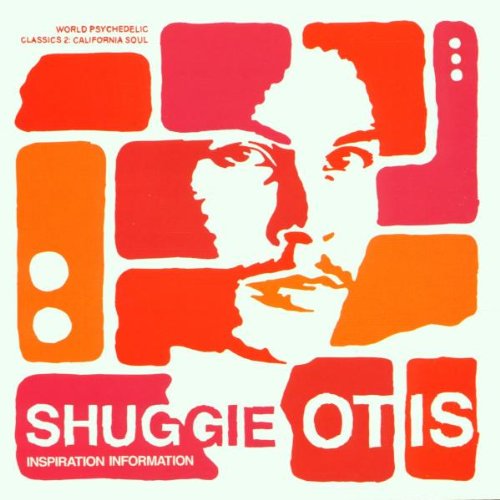
Shuggie Otis’s Inspiration Information
Although a commercial disappointment upon its release in 1974,
Inspiration Information has only grown in influence and importance
since. The album opens with the title track, a low-key, soulful affair that
boasts of a deep funky groove and syncopated vocals, with a little blues vibe
creeping in at the edges. The lush instrumentation is balanced by ethereal
backing harmonies, making for an odd combination of (then) contemporary
soul-funk but harking back to the R&B jams of the 1950s and early ‘60s.
The effervescent “Sparkle City” brings the fatback in a big way, Otis’s funky
chicken-pickin’ accompanied by a big bass line and a slippery rhythm, the song
boldly mixing jazz, blues, soul, and funk into a single invigorating listening
experience. Otis’s vocals are understated and don’t drop into the mix until
around two minutes in, but the meter of the lyrics matches the song’s overall
rhythmic blueprint to create one fun mess!
Using a bossa nova
styled rhythmic backdrop, “Aht Uh Mi Hed” is an odd piece, the tick-tock
percussion running throughout the song delivered a stark counterpoint by lush
strings and swells of exotic instrumentation, Otis adding minute amounts of
finely-crafted, filigree guitar layered beneath the unusual vocals and violin
flares. The short-but-sweet instrumental “Rainy Day” perfectly showcases
Otis’s immense six-string skills, his jazz-infused licks bouncing off of
mournful strings, while the sci-fi instrumental “XL-30” is electronic
space-rock at its best, strange musical tangents jumping out unexpectedly from
a droning keyboard hum.
This 2013 reissue of
Inspiration Information includes four previously-unreleased bonus
tracks tacked onto the original nine, two of which – the soulful, bluesy
“Magic” and “Castle Top Jam” – were originally recorded in 1971 for the album
but ultimately rejected, although both are quite good enough to have made the
cut. “Things We Like To Do,” laid on tape in ‘77, is an unlikely marriage of
old school R&B and 1970s-era soul, with muted vocals embroidered through a
lush soundscape of rhythmic percussion, sumptuous strings, and “come hither”
lyrics.
Wings of Love
Inspiration Information circa 2013 also includes a second disc of tunes
titled Wings of Love, a baker’s dozen of previously unreleased live and
studio tracks pulled from the archive, cleaned up, and remastered by Otis
personally. Offering material dating from as early as 1975 and as current as
2000, a lot of the songs on Wings of Love sound as good as, if not
better, than those on Inspiration Information. Any combination of these
13 songs would have made a killer album in their own right, and the quality of
performances from the late 1980s a the lone 1990 track show that Otis was still
making great music even if few got the chance to hear it.
As Otis
himself explains in the album’s liner notes, it’s not so much that he gave up on
the music business when he all but disappeared from the spotlight after the 1974
release of Inspiration Information, it’s really more of a case of the
business giving up on him. A lot of Wings of Love delves into the same
soul-blues-funk turf as Information Inspiration, but material like the
bouncy “Special” (1980) is every bit as satisfying as anything that Prince was
dominating the R&B airwaves with at the time. “Give Me Something Good”
should have owned radio in 1977, the song a dynamic mix of Hendrixian guitars
and icy, Isley Brothers-styled funk, with strong vocals and a little R&B
flavor added to the brew for good measure while “Tryin’ To Get Close To You”
predates the aforementioned Prince’s best soul-funk efforts by a
decade.
Wings of Love’s title track
is an ambitious eleven-minute jam recorded in 1990 that blows anything Otis had
done previous right out of the water. With gorgeous Spanish guitar leading into
classically-styled synthesizer riffs, the song explores decades of musical
themes, and the careful listener can hear elements of jazzy, 1940s-era torch
songs (think Billie Holiday); 1970s-era prog-rock (with a pop edge, like Todd
Rundgren); adventurous 1950s-styled rhythm and blues; 1970s influenced flights
of fanciful guitar; and much, much more. It’s a stunning musical tour de force.
The shorter-by-half “If You’d Be Mine” is, perhaps, its creative equal, the 1987
recording perfectly fusing rock, soul, and pop music together seamlessly in the
creation of a truly electrifying performance.
The Reverend’s Bottom Line
To be honest, there’s not much in the way of blues music to be heard on
Inspiration Information, Otis’s R&B roots hidden beneath mountains
of psychedelic-soul and raunchy funk. “Fireball of Love” from the
Wings disc probably veers the closest to a blues sound, the song’s
raucous vocals and fretwork reminiscent of Johnny “Guitar” Watson’s funky
1970s era recordings. The acoustic “Black Belt Sheriff,” from 2000, is the
most recent track and it displays a sort of Delta-styled country-blues vibe
with some mighty tasty slide-guitar work.
Truth is, Shuggie Otis
was a visionary musician of no little genius, his brilliance and talent
unrecognized until a raft of acolytes picked up on Inspiration Information in
the 1990s and spread the word to fellow travelers. Listening to the better
than two-dozen tracks on this reissue, one can easily hear the pop, rock,
soul, jazz, funk, and blues influences that Otis used to create a blueprint
for some of the biggest, brashest, and most commercially-successful music of
the 1980s and ‘90s. This is ambitious, sometimes complex stuff, to be sure,
but it’s never difficult to listen to, and quite entertaining for those
looking for depth, honesty, and artistry in their preferred music. (Legacy
Recordings, released April 16, 2013)
Although there have been a handful of young guitar prodigies since that time,
the late ‘60s emergence of fourteen year old six-string wizard
Shuggie Otis was unheralded at the time. The son of R & B legend
Johnny Otis, Johnny, Jr. – known as Shuggie – was discovered by the great John
Hammond and signed to Epic Records. An enthusiastic Al Kooper featured Otis on
one of his “super session” records soon afterwards, the young Otis making his
recording debut in 1969 with Al Kooper Introduces Shuggie Otis.
Soon
to follow was 1970’s Cuttin’ Up by Johnny Otis, which featured his
multi-talented son on a number of cuts, playing a variety of instruments,
including guitar, bass and keyboards. Later in the year came Shuggie’s
full-fledged solo debut, Here Comes Shuggie Otis, on which he performed all of
the instrumentation save for bass guitar and wrote or co-wrote all of the disc’s
ten cuts. The critically-acclaimed album was a breath of fresh air, with the
unique blues-based guitar style evinced by Otis ground-breaking in its scope and
surprisingly mature in its execution. Otis would go on to record a total of
three solo albums for Epic in the early 1970s, as well as continuing to do live
work with his father’s band.
Shuggie’s Boogie draws its dozen cuts
from the first two solo albums from Otis and his aforementioned work with Kooper
and the elder Otis. It showcases an artist wise beyond his tender years, the
work representing a striking stylistic ability and an enormous power of
expression. Cuts like “Shuggie’s Boogie,” with its brief opening spoken
autobiography, “I Can Stand To See You Die,” its country-styled slide guitar
matched by the wonderful vocals courtesy of Sugarcane Harris, or “Shuggie’s Old
Time Slide Boogie,” which brings up memories of Tampa Red or, more
appropriately, Blind Willie McTell, all stand up well to the test of time.
Shuggie’s subsequent slide into obscurity makes these early achievements all the
more impressive. During his brief career, Shuggie Otis left a large mark on the
blues, his youthful enthusiasm and skill captured here on Shuggie’s Boogie:
Shuggie Otis Plays The Blues. (Sony Legacy Recordings, released 1994)
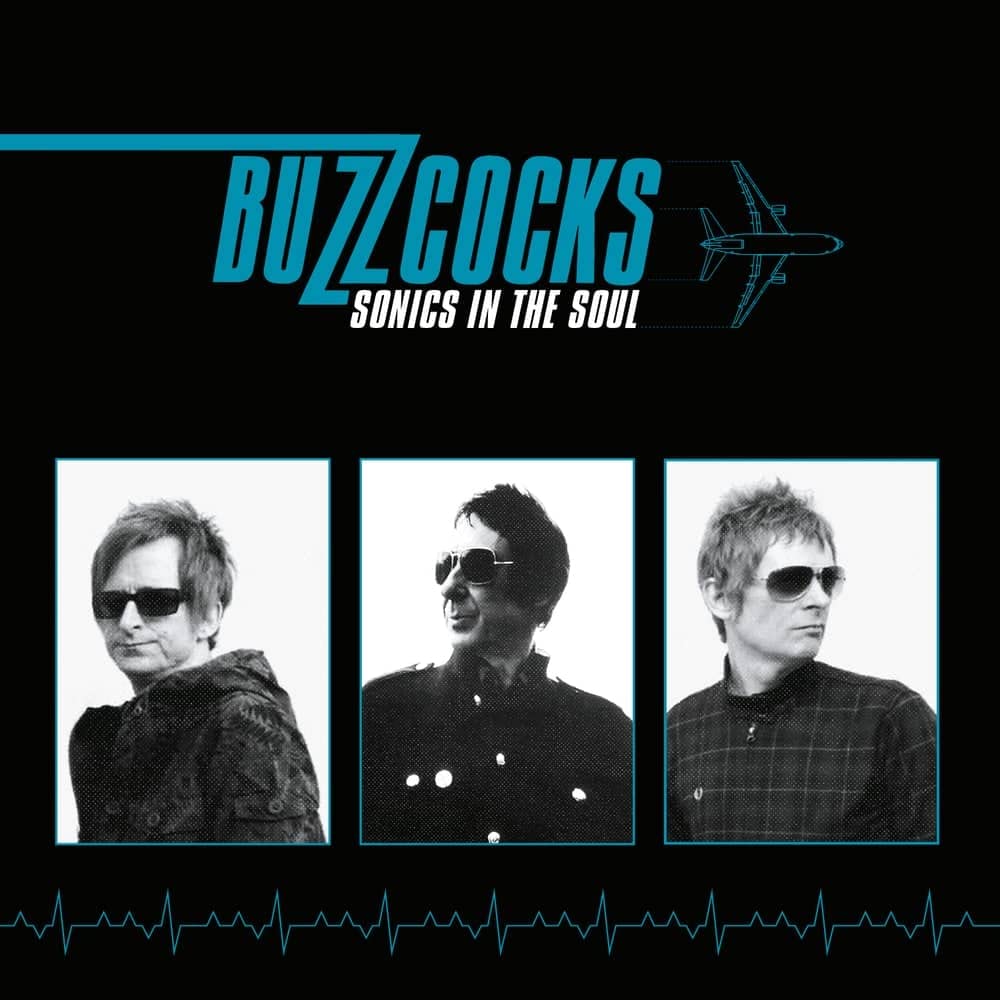
Buzzcocks – Sonics In the Soul (Cherry Red Records U.K.) British punk/new wave legends Buzzcocks built their reputation on Pete
Shelley’s caustic, insightful lyrics; Steve Diggle’s livewire fretwork; and an
overall melodic, high-octane pop-punk sound that became influential far beyond
the band’s modest record sales. Since reuniting in 1989 after an eight-year
hiatus, Buzzcocks has been firing on all cylinders, Shelley and Diggle ensuring
that they remained a vital creative outfit and not a ‘nostalgia’ act. With
Shelley’s death in 2018, the band’s first album without its charismatic frontman
had to be a daunting challenge to record. Diggle proves with
Sonics In the Soul that there’s still gas left in the Buzzcocks’ tank.
Flanked by longtime bassist Chris Remington and drummer Danny Farrant,
Sonics In the Soul is essentially a Diggle solo album, but one sporting
the crucial ‘fast ‘n’ loud’ Buzzcocks sonic ethos. Diggle’s voice takes getting
used to, and his attack-dog guitarplay pales somewhat by the loss of Shelley’s
counterpoint. But songs like the locomotive “Manchester Rain” or the
riff-littered “Bad Dreams” display a fierce creativity and musical deftness
matching or surpassing the band’s previous post-millennial albums. Extra credit
awarded for “Don’t Mess With My Brain”, a rifftastic stomped that blends typical
Buzzcocks’ lyrical wit with stunning instrumentation.
Grade: A- BUY!
Creedence Clearwater Revival – At The Royal Albert Hall (Craft Recordings) Just as CCR’s enormous success as a “singles band” (nine Top 10 singles
in four years) often overshadowed their album-making prowess, so too did it
obscure their strength as a live outfit. As proven by 2019’s long-overdue
release of Live At Woodstock, and this recent
At The Royal Albert Hall, Creedence was a white-hot live band, each
performance bristling with fire and brimstone. This is the first release of the
April 1970 show*, which straddles Willie & the Poor Boys and the
upcoming Cosmo’s Factory, but the setlist is well-balanced across albums
and includes all the “classic rock” radio hits – “Fortunate Son”, “Born On the
Bayou”, “Proud Mary”, and “Travelin’ Band” – as well as gems like “Midnight
Special” and an extended “Keep On Chooglin’” jam among its dozen tiki-torches. A
few deep cuts stand out, notably their bluesy cover of “The Night Time Is the
Right Time”, which is closer in spirit to Ray Charles’ version than to Nappy
Brown’s original; the riotous, punk-fierce B-side “Commotion”; and the
swamp-blues fever of “Tombstone Shadow”. It’s a shame that no CCR live LPs
were released during their heyday (Live In Europe was a posthumous
release) as Creedence was a helluva performing outfit.
Grade: A+
BUY!
* The Royal Albert Hall Concert album was released by
Fantasy Records in 1980 to cash in on the band’s lingering reputation, but
mistakes were made and the tapes used were actually from a January 1970 show at
the Oakland Coliseum. Fantasy recalled the album and reissued it months later as
The Concert – same cover, same concert, different title…
Charlie Daniels & Friends –
Volunteer Jam 1, 1974: The Legend Begins (Blue Hat Records) Southern Rock had been around for a half-decade by the time that Charlie
Daniels held the first ‘Volunteer Jam’ at the War Memorial Auditorium in
Nashville. It could be argued, however, that October 4th, 1974 was the day that
Southern Rock burst into the mainstream, the first of 21 total Volunteer Jams
held over the next 47 years, the event eventually outliving its creator. That
entire 1974 show has never been released commercially (two live songs from the
concert were included on the band’s 1974 Fire On the Mountain LP). Aside
from Daniels’ crackerjack band, the performance includes “friends” like the
Marshall Tucker Band’s Toy Caldwell and Paul Riddle and the Allman Brothers
Band’s Dickey Betts and Jamie Nichol. The twelve-song tracklist skews heavily
towards CDB’s upcoming Fire album, including the Top 30 hit “The South’s
Gonna Do It”, and is fairly indicative of the talented band’s set at the time.
Daniels was a skilled multi-instrumentalist, keyboardist/singer “Taz” DiGregorio
could have fronted his own band, and guitarist Barry Barnes was the CDB’s secret
weapon. Honestly, you either love Southern Rock and the 1970s-era CBD or you
don’t; but for fans, this set is long-overdue document of a talented, hot-shit
band.
Grade: A
BUY!
Note: With this new CD, six of the first seven Volunteer
Jams have been released on vinyl/CD, with 1976’s self-titled
Volunteer Jam album comprised of a handful of performances from the 1975
Murfreesboro TN event. Jams III (1977) and IV (1978) were condensed onto a
single double-LP set, while VI (1980) and VII (1981) received single-disc
releases. The landmark 1979 (V) jam has never been released, although the show
featured the reunion of Lynyrd Skynyrd for the first time since the 1977 plane
crash that killed several band members; the event also included guests like Toy
Caldwell and George McCorkle from the Marshall Tucker Band, John Prine, Link
Wray, and the Winter Brothers Band, among many others. I was there and it was a
pretty explosive moment when the surviving Skynyrd members hit the stage … so
when will we see the show on CD?
Will Hoge – Wings On My Shoes (Edlo Records) Nashville’s Will Hoge has long drawn inspiration as a lyricist from the
late, great John Prine but, with the album-opening “John Prine’s Cadillac”, he
picks up the songwriting legend’s mantle with an exquisitely-drawn story-song
that offers up brilliant lyrical imagery while also serving as a reverent
tribute to the fallen troubadour. It’s just the first of an album’s worth of
fine material on Hoge’s Wings On My Shoes, and if the singer/songwriter
has moved slightly away from his earlier power-pop, jangle-rock sound to a
rootsier, Americana sound, it hasn’t lessened his poetic acumen or energetic
delivery. Gorgeous love songs like “It’s Just You” and “The Last One To Go” are
brimming over with romantic yearning while story-songs like “Dead Man’s Hand”
and “Queenie” draw from the Prine/Guy Clark school of penmanship. The wonderful,
nostalgic “Ain’t Like It Used To Be” is about my former hometown, contrasting
the old, rural town with the new, upscale city while “Whose God It This?” is
wickedly satirical, its humorous narrative hitting the MAGA bullseye. Each
performance is infused with soulful vocals, ringing guitars, and a big drumbeat;
if this is the sound of “new country,” then I’m all in…
Grade: A BUY!
The Pretty Things – Live At the BBC (Repertoire Records U.K.) Even if relatively obscure stateside, the Pretty Things were one of the
better bands from the British Invasion and they enjoyed a lengthy career that
spanned six decades and a couple dozen albums, right up to the tragic passing of
longtime band frontman Phil May. The material included on this six-disc box set
was originally broadcast by BBC radio and although a lot of it has been
previously-released on a handful of collections, this compilation is the last
word on the British rocker’s hometown performances. Live At the BBC packs
a lot of energy and vitality into its six discs, which offer performances from
as early as an October 1964 appearance on the ‘Saturday Club’ show through a
July 1975 performance for legendary British DJ John Peel. There are a lot of
stops in-between over the decade-plus documented here, capturing the band in its
various guises, from R&B shouters to psychedelic pioneers to hard rockers.
Sure, there’s a lot of duplication of songs from various shows, but where else
are you going to hear turbo-charged live takes on great tunes like “SF Sorrow Is
Born”, “Religion’s Dead”, “Belfast Cowboys”, “Defecting Grey”, “Rosalyn”, and
“Singapore Silk Torpedo”, among many others?
Grade: A+
BUY!
Walter Trout – Ride (Provogue Records) At 70 years old, Walter Trout still performs with the energy and creative
vitality of an artist half his age. The life-scarred blues veteran has been
treading the bricks for nearly 50 years at this point and with Ride, his
30th album, Trout proves that there’s a lot of life left in the old road dog.
The guitarist is always looking for ways to challenge himself musically, so
Ride showcases Trout’s songwriting and instrumental skills in a variety
of blues-based styles. Album-opening “Ghosts” is a hauntingly-brilliant (pun
intended) blues-rock flamethrower while the biographical title track echoes the
jazz-flecked, guitar-happy Southern rock vibe of the Marshall Tucker Band.
Trout’s underrated skill at balladry is on display with the lush “Follow You
Back Home” and the emotional “Waiting For the Dawn”, which offers up some of
Trout’s most evocative six-string solos. Blues-rock fare like “High Is Low”
(featuring Trout’s overlooked harmonica skills) and “Better Days Ahead” feature
the guitarist at his incendiary, guitar-slinging finest while “Leave It All
Behind” is a classic rock-styled raver complete with raging hornplay and heavy
guitar. Altogether, Walter Trout’s Ride continues a string of excellence
that began with 2008’s The Outsider and continues unabated to this day.
Grade: A
BUY!